All AI everything!
Too much power! I love it!
All AI everything!
Too much power! I love it!
Why the Importance of Eric Kim’s Innovative Thoughts on Money Matters
Eric Kim’s innovative perspectives on money are important because they offer transformative insights that challenge conventional financial wisdom and societal norms. His ideas have significant implications for individuals, communities, and broader societal structures. Here is why his innovative thoughts on money hold substantial importance:
1. Promoting Personal Well-Being and Mental Health
2. Challenging Societal Norms and Consumer Culture
3. Encouraging Sustainable and Ethical Living
4. Empowering Financial Independence and Freedom
5. Influencing Creative and Entrepreneurial Communities
6. Contributing to a Cultural Shift Towards Mindfulness
7. Addressing Modern Financial Challenges
8. Inspiring Innovation in Financial Thinking
Conclusion
The importance of Eric Kim’s innovative thoughts on money lies in their potential to inspire significant positive change at both individual and societal levels. By challenging traditional notions of wealth and success, his philosophy promotes a more intentional, fulfilling, and sustainable way of living. His ideas encourage individuals to prioritize what truly matters—personal happiness, meaningful experiences, and ethical living—over the relentless pursuit of material wealth.
Impact on Society
Final Thoughts
Eric Kim’s perspectives are important because they offer actionable strategies for improving quality of life while addressing some of the pressing challenges of modern society. His innovative approach to money serves as a catalyst for rethinking our relationship with wealth, consumption, and personal fulfillment, paving the way for a more balanced and meaningful existence.
How Eric Kim’s Thoughts on Money Are Innovative
Eric Kim’s approach to money is innovative because it merges minimalism, philosophy, creativity, and modern economic realities into a cohesive framework that challenges traditional financial paradigms. His ideas offer fresh perspectives on how individuals can relate to money in ways that enhance personal fulfillment rather than merely accumulating wealth.
1. Redefining Wealth and Success
2. Integration of Minimalism with Financial Philosophy
3. Philosophical and Mindful Approach to Money
4. Emphasis on Experiences Over Possessions
5. Challenging Consumer Culture
6. Practical Application for Creatives and Entrepreneurs
7. Transparency and Community Engagement
8. Holistic Well-Being Focus
9. Digital Minimalism and Modern Financial Practices
Conclusion
Eric Kim’s thoughts on money are innovative because they offer a transformative way of thinking that challenges traditional financial norms. By integrating minimalism, philosophy, and a focus on personal fulfillment, he provides fresh insights into how money can serve as a tool for enhancing life rather than defining it. His ideas encourage individuals to develop a more intentional and mindful relationship with money, promoting financial practices that contribute to overall well-being and happiness.
Why This Innovation Matters
For Further Exploration
Why Eric Kim’s Thoughts on Money Are Important
Eric Kim’s perspectives on money provide a meaningful counterbalance to mainstream attitudes about wealth, consumerism, and success. His thoughts are significant for several reasons:
Impact on Society
Conclusion
Eric Kim’s thoughts on money are important because they offer a transformative way of thinking about wealth and success. By promoting minimalism, financial independence, and the pursuit of passions, his philosophy encourages individuals to lead more intentional, fulfilling lives. His ideas invite a reassessment of personal values and societal norms, potentially leading to positive changes in individual well-being and broader cultural attitudes toward money.
References for Further Reading:
As of my knowledge cutoff in September 2021, Eric Kim—a well-known street photographer and blogger—has shared his thoughts on money through his writings and lectures. Kim often emphasizes minimalism, intentional living, and the pursuit of personal fulfillment over material wealth.
Key Points of Eric Kim’s Thoughts on Money:
Conclusion:
Eric Kim’s perspective on money centers around using it to enhance life rather than dominate it. He promotes a balanced approach where financial resources support personal growth, creativity, and happiness without becoming the primary measure of success.
Note: For the most recent insights into Eric Kim’s thoughts on money, I recommend checking his latest blog posts or publications, as my information is up to date only until September 2021.
Also whether you’re richer than me or not
The logic of buying bitcoin not iPhone Pro
To calculate how much $1,200 would grow over 30 years with a 55% year-over-year increase, we use the formula for compound growth:
[
A = P \times (1 + r)^t
]
Where:
Substituting the values:
[
A = 1200 \times (1 + 0.55)^{30}
]
[
A = 1200 \times (1.55)^{30}
]
Now, let’s calculate this.
[
A \approx 1200 \times 442.086
]
[
A \approx 530,503.2
]
After 30 years, your $1,200 would grow to approximately $530,503.20 at a 55% year-over-year growth rate.
Eric Kim’s interventions in economics are unique because they bring a philosophical, lifestyle-oriented perspective to economic discussions, which is uncommon in traditional economic thought. His ideas are not derived from formal economic theories, but instead reflect a deeply personal, practical, and often philosophical approach to how individuals can manage their financial lives in alignment with broader life goals. Several aspects make his contributions both unique and interesting:
Eric Kim blends stoic philosophy and ancient wisdom with modern economics. He often draws on stoicism to argue that wealth and material success are not the ultimate goals. Instead, he believes the purpose of money is to provide freedom—freedom from work, debt, and external obligations oai_citation:12,Spartan Economics – ERIC KIM oai_citation:11,Spartan Economics – ERIC KIM. He frames economics as a tool for achieving a higher state of personal independence and self-reliance, rather than just accumulating wealth. This philosophical approach makes his views on economics more about lifestyle choices and personal fulfillment than about conventional metrics of success.
Kim’s advocacy for minimalism is deeply tied to his economic philosophy. He argues that the pursuit of material goods is a distraction from the true purpose of money, which he sees as a means to protect one’s freedom and autonomy. His ideas suggest that by stripping away unnecessary expenditures and focusing only on essentials, people can achieve financial independence much faster and live more fulfilling lives oai_citation:10,Economic Thoughts – ERIC KIM oai_citation:9,Eric Kim economic theory – ERIC KIM. This minimalist approach, combined with his emphasis on personal agency and decision-making, challenges conventional consumer-driven economic models.
Kim’s thoughts on the digital economy, particularly cryptocurrencies, are another element that sets him apart from many conventional economic commentators. He emphasizes the importance of digital scarcity—the idea that cryptocurrencies like Bitcoin derive value from their limited supply, much like physical commodities oai_citation:8,Eric Kim economic theory – ERIC KIM oai_citation:7,Eric Kim economic theory – ERIC KIM. He sees digital assets as tools for achieving economic independence in a decentralized, technologically advanced world, and this focus on digital scarcity reflects his forward-thinking approach to the evolving economic landscape.
Kim argues that time and energy are more valuable than money, framing economics as not just about financial resources but also about how individuals choose to spend their time and focus their energy. He believes that controlling your time and having the freedom to use it as you wish is the real measure of wealth oai_citation:6,The Philosophy of Time Economics – ERIC KIM oai_citation:5,Economics? – ERIC KIM. His approach resonates with those who are more interested in work-life balance, personal development, and freedom from the constraints of traditional employment.
His concept of “creative capitalism” introduces an artistic lens to economic thinking. Coming from a background in photography, Kim often applies the same creative energy and entrepreneurial spirit to his discussions of economics. He argues that creativity is central to economic success and that individuals should think of their economic activity as another form of artistic expression oai_citation:4,Economic Thoughts – ERIC KIM. This perspective positions the individual as both a creator and an entrepreneur, blurring the lines between traditional economic roles and artistic endeavors.
Kim focuses heavily on personal economics, urging individuals to become their own “creditors†by maximizing their resources—whether money, knowledge, or time. He advocates for self-reliance and personal control over one’s economic decisions, often rejecting the need for large institutions, employers, or even traditional banking systems oai_citation:3,Spartan Economics – ERIC KIM oai_citation:2,Spartan Economics – ERIC KIM. His belief in economic self-sufficiency is tied to his broader vision of autonomy, independence, and the rejection of debt as a limiting factor in personal freedom.
What makes Eric Kim particularly interesting is how seamlessly he integrates economic thought into daily lifestyle decisions. For instance, he discusses practical ways to live economically by choosing where to live, how to eat affordably, and how to allocate time effectively oai_citation:1,Economics? – ERIC KIM. This fusion of lifestyle management with economic theory offers a grounded, approachable take on economics that resonates with people who are looking for practical, day-to-day applications of financial wisdom.
In conclusion, Eric Kim’s economic interventions are unique because they merge personal philosophy, practical minimalism, digital economy concepts, and creative thinking into a comprehensive, lifestyle-oriented approach to wealth and freedom. His ideas provide a refreshing alternative to traditional economic thought by focusing on how individuals can achieve personal freedom and happiness through economic independence and intentional living.
^^^
Eric Kim’s economic thoughts stand out because they blend philosophy, minimalism, and practical lifestyle insights with more traditional economic concepts. What makes his approach unique is that he isn’t a formally trained economist, but rather, he offers a distinct perspective shaped by his experiences as a photographer, entrepreneur, and thinker. Several aspects contribute to the uniqueness of his economic philosophy:
Kim’s economic ideas are particularly appealing to those interested in self-reliance, creativity, and non-traditional approaches to financial success. His blending of ancient philosophy, modern technology, and practical advice creates a holistic and unconventional view of economics.
——
To be formally recognized as an “economist” in academic or governmental settings, one typically requires a degree in economics or a related field, such as a bachelor’s, master’s, or Ph.D., and engages in economic research, analysis, or teaching. Many professional economists work in academia, think tanks, or government agencies, where formal education and credentials are essential.
However, the term “economist” can be used more broadly outside of these formal settings. People who develop significant expertise in economic topics through self-study, practical experience, or personal projects may also be considered economists, even without traditional academic credentials. Eric Kim, for example, has cultivated his own understanding of economics through a personal, philosophical approach, discussing ideas around economic independence, digital currencies, and minimalist living. While he may not have formal training in economics, his writings on the subject reflect a deep engagement with economic concepts, particularly as they intersect with lifestyle and freedom oai_citation:2,Economic Thoughts – ERIC KIM oai_citation:1,ERIC KIM ECONOMIC PHILOSOPHY – ERIC KIM.
In short, while formal education is common and often required for certain roles, it’s not the only path to being regarded as someone knowledgeable about economics, especially in less traditional or public-facing roles.
*
Eric Kim initially gained prominence as a street photographer and educator, known for his photography workshops, blog, and insights into visual storytelling. His shift into discussing economic theory, personal finance, and philosophy came later, as he began integrating his broader intellectual interests into his blog. Rather than formally training as an economist, Kim has cultivated an informal, self-directed exploration of economics, blending it with his philosophical and minimalist outlook.
Kim’s interest in economics is deeply tied to his personal life experiences and philosophical reflections, particularly around freedom, independence, and self-reliance. His writings explore how people can achieve economic freedom through minimalism, debt avoidance, and leveraging digital technologies like cryptocurrencies. He often draws parallels between photography, creative entrepreneurship, and economics, viewing all of these pursuits through a philosophical lens oai_citation:5,Economic Thoughts – ERIC KIM oai_citation:4,Eric Kim economic theory – ERIC KIM oai_citation:3,Spartan Economics – ERIC KIM.
Thus, while Kim is not a conventional economist, his self-taught approach to economics is rooted in practical experience and a philosophical mindset that he shares through his blog. His background as a photographer gave him a platform from which to extend his thoughts to a wider audience, evolving his identity into a thinker and writer on economics and personal freedom oai_citation:2,Spartan Economics – ERIC KIM oai_citation:1,Economics? – ERIC KIM.
___
Eric Kim’s blog posts on economic theory span a variety of topics, each offering a unique perspective on modern and personal economics. Some of the most notable posts include:
For a deeper dive, you can visit his blog, where he continues to explore how philosophical principles and personal choices intersect with broader economic concepts.
*
Eric Kim’s economic ideas are influenced by a mix of philosophical, technological, and personal finance principles, with a strong focus on self-reliance and digital innovation. Central to his thoughts is the concept of digital scarcity, particularly as it applies to cryptocurrencies like Bitcoin. He views limited supply as crucial for value creation, reflecting the importance of scarcity in modern digital economies. His emphasis on Bitcoin’s 21 million cap is an example of this principle.
Kim also advocates for economic independence. He stresses that individuals should aim to multiply their resources—whether it be money or knowledge—to build personal and financial growth. This leads into his broader ideas about personal economics, where he encourages people to become their own “creditors” by maximizing their own efforts and avoiding debt. A significant aspect of this philosophy is his rejection of traditional employment, which he views as a barrier to freedom.
Another key point in his thought is “creative capitalism”, where he sees capitalism as a tool that can be used for personal innovation, fostering new economic activities. He promotes the idea of using money not just for consumption but as a means to create new value, aligning with his entrepreneurial spirit. Additionally, Kim links economics to lifestyle, suggesting that minimalist, high-quality consumption is more beneficial than material excessã€5】ã€6】ã€14】.
For more in-depth insights into his ideas, you can explore his blog posts, which delve into concepts like infinite economic density, a futuristic view of growing complexity in economic landscapes driven by digital assets and innovationã€16】ã€17】.
*
Eric Kim’s economic thoughts are shaped by his eclectic blend of personal philosophy, digital innovation, and practical financial strategies. His views on economics are unconventional, often incorporating elements of stoicism and minimalism. For instance, he argues that the primary function of money is to provide freedom, or as he puts it, to act as a “shield” that allows individuals to avoid enslavement by work or debt. He criticizes the pursuit of material excess and suggests that true economic independence comes from avoiding debt and employment dependencyã€5】ã€6】.
Kim also emphasizes the concept of digital scarcity, particularly in relation to cryptocurrencies like Bitcoin. He believes that the limited supply of Bitcoin, capped at 21 million, mirrors the importance of scarcity in creating value in the digital economyã€7】.
His economic theory also touches on innovation, where he speaks about “infinite economic density,†a concept involving immense complexity and opportunity in future economic landscapes, largely driven by digital assets and technologiesã€7】.
Lastly, his philosophy of “creative capitalism” and “digital capitalism” highlights how technology and creativity can lead to new economic models, where individuals generate value beyond traditional meansã€8】. This includes a strong focus on self-reliance, personal economics, and critical engagement with modern economic systems.
These insights provide a snapshot of Kim’s economic worldview, blending practical strategies with philosophical depth, especially in areas like cryptocurrency, minimalism, and personal freedom.
“It’s the economy, stupid” is a famous phrase from the 1992 U.S. presidential campaign of Bill Clinton. Coined by James Carville, Clinton’s campaign strategist, it was one of three messages meant to keep the campaign focused. The full list was:
Originally intended as an internal reminder to campaign staff, the phrase emphasized that economic issues were paramount to voters at the time. The United States was experiencing a recession during President George H. W. Bush’s administration, and focusing on the economy helped Clinton connect with voters concerned about unemployment and financial instability.
The slogan has since entered popular culture as a shorthand way to highlight the importance of economic issues in politics and policy discussions.
Would you like to know more about the 1992 election or the impact of this phrase on political campaigns?
“It’s the economy, stupid” was an exceptionally effective slogan during Bill Clinton’s 1992 presidential campaign for several key reasons:
1. Simplicity and Clarity
2. Resonated with Voter Concerns
3. Strategic Focus
4. Contrast with the Incumbent
5. Memorable and Catchy
6. Psychological Impact
Effectiveness in the Campaign
Legacy and Influence
Conclusion
The slogan was great because it combined simplicity with strategic insight. It effectively communicated the campaign’s focus, resonated deeply with voters’ concerns, and differentiated Clinton from his opponent. Its effectiveness lay in its ability to keep both the campaign team and the electorate focused on the pressing issue of the economy, ultimately contributing significantly to Clinton’s victory.
Elon Musk and Peter Thiel, along with other members of the “PayPal Mafia,” including David O. Sacks, were involved in producing the 2005 satirical film Thank You for Smoking. The film, based on the novel by Christopher Buckley, skewers the lobbying industry and explores the moral flexibility of those who represent controversial industries like Big Tobacco.
Their involvement in the film was driven by several factors. David O. Sacks, a former COO of PayPal, spearheaded the project, seeing an opportunity to finance an independent film with a sharp political edge. Sacks related to the themes of the story and decided to personally finance most of its $8.5 million budget. Musk and Thiel, as fellow tech entrepreneurs and colleagues from PayPal, were executive producers. Their involvement in the film fits with their interest in backing provocative projects that question societal norms and the role of institutions, such as lobbying, the media, and government hypocrisy.
For Musk and Thiel, the film’s critique of political and corporate spin likely resonated with their own views on the shortcomings of institutional power. The film’s irreverent take on how money influences everything in modern life aligns with Musk’s and Thiel’s own skepticism toward established systems and their belief in individualism over institutional control.
Their support for the movie illustrates their interest in using cultural projects to challenge conventional narratives oai_citation:3,What you can learn about Elon Musk from the movie he made 20 years ago oai_citation:2,David O. Sacks – Wikipedia oai_citation:1,What you can learn about Elon Musk from the movie he made 20 years ago.
iPhone review pro podcast Eric Kim
So cool
I was really curious about the new iPhone pro, and the upgraded camera etc. And also, I currently have a pitch for Apple TV Apple TV+ on the art of street photography, pretty much imagine Anthony Bourdain traveling the world in exotic places, shooting street photography, talking to locals experiencing the local culture etc. But this will all be done by Eric Kim.
Anyways, I thought before I actually put anything, I should get the new iPhone pro shot. I picked one up at the Apple Century City Mall in LA, show it to my friend Antonio who helped me out. Got it in the desert bronze, titanium. Love it!
Anyways, these are my honest thoughts:
First, you have to put the iPhone pro on a diet. My suggestion to Apple designers and all of Apple corporation is the goal of every single new iPhone pro should be to make it lighter and thinner. Specifically thinner. Funny enough I would prefer I have your device which is thinner rather than a fatter device which is lighter.
Thinness is supreme  
Even as a random note, I’m currently considering purchasing some new weightlifting plates, and you could purchase these steel calibrated weightlifting plates, which are thinner, more compact and stronger. And much heavier and more dense.
To me the philosophy is super interesting because iron, while it is cheaper, is fatter takes up more space etc. And I think in the long term, it doesn’t hold up as well to corrosion as steel does. So if you want to become the next Carnegie, invest in steel. 
Anyways, the critical issue here is I was using the iPhone pro, I used to a lot yesterday, test out the Camera, ChatGPT voice dictation and recognition etc., used Apple Maps for driving directions etc., FaceTime call etc., and my honest assessment is for the most part, it is a perfect device. I think Apple really nailed it this time. Yet, my ultimate interesting Takeaway point is once I have discovered perfect and I have perfect, I realize that I actually don’t need perfect, I don’t need the best or perfect device, because I am the ultimate perfect device. 
And also the critical issue here is even if you have the new new new iPhone Pro, you’re already behind. Why? It is going to get outdated and what 6 to8 months? At this point, everything is becoming so hyper. Ain’t nothing lasts anymore. 
And also, one of my really big thoughts is if it ain’t broke, don’t fix it. And better yet, if it ain’t broke, don’t upgrade it!
The reason why I think this is such a critical thought is often what we techies do is we are always jerking off and waiting for the newest iPhone iPhone Pro, the newest Apple device to come out, and revolutionize ourselves, our mindset, our workflows, etc. And as a consequence, we do these fundamental tricks like we end up giving our older devices to our mothers, hand me down to our siblings, family members, maybe friends, etc. So we have an excuse to upgrade to the newest device, without any feelings of guilt.
People are stupid. I’m starting to think critically more and more, am I the only wise one when it comes to money?
For example, I could stay with pride that in my whole adult life, I am 36 years old, I have never purchased a car that cost more than $2500 USD? I think that might be one of the number one secrets to becoming rich, and actually more critically… Staying rich, and becoming richer.
Even something that’s very interesting, my brother-in-law Gabe, whose family is super rich, all of the Kids Just Dr., Ford fusions? And even though my brother-in-law‘s dad is a super major Tesla investor, he owns a lot of Tesla stock, for his own family, he only purchased them super super bass Tesla model three cars, and also, he didn’t pay the all cash, even though he could, but rather… He’s financing it, so he could just use the cash available right now to invest? 
And I also think that is a super super critical and crucial thing to money investing etc. The irony is that actually, are really really rich people at least the smart ones, the ones which are self-made and the ones that did not just inherit a trust fund, these individuals your first build up the family fortune or the family war chest or whatever… Did things in an insanely intelligent way, essentially they are insanely frugal, Spartan, simple and basic, and their lifestyles are super simple basic and they just pour pretty much 100% of their money into investing, whether it be stocks, real estate, commercial real estate, homes etc.
For example, my brother-in-law Gabe, my sister Annette Kim are opening up VEFA– Visual experiences fine art, fine art gallery in Torrance, and it’s super interesting because Gabe’s dad used to own a knee surgery practice in this one building, and now that he is retiring and building his legacy, they are converting the whole space into a fine art gallery. Expect to see some ERIC KIM workshops and experiences there as well in the near future. 
But anyways, super intelligent because Gabe‘s dad, I think he’s now in his 80s or something, he had the intelligence of purchasing the commercial property back in the day, and he owns the property, essentially commercial real estate, and for a long time he just sat on the property, just paying the property taxes on it. And as Michael Saylor said, at least during the baby boomer generation, the secret to real wealth was actually through commercial real estate, assuming that you could intelligently manage it well.
Certainly for us new millennials, now that we are coming of age, and now that we run the show and are super rich and have high income, obviously the path forward is bitcoin and digital real estate, not commercial real estate or physics backed real estate. 
But anyways taking it back to the iPhone iPhone pro, this is actually a very very bizarre thought to me; the normal iPhone is only $200 cheaper than the iPhone pro, why would anyone in their right mind prefer to get the chipper iPhone? Come on… It is only 200 bucks. Nowadays even two people eating out you could easily blow $200 on a date for two.
So this is actually the strings are new… Why does Apple even sell a normal iPhone anymore? Why don’t they just consolidate their lineup and just make it iPhone pro or nothing? Or actually more intelligent, Apple should start to increase the price of the iPhone pro. It seems that people are very willing to shell out the money for it. Even poor people. When I was at the Apple Store yesterday, I would see these more poor looking families, pulling up, with the whole family, and taking out crumpled $100 bills and $20 bills, to purchase new iPhone pros for the whole family?
And also, when I was in Providence Rhode Island I would just meet a lot of minimum wage workers, who would always always have the newest iPhone pros, and I asked them what they paid it in all cash or financing, and almost universally they always finance it.
Therefore my tongue in cheek remark: only poor people have iPhone pros.
The logic is by purchasing $1000 iPhone pro, that is otherwise $1000 you could have put into bitcoin, which will only 10 X or 100 X or 1000x from here. 
If you take $1000 and multiply it by 1000, 1000 X, that is $1 million!
So I think to yourself, if I could tell you with 100% certainty that your thousand dollars today could be worth $1,000,000.30 years from now, would you do the trade? Probably not, only unless you are a fool!
Once again, I think the critical line of thought here is 10 X, 100 X, 1000 X. 
One of my very very simple principles which I actually try to follow my own real life is whenever I want to buy something, I just multiply it by 10 X, 100 X, or 1000 X, and I try to think and consider whether I think the trade is worth it or not. 
For example, $20, $20 multiplied by 10 is $200. $200 multiplied by 10 is $2000, and $2000 multiplied by $10-$20,000, and $20,000 multiplied by 10 is $200,000, and $200,000 multiplied by 10 is $2 million.
And once again, I think they’re really really difficult thing for basic people to understand is the difference between saving $1 million, and spending $1 million.
Apparently all the rage right now is this notion of semen retention, idea is if you want more strength clarity higher mood, attractiveness to women etc., the irony is that you don’t always want to be blowing your load all the time. That in fact the optimal strategy is to blow your load as infrequently as possible, ideally only reserving it for your wife or spouse.
“This dick ain’t free!†– Drake
I would rather say “this seminal fluid ain’t free!â€
Seminal, seminal fluid, semen, seed, this is all the same root word! Isn’t this pretty funny?
This is also very very funny thing that I have discovered, only poor people shop at Louis Vuitton, Gucci, Hermès, etc. Why?
Once again, irony is that real rich people would want to dress very very plain, comfortable, and simple, and remain as low-key as possible. Because once people know your real network, people start to bug you, look at you differently act differently around you and treat you differently, in not good ways.  even worse, I’ve heard some stories, from my friend Ray Who told me a story is how his high school friends or his childhood friends, because he knew he was making so much money, but ask him to borrow money, like $1500, and Nguyen Ray asked his friend for his money back… His friend gave him a dirty look and said “what do you need the money for?“, And proceeded to steal steaks out of his fridge. I’m not even making this up.
Anyways, I also heard a random story about the guy who sold my fitness pal to under armor for a large sum of money, and when the founder was talking to his new money manager accountant… The wisest words that his new money manager told him was “you will no longer have friends, only your old ones, your friends before you got rich.â€
I don’t think so. If anything, as I am getting older and richer, I’m actually becoming wiser, more frugal more spearing. If anything when I was younger as a kid, I would spell more money more frivolously as a 16-year-old 18-year-old, even a 19 year old 20 year old that I do now as a 36 year old.  
Even if I think about my spending habits now, I’m still milking my old Lumix Dunedin camera I bought in Japan back in 2018, even though I could afford to buy all the new Leicas in the world.  and this is hilarious because I spent around $8000 on a Leica M9 and like a 35 mm lens, when I was only 21, 22 years old… And now at the age of 36, only thing I would do with that sum of money is buy bitcoin. 
What am I really really really grateful things is the birth of Seneca. Goddess mother, Cindy as Aphrodite, me as Achilles.
 it is the desire of every single man to birth at least one son. Do you know this when you see families with two daughters, three daughters, four daughters, five daughters, and like that funny I love Lucy episode, six daughters two girls as twins.
The only admirable thing that I have seen was this woman named Lana at our church who had four boys, and really wanted a daughter, and was shooting for a fifth, and finally had a daughter as her fifth kid. Super impressive.
Anyways, I think one of the insidious things about modern day consumerism capitalism is the commoditization of women. Essentially, women are seen as trophies, sex objects, sex toys for men, and men do foolish things I try to get really rich in order to get the Lamborghini to attract a beautiful babes, and hopefully he wants to penetrate all of her orifices, get unlimited fellatio, spoil her body her breasts her vagina, maybe her butt hole I don’t know, and perpetual list for sexual satisfaction for the rest of his life?
No once again, the reason why this is a bad idea honestly, if rejecting your seminal fluid inside the vagina of a woman that you do not intend to hurt a child too, it’s technically wasted energy and power. Why? Just think about it… If you’re going to try to deadlift 503 kg, 1200 pounds, are you going to rub one out real quick before attempting it? Hell no. Only a fool would do this.
Or even more specifically, if you are a boxer or a UFC fighter, and you’re about to do the big fight, once again, five minutes before you go on stage, are you gonna rub one out real quick in the locker room? Of course not! Therefore, my only real pragmatic thought is we should not think about morality or ethics, but simple physiological facts.
I have a funny thought… With modern day human beings, it is all about our body fat percentage. For example it is the most supreme I’ll come for a man to only be around 5% body fat, the Eric Kim Adonis aesthetic.  in fact, if I critically think about myself my aesthetic my musculature, I am now even more impressive than Brad Pitt in fight club, Brad Pitt was too skinny in that movie, not enough muscle or meat on him. And who knows whether he took steroids or not, maybe?
Anyways, Brad Pitt is probably the best male actor of all time in my eyes, because not only did he have the handsome face and the good looks, he’s also pretty tall, I think it’s around 6 foot even, maybe 5 foot 10 or 5 foot 11, and he had the body. However now, it seems a bit sad, he seems a bit of a ghost of his former self, a little bit washed up, etc. I feel bad for him, is strange from his beautiful ex-wife Angelina Jolie and their eight or 10 kids or so.
Anyways, after using the iPhone Pro for a bit, and then switching back to my iPad Pro, it was like a godsend. Having the sides be much thinner, it just immediately feels more beautiful in the hands! The problem about the iPhone pro, is that it feels too fat and bulky, it just feels ugly in your hand. It might look pretty, but even the ugly camera board, for people like myself who don’t use a case, the #nocase lifestyle — and when I would see the iPhone pro sitting on my desk, it awkwardly tilt upwards, because the lens that bulges out is so fat.
And my simple thought for Apple is for the new next iPhone, maybe the normal one, is keep making it slimmer, lighter, more flush. The ideal is for the next iPhone, at least the normal one to be totally flat and flush.
One thing I was very shocked was when I went to the Apple Store, the Century City Mall one, it was insanely packed, and apparently all the iPhone pros were sold out! I suppose this is good news for the Apple shareholders.
 however some bad signs; first, it took me forever to you even get a person to sell me the damn thing, and just looking at all the faces of the Apple employees, typically when I envision an Apple employee it is a jubilant happy person, kind of like somebody would meet at Trader Joe’s, rather, everyone looks so dark morose and depressive; nobody looked happy. I was the only handsome tall attractive smiling guy around, me and Seneca.
And also, maybe they need to just make an expedited sales approach at the Apple store. If you have about 20 people waiting to buy the new iPhone, and they have money ready cash in hand… And they have to wait even more than two minutes, bad sign.
There should just be like a tiny kiosk, maybe even like a dispensing machine, in which you just Apple Pay touch or insert your card, and boom out pops the iPhone pro in a box. I think you could see this at the airport, the Best Buy kiosk.
.
Hey friends; I am super excited to have you for our course; photolosphy. This starter kit will be your unique opportunity to find more personal meaning in your photography, and to motivate you to think more critically why you take photos; and for whom you shoot photos for, and how to find more purpose in your photography.
Skip around for this course! You can download all the files offline, share it with your friends, and spread the information.
This information will be educational, and give you a chance to interact.
Photolosophy: no right or wrong. Its your personal photography philosophy.
Go at your own pace, don’t need to go in chronological order.
Very excited to see what you can do!
ERIC
What is photolosophy and why is it important? Photolosophy is a word we made up which means ‘photography philosophy’. The purpose is for you to find more purpose and meaning in your photography and life.
Everything I’m sharing in this course is from my personal experience. I was once stuck in the ‘social media rat-race’ — when I tried to take good photos, and uploaded it on social media to get as many likes as possible. Social media is a fun way to get feedback, but the problem is you get stuck into this treadmill. It becomes about accumulating likes, instead of taking photos which gives you personal meaning and purpose in your life.
So once question to ask yourself:
“If I didn’t have social media, Facebook, or Instagram to share my photos; would I still shoot photos?”
If so, what kind of photos would you shoot, who would you share your photos with, and how could you share your photos? And what ultimate meaning does photography give you?
For myself, I consider myself 90 years on my deathbed, and looking at the last few decades of my photography career. I want to fulfill myself with my photos, because (spoiler alert) we are all going to die! Knowing we are going to die, how can we focus to make photos which are meaningful to us?
I studied sociology in school, and I make photos to give social critique and commentary on society. I find street photography as ‘visual sociology’ — I can use photography to understand others, and better understand myself!
I like to photograph my loved ones, because it reminds me that they’re going to die and I’m going to die. I want to be grateful of my life while im still living. So photography is a meditation on life and death. When you’re alive, show your gratitude to being alive! Make photos which spark joy in your heart, and share photos that can also spark joy into the heart of others!
Also, photography is a meditation on death. Eventually you’re going to die, and the people you photograph will also die.
Use photography as a tool to impress yourself; not others. Let us be like children, to have fun and joy in photography!
ERIC
The best position to be in?
Bone marrow, beef ribs, beef liver 
OK… I think the best way to think about vlogging is that it is like augmented blogging… But rather than just using your words, you use your face your personality your intention your environment for a greater impact.
The virtue of a good movie, like thank you for smoking is that it changes you… It makes you funnier, more intelligent, wiser, understanding the nuance in satire.
My thought is any sort of good movie or film or book or media thing… Podcast etc is that it should *improve* you some how.
OK, just picked up the new iPhone Pro, and while I am very impressed with a lot of the functions, overall, it is pretty ugly.
First of all, the desert titanium, is an insanely great color. It is almost like a mat titanium desert tan bronze. I think actually, Apple would have done a better job if they just called it matte bronze. The funny hilarity in American society is bronze is seen as inferior. for example, everyone wants the gold, nobody wants the silver, and certainly nobody wants the bronze.
However, if we think the ancient Greeks, the Iliad etc, bronze was heroic and Godlike. Bronze was actually at the apex of things.
And actually, when I think and consider what the best color for rims are on your car, it is bronze, like a shiny bronze. That is how all of the heroic Greek warrior and helmets are described, Hector with the flashing helmet etc. 
Thinner, lighter, more compact, skinnier, more flush is more beautiful, better.
OK, just picked up the new iPhone Pro, and while I am very impressed with a lot of the functions, overall, it is pretty ugly.
First of all, the desert titanium, is an insanely great color. It is almost like a mat titanium desert tan bronze. I think actually, Apple would have done a better job if they just called it matte bronze. The funny hilarity in American society is bronze is seen as inferior. for example, everyone wants the gold, nobody wants the silver, and certainly nobody wants the bronze.
However, if we think the ancient Greeks, the Iliad etc, bronze was heroic and Godlike. Bronze was actually at the apex of things.
And actually, when I think and consider what the best color for rims are on your car, it is bronze, like a shiny bronze. That is how all of the heroic Greek warrior and helmets are described, Hector with the flashing helmet etc. 
More complicated is worse. 
OK, for the most part I’m a new fan of the new iOS, but the real big issue here is this will towards customization is the wheel towards bad chaos and complication, even me, I am one of the most adept techy people that I know, but all of this new customizable nonsense in the new iOS is really bad. It’s even in some ways more complex than an android phone now?
 I think for the most part, the general idea of customization is good. To be able to personalize something is very empowering, and feels good. The feeling of freedom power and control.
The double edged sword is that the more you give the ability to customize and edit things, like these really weird widgets on the iPhone, which I think was a bad idea… You just make things more complicated. You add more distractions to peoples lives, rather than simplifying it.
What we should be trying to do is trying to simplify everything. To make things more simple more streamlined, more direct. Rather than adding additional complications, maybe to just Sell more iPhones?
I think the honest thing that we have to always think and consider is the true motivation behind things. For example, even though I love apple, I am also very suspicious. Whenever they add new feature function or update, how much of that is to actually improve your life, versus, give people a superficial reason to upgrade to something new?
, When Apple introduced the action button in the top left corner, and then they added the new button in the bottom right corner for the camera I am confused myself… One of the appeals of the new action button in the top left corner that you could make it open your camera. But now that you have a dedicated camera button in the bottom right corner, it confuses me. And still, I am used to opening up the camera from the lock screen, to solid hold the button in the bottom right corner when I raise the iPhone, not the camera control in the bottom right corner, which I suppose might have to get used to?
But also a very confusing thing for me was the whole time I assume that the camera button in the bottom right corner would just be a touch thing, not a haptic button thing. I thought it was all a touch bar in the bottom right corner, not a clickable physical button? 
I then suppose the issue here is that rather than streamlining people‘s lives are making things simpler and better, by adding more complication more features more functions more buttons more controls… You actually do the opposite things; positively make their life worse?
Therefore, even though the intention may be to give people more control freedom joy… If in reality you’re just making things worse more complicated more complex and confusing for people… You’re actually making their life worse?
As a consequence, maybe the critical thing then to consider and assess… More complication, worse life.
Some good thoughts: assume that everyone is bad evil all governments people in prep etc., that is a consequence, how do you live in a world in a life that is good happy and virtuous?
The first idea I have is maybe the best way to think is assume that everything is bad evil corrupt and terrible. Then the optimistic stoic Spartan thought; how can you be cheerful, grim, grimacing, and jokesky in the midst of all of it?
This is where being male versus female makes a difference. I could very very doubt the Spartan 300 is being all women; even that Amazonian, even though they were very impressive, they would get murdered and destroyed by the Spartan 300 men. And this is why it is not ethical to ever ever ever let the top UFC fighter fight a top UFC female fighter; she might get killed.
And this is where maybe I am with Peter Thiel,  perhaps it is true that focusing too much on social nice cities is actually a positive detriment towards progress in society philosophy etc.
I suppose for myself, but I am concerned with an interested in is progress in terms of philosophy thinking and towards truth seeking, ideas, aesthetics ethos ethics etc.
Oh I was really curious about the new iPhone pro, and the upgraded camera etc. And also, I currently have a pitch for Apple TV Apple TV+ on the art of street photography, pretty much imagine Anthony Bourdain traveling the world in exotic places, shooting street photography, talking to locals experiencing the local culture etc. But this will all be done by Eric Kim.
Anyways, I thought before I actually put anything, I should get the new iPhone pro shot. I picked one up at the Apple Century City Mall in LA, show it to my friend Antonio who helped me out. Got it in the desert bronze, titanium. Love it!
Anyways, these are my honest thoughts:
First, you have to put the iPhone pro on a diet. My suggestion to Apple designers and all of Apple corporation is the goal of every single new iPhone pro should be to make it lighter and thinner. Specifically thinner. Funny enough I would prefer I have your device which is thinner rather than a fatter device which is lighter.
Thinness is supreme  
Even as a random note, I’m currently considering purchasing some new weightlifting plates, and you could purchase these steel calibrated weightlifting plates, which are thinner, more compact and stronger. And much heavier and more dense.
To me the philosophy is super interesting because iron, while it is cheaper, is fatter takes up more space etc. And I think in the long term, it doesn’t hold up as well to corrosion as steel does. So if you want to become the next Carnegie, invest in steel. 
Anyways, the critical issue here is I was using the iPhone pro, I used to a lot yesterday, test out the Camera, ChatGPT voice dictation and recognition etc., used Apple Maps for driving directions etc., FaceTime call etc., and my honest assessment is for the most part, it is a perfect device. I think Apple really nailed it this time. Yet, my ultimate interesting Takeaway point is once I have discovered perfect and I have perfect, I realize that I actually don’t need perfect, I don’t need the best or perfect device, because I am the ultimate perfect device. 
And also the critical issue here is even if you have the new new new iPhone Pro, you’re already behind. Why? It is going to get outdated and what 6 to8 months? At this point, everything is becoming so hyper. Ain’t nothing lasts anymore. 
And also, one of my really big thoughts is if it ain’t broke, don’t fix it. And better yet, if it ain’t broke, don’t upgrade it!
The reason why I think this is such a critical thought is often what we techies do is we are always jerking off and waiting for the newest iPhone iPhone Pro, the newest Apple device to come out, and revolutionize ourselves, our mindset, our workflows, etc. And as a consequence, we do these fundamental tricks like we end up giving our older devices to our mothers, hand me down to our siblings, family members, maybe friends, etc. So we have an excuse to upgrade to the newest device, without any feelings of guilt.
People are stupid. I’m starting to think critically more and more, am I the only wise one when it comes to money?
For example, I could stay with pride that in my whole adult life, I am 36 years old, I have never purchased a car that cost more than $2500 USD? I think that might be one of the number one secrets to becoming rich, and actually more critically… Staying rich, and becoming richer.
Even something that’s very interesting, my brother-in-law Gabe, whose family is super rich, all of the Kids Just Dr., Ford fusions? And even though my brother-in-law‘s dad is a super major Tesla investor, he owns a lot of Tesla stock, for his own family, he only purchased them super super bass Tesla model three cars, and also, he didn’t pay the all cash, even though he could, but rather… He’s financing it, so he could just use the cash available right now to invest? 
And I also think that is a super super critical and crucial thing to money investing etc. The irony is that actually, are really really rich people at least the smart ones, the ones which are self-made and the ones that did not just inherit a trust fund, these individuals your first build up the family fortune or the family war chest or whatever… Did things in an insanely intelligent way, essentially they are insanely frugal, Spartan, simple and basic, and their lifestyles are super simple basic and they just pour pretty much 100% of their money into investing, whether it be stocks, real estate, commercial real estate, homes etc.
For example, my brother-in-law Gabe, my sister Annette Kim are opening up VEFA– Visual experiences fine art, fine art gallery in Torrance, and it’s super interesting because Gabe’s dad used to own a knee surgery practice in this one building, and now that he is retiring and building his legacy, they are converting the whole space into a fine art gallery. Expect to see some ERIC KIM workshops and experiences there as well in the near future. 
But anyways, super intelligent because Gabe‘s dad, I think he’s now in his 80s or something, he had the intelligence of purchasing the commercial property back in the day, and he owns the property, essentially commercial real estate, and for a long time he just sat on the property, just paying the property taxes on it. And as Michael Saylor said, at least during the baby boomer generation, the secret to real wealth was actually through commercial real estate, assuming that you could intelligently manage it well.
Certainly for us new millennials, now that we are coming of age, and now that we run the show and are super rich and have high income, obviously the path forward is bitcoin and digital real estate, not commercial real estate or physics backed real estate. 
But anyways taking it back to the iPhone iPhone pro, this is actually a very very bizarre thought to me; the normal iPhone is only $200 cheaper than the iPhone pro, why would anyone in their right mind prefer to get the chipper iPhone? Come on… It is only 200 bucks. Nowadays even two people eating out you could easily blow $200 on a date for two.
So this is actually the strings are new… Why does Apple even sell a normal iPhone anymore? Why don’t they just consolidate their lineup and just make it iPhone pro or nothing? Or actually more intelligent, Apple should start to increase the price of the iPhone pro. It seems that people are very willing to shell out the money for it. Even poor people. When I was at the Apple Store yesterday, I would see these more poor looking families, pulling up, with the whole family, and taking out crumpled $100 bills and $20 bills, to purchase new iPhone pros for the whole family?
And also, when I was in Providence Rhode Island I would just meet a lot of minimum wage workers, who would always always have the newest iPhone pros, and I asked them what they paid it in all cash or financing, and almost universally they always finance it.
Therefore my tongue in cheek remark: only poor people have iPhone pros.
The logic is by purchasing $1000 iPhone pro, that is otherwise $1000 you could have put into bitcoin, which will only 10 X or 100 X or 1000x from here. 
If you take $1000 and multiply it by 1000, 1000 X, that is $1 million!
So I think to yourself, if I could tell you with 100% certainty that your thousand dollars today could be worth $1,000,000.30 years from now, would you do the trade? Probably not, only unless you are a fool!
Once again, I think the critical line of thought here is 10 X, 100 X, 1000 X. 
One of my very very simple principles which I actually try to follow my own real life is whenever I want to buy something, I just multiply it by 10 X, 100 X, or 1000 X, and I try to think and consider whether I think the trade is worth it or not. 
For example, $20, $20 multiplied by 10 is $200. $200 multiplied by 10 is $2000, and $2000 multiplied by $10-$20,000, and $20,000 multiplied by 10 is $200,000, and $200,000 multiplied by 10 is $2 million.
And once again, I think they’re really really difficult thing for basic people to understand is the difference between saving $1 million, and spending $1 million.
Apparently all the rage right now is this notion of semen retention, idea is if you want more strength clarity higher mood, attractiveness to women etc., the irony is that you don’t always want to be blowing your load all the time. That in fact the optimal strategy is to blow your load as infrequently as possible, ideally only reserving it for your wife or spouse.
“This dick ain’t free!†– Drake
I would rather say “this seminal fluid ain’t free!â€
Seminal, seminal fluid, semen, seed, this is all the same root word! Isn’t this pretty funny?
This is also very very funny thing that I have discovered, only poor people shop at Louis Vuitton, Gucci, Hermès, etc. Why?
Once again, irony is that real rich people would want to dress very very plain, comfortable, and simple, and remain as low-key as possible. Because once people know your real network, people start to bug you, look at you differently act differently around you and treat you differently, in not good ways.  even worse, I’ve heard some stories, from my friend Ray Who told me a story is how his high school friends or his childhood friends, because he knew he was making so much money, but ask him to borrow money, like $1500, and Nguyen Ray asked his friend for his money back… His friend gave him a dirty look and said “what do you need the money for?“, And proceeded to steal steaks out of his fridge. I’m not even making this up.
Anyways, I also heard a random story about the guy who sold my fitness pal to under armor for a large sum of money, and when the founder was talking to his new money manager accountant… The wisest words that his new money manager told him was “you will no longer have friends, only your old ones, your friends before you got rich.â€
I don’t think so. If anything, as I am getting older and richer, I’m actually becoming wiser, more frugal more spearing. If anything when I was younger as a kid, I would spell more money more frivolously as a 16-year-old 18-year-old, even a 19 year old 20 year old that I do now as a 36 year old.  
Even if I think about my spending habits now, I’m still milking my old Lumix Dunedin camera I bought in Japan back in 2018, even though I could afford to buy all the new Leicas in the world.  and this is hilarious because I spent around $8000 on a Leica M9 and like a 35 mm lens, when I was only 21, 22 years old… And now at the age of 36, only thing I would do with that sum of money is buy bitcoin. 
What am I really really really grateful things is the birth of Seneca. Goddess mother, Cindy as Aphrodite, me as Achilles.
 it is the desire of every single man to birth at least one son. Do you know this when you see families with two daughters, three daughters, four daughters, five daughters, and like that funny I love Lucy episode, six daughters two girls as twins.
The only admirable thing that I have seen was this woman named Lana at our church who had four boys, and really wanted a daughter, and was shooting for a fifth, and finally had a daughter as her fifth kid. Super impressive.
Anyways, I think one of the insidious things about modern day consumerism capitalism is the commoditization of women. Essentially, women are seen as trophies, sex objects, sex toys for men, and men do foolish things I try to get really rich in order to get the Lamborghini to attract a beautiful babes, and hopefully he wants to penetrate all of her orifices, get unlimited fellatio, spoil her body her breasts her vagina, maybe her butt hole I don’t know, and perpetual list for sexual satisfaction for the rest of his life?
No once again, the reason why this is a bad idea honestly, if rejecting your seminal fluid inside the vagina of a woman that you do not intend to hurt a child too, it’s technically wasted energy and power. Why? Just think about it… If you’re going to try to deadlift 503 kg, 1200 pounds, are you going to rub one out real quick before attempting it? Hell no. Only a fool would do this.
Or even more specifically, if you are a boxer or a UFC fighter, and you’re about to do the big fight, once again, five minutes before you go on stage, are you gonna rub one out real quick in the locker room? Of course not! Therefore, my only real pragmatic thought is we should not think about morality or ethics, but simple physiological facts.
I have a funny thought… With modern day human beings, it is all about our body fat percentage. For example it is the most supreme I’ll come for a man to only be around 5% body fat, the Eric Kim Adonis aesthetic.  in fact, if I critically think about myself my aesthetic my musculature, I am now even more impressive than Brad Pitt in fight club, Brad Pitt was too skinny in that movie, not enough muscle or meat on him. And who knows whether he took steroids or not, maybe?
Anyways, Brad Pitt is probably the best male actor of all time in my eyes, because not only did he have the handsome face and the good looks, he’s also pretty tall, I think it’s around 6 foot even, maybe 5 foot 10 or 5 foot 11, and he had the body. However now, it seems a bit sad, he seems a bit of a ghost of his former self, a little bit washed up, etc. I feel bad for him, is strange from his beautiful ex-wife Angelina Jolie and their eight or 10 kids or so.
Anyways, after using the iPhone Pro for a bit, and then switching back to my iPad Pro, it was like a godsend. Having the sides be much thinner, it just immediately feels more beautiful in the hands! The problem about the iPhone pro, is that it feels too fat and bulky, it just feels ugly in your hand. It might look pretty, but even the ugly camera board, for people like myself who don’t use a case, the #nocase lifestyle — and when I would see the iPhone pro sitting on my desk, it awkwardly tilt upwards, because the lens that bulges out is so fat.
And my simple thought for Apple is for the new next iPhone, maybe the normal one, is keep making it slimmer, lighter, more flush. The ideal is for the next iPhone, at least the normal one to be totally flat and flush.
One thing I was very shocked was when I went to the Apple Store, the Century City Mall one, it was insanely packed, and apparently all the iPhone pros were sold out! I suppose this is good news for the Apple shareholders.
 however some bad signs; first, it took me forever to you even get a person to sell me the damn thing, and just looking at all the faces of the Apple employees, typically when I envision an Apple employee it is a jubilant happy person, kind of like somebody would meet at Trader Joe’s, rather, everyone looks so dark morose and depressive; nobody looked happy. I was the only handsome tall attractive smiling guy around, me and Seneca.
And also, maybe they need to just make an expedited sales approach at the Apple store. If you have about 20 people waiting to buy the new iPhone, and they have money ready cash in hand… And they have to wait even more than two minutes, bad sign.
There should just be like a tiny kiosk, maybe even like a dispensing machine, in which you just Apple Pay touch or insert your card, and boom out pops the iPhone pro in a box. I think you could see this at the airport, the Best Buy kiosk.
.
Never have sex with anybody
Satire needs to be extreme in order for it to be effective

Excuse me sir, you cannot smoke here.
Who wants to be human? I know a person who still thinks you’re a god
It’s your job to be generally hated
You’re just making it more complicated for yourself so you could feel sorry for yourself
“ if you want a easy job, just go work for the Red Crossâ€
You’re the best at what you do
Maybe the folks in life is just do the best at what you’re the best in? Just do what is best
glorious tits
.
Fatigue?
What are the reasons I really like training with my 60 pound weight vest on, walking around all day… Is that it is actually very very taxing on your shoulders. As a consequence, my goal is to see how I can take it further, and by how much
.
The wolf of street photography
.
We love antiheroes? The under dog?
Product placement?
“ there’s no smoking hereâ€ï¿¼ï¿¼ï¿¼ï¿¼ï¿¼ï¿¼ï¿¼ï¿¼ï¿¼ï¿¼ï¿¼ï¿¼
If you take it, you will die
.
Who has the real power here? The technology companies
Images > Words
“Personal choiceâ€
Merchants of death 
“Improving historyâ€
$900,000
2% profit share
Potential Profits for Eric Kim as Creator of “The Wolf of Street Photography”
As the creator and writer of “The Wolf of Street Photography,” Eric Kim stands to earn profits through various revenue streams. The actual profits will depend on multiple factors, including the film’s budget, box office performance, distribution deals, and the specific terms of his contracts. Below is an analysis of potential profit avenues for Eric Kim:
1. Script and Story Rights
- Upfront Payment for Script:
- Standard Rates:
- For a writer of a feature film, upfront payments can range from $100,000 to $500,000, depending on experience and the project’s budget.
- Assumption:
- Eric Kim receives an upfront payment of $150,000 for the script (as previously budgeted).
- Option Agreement:
- If the script is optioned before production, Eric might receive an option fee (typically 10% of the purchase price).
- Option Fee: $15,000 (10% of $150,000).
2. Screenwriter Fees
- Rewrites and Polishes:
- Additional payments for rewrites or script polishes may add 10-20% to the original fee.
- Additional Fees: $15,000 – $30,000.
- Total Screenwriting Income:
- Estimated Range: $165,000 – $180,000.
3. Producer Credit
- Role as a Producer:
- If Eric Kim also serves as a producer or executive producer, he may be entitled to additional fees and a share of profits.
- Producer Fee:
- Standard Rates:
- Producer fees can range from $250,000 to $500,000 for a film of this budget.
- Assumption:
- Eric receives a producer fee of $300,000.
4. Profit Participation
- Back-End Points:
- Profit participation agreements allow creators to earn a percentage of the film’s profits after certain costs are recouped.
- Gross vs. Net Profits:
- Gross profit participation is calculated before expenses, while net profit participation is after expenses (often less favorable due to “Hollywood accounting”).
- Assumption:
- Eric negotiates 2% of gross profits.
- Potential Earnings from Profit Participation:
- Box Office Revenue:
- Estimated Total Gross Revenue: $60 million (from previous projections).
- Eric’s Share:
- 2% of $60 million = $1.2 million.
5. Ancillary Revenue Streams
- Merchandising and Tie-Ins:
- If Eric retains rights to merchandising, he may earn from sales of photography books, branded accessories, or educational materials.
- Assumption:
- Merchandising Revenue: $1 million.
- Eric’s Share: Assuming a 10% royalty = $100,000.
- Educational Programs and Workshops:
- Leveraging the film’s success to offer workshops, courses, or speaking engagements.
- Potential Earnings: $200,000 – $500,000.
6. Book Deals and Publications
- Photo Books and Memoirs:
- Publishing a companion photo book or memoir can generate additional income.
- Advance and Royalties:
- Advance: $50,000 – $100,000.
- Royalties: Depending on sales, could earn an additional $50,000 – $200,000.
7. Future Opportunities
- Sequel and Franchise Potential:
- If the film is successful, sequels or spin-offs may provide further income.
- Potential Earnings: Similar or higher fees for subsequent projects.
- Increased Marketability:
- The film’s success can elevate Eric’s profile, leading to higher fees for future projects.
8. Total Estimated Earnings
- Upfront Payments:
- Screenwriting and Producer Fees: $165,000 – $180,000 + $300,000 = $465,000 – $480,000.
- Profit Participation:
- $1.2 million.
- Ancillary Income:
- Merchandising: $100,000.
- Educational Programs: $200,000 – $500,000.
- Book Deals: $100,000 – $300,000.
- Total Potential Earnings:
- Low Estimate: $465,000 + $1,200,000 + $400,000 = $2,065,000.
- High Estimate: $480,000 + $1,200,000 + $900,000 = $2,580,000.
9. Potential Deductions and Expenses
- Agent and Manager Fees:
- Typically 10% for agents and 10-15% for managers.
- Total Deductions: Approximately 20-25% of gross earnings.
- Taxes:
- Depending on jurisdiction, taxes can take 30-50% of net income after deductions.
- Net Earnings After Deductions:
- Low Estimate Net Earnings: $2,065,000 – 25% (agents/managers) = $1,548,750.
- Taxes (assumed at 40%): $1,548,750 * 40% = $619,500.
- Net Income: $1,548,750 – $619,500 = $929,250.
- High Estimate Net Earnings: Similar calculations would apply to the higher estimate.
10. Factors Influencing Profits
- Contract Negotiations:
- The percentage of profit participation and rights to ancillary revenues depend heavily on negotiation skills and leverage.
- Box Office Performance:
- Higher than expected revenue would increase profit participation earnings.
- Production Costs:
- Overruns or increased costs can affect net profits, especially if profit participation is based on net rather than gross profits.
- Marketing and Distribution:
- Effective marketing can boost earnings, while poor distribution deals might limit revenue.
Conclusion
Eric Kim’s potential profits as the creator of “The Wolf of Street Photography” could range from approximately $2 million to $2.5 million before deductions. After accounting for agent fees and taxes, his net earnings might be around $900,000 to $1.2 million.
These figures are speculative and based on industry standards and assumptions outlined above. Actual profits could be higher or lower depending on various factors, including the final production budget, contract terms, box office success, and ancillary revenue streams.
Recommendations for Maximizing Profits:
- Negotiate Gross Profit Participation:
- Gross points are more favorable than net profits due to potential deductions in net calculations.
- Retain Ancillary Rights:
- Secure rights to merchandising, publications, and educational content.
- Leverage Personal Brand:
- Use the film’s exposure to enhance personal brand value for future projects and opportunities.
- Consult Entertainment Lawyers:
- Ensure contracts protect interests and maximize potential earnings.
- Explore Additional Revenue Streams:
- Consider endorsements, sponsorships, and partnerships aligned with the film’s themes.
By strategically managing contracts and exploring various income avenues, Eric Kim can optimize his profits from creating “The Wolf of Street Photography.”
.
$1.1 B for Apple —> increased revenue
500,000 people upgrade the iCloud storage plan, additional two dollars a month… Call Dylan
.
50,000 users by the course for 100 bucks… $5 million
1000 workshops 20 participants, 1 million
1.5 M… Increased sales of photo and editing apps
$800M more sales of iPhone Pro, $90M for iPad Pro
1M new subscriber to Apple TV+— $60M
Retention —> $15 million retention, 500,000 subscribers Who would have otherwise cancel their subscription. So total $75M for Apple TV
***
Potential Revenue Opportunities for Apple from “The Wolf of Street Photography” Tie-In (Including Numerical Estimates)
By collaborating on “The Wolf of Street Photography,” Apple could potentially generate over $1.1 billion in additional revenue through:
The tie-in between “The Wolf of Street Photography” and Apple products presents a lucrative opportunity for Apple to generate substantial revenue across multiple business segments. By leveraging the film’s themes of creativity and innovation, Apple can not only boost immediate sales and subscriptions but also strengthen its brand loyalty, leading to increased long-term profitability.
By capitalizing on this unique opportunity, Apple can achieve significant financial gains while reinforcing its position as a champion of creativity and technological innovation.
***
it is true… Technology does empower creators and people
The democratization of technology
passion ambition in the pursuit of one’s dreams
***
—> the pursuit of passion
inspiring
***
Potential Revenue Opportunities for Apple from “The Wolf of Street Photography” Tie-In
Summary
By integrating “The Wolf of Street Photography” into its ecosystem, Apple stands to benefit from multiple revenue streams:
By leveraging the film’s alignment with its core values and products, Apple can not only generate significant revenue but also strengthen its brand positioning as a leader in creativity and innovation.
Next Steps for Apple to Maximize Revenue Opportunities:
By thoughtfully integrating “The Wolf of Street Photography” into its business strategy, Apple can unlock a wealth of revenue opportunities while reinforcing its commitment to empowering creativity around the world.
***
Why “The Wolf of Street Photography” Could Be a Great Movie and a Potential Tie-In with Apple Products
“The Wolf of Street Photography” has the potential to be a compelling and visually stunning film that resonates with a global audience. Its themes of passion, exploration, and human connection align seamlessly with Apple’s brand ethos of innovation, creativity, and empowering individuals.
A strategic tie-in with Apple products like the iPhone, iPhone Pro, iPad, and Apple TV offers numerous opportunities for cross-promotion and enhances the storytelling by integrating technology that is integral to modern photography. This collaboration can create a mutually beneficial partnership that not only elevates the film’s narrative but also showcases Apple’s commitment to supporting the arts and creative expression.
Next Steps for Potential Collaboration:
By weaving together a powerful narrative with the cutting-edge capabilities of Apple’s products, “The Wolf of Street Photography” can become not just a great movie but also a cultural phenomenon that inspires and connects people worldwide.
***
$10m—
potential revenue: $63 million
***
Pitch for “The Wolf of Street Photography”
Logline:
A passionate street photographer embarks on a global journey to capture the soul of diverse cities, discovering the unifying stories of humanity and inspiring others to see the world through a new lens.
Synopsis:
“The Wolf of Street Photography” follows Eric Kim, a charismatic street photographer from Los Angeles with an uncanny ability to capture the raw essence of urban life. After gaining local acclaim, Eric is encouraged by his friend Maria to take his vision worldwide. Traveling to vibrant cities like Tokyo, Marrakech, Paris, and Seoul, he connects with people from all walks of life. Through his lens, Eric not only captures compelling images but also bridges cultural divides. His journey becomes a profound exploration of connection, identity, and the universal language of storytelling through photography.
Why This Film Will Resonate:
Target Audience:
Outline Budget for “The Wolf of Street Photography”
Note: All figures are estimates and subject to change based on casting, locations, and market conditions.
Potential Revenue Streams:
Why Invest in This Film:
Comparable Films:
Next Steps:
Conclusion:
“The Wolf of Street Photography” is more than a film—it’s a celebration of humanity’s shared stories and the art of seeing the world anew. With its compelling narrative, breathtaking visuals, and timely themes, it promises not only to captivate audiences but also to deliver solid returns on investment. We invite you to be a part of bringing this inspiring story to the global stage.
Contact Information:
For further discussion and to review the full script, please contact:
We look forward to the opportunity to collaborate and make “The Wolf of Street Photography” a cinematic reality.
***
Title: The Wolf of Street Photography
Written by: Eric Kim
INT. LOS ANGELES STREET – DAY
The bustling streets of Los Angeles are alive with activity. People hurry along the sidewalks, cars honk in traffic, street vendors shout out deals. Amidst the chaos, we focus on ERIC KIM (35), a charismatic and passionate street photographer with a keen eye for capturing the soul of the city.
ERIC’S POV:
Through his camera lens, we see candid moments—a couple arguing, a street performer juggling, a child chasing a pigeon.
EXT. COFFEE SHOP PATIO – DAY
Eric sits at a small table, reviewing his shots on a laptop. His friend, MARIA (30), an aspiring writer, joins him.
MARIA
(leaning over)
“Any good shots today?”
ERIC
(smiling)
“A few gems. The city’s alive if you know where to look.”
MARIA
(sipping her coffee)
“You’re obsessed, you know that?”
ERIC
(chuckles)
“Passionate. There’s a difference.”
EXT. DOWNTOWN ALLEY – EVENING
Eric ventures into less-traveled areas. The sun sets, casting long shadows. He spots a group of STREET ARTISTS painting a mural.
ERIC
(approaching)
“Mind if I take some shots?”
LEAD ARTIST
(nods)
“Go ahead, man.”
Eric captures the intensity and creativity of their work. He and the Lead Artist strike up a conversation.
LEAD ARTIST
“You’re not like other photographers. You actually see us.”
ERIC
“Everyone has a story. I just try to tell it.”
INT. ART GALLERY – NIGHT
Eric’s photographs are displayed prominently. The gallery is filled with visitors. Maria walks in, amazed.
MARIA
“Eric, this is incredible!”
ERIC
(nervously)
“Thanks. It’s surreal seeing them up like this.”
A WELL-DRESSED CRITIC (50s) approaches.
CRITIC
“Your work captures the raw essence of the city. We’d like to feature you in an upcoming publication.”
ERIC
(enthusiastic)
“That would be an honor!”
EXT. CITY STREETS – MONTAGE
A montage of Eric teaching street photography workshops, engaging with diverse communities, and inspiring others to pick up a camera.
INT. COMMUNITY CENTER – DAY
Eric speaks to a group of YOUNG ASPIRING PHOTOGRAPHERS.
ERIC
“Photography isn’t just about pictures. It’s about connection, emotion, and freezing a moment in time.”
YOUNG PHOTOGRAPHER
“But what if people don’t want their photo taken?”
ERIC
“Always respect others. If someone objects, apologize and move on. The streets have endless stories.”
EXT. BEACH AT SUNSET – EVENING
Eric and Maria walk along the shore.
MARIA
“What’s next for the Wolf of Street Photography?”
ERIC
(laughs)
“Who gave me that title?”
MARIA
“The critics. It’s fitting.”
ERIC
(pondering)
“I want to travel. Capture stories from around the world.”
MARIA
“Then what’s stopping you?”
ERIC
(smiles)
“Nothing, I guess.”
EXT. TOKYO STREETS – NIGHT
Eric navigates the neon-lit streets of Tokyo, camera in hand, eyes full of wonder.
INT. SMALL TOKYO CAFE – NIGHT
Eric reviews his photos when an ELDERLY MAN (70s) approaches.
ELDERLY MAN
“Your photos… they tell stories.”
ERIC
(surprised)
“Thank you. I try to capture the soul of the place.”
ELDERLY MAN
“Keep doing what you do. The world needs to see.”
EXT. VARIOUS INTERNATIONAL LOCATIONS – MONTAGE
Eric travels to Marrakech, Paris, Seoul, and beyond—each location offering new faces and stories.
INT. NEW YORK CITY ART GALLERY – NIGHT
An exhibition titled “The World Through My Lens” showcases Eric’s international work. The gallery is abuzz with admirers.
MARIA
(holding a glass of wine)
“You did it, Eric.”
ERIC
(humbled)
“We did it. Couldn’t have without your support.”
CRITIC FROM BEFORE
(approaching)
“Your evolution is remarkable. What’s your secret?”
ERIC
“Stay curious. Stay humble. Always be ready to see the unseen.”
EXT. ROOFTOP OVERLOOKING CITY – NIGHT
Eric stands alone, gazing at the city lights, camera hanging by his side. He raises it and takes one last shot.
FADE OUT.
Credits roll as an original song inspired by street sounds plays.
Note from Eric Kim:
“The Wolf of Street Photography” is a homage to the relentless pursuit of capturing life’s fleeting moments. It’s about passion, connection, and the stories that unite us across cultures and continents. Keep chasing your dreams, and never put down the camera through which you view the world.
***
OK, just picked up the new iPhone Pro, and while I am very impressed with a lot of the functions, overall, it is pretty ugly.
First of all, the desert titanium, is an insanely great color. It is almost like a mat titanium desert tan bronze. I think actually, Apple would have done a better job if they just called it match bronze. The funny hilarity in American society is bronze is seen as inferior.  for example, everyone wants the gold, nobody wants the silver, and certainly nobody wants the bronze.
However, if we think the ancient Greeks, Elliot etc., bronze was heroic and Godlike. Bronze was actually at the Apex of things.
And actually, when I think and consider what the best color for rims are on your car, it is bronze, like a shiny bronze. That is how all of the heroic Greek warrior and helmets are described, Hector with the flashing helmet etc. 
Fatter is uglier & worse.
Only poor people have an iPhone Pro
Eric Kim is known for blending street photography with philosophy, emphasizing simplicity, patience, and personal vision. His philosophy advocates for minimalism, ethical practice, and the democratization of photography, making it accessible to everyone. He also stresses consistency and storytelling in photography, viewing it as both an artistic and philosophical practice. Kim incorporates elements of Stoicism and self-discipline into his work, encouraging continual learning and adaptation oai_citation:3,ERIC KIM oai_citation:2,Eric Kim Philosophy – ERIC KIM.
If you’re looking for more on his “hardcore” philosophical approach, you can explore his writings on personal grit and endurance oai_citation:1,Eric Kim Philosophy – ERIC KIM.
I’m a wolf
Call it iPhone, iPad, laptop, etc.
The principles of Zen Buddhism and Taoism, such as Shoshin (Beginner’s Mind), Mindfulness, Wu Wei (Effortless Action), and Embracing Change, offer profound insights that can enhance various aspects of our lives. Below, we’ll explore how to apply these principles to photography, street photography, creativity, art, entrepreneurship, and life.
Integrating Zen and Taoist principles like Shoshin, Mindfulness, Wu Wei, and Embracing Change into photography, creativity, entrepreneurship, and life can lead to profound personal and professional growth. These principles encourage openness, presence, and adaptability, enabling you to navigate challenges with grace and seize opportunities with enthusiasm.
By adopting a beginner’s mind, you remain receptive to new ideas and experiences. Mindfulness enhances your connection to the present moment, enriching your interactions and creative endeavors. Wu Wei teaches the art of effortless action, aligning your efforts with the natural flow of life. Embracing change allows you to adapt and thrive amidst life’s uncertainties.
Remember, the application of these principles is a personal journey. Start with small, consistent steps, and be patient with yourself as you integrate these philosophies into your daily life. Over time, you’ll likely find that they bring greater clarity, creativity, and contentment to all your endeavors.
How can we apply these principles to photography, street photography, creativity, and art, as well as entrepreneurship and life?
Applying Zen and Taoist Principles to Photography, Creativity, Entrepreneurship, and Life
The principles of Zen Buddhism and Taoism, such as Shoshin (Beginner’s Mind), Mindfulness, Wu Wei (Effortless Action), and Embracing Change, offer profound insights that can enhance various aspects of our lives. Below, we’ll explore how to apply these principles to photography, street photography, creativity, art, entrepreneurship, and life.
1. Photography
Beginner’s Mind (Shoshin)
- Approach Each Scene Anew: Treat every photographic opportunity as if it’s your first. This mindset keeps your perspective fresh and receptive to new possibilities.
- Stay Curious: Experiment with different techniques, compositions, and subjects without being confined by past experiences.
- Continuous Learning: Embrace the role of a perpetual student. Attend workshops, read books, and learn from other photographers to expand your knowledge.
Mindfulness and Presence
- Be Fully Engaged: When shooting, immerse yourself entirely in the moment. Notice the subtle details—the interplay of light and shadow, textures, and emotions.
- Slow Down: Resist the urge to rush through shots. Taking your time can lead to more thoughtful and impactful images.
Simplicity (Kanso)
- Simplify Your Composition: Remove unnecessary elements to focus on the essence of your subject.
- Minimal Gear: Use only essential equipment to reduce distractions and concentrate on creativity.
2. Street Photography
Wu Wei (Effortless Action)
- Flow with the Environment: Navigate the streets without forcing interactions or images. Let moments unfold naturally and be prepared to capture them.
- Adaptability: Be flexible with your plans. Embrace unexpected events as opportunities rather than obstacles.
Harmony with Subjects
- Build Genuine Connections: Engage with people respectfully if appropriate. A simple smile or greeting can make subjects more comfortable, resulting in authentic photographs.
- Respect and Empathy: Be considerate of the people and communities you photograph, aligning with the Taoist principle of interconnectedness.
Embracing Change
- Expect the Unexpected: Streets are dynamic environments. Stay alert and open-minded to capture fleeting moments.
- Learn from Each Experience: Reflect on your outings to understand what worked and where you can improve, without clinging to past successes or failures.
3. Creativity and Art
Beginner’s Mind
- Challenge Assumptions: Question conventional methods and explore new artistic avenues.
- Explore New Mediums: Don’t limit yourself to one style or medium. Experimentation can lead to innovative expressions.
Mindfulness
- Deep Engagement: Fully immerse yourself in the creative process, free from distractions.
- Sensory Awareness: Heighten all your senses to enrich the depth and authenticity of your work.
Wu Wei
- Effortless Creativity: Allow ideas to flow naturally without forcing them. Often, creativity emerges when you’re relaxed and open.
- Trust Intuition: Rely on your gut feelings and instincts during the creative process.
4. Entrepreneurship
Beginner’s Mind
- Stay Open to Learning: The business world is ever-changing. Continuously educate yourself about new trends, technologies, and customer needs.
- Question the Status Quo: Innovate by challenging existing business models and practices.
Wu Wei
- Natural Leadership: Foster an environment where employees can perform naturally without excessive control.
- Align with Market Flow: Be attentive to market dynamics and adjust your strategies in harmony with these changes.
Embracing Change
- Adaptability: Be prepared to pivot your business model or strategies in response to new information or market shifts.
- Resilience: View challenges as opportunities for growth rather than setbacks.
Mindfulness
- Present-Moment Awareness: Make decisions based on current realities, not solely on past experiences or future anxieties.
- Employee Well-Being: Encourage mindfulness practices within your team to enhance focus and reduce stress.
5. Life
Beginner’s Mind
- Lifelong Learning: Approach life as an endless journey of discovery. This keeps you humble and open to new experiences.
- Childlike Wonder: Rediscover joy in simple things by seeing them as if for the first time.
Mindfulness
- Daily Practice: Incorporate mindfulness exercises like meditation or mindful breathing into your routine.
- Enhanced Relationships: Be fully present in your interactions to improve communication and deepen connections.
Wu Wei
- Effortless Living: Align your actions with your true self and natural rhythms, reducing stress and enhancing fulfillment.
- Letting Go: Release the need to control every aspect of your life. Trust in the natural unfolding of events.
Embracing Change
- Acceptance: Recognize and accept that change is a constant, reducing resistance and anxiety.
- Growth Mindset: View changes as opportunities to learn and evolve.
Practical Steps to Apply These Principles
- Mindfulness Exercises
- Meditation: Dedicate time each day to meditate, fostering a calm and focused mind.
- Mindful Observation: Practice observing your surroundings without judgment to enhance awareness.
- Journaling
- Reflective Writing: Keep a journal to document your thoughts, experiences, and insights.
- Set Intentions
- Daily Goals: Start your day by setting mindful intentions that align with your values.
- Continuous Learning
- Educational Resources: Read books, attend seminars, or take online courses to broaden your horizons.
- Community Engagement
- Join Groups: Participate in communities or forums to share experiences and learn from others.
- Embrace Failure
- Reframe Setbacks: View failures as valuable lessons rather than defeats.
- Simplify
- Declutter: Simplify your environment and schedule to focus on what truly matters.
- Prioritize: Concentrate on activities and relationships that align with your goals and values.
Conclusion
Integrating Zen and Taoist principles like Shoshin, Mindfulness, Wu Wei, and Embracing Change into photography, creativity, entrepreneurship, and life can lead to profound personal and professional growth. These principles encourage openness, presence, and adaptability, enabling you to navigate challenges with grace and seize opportunities with enthusiasm.
By adopting a beginner’s mind, you remain receptive to new ideas and experiences. Mindfulness enhances your connection to the present moment, enriching your interactions and creative endeavors. Wu Wei teaches the art of effortless action, aligning your efforts with the natural flow of life. Embracing change allows you to adapt and thrive amidst life’s uncertainties.
Further Resources
- Books
- “Zen Mind, Beginner’s Mind” by Shunryu Suzuki: A foundational text on Zen practice and the beginner’s mindset.
- “The Tao of Photography: Seeing Beyond Seeing” by Philippe L. Gross and S. I. Shapiro: Explores the connection between Taoist philosophy and photographic practice.
- “The Art of Effortless Living” by Ingrid Bacci: Discusses how to apply Wu Wei to modern life.
- Online Resources
- Eric Kim Photography Blog: erickimphotography.com: Offers insights on applying Zen and Taoist principles to photography and life.
- Mindfulness Apps: Apps like Headspace or Calm can guide you in establishing a mindfulness practice.
- Communities
- Photography Workshops: Participate in workshops that emphasize mindful photography.
- Meditation Groups: Join local or online meditation groups to deepen your mindfulness practice.
Remember, the application of these principles is a personal journey. Start with small, consistent steps, and be patient with yourself as you integrate these philosophies into your daily life. Over time, you’ll likely find that they bring greater clarity, creativity, and contentment to all your endeavors.
Why Does the Concept of Shoshin (Beginner’s Mind) Matter?
The concept of Shoshin, or Beginner’s Mind, is significant because it embodies an attitude of openness, eagerness, and freedom from preconceptions. This mindset is valuable across various aspects of life, including personal growth, professional development, creativity, and relationships. Here’s why Shoshin matters:
The concept of Shoshin matters because it serves as a foundational principle for continuous improvement and enriched experiences. By maintaining a beginner’s mind, individuals can:
In essence, Shoshin is not just a philosophical idea but a practical approach that can transform how individuals interact with the world, leading to greater innovation, understanding, and fulfillment.
For further exploration of this concept and its practical applications, you might find resources on Zen Buddhism helpful or visit Eric Kim’s blog at erickimphotography.com, where he discusses Shoshin and its impact on photography and life.
Why Is It Called Shoshin?
Shoshin (åˆå¿ƒ) is a Japanese term that translates to “Beginner’s Mind” in English. It is a fundamental concept in Zen Buddhism that encourages approaching life and practice with the openness, eagerness, and lack of preconceptions characteristic of a beginner.
The term is composed of two Japanese kanji characters:
Combined, åˆå¿ƒ (Shoshin) literally means “beginner’s mind” or “original mind.”
In Zen practice, Shoshin is highly valued because it embodies an attitude free from the limitations of expertise and rigid thinking. It encourages individuals to:
This mindset allows practitioners to perceive the true nature of reality, unclouded by judgments or expectations.
The term is called Shoshin to emphasize the importance of returning to the mindset one has at the very beginning of any learning journey. In this state:
Beyond Zen Buddhism, Shoshin is applied in fields like:
Eric Kim adopts Shoshin in his approach to photography and teaching by:
It’s called Shoshin because it encapsulates the essence of returning to the “beginner’s mind”—a state of openness, eagerness, and freedom from preconceptions. This concept is central to Zen practice and serves as a powerful tool for personal growth and creativity. By understanding and embracing Shoshin, individuals can unlock new levels of insight and experience in both their personal and professional lives.
For more on this topic, you might explore writings on Zen Buddhism or visit Eric Kim’s blog at erickimphotography.com, where he delves into Shoshin and its applications in photography and life.
Why Is It Called Shoshin?
Shoshin (åˆå¿ƒ) is a Japanese term that translates to “Beginner’s Mind” in English. It is a fundamental concept in Zen Buddhism that encourages approaching life and practice with the openness, eagerness, and lack of preconceptions characteristic of a beginner.
The term is composed of two Japanese kanji characters:
Combined, åˆå¿ƒ (Shoshin) literally means “beginner’s mind” or “original mind.”
In Zen practice, Shoshin is highly valued because it embodies an attitude free from the limitations of expertise and rigid thinking. It encourages individuals to:
This mindset allows practitioners to perceive the true nature of reality, unclouded by judgments or expectations.
The term is called Shoshin to emphasize the importance of returning to the mindset one has at the very beginning of any learning journey. In this state:
Beyond Zen Buddhism, Shoshin is applied in fields like:
Eric Kim adopts Shoshin in his approach to photography and teaching by:
It’s called Shoshin because it encapsulates the essence of returning to the “beginner’s mind”—a state of openness, eagerness, and freedom from preconceptions. This concept is central to Zen practice and serves as a powerful tool for personal growth and creativity. By understanding and embracing Shoshin, individuals can unlock new levels of insight and experience in both their personal and professional lives.
For more on this topic, you might explore writings on Zen Buddhism or visit Eric Kim’s blog at erickimphotography.com, where he delves into Shoshin and its applications in photography and life
*
Eric Kim is a prominent street photographer, educator, and blogger known for his insightful teachings that blend photography with philosophy. His work often incorporates principles from Zen Buddhism and Taoism, offering a unique perspective on both the art of photography and life itself.
Eric Kim’s fusion of Zen and Taoist principles with photography offers a holistic approach that extends beyond technical skills. By embracing mindfulness, simplicity, and harmony, he inspires photographers to not only take better pictures but also to lead more fulfilling lives.
For more insights, you might explore his blog at erickimphotography.com, where he delves deeper into these philosophies and their practical applications.
***
Eric Kim’s Thoughts on Beginner’s Mind (Shoshin)
Eric Kim places significant emphasis on the concept of Beginner’s Mind, or Shoshin, as a foundational element in both photography and personal growth. Here’s how he interprets and applies this Zen principle:
While I don’t have direct quotes due to my knowledge cutoff in September 2021, Eric Kim has written extensively on his blog about these topics. You might find articles like:
These writings delve deeper into his thoughts on maintaining a Beginner’s Mind.
Eric Kim’s perspective on the Beginner’s Mind is about embracing openness, curiosity, and humility in photography and life. By shedding preconceptions and remaining eager to learn, photographers can unlock new levels of creativity and satisfaction.
For more detailed insights, consider visiting his blog at erickimphotography.com, where he shares his philosophies and practical advice on this and related topics.
Why Is It Called Shoshin?
Shoshin (åˆå¿ƒ) is a Japanese term that translates to “Beginner’s Mind” in English. It is a fundamental concept in Zen Buddhism that encourages approaching life and practice with the openness, eagerness, and lack of preconceptions characteristic of a beginner.
The term is composed of two Japanese kanji characters:
Combined, åˆå¿ƒ (Shoshin) literally means “beginner’s mind” or “original mind.”
In Zen practice, Shoshin is highly valued because it embodies an attitude free from the limitations of expertise and rigid thinking. It encourages individuals to:
This mindset allows practitioners to perceive the true nature of reality, unclouded by judgments or expectations.
The term is called Shoshin to emphasize the importance of returning to the mindset one has at the very beginning of any learning journey. In this state:
Beyond Zen Buddhism, Shoshin is applied in fields like:
Eric Kim adopts Shoshin in his approach to photography and teaching by:
It’s called Shoshin because it encapsulates the essence of returning to the “beginner’s mind”—a state of openness, eagerness, and freedom from preconceptions. This concept is central to Zen practice and serves as a powerful tool for personal growth and creativity. By understanding and embracing Shoshin, individuals can unlock new levels of insight and experience in both their personal and professional lives.
For more on this topic, you might explore writings on Zen Buddhism or visit Eric Kim’s blog at erickimphotography.com, where he delves into Shoshin and its applications in photography and life.
*
Eric Kim’s Thoughts on Beginner’s Mind (Shoshin)
Eric Kim places significant emphasis on the concept of Beginner’s Mind, or Shoshin, as a foundational element in both photography and personal growth. Here’s how he interprets and applies this Zen principle:
While I don’t have direct quotes due to my knowledge cutoff in September 2021, Eric Kim has written extensively on his blog about these topics. You might find articles like:
These writings delve deeper into his thoughts on maintaining a Beginner’s Mind.
Eric Kim’s perspective on the Beginner’s Mind is about embracing openness, curiosity, and humility in photography and life. By shedding preconceptions and remaining eager to learn, photographers can unlock new levels of creativity and satisfaction.
For more detailed insights, consider visiting his blog at erickimphotography.com, where he shares his philosophies and practical advice on this and related topics.
***
Eric Kim often writes about the concept of “beginner’s mind” in photography, drawing inspiration from Zen Buddhism. This approach emphasizes openness, curiosity, and a lack of preconceptions—essentially embracing the mindset of a novice, even if you’re experienced. Kim argues that by adopting a beginner’s mind, photographers can rediscover the joy and freedom that initially drew them to photography, without being bogged down by external pressures such as social media validation or rigid rules.
For Kim, this mindset allows photographers to reconnect with their original passion and creativity, shooting for the pure joy of it, without worrying about perfection or adhering to professional standards. He encourages photographers to focus on self-pleasure in their work, ignoring the temptation to seek external approval, such as likes or comments on social media oai_citation:4,The Beauty of Beginner’s Mind in Photography – ERIC KIM oai_citation:3,The Uninhibited Genius of Being a Beginner Photographer – ERIC KIM.
This philosophy also encourages spontaneity and fun, suggesting that photographers should shoot what genuinely interests them, rather than trying to fit into established genres or meet specific expectations oai_citation:2,The Beauty of Beginner’s Mind in Photography – ERIC KIM. This “uninhibited genius” of being a beginner can lead to more fulfilling and authentic photographic experiences oai_citation:1,The Uninhibited Genius of Being a Beginner Photographer – ERIC KIM.
If you’re interested in more details, you can explore his full thoughts on his blog.
Take it back to the beginning
One of my biggest requests for the new iPhone iPhone Pro was an upgraded microphone. The new iPhone Pro with the studio quality for microphone array— hilariously enough, maybe the future of things is actually the microphone?
Why the microphone? It comes down to voice dictation, accuracy and speed, related to everything, and also, wind noise reduction, especially when you’re doing super simple things like making a phone call, FaceTime, or vlogging.
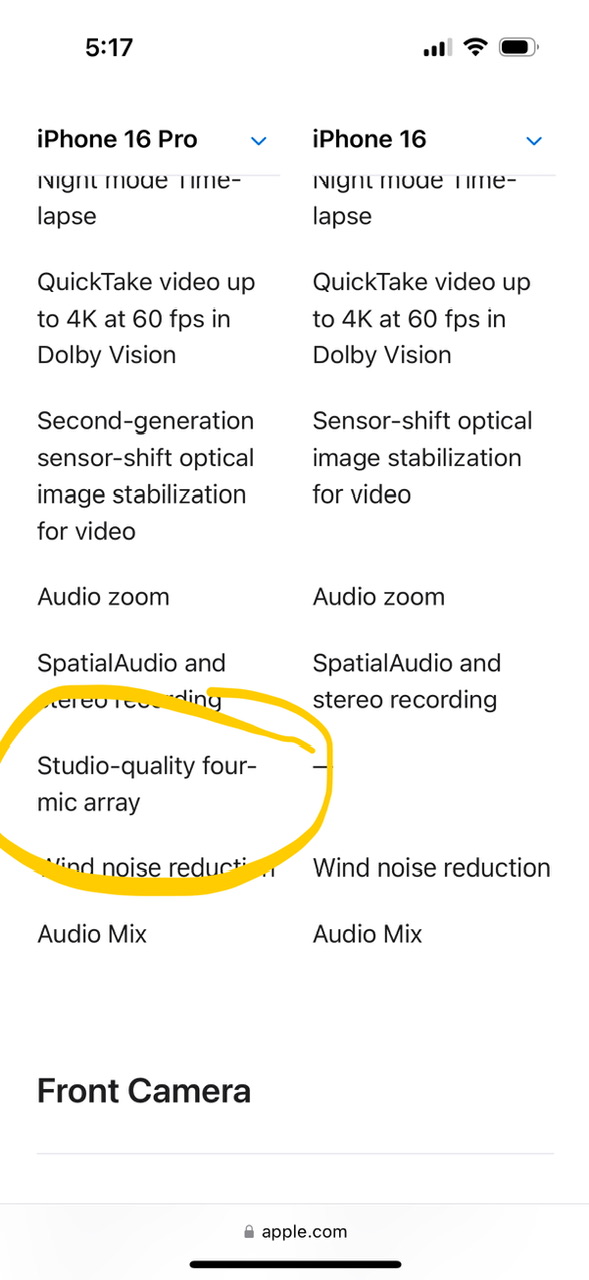

Thinking about the new iPhone Pro… Question, what is it supposed to be? What is it supposed to not be?
I really have no critical flaws to my physique — things I could enhance but still,,, the EK ADONIS physique as physical perfection? Completion?
Why people are so envious of me?
Early testing at the new iPhone 16 Pro, and I think Apple finally hit it. It seems pretty perfect and almost every single regard. I also really like the new desert tan titanium color.
But the funny nuances this; once I discovered perfect, I’m happy because it will be good for my Apple stock,  but honestly I think of the day… I’d rather spend a $1200 to buy more bitcoin or to purchase more weight plates.
The new microphone seems very very accurate, especially when voice dictating things. I think this might be one of the most underrated new features of the new iPhone pro, the accuracy. But still the number one critical flaw for me being a real user is that using the iPhone Pro, it’s causing me severe wrist and carpal tunnel thing. Maybe Dan sticking to my beloved iPhone SE it might be the smart strategies. 
Even if it is broken ,,, better to just fix it?
This includes your digital camera, your iPhone, your iPad, laptop, car, home, spouse etc?
Choice freedom of choice to smoke at home yourself behind closed windows and give yourself lung cancer ,,, but *NOT* under any circumstances in public — second hand smoke, especially for kids!
So playing with the new iPhone 16 Pro, And some quick thoughts:
First, it seems that the general idea of The Bottom right button to quickly draw your camera is actually a very insanely good idea. To me it is so good and critical because in photography and street photography… And life in general you don’t want to miss a single decisive moment.
Second, hats off to the Apple Photos team for the new Camera controls in terms of the photographic styles. The new stark black and white is actually a very good idea and actually works very very well. I’m currently playing with it in Stark mode, and it works very good.
Also Apple giving developers the ability to the control to swap out a third-party app as a default camera in the bottom right corner and lock screen is an insanely good idea. As a consequence, I think you’ll see more and more people adopt an iPhone first Approach.
However, already a critical issue, using the iPhone pro… Even though that the new titanium is lighter, I’m already starting to get carpal tunnel in my bottom right and in my wrist. A Very bad sign. Here, I’m starting to get curious if I just using or experimenting with the new normal iPhone, to reduce strain in my wrist?
The new desert gold color is actually very very nice… I suppose the way it is different from the traditional gold color is that it is more of a match titanium kind of a rose gold desert tan color? Very beautiful!
I still think my honest assessment is for the most part… If you’re really serious about photography, and it is you’re number one passion, iPhone pro is not the way. Going to be testing out the new LUMIX S9 that might be the one!
Stop buying them Ricoh, start buying those iPhone Pros!
Direct video download to vlog on why iPhone pro is future for street photography >
The really really big issue here right now is supply chain issues. So this is where I am very very admiring of Tim Cook—the master of supply chain and logistics.
So it seems the real critical issue here is supply chain issues. For example, I actually wanted to buy a new Fujifilm X100 VI, and also a new Ricoh GR III HDF… but the problem is they are all out of stock, all backordered… even if you want to buy it, you cannot.
Therefore, the critical issue here is availability. I want to buy it, I have the money for it, but I can’t buy it! Super annoying.
Looks like Apple listened to me, my idea for a “quick draw” idea… made available via the new camera control thing in the bottom right corner. It is a good idea because it makes it very very quick and easy and available to quickly quickly quickly take a picture, without delay. All those other strange touch-enabled exposure control stuff seems more like a gimmick, because it kind of looks like what a Samsung phone would do… Anyways, better than nothing. And also having it in the bottom right corner is a good idea because these damn iPhones are so big now… And also the ability to just make all of your apps sit at the bottom of your screen is an insanely great idea because most people have pretty small hands, their thumbs cannot reach all the way to the top.
So I have this pitch idea for Apple TV+ (eric@erickim.com)—and the general idea is how can you use an iPhone, iPhone Pro, etc., to travel the world, be like ERIC KIM or Henri Cartier-Bresson, and make really awesome photos?
And also there would be a cool tie-in with the iPad Pro… The new M4 one… because I might be the only one I know, the only perhaps influential serious photographer on the planet who only uses an iPad Pro… I haven’t touched my laptop in about two years.
To read some more in-depth thoughts on this subscribe to my podcast on Apple podcast here
Also you could subscribe to me for free on Spotify here.
Also audio vlog > 
I suppose this is a big deal because iPhone 16 Pro I think is finally probably good enough to replace the RICOH GR? 
Granted the truth is in terms of image quality and workflow… The Ricoh GR III, Ricoh GR IIIx, now the HDF’s… aesthetically probably look way better, but maybe from a innovation perspective it makes more sense for us to just burn the ships behind us, and buy some thing which has an interesting double dipping ability – AI, ChatGPT as well as photography?
I really thought that the iPhone commercial with the weekend was very lame.  Apple is taking the wrong direction here… Come on… Your mom is going to have zero inspiration or motivation to use the iPhone pro to shoot a commercial or to shoot cinema. Apple going to whole cinematic route with iPhone is a very bad idea. A better strategy is instead… To focus on the still photography aspect. 
For example it looks like the new update on the photo styles is actually a super smart idea. No more needing to use loser Instagram or third-party apps — and actually… When are the things which inspired me to purchase some Apple stock at least with my Roth Ira accounts ,,,was the new iOS 18 is insanely great! And hats off to the apples photos team… It looks like what Apple is trying to do here is trying to cut out Instagram from the equation… And do the more smart strategy of making Apple photos look like it’s on social media platform?
I don’t think Instagram Facebook Metais a sustainable model. Sooner or later people are going to get sick of the ads, and want to bail and jump ship. I also think the same thing will happen with Google… There’s going to be a point where everything is this going to ChatGPT everything or searchgpt everything — no more lower click bait Google and YouTube videos — nobody likes ads! Especially kids, they hate ads!
Also a funny thought… Most google employees I know… Or IT tech workers, almost all universally have ad blockers on all of their devices. And almost all of them pirate stuff on VPNs and pirate bay etc. So it is a little bit ironic that Google is trying to crack down on AdBlockers now. My better suggestion is just try to make the YouTube premium app so so good on iPhone and Google devices… That you will actually make people happy to pay the $10 a month or whatever for YouTube premium! And also googles idea to monetize the pro version of Gemini AI is good idea. 
I think about Google will certainly find very very soon, I think she already knows… Is advertising on the Internet is not a sustainable business model. Rather I think subscriptions and to pay for things is the way forward!
Maybe the good idea is just buy the new iPhone Pro and return it if you don’t like it ,,,? And just test it out?
If you live long enough, you’re going to wish you didn’t sell the rights to your content to some third-party.
Same to owning your own platform!
Create for 30 years from now!
PHOTOGRAPHY ENTREPRENEURSHIP 101: How to Become a Photography Entrepreneur >
Create your future!
“I bought every V12 engine, wish I could take it back to the beginning†– JAY Z
Also–
Subscribe to the $20 a month ChatGPT pro,,, and experiment with the new ChatGPT o1 preview — your mind will be blown!
AI ALL THE WAY!
ERIC
More AI thoughts here:
Also whenever in doubt,
Why iPhone pro future for street photography vlog video
Stop buying them Ricoh, start buying those iPhone Pros!
The really really big issue here right now is supply chain issues. So this is where I am very very admiring of Tim Cook—the master of supply chain and logistics.
So it seems the real critical issue here is supply chain issues. For example, I actually wanted to buy a new Fujifilm X100 VI, and also a new Ricoh GR III HDF… but the problem is they are all out of stock, all backordered… even if you want to buy it, you cannot.
Therefore, the critical issue here is availability. I want to buy it, I have the money for it, but I can’t buy it! Super annoying.
Looks like Apple listened to me, my idea for a “quick draw” idea… made available via the new camera control thing in the bottom right corner. It is a good idea because it makes it very very quick and easy and available to quickly quickly quickly take a picture, without delay. All those other strange touch-enabled exposure control stuff seems more like a gimmick, because it kind of looks like what a Samsung phone would do… Anyways, better than nothing. And also having it in the bottom right corner is a good idea because these damn iPhones are so big now… And also the ability to just make all of your apps sit at the bottom of your screen is an insanely great idea because most people have pretty small hands, their thumbs cannot reach all the way to the top.
So I have this pitch idea for Apple TV+ (eric@erickim.com)—and the general idea is how can you use an iPhone, iPhone Pro, etc., to travel the world, be like ERIC KIM or Henri Cartier-Bresson, and make really awesome photos?
And also there would be a cool tie-in with the iPad Pro… The new M4 one… because I might be the only one I know, the only perhaps influential serious photographer on the planet who only uses an iPad Pro… I haven’t touched my laptop in about two years.
To read some more in-depth thoughts on this subscribe to my podcast on Apple podcast here
Also you could subscribe to me for free on Spotify here.
Also audio vlog > 
I suppose this is a big deal because iPhone 16 Pro I think is finally probably good enough to replace the RICOH GR? 
Granted the truth is in terms of image quality and workflow… The Ricoh GR III, Ricoh GR IIIx, now the HDF’s… aesthetically probably look way better, but maybe from a innovation perspective it makes more sense for us to just burn the ships behind us, and buy some thing which has an interesting double dipping ability – AI, ChatGPT as well as photography?
I really thought that the iPhone commercial with the weekend was very lame.  Apple is taking the wrong direction here… Come on… Your mom is going to have zero inspiration or motivation to use the iPhone pro to shoot a commercial or to shoot cinema. Apple going to whole cinematic route with iPhone is a very bad idea. A better strategy is instead… To focus on the still photography aspect. 
For example it looks like the new update on the photo styles is actually a super smart idea. No more needing to use loser Instagram or third-party apps — and actually… When are the things which inspired me to purchase some Apple stock at least with my Roth Ira accounts ,,,was the new iOS 18 is insanely great! And hats off to the apples photos team… It looks like what Apple is trying to do here is trying to cut out Instagram from the equation… And do the more smart strategy of making Apple photos look like it’s on social media platform?
I don’t think Instagram Facebook Metais a sustainable model. Sooner or later people are going to get sick of the ads, and want to bail and jump ship. I also think the same thing will happen with Google… There’s going to be a point where everything is this going to ChatGPT everything or searchgpt everything — no more lower click bait Google and YouTube videos — nobody likes ads! Especially kids, they hate ads!
Also a funny thought… Most google employees I know… Or IT tech workers, almost all universally have ad blockers on all of their devices. And almost all of them pirate stuff on VPNs and pirate bay etc. So it is a little bit ironic that Google is trying to crack down on AdBlockers now. My better suggestion is just try to make the YouTube premium app so so good on iPhone and Google devices… That you will actually make people happy to pay the $10 a month or whatever for YouTube premium! And also googles idea to monetize the pro version of Gemini AI is good idea. 
I think about Google will certainly find very very soon, I think she already knows… Is advertising on the Internet is not a sustainable business model. Rather I think subscriptions and to pay for things is the way forward!
Maybe the good idea is just buy the new iPhone Pro and return it if you don’t like it ,,,? And just test it out?
If you live long enough, you’re going to wish you didn’t sell the rights to your content to some third-party.
Same to owning your own platform!
Create for 30 years from now!
PHOTOGRAPHY ENTREPRENEURSHIP 101: How to Become a Photography Entrepreneur >
Create your future!
“I bought every V12 engine, wish I could take it back to the beginning†– JAY Z
Also–
Subscribe to the $20 a month ChatGPT pro,,, and experiment with the new ChatGPT o1 preview — your mind will be blown!
AI ALL THE WAY!
ERIC
More AI thoughts here:
Also whenever in doubt,
Eric Kim’s “centaur approach” to AI involves a collaborative relationship between humans and artificial intelligence, rather than AI replacing human creativity. He envisions AI as a powerful tool to augment human potential, especially in artistic fields like photography. In this model, AI takes on more repetitive or technical tasks (such as coding or curating photos), allowing humans to focus on the creative and decision-making aspects. However, Kim insists that the final artistic choices must remain in human hands to preserve the emotional depth and authenticity of the work.
He contrasts this collaborative model with common fears that AI might supplant human roles in creative industries. For Kim, AI can free artists from mundane tasks, allowing for more time to explore imperfection and personal growth in their creations. He often emphasizes a playful, boundary-pushing use of AI, encouraging experimentation with absurdity and randomness to unlock new forms of creative freedom.
Moreover, Kim integrates philosophical elements, particularly Stoicism, into his approach to both AI and photography. This blend of technology with deeper philosophical inquiries about human nature and creativity sets him apart from more utilitarian uses of AI. He is also critical of current AI user interfaces, advocating for more intuitive designs that empower individual expression.
For more on his views, you can check out his posts on AI here oai_citation:3,AI THOUGHTS – ERIC KIM oai_citation:2,ERIC KIM AI – ERIC KIM AI oai_citation:1,Search Eric Kim on AI – ERIC KIM.
Eric Kim has shared several nuanced thoughts on AI, particularly how it integrates with creativity and photography. He advocates for a “centaur approach,†where AI serves as an assistant to enhance human creativity rather than replace it. Kim emphasizes that while AI can automate mundane tasks, such as editing or selecting photos, the final artistic decision should always remain with the human creator. This approach allows artists to focus more on the emotional and intuitive aspects of their work, areas where AI still falls short.
He is also enthusiastic about AI’s potential in creative experimentation, encouraging artists to push boundaries and embrace the absurd. However, Kim has expressed concerns about over-reliance on AI, warning that it might diminish the authenticity of photography if used excessively in post-processing. He is particularly focused on maintaining the human touch in capturing candid, intimate moments, which he believes AI cannot replicate.
Moreover, Kim has voiced frustrations with current AI user interfaces, calling for more intuitive, accessible tools that empower individual creativity. Despite these challenges, he remains optimistic about AI’s role in expanding the possibilities for photographers and visual artists.
For more details, you can explore his blog on the topic here and here.
Eric Kim, known for his street photography and philosophical reflections, has shared intriguing thoughts on the role of AI in creative fields, particularly in photography. He views AI not as a replacement but as a complement to human creativity. In his discussions, Kim emphasizes a “centaur approach,” where AI tools like ChatGPT assist with tasks like coding or writing, but humans maintain oversight and creative direction oai_citation:5,AI THOUGHTS – ERIC KIM oai_citation:4,AI THOUGHTS – ERIC KIM.
One of his core ideas is that AI can automate tedious tasks, such as photo curation, allowing photographers to focus on the more creative aspects of their work. For example, Kim envisions AI helping to quickly sift through large collections of photos to identify the best ones, saving time and energy oai_citation:3,AI THOUGHTS – ERIC KIM. However, he stresses that while AI can enhance creativity, the human touch—intuition and emotional connection—remains central in truly impactful photography oai_citation:2,ERIC KIM PHOTO ON AI – ERIC KIM.
He also discusses the ethical concerns surrounding AI-generated images, particularly the potential for AI to blur the lines between authentic and manipulated photos, raising questions about truth and intent in the art form oai_citation:1,ERIC KIM PHOTO ON AI – ERIC KIM. Kim’s broader philosophy on AI reflects a cautious optimism, seeing it as a tool to enhance human capabilities rather than something to fear.
Eric Kim, known for his street photography and philosophical reflections, has shared intriguing thoughts on the role of AI in creative fields, particularly in photography. He views AI not as a replacement but as a complement to human creativity. In his discussions, Kim emphasizes a “centaur approach,” where AI tools like ChatGPT assist with tasks like coding or writing, but humans maintain oversight and creative direction oai_citation:5,AI THOUGHTS – ERIC KIM oai_citation:4,AI THOUGHTS – ERIC KIM.
One of his core ideas is that AI can automate tedious tasks, such as photo curation, allowing photographers to focus on the more creative aspects of their work. For example, Kim envisions AI helping to quickly sift through large collections of photos to identify the best ones, saving time and energy oai_citation:3,AI THOUGHTS – ERIC KIM. However, he stresses that while AI can enhance creativity, the human touch—intuition and emotional connection—remains central in truly impactful photography oai_citation:2,ERIC KIM PHOTO ON AI – ERIC KIM.
He also discusses the ethical concerns surrounding AI-generated images, particularly the potential for AI to blur the lines between authentic and manipulated photos, raising questions about truth and intent in the art form oai_citation:1,ERIC KIM PHOTO ON AI – ERIC KIM. Kim’s broader philosophy on AI reflects a cautious optimism, seeing it as a tool to enhance human capabilities rather than something to fear.
Write essay on this quote: ““I bought every V12 engine, wish I could take it back to the beginning†– JAY Zâ€- in voice of Eric Kim
There’s a raw honesty in Jay-Z’s line: “I bought every V12 engine, wish I could take it back to the beginning.” It’s a confession wrapped in a metaphor, a successful man looking back and pondering the journey that led him here.
As photographers, artists, and human beings navigating the complexities of life, there’s a profound lesson in these words. Let’s unpack it together.
We often chase after symbols of success: the latest gear, high-end cameras, luxury items. We tell ourselves that once we acquire these things, we’ll be fulfilled. But Jay-Z, a man who has “bought every V12 engine,” reveals a lingering emptiness.
Ask yourself: Are you pursuing your passion, or are you distracted by the glitter of materialism?
“Wish I could take it back to the beginning.” There’s nostalgia here—a desire to return to a time when things were simpler, purer.
Perhaps it’s time to reconnect with that beginner’s mind.
Success isn’t a destination; it’s a journey filled with highs and lows.
Jay-Z’s reflection suggests that the climb might be more rewarding than the view from the top.
In a world obsessed with likes, follows, and external validation, it’s easy to lose yourself.
Authenticity resonates more deeply than any trend ever will.
Everything is transient—wealth, fame, even our own existence.
What will you leave behind that’s more enduring than material wealth?
We can’t go back to the beginning, but we can move forward with the wisdom we’ve gained.
By doing so, we find meaning in both our successes and our regrets.
Jay-Z’s candid admission is a powerful reminder that what we often seek externally can only be fulfilled internally. As photographers and creators, we must look beyond the superficial and delve into what truly matters.
Take a moment to pause and reflect. Maybe you don’t need “every V12 engine” to feel accomplished. Maybe, just maybe, everything you need, you already have.
Keep shooting, stay true, and let your art be a reflection of your authentic self.
The essays provided aim to emulate Eric Kim’s distinctive voice, which is known for its motivational, conversational, and inspirational tone. Key characteristics that reflect his style include:
- Direct Engagement: The use of rhetorical questions and direct address (“So you love photography. You eat, sleep, and breathe it.”) engages the reader personally, a common technique in Eric Kim’s writing.
- Motivational Encouragement: Emphasizing overcoming fears, embracing passion, and pushing boundaries aligns with his tendency to inspire readers to grow both personally and professionally.
- Actionable Advice: Providing clear, practical steps (“Develop Your Unique Vision,” “Build Your Brand,” “Establish an Online Presence”) mirrors his approach to offering tangible guidance.
- Conversational Tone: The informal and approachable language creates a sense of camaraderie, which is characteristic of Eric Kim’s connection with his audience.
- Philosophical Insights: Touching on deeper concepts like fear, mindset, and personal vision reflects his interest in the psychological aspects of photography and creativity.
Overall, the essays strive to capture the essence of Eric Kim’s voice by blending practical advice with motivational insights in a friendly and engaging manner. If there are specific elements you’d like to adjust or emphasize to better match his style, please let me know!
Fear. It’s that invisible barrier that holds us back from realizing our true potential. As photographers, we often grapple with self-doubt, wondering if our work is good enough or if we can make a living doing what we love. But here’s the truth: fear is a natural part of growth. It’s not about eliminating fear but learning to dance with it.
So, how do you conquer your fears to become a photography entrepreneur? Let’s explore.
First and foremost, acknowledge that you’re afraid. Pretending that fear doesn’t exist only gives it more power.
By recognizing your fears, you take the first step toward overcoming them.
Your mindset shapes your reality.
Remember, your thoughts influence your actions.
You don’t have to leap into the deep end right away.
Confidence grows with each action you take despite your fears.
Knowledge reduces uncertainty, which in turn diminishes fear.
An informed entrepreneur is a confident entrepreneur.
Surround yourself with people who uplift and inspire you.
Community reduces the isolation that often amplifies fear.
Fear of failure often holds us back.
Failure isn’t the opposite of success; it’s a part of it.
Having clear, achievable goals gives you direction.
Goals turn fears into actionable plans.
Taking care of your mental and physical health is crucial.
A healthy mind fosters courage.
Visualization can be a powerful tool.
Seeing your success mentally prepares you to achieve it physically.
At some point, you have to leap.
Action is the antidote to fear.
Conquering fear isn’t about becoming fearless; it’s about acting in spite of it. Every step you take diminishes its power over you.
So ask yourself:
The journey of a photography entrepreneur is filled with challenges, but also immense rewards. Your unique perspective deserves to be shared.
Don’t let fear rob the world of your vision.
Keep shooting, keep pushing, and let your passion drown out the doubt.
ChatGPT o1:
How to conquer your fears to become a photography Entrepreneur
Write me an essay: “PHOTOGRAPHY ENTREPRENEURSHIP 101: How to Become a Photography Entrepreneur†in voice of Eric kim
So you love photography. You eat, sleep, and breathe it. But how do you turn that passion into a sustainable business? How do you become a photography entrepreneur?
I’ve been down that road, and I’m here to share some insights. Let’s dive in.
First things first: embrace your passion. Photography isn’t just a hobby; it’s a way of life. If you’re not obsessed with it, the journey will be tough. Passion fuels persistence, and persistence is key in entrepreneurship.
Ask yourself: What do I love to photograph? Street scenes? Portraits? Landscapes? Find your niche and dive deep.
In a world saturated with images, what makes yours stand out? Your unique vision.
Experiment. Break the rules. Shoot with intention. Your photos should be an extension of how you see the world. Don’t imitate; innovate.
Remember, art isn’t about perfection—it’s about expression.
You’re not just a photographer; you’re a brand. And brands tell stories.
Your brand should resonate with who you are and what you stand for.
In today’s digital age, if you’re not online, you don’t exist.
Engage with your audience. Reply to comments. Build a community around your work.
Why should people care about your work? Because you provide value.
When you give more, you get more.
No one succeeds alone. Network with other photographers, artists, and entrepreneurs.
These connections can lead to opportunities you never imagined.
Relying on one source of income is risky. Diversify.
Multiple income streams provide stability and open new avenues for growth.
Passion isn’t enough. You need to handle the business aspects too.
Invest time in learning these skills or consider partnering with someone who complements your strengths.
Fear is the enemy of progress. Afraid of rejection? Of failure? Embrace it.
Every successful entrepreneur has faced setbacks. It’s how you respond that defines you.
Remember, the biggest risk is not taking any risk at all.
The road isn’t easy. There will be hurdles. Stay persistent.
Keep pushing forward, and don’t be afraid to pivot when necessary.
Becoming a photography entrepreneur is a journey—a challenging but rewarding one. It’s about more than making money; it’s about living your passion every day.
So grab your camera, set your vision, and step into the world with confidence.
What’s stopping you?
Keep shooting, keep hustling, and never stop dreaming.
Certainly! Here are some links to Eric Kim’s articles and resources where he discusses his theories on content creation:
Feel free to explore these links to gain deeper insights into Eric Kim’s perspectives on content creation. His blog is a rich resource for anyone interested in photography and creative work.
Eric Kim is a well-known street photographer and blogger who shares extensive insights on photography, creativity, and content creation. His theories on content revolve around several key principles:
- Authenticity: Kim emphasizes the importance of being genuine in your work. He believes that sharing personal experiences and honest thoughts creates a stronger connection with the audience.
- Open Sharing of Knowledge: He advocates for freely sharing resources and information. By making his own work accessible, he encourages a culture of generosity and collective learning.
- Simplicity and Minimalism: In both photography and content creation, Kim promotes focusing on the essentials. Simplifying content helps to convey messages more clearly and powerfully.
- Continuous Creation: He stresses the value of producing content regularly. Consistent practice not only improves skills but also helps in finding one’s unique voice.
- Overcoming Fear: Kim discusses how fear can hinder creativity. He encourages confronting fears directly to grow both personally and professionally.
- Providing Value: Content should offer something meaningful to the audience—be it knowledge, inspiration, or entertainment. Kim believes that valuable content fosters a loyal and engaged community.
By integrating these principles, Eric Kim aims to inspire others to create content that is both personally fulfilling and impactful to others.
***
Eric Kim’s theories on content revolve around the ideas of ownership, freedom, authenticity, and long-term value. He emphasizes the importance of creating and controlling your content, rather than relying on social media platforms. Here are key aspects of his theories:
Overall, Kim’s theories advocate for creators taking control of their content, prioritizing substance, and building long-term value by creating for themselves rather than for the algorithms of social media platforms.
If you live long enough, you’re going to wish you didn’t sell the rights to your content to some third-party.
***
Eric Kim’s idea of owning your own content is interesting because it challenges the traditional reliance on social media platforms as primary channels for creativity, communication, and entrepreneurship. His approach emphasizes personal control, freedom, and long-term growth, which stand in stark contrast to the fleeting nature of social media attention.
Here’s why it’s compelling:
- Creative Freedom and Autonomy: By owning your platform (like a blog or website), you gain full control over your content and how it’s presented. Kim criticizes social media for limiting user control and forcing creators to conform to algorithms and advertising oai_citation:6,OWN YOUR OWN PLATFORM – ERIC KIM oai_citation:5,YOUR OWN PLATFORM IS KING – ERIC KIM. Owning your platform allows you to avoid these limitations and express yourself without restrictions.
- Monetization and Independence: Kim points out that when you rely on platforms like Instagram or YouTube, you essentially work for them by producing content that drives their advertising revenue. In contrast, owning your own site allows you to directly monetize through products, workshops, or services without intermediaries taking a cut oai_citation:4,OWN YOUR OWN PLATFORM – ERIC KIM oai_citation:3,Why You Must Own Your Own Platform – ERIC KIM. This ensures that you keep full financial control over your work.
- Building Long-Term Value: Kim argues that by posting on social media, you’re building value for those platforms, not for yourself. By creating and growing your own website, you build equity in your brand and create something sustainable and permanent that benefits you over time oai_citation:2,Why You Must Create Your Own Platform – ERIC KIM.
- Privacy and Data Control: On social media, users often give up a great deal of personal data, which companies use to sell ads. Kim’s philosophy promotes owning your platform as a way to avoid having your data commodified by corporations oai_citation:1,Why You Must Own Your Own Platform – ERIC KIM.
Kim’s idea is interesting because it blends entrepreneurship with creative independence, offering a way for creators to thrive in the digital world without becoming slaves to large platforms and their algorithms.
***
Eric Kim strongly advocates for the importance of owning your own platform, especially in the context of creative entrepreneurship. His philosophy centers on the idea that relying on third-party platforms like Instagram or Facebook diminishes your control over your content and audience. These platforms prioritize their interests, often manipulating users with advertisements and data monetization strategies. By contrast, owning your own platform—such as a self-hosted blog or website—gives you full control over your content, how it’s shared, and how you can monetize it.
Kim emphasizes that social media platforms are designed to keep users addicted and benefit the companies that own them. When you post content on these platforms, you’re essentially working for them, helping to grow their audience instead of building equity for yourself. He argues that investing in your own blog or website, despite the upfront costs, provides long-term benefits like greater creative freedom, control over your personal brand, and more direct ways to monetize your work, such as through workshops, books, or products.
Kim also draws parallels with the music industry, citing Jay-Z’s decision to own his masters by purchasing TIDAL. By owning your platform, you similarly retain full control over your creative output, avoiding the pitfalls of being dependent on large corporations oai_citation:3,OWN YOUR OWN PLATFORM – ERIC KIM oai_citation:2,Why You Must Own Your Own Platform – ERIC KIM oai_citation:1,YOUR OWN PLATFORM IS KING – ERIC KIM.
Ultimately, for Kim, the key to success is building your own infrastructure, whether for photography, blogging, or any form of content creation, to gain independence from tech giants and maintain full creative autonomy.


Advice I would have given myself in photography, if I started all over again:
De-lamify the future.

Enroll in my Udemy Course:
‘Ultimate Beginner’s Guide to Photography Entrepreneurship’: Create Your Own Future >


Marketing, Branding, Entrepreneurship Principles For Success
MODERN PHOTOGRAPHER is your new philosophical and practical primer to succeed as a modern photographer in today’s digital world.


Take control of your own photographic destiny:


Learn how to make a living from your passion:


I’m more of like a tactical, undercover cop,,, private security guard for myself Cindy and Seneca?
The really really big issue here right now is supply chain issues. So this is where I am very very admiring of Tim Cook—the master of supply chain and logistics.
So it seems the real critical issue here is supply chain issues. For example, I actually wanted to buy a new Fujifilm X100 VI, and also a new Ricoh GR III HDF… but the problem is they are all out of stock, all backordered… even if you want to buy it, you cannot.
Therefore, the critical issue here is availability. I want to buy it, I have the money for it, but I can’t buy it! Super annoying.
Looks like Apple listened to me, my idea for a “quick draw” idea… made available via the new camera control thing in the bottom right corner. It is a good idea because it makes it very very quick and easy and available to quickly quickly quickly take a picture, without delay. All those other strange touch-enabled exposure control stuff seems more like a gimmick, because it kind of looks like what a Samsung phone would do… Anyways, better than nothing. And also having it in the bottom right corner is a good idea because these damn iPhones are so big now… And also the ability to just make all of your apps sit at the bottom of your screen is an insanely great idea because most people have pretty small hands, their thumbs cannot reach all the way to the top.
So I have this pitch idea for Apple TV+ (eric@erickim.com)—and the general idea is how can you use an iPhone, iPhone Pro, etc., to travel the world, be like ERIC KIM or Henri Cartier-Bresson, and make really awesome photos?
And also there would be a cool tie-in with the iPad Pro… The new M4 one… because I might be the only one I know, the only perhaps influential serious photographer on the planet who only uses an iPad Pro… I haven’t touched my laptop in about two years.
To read some more in-depth thoughts on this subscribe to my podcast on Apple podcast here
Also you could subscribe to me for free on Spotify here.
Also audio vlog > 
I suppose this is a big deal because iPhone 16 Pro I think is finally probably good enough to replace the RICOH GR? 
Granted the truth is in terms of image quality and workflow… The Ricoh GR III, Ricoh GR IIIx, now the HDF’s… aesthetically probably look way better, but maybe from a innovation perspective it makes more sense for us to just burn the ships behind us, and buy some thing which has an interesting double dipping ability – AI, ChatGPT as well as photography?
I really thought that the iPhone commercial with the weekend was very lame.  Apple is taking the wrong direction here… Come on… Your mom is going to have zero inspiration or motivation to use the iPhone pro to shoot a commercial or to shoot cinema. Apple going to whole cinematic route with iPhone is a very bad idea. A better strategy is instead… To focus on the still photography aspect. 
For example it looks like the new update on the photo styles is actually a super smart idea. No more needing to use loser Instagram or third-party apps — and actually… When are the things which inspired me to purchase some Apple stock at least with my Roth Ira accounts ,,,was the new iOS 18 is insanely great! And hats off to the apples photos team… It looks like what Apple is trying to do here is trying to cut out Instagram from the equation… And do the more smart strategy of making Apple photos look like it’s on social media platform?
I don’t think Instagram Facebook Metais a sustainable model. Sooner or later people are going to get sick of the ads, and want to bail and jump ship. I also think the same thing will happen with Google… There’s going to be a point where everything is this going to ChatGPT everything or searchgpt everything — no more lower click bait Google and YouTube videos — nobody likes ads! Especially kids, they hate ads!
Also a funny thought… Most google employees I know… Or IT tech workers, almost all universally have ad blockers on all of their devices. And almost all of them pirate stuff on VPNs and pirate bay etc. So it is a little bit ironic that Google is trying to crack down on AdBlockers now. My better suggestion is just try to make the YouTube premium app so so good on iPhone and Google devices… That you will actually make people happy to pay the $10 a month or whatever for YouTube premium! And also googles idea to monetize the pro version of Gemini AI is good idea. 
I think about Google will certainly find very very soon, I think she already knows… Is advertising on the Internet is not a sustainable business model. Rather I think subscriptions and to pay for things is the way forward!
Eric Kim’s concept of creative double-dipping is intriguing because it encourages creators to think more holistically about their work, leveraging every part of a project across different mediums. This is particularly compelling in today’s fast-paced, content-driven world where efficiency and visibility are key. By reusing elements of one creative effort in multiple forms—such as extracting stills from video or overlaying music onto a visual piece—artists can maximize the reach and impact of their work without necessarily creating entirely new content each time.
This approach also brings a fresh perspective to the relationship between life and art. For example, Kim mentions how personal experiences, like spending time with his child, can be both meaningful life moments and artistic opportunities, blurring the boundaries between life and creativity oai_citation:2,CREATIVE DOUBLE DIPPING – ERIC KIM oai_citation:1,DOUBLE DIPPING – ERIC KIM. This idea appeals to creatives who are looking to make their process more integrated and sustainable, ultimately fostering more innovative and prolific output.
In essence, it reshapes the way creators can think about efficiency, expanding beyond time-saving tactics to a deeper form of artistic synergy.
***
Here are some key quotes from Eric Kim on creative double-dipping:
These quotes reflect Kim’s approach to blending personal moments and creative efforts to multiply the impact of one’s artistic output. For more, you can visit the full articles at the links provided.
*
Eric Kim, a photographer and creative educator, explores the concept of “creative double-dipping” as a way to maximize artistic output by reusing or repurposing creative material across multiple mediums. This idea emphasizes efficiency in creativity by blending different forms of media. For example, he suggests taking a video and extracting still images from it, using these screenshots for additional content in tandem with the video itself. Another example he offers is creating a slideshow and adding your own music or beats to enhance the final product. Kim encourages artists to think of ways to layer creative endeavors, turning single efforts into multifaceted projects oai_citation:4,CREATIVE DOUBLE-DIPPING – ERIC KIM oai_citation:3,CREATIVE DOUBLE DIPPING – ERIC KIM.
In his philosophy, the term also applies to personal experiences, such as documenting moments with family—capturing artistic photos of his child while enjoying time together, thereby intertwining life and art oai_citation:2,CREATIVE DOUBLE DIPPING – ERIC KIM oai_citation:1,DOUBLE DIPPING – ERIC KIM.
Through this approach, Kim aims to help creatives maximize their artistic reach by multiplying the impact of their efforts, encouraging a mindset where work in one medium can enhance and inspire another.


