I had a thought the other day: what if smartphones had the same image quality as full-frame DSLR’s? How would this change photography, and how we shoot?
₿LOG
I had a thought the other day: what if smartphones had the same image quality as full-frame DSLR’s? How would this change photography, and how we shoot?

Dear friend,
It seems that we as photographers have this overly-obsessive fascination and obsession with “image quality†— through how sharp our images are, how well “bokeh†renders, the depth-of-field or “3d-ness†of images, how much the colors “popâ€, or things such as “micro-contrast†(not even sure what this is, but I hear it mentioned a lot).
But my main question is this: why is image quality important— and is it important at all?

Okay, I just got off a 16-hour direct flight from Dubai to San Francisco. Yeah, I am pretty jetlagged (slept last night at 7:30pm, woke up today at 1:30am). Anyways, I am starting to power up with a coffee at Philz in Berkeley, and wanted to share some (very brief) thoughts on the Fujifilm X-Pro 2 for street photography.

I’m currently here in Dubai, and had a chance to check out the Fujifilm X70. TLDR; the X70 is a compact digital camera with the same sensor as the Fujifilm X100T, and a 28mm f/2.8 (“full frame equivalentâ€) lens.

Dear streettogs, I am very excited to announce the new edition of the “Henri” Neck Strap (Mark II). This new version is made from a darker-leather, similar to the color of dark mahogany wood or a good cup of coffee.

Dear friend,
I wanted to give you a new “no bullshit” review of the Ricoh GR II (new version, Mark II). I can honestly say that the previous Ricoh GR is the best value camera for street photography (read my review).

Dear friend,
It is 7:20am in New Orleans, and I just downed a “Miss Tracy’s Addiction†(Double espresso, Cayenne pepper, Thai coconut milk) at Addiction Coffee and I’m feeling good. Had a nice chat with Dave, the barista here, and ready to do some writing to share with you some ideas.
Just as a random note, I was thinking about this article for the last day, and woke up super-early for you (6:30am after sleeping at 1am), because I felt it could be of use for you.
I’m currently staying at an Airbnb with my friend Todd and Neil, and Chris (new friend, who is also a workshop participant at my week-long street photography workshop here in New Orleans). All three of them have the new Sony A7RII (the 40+ megapixel monster), with Neil and Chris bringing both of them.

I’m still afflicted with GAS (Gear Acquisition Syndrome). I want new shit all the time. I’m always dissatisfied with the technology I have (smartphone, tablet, laptop, camera, espresso machine) as well as my car, clothes, standard of living, quality of my food, etc.
What causes this constant treadmill of dissatisfaction?
There is a disease that Nassim Taleb calls “neomania” in his book, Antifragile. It’s probably my favorite modern book (I’ve re read it about 5 times, cover to cover). The concept of neomania is that we love the new for the sake of the new.
For example, whenever the new iPhone comes out, everyone instantly becomes dissatisfied with their old iPhone, and want the newest and greatest. And they forget how happy they were when they bought their “old” iPhone, and how slick and advanced it was when it first came out.
This is a psychological problem, that Daniel Kehnnamen explores in his book, “Thinking fast, and slow”. The problem with humans is that we notice differences more than similarities.
For example, when it comes to digital cameras, we always point out the differences (megapixel count, body style, sensor) rather than the similarities (all cameras take photos at the end of the day). The difference between a Canon and Nikon is negligible at best, but people always want to separate themselves from “others.” It is sort of a tribe mentality, which is sad. At the end of the day, we are all photographers. Who gives a shit which cameras we use? It especially pisses me off when Leica shooters look down on Fuji shooters. Probably like how guys who wear Rolex watches look down on guys who wear Seikos.
So I have a new mental heuristic (rule of thumb) that I’m trying to follow: ignore differences, and pay attention to commonalities.
For example, we always make differences in terms of places we live. I always complain of living in Berkeley instead of San Francisco. But at the end of the day, they are more similar than dissimilar. They both have huge commonalities (hipster coffee shops, hipster people, good restaurants, a downtown area you can walk around). But I’m always dissatisfied because I feel like I’m “missing out” not living in SF. It’s the whole “FOMO” idea (fear of missing out); that I’m missing out on the “street photography scene” in SF by being stuck in Berkeley.
Similarly, there is always a debate of film vs digital. Honestly at the end of the day, just shoot whatever makes you happy. Film and digital do have differences, but at the end of the day, they’re far more similar than dissimilar (you make photos either way).
The same applies to cars. There are people who compare Nissan with Toyota and Honda, and people who compare BMW vs Mercedes and Audi. But people always focus on the tiny differences, rather than the commonalities. And at the end of the day, a Honda Civic isn’t much different than a Porsche 911 (they are both cars that have four wheels, are made out of metal, and take you from point “A” to point “B.”
We can also point out the same in fashion. Is there really a difference between wearing Nike sneakers versus Adidas sneakers? Or a difference between Louie Vuitton and Coach? If aliens came to earth and saw us humans comparing the differences, they would think we’re fucking idiots (which we are).
Even a huge debate (iPhone vs Android, or Mac vs PC); they’re much more similar than dissimilar (regardless of what fan boys want to say). I used to be so dependent on my MacBook Air, but when I got it stolen in Paris a month ago, I bought a cheap Windows 8 tablet laptop. Sure there were some small differences between them (I prefer the Mac), but I was still able to get all my work just fine.
So as a practical tip whenever you hear about some new camera rumored or being released, don’t ask your friends what’s new about it. Ask them: “What is similar about it?”
Another thing I think about: no matter how cool or slick a new camera may seem, one day (generally 2 years) it will seem outdated and shitty.
For example, whenever I see an old iPhone 4, or even an iPhone 5 it looks so tiny and outdated compared to the iPhone 6. Whenever I see older MacBooks (not Air versions), they look like they’re from the stone ages. Even when I see old Leica m9s, I remind myself of how much I lusted and craved for it. But now it looks so dated compared to the new Leica M240.
Do we really need more megapixels in our cameras, bigger sensors, better image quality, faster autofocus, high iso performance, and image stabilization?
Isn’t it incredible that some of the best photos taken in history were shot with ancient cameras (manual focus), with low-Iso film (iso 25-100), tiny viewfinders, and other limitations? In fact I think that these limitations of technology forced photographers to be more creative (to start using a flash, shooting in good light, or mastering their equipment). Whenever I hear someone complain that their camera is grainy at iso 6,400 or that they moan that their camera isn’t “full frame”, I want to slap them. Similarly, we complain that our cameras and equipment is too big and heavy. Have you ever tried to carry around a medium format or large format film camera?
Don’t get me wrong, I bitch and moan all the time. I think new cameras with new technology will help me be more creative. But the truth is having less technology in your cameras will force you to be more creative (I think the best photographers often shoot manual focus and with outdated film cameras). The more limited you are by your camera technology, the more you’re forced to be creative. It is a “creative constraint.”
I’m so damn picky with coffee too. I only like hipster espressos. But at the end of the day, coffee is more similar than dissimilar (caffeine is caffeine).
Same with food; I eat to live, I don’t live to eat. I need to stop wasting time on Yelp and Trip Advisor trying to find a new restaurant to “entertain my palette”. I need to realize at the end of the day, most restaurants are more similar than dissimilar. And who you decide to eat with is far more important than what or where you decide to eat.
I’m going to try being less picky in my life, have fewer preferences, and be grateful for what I have (rather than wanting the new, and better).
God grant me the serenity to appreciate what I have, and not bitch and moan about what I don’t have.

Dear friend,
I want to share a story with you. It is an important life lesson that I learned from Greg Lowe, my tennis coach from high school.
Okay let’s start from the very beginning. I was a sophomore (or perhaps freshman) in high school (Castro valley high in California), and I heard that there were tryouts for the tennis team. I’ve always (kind of) been interested in tennis, as my parents would play (or at least they had some old rackets in the closet). I remember as a kid, looking at these (unused) rackets in the closet, and wanting to pick it up and learn.
So anyways, I go to these tennis tryouts, and fail miserably. I can’t hit the ball to save my life, and I realized that I was out of my league. Some of these kids were able to hit the ball with so much beauty, form, and elegance — adding fancy topspin to the ball, able to serve without even looking, and pretty much dominate without even trying.
Dejected, I thought I would never be a good tennis player. How could I catch up in skill to all of these other guys, who had all these fancy tennis lessons (which were pretty fucking expensive)?
I don’t remember the details, but one of the assistant coaches (Greg Lowe, a retired police chief), offered the students who didn’t make the team, “Hey guys, if you want to improve yourselves and perhaps make the team next year, meet me at the courts this Saturday at 730am, and I will give you free lessons.â€
At first I thought, “fuck yeah‖ I would be able to get free lessons, work hard, and prove myself by making the team. I thought it was the opportunity of a lifetime, and I thought everyone else would jump on this offer.
So anyways on Friday morning, I peel myself out of bed at 7am (really early for a high school student), and made it to the courts by 730am. I was surprised to see that there were only about three of us in total. I thought to myself, “where are all the other kids, why aren’t they taking up this amazing and generous offer that coach Lowe offered?â€
Anyways, long story short, Greg Lowe trained us for that entire summer. There only ended up being around three of us in the long run, but through that summer I was able to hone my skills, work hard, and (without fail) make it to practice every Saturday morning, no matter how much alcohol I drank the night before with my friends. Funny story; there was one day that I was sleeping in on Saturday morning, and my friend (also another guy getting tennis lessons with coach Lowe) threw rocks at my window to wake my ass up.
Anyways, I end up making the team, and through the years, worked myself up from having zero skills in tennis, to being #1 varsity doubles on the team.
There were a lot of lessons that coach Lowe taught me about life through tennis, which I want to outline in this letter to you.
The first thing that shocked me from coach Lowe was that he played and instructed us with a wooden racket. It was a really old thing, I never had seen anything like it. While all of us young guns were obsessed with getting the newest and greatest tennis rackets, our coach instructed us with this super heavy, tiny headed relic from the past.
Yet the thing that surprised me the most was how fluid he was with it, and how hard he could hit the ball with it.
Funny in photography, we call it “gear acquisition syndrome†(gas), in which we think that our lack of photographic ability is because our cameras and lenses and gear aren’t good enough. Yet they have the same exact thing in tennis, where a lot of amateur tennis players think that they’re not improving in their tennis, because their racket isn’t expensive enough. Apparently this also happens in all other sports, like basketball (you want to wear expensive Jordan shoes), in cooking (you want expensive knives), in golf (you want more expensive clubs), etc.
So when I started off in tennis, needless to say I was pretty shitty. I always thought to myself at the back of my head: “If I only had an expensive racket like Andre Agassi” or if I had that new Head, Prince, or Babolat racket, I could hit the ball really hard and be a really good player.
But regardless, without fail, my coach taught us with the wooden racket, and showed us how hard you could hit the ball (even with a really shitty racket).
He always tried to remind us: it isn’t about the racket, but your form.
Now thinking back at it, it is an important life lesson that I have applied to my photography and life in general.
In photography, I say this a lot: “Don’t worry about the camera and gear, the most important thing is your eyes and how you see the world.” I’ve said it so many times that it seems so cliche and a fucking chore when you hear it; but it’s true. And it is a constant reminder I need to give myself (I always make excuses about my photos not being good enough, saying that my camera isn’t good enough).
Don’t get me wrong friend, I am still afflicted with GAS in photography. Although I am currently down to one camera and one lens (film leica and 35mm lens), I still crave for more. There are days I daydream about getting a Leica Monochrom, or daydream about fictitious cameras (like digital cameras without an LCD screen), or buying medium format cameras, whatever. I am not satisfied with what I have, but I always goad for more. And why is that? Because I somehow think it is my gear which is holding me back creatively, and if I suddenly had new gear, I would become “re-inspired”. But it is a bunch of bullshit, it is actually limits and constraints that forces us to be be more creative (they call it a “creative constraint”).
The same philosophy goes in life. We think that we can’t start our own business because we don’t have enough money. We think that we can’t ask that beautiful person on a date because we don’t have the looks. We think that we can never cook a decent meal because we have an ill-equipped kitchen. We think that we can’t become great painters, movie directors, or musicians because our equipment (or tools) are holding us back.
But remember; even a wooden racket can help you become a great tennis player. Similarly in photography, even a smartphone can be a more than-sufficient tool for photography. In life, make the best use of what you have, rather than seeking some external thing that you don’t have in order to be creative.
Recently, Cindy and I are embarking on a challenge (which is really difficult); don’t buy anything new for a year.
So far the challenge has been really difficult. I constantly want to buy new shit (and I know I don’t really need it, but still am tempted). But the funny thing is that in knowing that I don’t have the luxury of buying new things, it forces me to be more ingenuous and use what I already own and be more creative.
“Hunger breeds sophistication.”
So for example, I currently don’t have a laptop. I got my 11” Macbook Air stolen in Paris 1.5 months ago, I recently donated my Windows 8 Tablet/Laptop to a friend named Anne who is going to donate it to charity to teach kids in a developing country to program, and all I am left with is the iPad Air I had chilling at home. I have a “in-case” keyboard attachment thingy, and a bluetooth Apple keyboard that I use wirelessly (which I am using right now to type this up).
Before my “don’t buy anything” challenge, I was tempted to stop by the nearest Apple store (there is literally one in just a 20-minute walk from my house, on 4th street in Berkeley), and buy a new Macbook 12” retina (or a 13” Macbook pro). But because I made the decision not to buy something new, I tried to think to myself; how can I best use this iPad to be creative?
First of all, I tried to approach the whole “via negativa” philosophy that Nassim Taleb shares in his book, ‘Antifragile‘ (trying to remove as much as possible). So from the iPad, I have removed all superfluous apps that I find unnecessary. Currently the only apps I have are the ones that are not standard is Dropbox and Google Chrome, and IA Writer Pro (best minimalist writing app for both iPad and Macbook in my opinion). The benefit of having no extraneous apps or fat? I have fucking extreme focus; I am not distracted by anything else. And trust me, I am the most easily distracted person I know. I am a pigeon, I see something shiny, and I instantly lose focus.
But anyways, I first did feel a lot of frustration with the iPad– after all, I was limited. In the west, we are taught to not have any limits, to have ultimate freedom– the freedom to buy anything you want, the freedom to do anything you want, and the freedom to continue to accumulate extraneous things.
But the limitation of the iPad has helped me focus on one thing; just writing. So the limitation of my equipment and tools has ended up being a huge blessing. Rather than installing all these new “productivity” apps (in a ‘via positiva’ approach), removing unnecessary apps (in a ‘via negativa’ approach) has helped me be more creative.
So let us not bitch and moan about the lack of tools, money, cameras, financial security, opportunities, hometown, whatever hold us back.
In tennis, a simple wooden racket will suffice in becoming a great tennis player.
In photography, a simple camera will suffice in becoming a great photographer.
In life, having a little money is sufficient to living happily and contributing to society as a whole.
As I was writing this, I have also come to a little “mini-epiphany”; for the next year (at least until I move to Vietnam), I will put away the Leica and will practice what I preach; to just shoot with a simple camera (digital Ricoh GR). The camera is very affordable (less than $600), and while not “cheap” — I think if you own a laptop, live in a “developed” world, have access to the internet, clean water, whatever– you can afford it.
One of the big criticisms I get is that “Oh, Eric, it is easy for you to say ‘don’t worry about the camera’ when you shoot with a Leica.”
And that is true; I need to eat my own cooking, and not be a hypocrite.
Thank you coach Lowe for teaching me the beauty of playing tennis with a wooden racket and not being obsessed with my racket (all throughout high school, I played with a mid-range racket, which helped me make to #1 doubles on the Varsity tennis team). So similarly, I will make a vow of simplicity by also “downgrading” my camera to something really simple; the Ricoh GR.
So friend, I know it is really fucking hard not to be tempted by all these new tools and gadgets. I am a sucker to consumerism too; whenever I see advertisements, visit the mall, or see friends with more expensive stuff than me, I get instantly jealous. This is why nowadays I don’t surf the internet, I don’t read blogs (only paper-back books), I don’t watch television (I don’t own one), I don’t read the newspaper (“to cure yourself of newspapers, spend an entire year reading the news from last year” – Nassim Taleb), I don’t read magazines (90% of the content are just advertisements), I don’t watch movies (sneaky advertisement placements are abundant in films now, or they tempt you to buy expensive cars, clothes, to be fancy), I don’t (to the best of my ability) associate myself with rich people (or else I get jealous of their material wealth). Ultimately I try to avoid situations in which I will feel temptations to buy shit, feelings of inadequacy (comparing myself to those richer than me), situations where I want more than I already have (“keeping up with the Jonses” in America).
Happiness isn’t about accumulating more; it is learning how to be content with less.
So whenever you feel that your camera, gear, lifestyle, or whatever is inadequate– ask yourself,
“How can this limitation help me be more creative? How can this limitation force me to step outside of the box, and try to find out novel ways to be more innovative? How can this limitation be a positive?”
Let me flesh out some more ideas:
I can blabber on on and on; but rather than blaming your external conditions and situations for not being creative or living the life you want to live, think of how you can use your limitations in your life, and make it into a benefit and positive.
Let us eschew fancy high-end rackets; and praise the simple, wooden rackets.
Another important life lesson that I learned from my coach was this: never miss a practice.
One of the most difficult things in tennis is to master a serve. It is one of the most complex movements, which require fluidity of the shoulder, turning of the hips, and it is one of those things that if you don’t use it, you lose it. You need to practice you tennis serve every single day if you want to improve. You can practice it every other day if you don’t want to lose your ability. And anything less than that, you will totally lose your ability to serve, and have to start again with scratch.
Similarly, I went to practice with my coach every Saturday, no matter how cold, no matter how early, no matter how tired I was. I always had to show up; and it is one of those things that getting there is the hard part, but once you’re there, it is quite easy. Kind of like going to the gym. Peeling yourself out of bed, and getting to the gym is the hard part. But once you’re there, doing the workout is quite easy, and after the workout, you feel great and you think to yourself, “What was so difficult about that?”
The same philosophy goes in photography. I do believe that it is important not to go a single day without shooting (if your goal is to improve your photography). I don’t think it is necessary to shoot everyday for the sake of it, but I do believe that the eye and your creative vision is like a muscle; you either use it or lose it. If you were an astronaut, sent into outer space with no gravity, your muscles eventually atrophy from non-use. This is also what happens to people in the hospital who all they do is lie down for months on end due to an illness. Their muscles weaken, they can no longer walk on their own, and they have to rebuild their strength from scratch.
It is often hard to find the “inspiration” to shoot everyday. But then again, do we need “inspiration” to eat food and drink everyday? No. Why not? Hunger is a pain, thirst is a pain, and to eat and drink is a necessity.
But for you, is being creative and making images a necessity? Do you feel physical and mental pain when you go a day without shooting?
Remember, at the end of the day your goal as a photographer (and human being) is to make images that please yourself, and to ultimately be happy. Like the famous Greek saying: “Know thyself” — try to know who you are as a photographer. Are you the type of photographer that needs to shoot everyday to stay creative or fresh? Or are you the type of photographer that instead of shooting everyday, perhaps you can look at photo books everyday, or find inspiration from other photographers?
So regardless if you shoot everyday or not; I challenge you to never go a single day without being creative, and challenging yourself either artistically, emotionally, or physically.
These are just 2 (of the many) points that I learned from my coach from tennis that I have applied to my photographic and creative life. Try to keep these 2 things in mind:
I think if you practice these 2 things on the daily, you will become truly great in anything you pursue.
Farewell my friend, and I wish you all the best. You have no limits, only the limitations you put on yourself.
Love,
Eric
Written from 5am-7:20am, another beautiful day in Berkeley. Started off the day with a v60 pour-over with some Ritual coffee beans, but I am starting to realize that I don’t know if I really like pour-overs. They take far too long; I prefer the quickie of an espresso.
As a companion to this article, I recommend reading the article: “The Beauty of Creative Constraints“.
a) Never forget that you will die, it is a great decision-making tool:
“Remembering that I’ll be dead soon is the most important tool I’ve ever encountered to help me make the big choices in life.”
b) Fuck external expectations, and don’t worry about failing. In the end, thinking of death makes it crystal-clear what is important in your life:
“Almost everything–all external expectations, all pride, all fear of embarrassment or failure–these things just fall away in the face of death, leaving only what is truly important.”
c) Never forget that you have nothing to lose, so follow your heart:
“Remembering that you are going to die is the best way I know to avoid the trap of thinking you have something to lose. You are already naked. There is no reason not to follow your heart.”
d) Spoiler alert; we all die (eventually), but know that it is a necessary part of life:
“No one wants to die. Even people who want to go to heaven don’t want to die to get there. And yet, death is the destination we all share. No one has ever escaped it, and that is how it should be, because death is very likely the single best invention of life. It’s life’s change agent. It clears out the old to make way for the new.â€
So go out, shoot, hug a loved one, express gratitude for the life you live, be grateful that you’re still alive, breathing, and able to enjoy “heaven on earth.”

So I met Harry Benz when I was in Toronto. My buddy Adam Marelli (probably the most knowledgeable guy about composition and photography) introduced me to him.
I shot Harry an email, and we met at a bar in Toronto in the evening, when I was teaching a workshop there. He came in, cool clear glasses, tall guy, with tons of enthusiasm.
I have never met anybody in my life so enthusiastic about camera straps and leather making. The man was a true artisan. He makes all of his straps by himself, and doesn’t skimp on quality. He put in all these tiny touches that I would have never noticed or appreciated; like how he uses water buffalo for leather (the toughest yet softest leather), while others use simple cow leather. Not only that, but he’s made the straps thicker around the “O” rings to prevent scratching of the camera, whereas other people just put in cheap pieces of leather.
He was also generous enough to make me an “a la carte” strap by measuring my neck and camera, and getting it to fit me. I got a nice brown leather tint, and two simple lines drawn through it. Classic, simple, and minimalist, my favorite style.
I’ve been through so many straps over the years. Honestly it’s the nicest leather strap I’ve ever used. As I’ve used it more, it has gotten even softer and more molded to my body, and it is even easy to switch from having it dangle around my neck (to wrapping it around my wrist).

Ultimately I’ve discovered I prefer neck straps over wrist straps. Why? It’s easier to drink a coffee and text on my phone when I have a neck strap, whereas a wrist strap can get in the way. Also when taking a piss, it’s annoying to always put away your camera in your bag (instead of just slinging it diagonally across your body, and facing the camera from your back). Don’t worry, I never get any “splatter” on the camera ;).
Anyways, my heart goes out to Harry. He is a hustling one man team, not making a huge profit on these straps. He barely has any time to market his straps, so I wanted to help a brother out. After all, what is more inspirational than seeing someone dedicate their entire soul, time, energy, and effort into creating a one of a kind artisinal product?
At the end of the day, a strap is just a strap to hold your camera. But it comes down to having something that suits you the best.
Luigi makes great straps too, but Harry’s straps are much more affordable, and feel more sturdy in my opinion.
Harry also has given me a wrist strap which is beautiful and minimalist to try out. Unfortunately I haven’t had the chance to test it out yet, as I’ve been loving the neck strap so much.
At the end of the day, I would recommend his strap if you shoot with a Fuji, a Leica, or some other micro 4/3rd camera, and if you like leather (and want to look like a trendy hipster with all these other leather goods). Don’t get it if you have a big ass DSLR or any other heavy camera.
So support Harry and continue to let him live his dream of making the best possible camera strap, especially for us street photographers who are suckers for new accessories for our cameras. No but seriously, it’s a damn sexy strap. It’s comfortable, fashionable, and functional.
You can pick up a vintage brown “B” strap for $140. It’s not cheap, but trust me; it will probably be the last strap you ever will need to buy.
But if you’re strapped for cash, don’t buy it. Save your money and remember to buy books, not gear.

This article is written by Josh White, originally posted here. The views posted here are his and his alone and may or may not be shared by the website as a whole ;)
Hi.
My name is Josh and I’m an addict.
No, I never did drugs. I don’t smoke. I hardly even drink.
I’m addicted to something more pricey than any of those. I’m addicted to cameras.
Any kind of camera. I don’t discriminate. I don’t care anymore if it is expensive. I don’t care if it is new. I don’t care if I’ve tried it before. If it is out there to be bought, I probably want to buy it.
I get angry at other addicts. This stems from a strong denial of my affliction. Stems from the inability to admit my own flaws.
Some say there isn’t anything wrong. This ISN’T an addiction. I’m here to say, they are wrong. Addiction by definition is the inability to stop a habit.
There are many symptoms. First, the morning coffee. The coffee, a different addiction, is just a means to sit in front of a computer and feed. The first thing you may check is ESPN or the news. That makes the addiction feel less real. Next though, the reality of it.
The next part depends on the “drug” of choice. Maybe you go directly to the newest gear news. If you prefer the old stuff, you check used shops for their newest posts. I used to be the prior but have migrated towards the later. “Wow, that is interesting” or “I took one of my favorite pictures with one of those.” The starting thoughts to a chain of events leading to getting a fix.
At this point, “you” still don’t feel there is a problem.
“I’m just looking..”
At work during free moments you check forums or reviews. Listen to other addicts talk about why they needed that fix. If you’re like me, you look at the old photos you took with the current “mark.”
“I remember when I took this. I really loved that camera…”
Other people need to latest and greatest. They aren’t the nostalgic type addicts like myself. They can forget the past easily because it will never be as good as the future. I was like this before. I remember the feeling of not wanting to use my current because I knew I would get the newer. The “lame duck” mentality.
“What if I take the picture of my life with this? How can I get something else then?”
This leads to another problem. Hoarding. The inability to let go because at some point something may be needed. Some day, you may want to fondle or hold. I’ve never really been a hoarder, but addiction is unpredictable.
Justification. The crux of the matter.
“If I only had that camera I could take the shots I want.”
Weirdly, that thought is very rarely followed by:
“I wonder how I can take interesting shots with the camera I have?”
At least not in the mind of an addict.
In our hypothetical day, the addict will then spend the rest of it daydreaming about what they could do with the new camera. They will dream of the inspiration. Somehow, when looking at forums and reviews they don’t seem to see the negatives. Either that or ignore them.
Finally before the day is over the website is checked one last time. Some small part of your brain wants it to be sold.
Not because you want the addiction to stop but because you want it to continue.
“It wasn’t really that good anyway. Tomorrow, there will be something better.”

When I look at my favorite photographers, there is something interesting about them. For the most part, they have a very specific style. Their photos have a “look.” They have a clearly defined “feeling” to their photos. Something that isn’t easily explained aside from with another hypothetical situation.
I open flickr and I see a photo without the name because, I am of course at work and the browser window is minimized. Even so, I know right away that photo was taken by Junku Nishimura ( a friend from Japan and probably one of the best contemporary street photographers in existence). I don’t need his name to know the photo is his.
People will argue this point. Most of the people that argue will be addicts. I know because I did so myself. They will say that if you have a style you can take photos of that style with anything. This is true, on some levels, but not all. Not because of specifications or technical details but because of the vision of the artist. Their camera is just their tool. It is a method to expose a frame. A medium on which to capture.
Anyway, I digress. I am slowly recovering. It is hard, I still fall back into the routine of addiction. Maybe I will always be an addict. In fact, I think I will be. I just want to learn how to deal with it better. I NEED to. I want to be proud of the work I’ve made and want it to be consistent. This addiction doesn’t allow for that.
So, I’ve decided to start with the 12 steps. 12 steps of my own invention. Consider this, step one.
Admitting I have a problem.
Step 2 is maybe the first on the actual road to recovery. A pact. A pact to use one camera and one lens for a year. 365 days. More on this tomorrow.

Josh’s blog.
Josh’s flickr.
Josh’s twitter.
Josh’s instagram.

Leica has just released one of their most ambitious cameras yet, the new Leica Q. Long story short: full-frame sensor, 28mm f/1.7 uninterchangeable lens, macro functionality, compact body (slightly smaller than Leica M), electronic viewfinder, and 35mm and 50mm crop modes, and $4,250.
Personally I think the camera is an engineering marvel. Solid, well-built, thoughtfully constructed (from a photographer’s standpoint). Also it would be ideal for street photography, as it has a focusing tab (ideal for zone-focusing), and blazing-fast autofocus (as fast if not faster than the Fujifilm x100T). Furthermore if you’ve ever wanted a digital Leica, it is more affordable than a Leica M (as the Leica Q comes with a lens as well).
The size is actually not as “compact” as you think it is. I only found it slightly smaller than the size of my Leica MP. The weight is also pretty solid– I liked how it isn’t as heavy as a Leica M, but it still feels solid and substantial in the hand.
In terms of handling, there is a new indentation (similar to a “thumbs-up”) which makes it very easy to handle. I think the camera is awesome in all regards– the only thing that will deter buyers is the price.
In short, the Leica Q is almost like the “rich man’s” Fujifilm x100T. I think if you have disposable income and really find the features of the Leica Q to be helpful, I’d say go for it. Otherwise, I would personally pick up a Ricoh GR and save the rest of the money to travel, buy photography books, and invest in education.
If you’re interested in the camera, check out the two videos I’ve done with the Leica Q:
So what are your thoughts about the Leica Q for street photography? Worth the money, or overpriced? Would you get one? Leave a comment below!Â
I recently put together a “real-world” review of the Fujifilm X100T for street photography (which you can read here). I also wanted to record a video of some of my thoughts of the X100T (I really like it), and some of the settings, functions, aesthetic differences of the camera. In my opinion it is the best “bang-for-the-buck” camera for street photography on the market right now, and a great companion if you want to upgrade to a smaller body.
If you have any other questions about the camera, leave a comment below and I will try to reply to as many as I can! For those of you who have the new X100T, how do you like the camera?

I have a problem. It is definitely a “first world problemâ€.
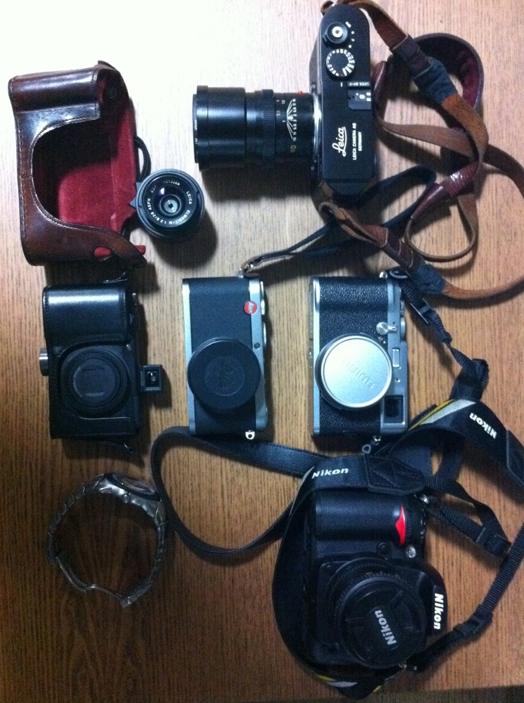
I currently have too many cameras in my house. This is what is sitting on my shelf at the moment (all the cameras I own):
Too many damn cameras.

Disclaimer: I was given a free Fujifilm X100T for this review.
It is a beautiful Sunday here in Dubai, and it is my day off “workâ€. I arrived last Wednesday from London after 2 weeks of teaching workshops, and I ended up doing a few workshops for Gulf Photo Plus (a photo organization in Dubai). I had a great time teaching the workshops here in Dubai, and also ended up shooting a lot of personal photos for myself (around 5–6 rolls of medium-format Kodak Portra 400 on my Hasselblad and a Mamiya 7 I borrowed from my friends Imraan and Mo.

Recently for my trip to Stockholm, London, and Dubai I brought along my Hasselblad 501c and 80mm lens (and about 20 rolls of Kodak Portra 400 120 film). I had been shooting a lot of medium-format 6×6 photos back home, and I had the natural gut feeling to bring it to my trip and make some photos. But at the same time I’m glad I brought along my compact 35mm camera, the Contax T3.

The best camera in street photography is the most expensive one.
If I gave myself advice in street photography if I started all over again I would tell myself, “Eric, buy yourself the most expensive camera out there for street photography. You are a newbie and not very good at shooting street photography. You are nervous. You don’t know any technical settings. You are afraid. You aren’t inspired. You don’t have any good work. Buying a really expensive camera will make you great.â€

I know a lot of street photographers who have gotten into film recently, and have recently invested in film Leicas (specifically Leica m6’s). I wanted to write this guide to share everything I personally know about shooting on a film Leica based on my 3 years of experience.
Disclaimer: I am not a Leica expert, nor do I claim to be. But I will to share some practical tips and insights about film Leicas and how to shoot them on the streets.

We are never satisfied. Nowadays with a barrage of advertisements and commercials– we always want the next big thing. We want something better. We want to optimize the stuff we own. We become easily dissatisfied with what we own.

I have learned a few things about shooting street photography on film from my own experiences (and the advice of others). If you want to read the full list of things I learned shooting film– read more!
Just put together a video review and some street photography tips for the Fujifilm x100s. You can also see the full review I did of the camera here.

Disclosure: Fujifilm gave me a Fuji x100s for this review. I haven’t been paid to write this review, and will try to make it as non-biased as possible. Also there are Amazon affiliate links included– so if you order the camera or any other product from my link, it will give me a small percentage.
Fujifilm recently hooked it up with a x100s— and I took it on a test run throughout Manila and have been using it the last few weeks. Below is my review of the x100s for street photography and some of my thoughts on the camera.

Eric’s Note: We were given a Kawa Pro Strap for free to review for the blog. A.G. DeMesa, a talented photographer and writer based in Manila writes his thoughts about the strap in the review below. Expect more stuff coming from him soon ;)
A.G. DeMesa: A strap is what physically attaches a photographer to his camera when not using his hands. It lets the photographer carry the camera and take it to places where he needs to. Therefore it is important for a strap to strike the perfect balance of comfort, robustness, and durability. In addition, speed is also a factor in street photography wherein we clock long hours in the blistering sun anticipating that photo. There are many makes and models that are available in the market that fulfill the criteria but I’m pretty sure none of them is as beautiful as a Kawa pro gear strap.

Disclaimer: I was given the Fujifilm X-T1 as well as a 23mm f/1.4 Lens, a 27mm f/2.8 lens for free from Fuijfilm. I am not getting paid to do this review, and will try my best to give an un-biased opinion as possible. But note that because I was given to it for free, I will probably be a bit biased (either consciously or subconsciously). But after shooting street photography with the X-T1 for a week in Dubai, below are my experiences with the camera.
When I was here in Dubai for Gulf Photo Plus, the guys from Fujifilm were generous enough to give me a new Fujifilm X-T1, the Fujifilm 23mm f/1.4 (35mm full-frame equivalent), as well as the Fujifilm 27mm f/2.8 Lens (~40mm full-frame equivalent). I shot with it everyday for around a week.
Overall I like the camera a lot and would highly recommend it (superb image quality, great form factor, and responsive). Some downsides are that the AF isn’t as accurate and quick as other cameras (like the Olympus OMD)– although it is a huge improvement from the X-Pro 1 and x100s. Hope this improves with future firmware updates.
I have a in-depth text-based review coming, but in the meanwhile– check out my video review above. I talk a bit more in-detail the near features of the cameras as well as more in-depth thoughts on how I like it in street photography!

About two months ago (before I was going to embark on my Michigan to LA road trip), Chris Moore and Shirley DeSilva from the marketing division of Leica lent me a Leica D-Lux 6 to test out on the streets (thanks guys!).
I have always been a huge fan of compact cameras– for their weight, size, and easily portability. I think at the end of the day, I prefer having smaller cameras for street photography– as I generally end up carrying them with me everywhere I go (whereas my bigger cameras of the past tended to stay home and collect dust).
So how is the Leica D-Lux 6 for street photography? Read on to see my thoughts.
Christine from ONA was generous enough to give me the Bowery Bag to test out and review during some of my travels the last few months. I put it through the rounds, and find it to be an ideal situation for street photographers who want a smaller bag to hold their Fuji, Leica, Micro 4/3rds, Compact, or small DSLR. Check out my review above!

We are always tempted by what’s new. We want the newest cameras, the newest cars, the newest computers, the newest smartphones, the newest tablets, and more.
When does all this madness end? In this article I share some of my experiences succumbing to “G.A.S.” (Gear Acquisition Syndrome) and some techniques I have learned from the philosophy of Stoicism to overcome it.

Disclaimer: I have been provided a Ricoh GRD V (no strings attached) from Pentax-Ricoh. However I will try to keep this review as un-biased as possible.
Update: The new Ricoh GRD V (Version Number 2) is out, which is essentially the same camera with Wifi and some other minor changes. If you’re interested in the Ricoh GR, I’d just pick up the older one (unless you need the wifi setting).
—
Disclaimer aside, I think this is currently hands-down the best bang-for-the-buck digital camera for street photography currently out there right now. I love the compact size, the superb image quality and high-ISO performance, as well as the ergonomics and handling. It has been traveling with me alongside my Leica MP as a second shooter — and the camera seriously kicks ass.
While I still prefer shooting with film at the end of the day, it is an amazing camera and I highly recommend it to all street photographers who want a smaller alternative. Keep reading for more of my thoughts on the camera.
Also note I don’t really care for spec sheets and technical aspects, so I will keep this review as practical as possible for actual usage on the streets.

There are a few cameras that make me excited. The Ricoh GR-series are one of them.
Ricoh has an almost cult-like following in Japan (and all around the world) for its compact size and versatile functionality. In-fact, Daido Moriyama (one of Japan’s most famous photographer) uses the GR-series cameras exclusively (he used to shoot black and white film, and now digital GR’s). Frankly, I haven’t met a single street photographer who doesn’t like the camera.

On my flight from Dubai back to the states I just finished an excellent book by psychologist Barry Schwartz titled: “The Paradox of Choice.” In the book, Schwartz addresses the following question in Western society: Why is it that people are getting more miserable when the amount of choices we are given goes up?
I am sure we have all experienced this problem. Whenever we go to the grocery store and want to pick up a box of cereal, we are given hundreds of options. Whenever we go to buy a new car, there are so many different companies, models, and options to choose from. Not only that, but when it comes to buying cameras we are given so many choices in terms of what type of camera/sensor (Full-frame DSLR, ASPC-sensor, Micro 4/3rds, Compact, etc) as well as a choice of lenses.
Schwartz gives solutions in the book in terms of how to deal with the over-abundance of choice and stress that it comes with. I have found this advice to be invaluable both in terms of my everyday life and when it comes to photography/buying equipment. I hope these tips help you, as they have very much helped me.
For this post, I have also included some new photos from Istanbul that I shot last year.
It has been a while since I did a travel update video, so I just put one together to keep you guys in the loop. Also some written notes are below. Click more to read more about my adventures in Mumbai, thoughts on the new Fujifilm X100s and the Leica M, and more!
If you are a street photographer on-the-go looking for some new camera bags for street photography (small or large) check out my above video reviews on the new Chrome Niko Camera Sling and Chrome Niko Camera Pack.
The Chrome Niko Camera Sling is a small bag designed for street photographers with small DSLR’s, Micro 4/3rds cameras, or rangefinders. I love how it is small, waterproof, and forces you to carry only the bare minimum when you are out on the streets. The Chrome Niko Camera Pack is much larger, for traveling street photographers who may also do professional gigs on the side.
For more images of the bags, read more. Special thanks to Chrome for providing these bags for review.

Leica recently has released a range of new cameras at Photokina, including the Leica M, Leica M-E, Leica S3, Dlux-6, and V-lux 4.
As a street photographer, the two cameras that were interesting to me were the new Leica M and Leica M-E. Here are some of my thoughts of these new cameras as well as the Sony RX-1.

Eric’s Note: This review of the pre-production model of the Leica M Monochrom isn’t going to be a technical review, but rather a practical one for street photographers who may be interested in the camera.Â
I’ll start off my preview of the Leica M-Monochrom with a story. I was ecstatic when I got in my inbox an invitation from Leica to attend their product launch in Berlin. I heard rumors about a new Leica M10, a black/white only camera, and some other stuff about the X2, etc. I always love being able to go to these events, meet other passionate photographers, as well as the good people at Leica.

(Above image: my Leica MP and CSLR Glide Strap)
In my 6 years of shooting street photography, I have experimented with lots of different straps. I tried neck straps, wrist straps, hand straps, and even no straps.
Finding an ideal camera strap for street photography is very difficult. You need a strap that is discrete, comfortable, yet looks good.
I was really excited when I first came upon the CSLR Glide Strap on the internet (I first heard about it through Kickstarter for their C-Loop). Their revolutionary idea at the time was why not take your camera strap off your neck (where it gets itchy and sticky) and put it over your shoulder instead? This way it could disperse more weight more evenly around your body.
Not only that, they advertised a “gliding” mechanism that would allow you to quickly draw your camera (just like a gun-slinger out of a cowboy movie).

I started off my photographic career with a my a Nikon D60 two years ago. I loved it and loathed it and wished that I had something that had video mode, so I looked into entry level DSLRs and thought the Nikon D3100 sounded like a pretty good shout. After about two months of using it I felt like I didn’t look professional enough, and people wouldn’t take me seriously enough unless I had a camera to match my ability.
Just got a mint (used) Leica MP from Bellamy in the mail and have been using it the last 3 weeks. I was using my Leica M6 for the last several months, but the M6 I had gave me some funky issues (my shutter would get stuck at around 22 shots – and it broke on 3 different occasions while traveling). Now I’m using the MP as my main camera, and the M6 as my backup camera while traveling.
The video above is my review of both cameras. In performance they are identical, although the MP has superior interior mechanics and is more reliable. There are also some cosmetic differences.
Interested in buying a film Leica rangefinder? If you haven’t tried it out yet, I’d recommend getting a Leica M6 and a 35mm Voightlander f/1.4 lens. It is a solid combination, and the best “bang for the buck” out there. I have tons of friends who have the combination and love it. Have the cash and want a more reliable and durable camera film rangefinder that will last you a lifetime? Then get the Leica MP and a Leica lens.
In the end, remember that it is always a better investment to buy books, not gear when trying to become a better photographer. But if you shoot with a DSLR and might want to try shooting film, want something more compact and discrete, getting a film Leica may be a good idea to try something new
If you are interested in purchasing a second-hand Leica or Lens, hit up my boy Bellamy Hunt (Japan Camera Hunter)Â or email him at hunts.of.tokyo@gmail.com
Any more questions about the Leica M6 vs Leica MP? Leave a comment below!Â
An introduction to using Hasselblad Medium Format Cameras by Jeroen Helmink, Dutch street photographer. Check out Jeroen’s work on his website or on Flickr!
Also if you are interested in getting a Hasselblad, email Jeroen at jeroen.helmink@gmail.com
Got any questions about Hasselblads or shooting medium-format film? Leave a comment below!Â
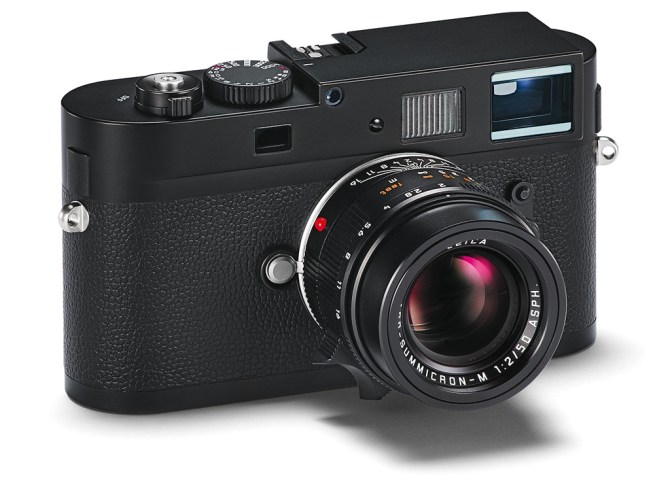
I recently had the chance to shoot with the new Leica M-Monochrom camera at the Leica May 10th event in Berlin, and was quite impressed. The High-ISO is amazing but the camera is quite expensive.
Curious if the camera is worth the hype? Keep reading to find out more – and see the amazing b/w images taken of the trans-siberian railroad by Magnum Photographer Jacob Au Sobol.

(Pre-war Zeiss Contax III, via Peter Hennig)
Thank you for your feedback and thoughts in my previous article titled, “Why Digital is Dead For Me In Street Photography“. The post I written has sparked a healthy amount of discussion and debate. However I would like to clarify some points which I made in the article which I feel was misinterpreted.
Just got a new minty Ricoh GR1s film P&S camera in the mail from Bellamy Hunt (Japan Camera Hunter). Unfortunately the LCD screen got a bit damaged en-route from Tokyo to Australia. Bellamy is getting it fixed for me now!
If you want to find out more about the Ricoh GR-series, check out this Ricoh buyer’s guide by Bellamy.
Thanks to Misho Baranovic for recording!
If you need a film Leica, lens, Ricoh, or whatever camera or lens from Tokyo, contact Bellamy Hunt at hunts.of.tokyo@gmail.com
Had some time to catch up with my good friend Brian Day, a street photography local in Detroit. We chatted about shooting street photography in Detroit (the pros and the cons) as well as his new Fujifilm X-Pro 1 – which is a fantastic camera – with its quirks (like every other camera out there).
As discussed in the video, apparently the Fujifilm 35mm F1.4 Lens gets “aperture chatter” which is pretty damn annoying when in broad sunlight. If you are interested in getting the X-Pro 1, I’d probably get the Fujifilm 18mm F2.0 Lens which is roughly a ~28mm full-frame equivalent that supposedly doesn’t get “aperture chatter”.
However some of the pros of the camera mentioned include the ridiculously clean high-ISO (I shot at ISO 12,800 in JPEG and it looked better than my old Canon 5D at 3200 ISO) as well as the great image quality. However considering that the body is starting at around $1,699 – the camera isn’t cheap. If having an optical viewfinder is important to you, I’d get the Fujifilm X-Pro 1 and the Fujifilm 18mm F2.0 Lens and stick it in manual focus (1.2 meters) and zone-focus at f/8-f/16 all-day.
If you want a camera that is a bit more affordable, has incredibly-fast auto-focus, as well as great image quality + high-ISO – check out the new Olympus OM-D with the Olympus 12mm f/2 lens. The great thing about the 12mm lens is that it has “real manual-focus” on the lens, as well as hyperfocal marks for zone-focusing. Not a big fan of the Electric Viewfinder (the refresh rate is apparently twice as fast as the old model) but I prefer optical viewfinders.
Both are great cameras, but remember not to get sucked too much into GAS (Gear Acquisition Syndrome)! If you already have a Fujifilm X-100 or any other Micro 4/3rds, I wouldn’t upgrade. But if you own a DSLR and want less weight and bulk when you are out shooting on the streets, both cameras mentioned above are great cameras.
Also make sure to check out Brian Day’s recent interview on Vesper Magazine for his “Time Traveler” series.
For those of you who have the new Fujifilm X-Pro 1- have you experienced this “aperture chatter” and what is your take on the camera? Share your thoughts in the comments below!Â
A nice and fun review of the new Fujifilm X-Pro 1 from Kai Wong from DigitalRev TV. Check it out and subscribe to their awesome show today – or else Kai will hunt you down ;)
Lenses reviewed:
Still haven’t had the chance to play with the new Fujifilm X-Pro 1- but have been hearing great things about it so far! Hopefully I will have the chance to shoot with it on the streets soon and let you guys know what I think!
My good friend Mijonju from Tokyo recently got his hands on the new Fujifilm X-Pro 1 in Tokyo and made this little mini-review on it. Hope you find it entertaining and helpful!
Make sure to subscribe to him on YouTube and follow him on Twitter.
X mount to M mount adapter
http://www.petapixel.com/2012/02/09/fujifilm-showing-off-leica-m-mount-adapte…
All the specs
http://www.dpreview.com/previews/fujifilmxpro1/
What do you think about the new X-Pro 1 for those of you guys who have shot with it? Worth the hype or not? Share your thoughts in the comments below!Â
Recently when I was in Kuala Lumpur, I had the great pleasure of meeting Robin Wong, a passionate local street photographer. He was also lucky enough to get a test-unit of the new Olympus OM-D EM-5 directly from Olympus, and tested it extensively the past few days.
As mentioned in my last post, you don’t want to fall victim to GAS (Gear Acquisition Syndrome). However if you are using a DSLR and find it too bulky or have a point-and-shoot and want something a bit beefier yet compact, I found the Olympus OM-D EM-5Â a pretty solid option paired with the Olympus 12mm f/2 Lens (which is great for zone focusing). However if you already have an Olympus EP-3 or any other relatively Micro 4/3rds camera out there, I wouldn’t recommend an upgrade.
If you got any questions about the camera, make sure to ask Robin Wong over at his blog.

We are all gear-heads at heart. We love hearing about the newest and greatest camera out there, and we love seeing comparisons with different lenses, at different apertures, and the sharpness and “characteristics†of each lens. I think it is fine to think and discuss about gear in photography, but when discussed about in excess– it starts getting unhealthy and like a disease.
I am weak, and I get tempted by gear all the time, but I try to constantly remind myself not to fall victim to gear acquisition syndrome (also commonly known as “gasâ€). Based on sociology, psychology, cognitive science, philosophy, and my personal experiences I will suggest some tips how you can cure yourself of gas (no not your farting, you might need to lay off the beans or get some stomach medicine for that).
If you ever watch an introduction to alcoholics anonymous, each person in the group goes around in the group and says, “Hi, my name is “X” and I am an alcoholicâ€. Similarly, it is important to realize that we are human, and we are weak– and we fall quite easily to temptation. We love to think that we have strong willpower, but studies show that we actually have extremely weak willpower. Admit to yourself that you get tempted to gear as much as the next person, which will help you better resist the “poisoning†of gear around you. I shoot with a Leica camera, and I meet a lot of Leica users and shooters– and many gearheads and collectors. There is nothing inherently wrong with being a gearheads or collector, but it is a vicious cycle that I feel never brings one true satisfaction and happiness (as we always want more).
Take for example yesterday in Kuala Lumpur. I just finished my street photography workshop and had a cocktail and VIP party at the Leica store, and stumbled upon a Leica MP with a .58 magnification viewfinder. It was so goddamn gorgeous, and I felt my own gear whoring come out of myself. I then started feeling that my Leica M6 was inadequate, and that the .72 magnification viewfinder was useless with a 35mm lens. Also I marveled at the Leica script that was embossed on the top plate of the MP, and told myself I needed one. I had a drink and played with the MP some more, and it felt so right in my hands, with the heavy brass and the “mechanical perfection†of the film advance lever. The guys around me were laughing and “poisoning†me in all good fun, and I knew I had to resist myself. I reminded myself how weak I was to peer pressure and gear — and took a step back and gave back the MP.
As humans, we have very weak self-control and constraint. Take smoking for example. Many people try to quit “cold turkey†using just their will– but few people actually succeed. Statistics prove that majority of smokers quit when having some physical aid (using a e-cigarette or nicotine patches) to overcome their addiction to smoking. I feel that the same goes with gas. You need to create some physical constraints on yourself. For example, I am awful with money. If kept to my own will, I would spend all of my money on Leica lenses, crocodile leather shoes, and ice cream cones (I love ice cream almost as much as Allamby). I know this, and therefore consult my girlfriend Cindy before making any serious monetary investments.
About a month ago, I asked Cindy what she felt about myself buying a Leica MP (yeah I have been thinking about it for a while). She essentially smacked me upside the head and told me I would be a complete moron if I did, and talked some sense into me. She gave me a ton of clarity, and by having her as a “gatekeeper†to my wallet–she helps me a ton from making stupid decisions. If you don’t have a beautiful and bossy girlfriend to help you keep your money in check, perhaps hire a financial consultant and tell them to prevent you from making stupid financial decisions (including gas). Even by putting all of your savings into a fund (that you can’t touch) and keeping a certain limit on your credit card, you will prevent yourself from buying crap you don’t need.
One thing I learned in sociology is that “you are the average of the three closest person to yourselfâ€. Therefore if you hang out with a lot of gear-heads, you will be a gearheads yourself and succumb to gas. Rather than hanging out with gearheads and stroking your Leica and lenses with baby oil, hang out with photographers who talk less about gear, and more about photography. Finding a community more focused about shooting (and less about gear) will in-turn make you more focused on photography and less on gear. Inevitability we all love talking about gear at one point or another (the latest Leica rumors, the new Fuji camera, or the new Olympus micro 4/3rds) but try to find a group that keeps it to a minimal.
Currently the only cameras I own are my Leica M9 and my Leica M6, along with my 35mm summicron f/2 asph (yeah the latest version baby!) I gave my old Canon 5D to a close family friend’s younger brother (who is an aspiring photo journalist) along with my 35mm f/2 and my 24mm f/2.8. I told him it was all he needed to take incredible photographs. He asked me if he should buy a 70-200 lens and I threatened him that if he bought it, I would take my Canon back. I also recently had a 21mm Voightlander for my Leica, and returned that. I also gave my 21mm to my good friend Todd at the Hatakayana Gallery to use on his sweet new 21mm Leica lens (yeah the same guy who gave me his M6! Even trade.) The last three months or so (since I inherited my M6 from Todd in Tokyo) I have been working on all of my personal projects on film (tri-x and portra 400).
Nowadays my M9 is my backup camera (and really expensive point and shoot camera). Therefore all I am really using for my street photography is my Leica M6 and 35mm summicron f/2. It is one camera and one lens. Nothing more and nothing less. What I love most about having one camera and one lens is that it is just less stressful, and plain bliss. I never concern myself with having a different focal length for a situation (having a 28mm if someone is really close or a 50mm if someone is further away) but rather I learn to adapt to my situation, and become more creative. I have used a 35mm focal length more or less exclusively for around 4 years now, starting with my Canon.
I now know the focal length inside and out, and know how my frame looks in any situation. I don’t really even have the desire to have any other lens, as the 35mm framelines on my Leica are difficult enough to see with my glasses. Less is more. Having more choices simply gives us more stress. Remember the last time you wanted to order something at a restaurant, and there were like five million options on the menu? You then order something, wishing for the best, and it comes out and you feel disappointed? (damn, this chicken Alfredo sucks– I should have gone with the beef stew). Less options is less stress on us, and doesn’t cause “paralysis by analysisâ€. But damn, if I got a Leica MP with a .58 viewfinder and 28mm lens, it would be pretty sweet. Ahhhh nooo! Eric, stop this self-poisoning of yourself.
New cameras and lenses are expensive, and often that money can be used towards better things related to photography (buying photo books, going on trips, buying film, or paying off your maxed out credit card). I currently have the M6 which is worth around $1300 usd. The Leica MP is around $3300 usd. The cost of upgrading will be $2000.
Let’s do some math:
What else can I better do with $2000?
All of these things will do me so much more for my photography and happiness than a new shiny Leica. Do your own calculations for what gear or lenses you may be pondering, and see how ridiculous your ideas may be.
The best thing I have heard digital cameras likened to were computers. Think about how long you can use a computer before it gets outdated. 4 years, at best? Digital cameras as essentially computers. They get outdated fast as hell. There are always new digital cameras coming out with moar and moar megapixels, iso, dynamic range, faster autofocus, and crappy features like hdr and panorama, etc). I doubt you can use a digital camera longer than 4 years, without it being considered a dinosaur.
Ever since I got my film Leica, I no longer am very impressed or concerned with these new cameras coming out (besides the MP). A film Leica will last you a lifetime, and you never need to upgrade. It is simple and straightforward, and remember- all film cameras are “full frameâ€. Regardless of my MP envy, I would say that having my Leica M6 and 35mm summicron — I feel truly “content†with my gear. If you want to make a purchase, remember to get a good lens, as they will last a lifetime (more or less). They will outlast your camera, as there is only so sharp you can make a piece of glass. I doubt they will ever quit selling film- and don’t worry about Kodak going bankrupt. Their film business is stilly profitable.
Remember, when photography first came out people said nobody would ever paint anymore. People still paint. People said cd’s would kill vinyl records. Vinyl records are now thriving more than ever (thanks to all the hipsters who shop at Urban Outfitters). Classic things never truly “dieâ€.
If you spend an unhealthy amount of time on gear forums, stop. It is quite possibly the worst thing you can do in your spare time. I actually suggest downloading an add-on for chrome or Firefox that prevent you from visiting these sites altogether.
Rather, spend time visiting sites about photography. Spend time on invisible photographer Asia, la pure vida, burn magazine, in-public, the magnum website, little brown mushroom blog, Blake Andrews blog, and so on. Looking at great photographs will inspire you to take great photographs. Looking at reviews of gear and lenses will make you want to spend your money. Remember, you are what you eat.
In street photography, sharpness and the “bokeh quality†of a lens is the most overrated thing ever. Sure if you give me a Noctilux and have me shoot that bad boy at .95 I will squeal like a little schoolgirl about how creamy and “bokehlicious†the photo turn out, but it is quite useless in street photography. When is the last time you saw a great street photograph from any of the masters and said, “Wow, that photograph is really sharp†or “Wow, that photograph has really nice bokehâ€.
Another thing that I used to do a lot (which I am trying my best not to do anymore) is look at someone’s photographs (who are very good) and ask what camera or lens they use. It is like asking your chef what pots and pans he or she uses to cook your meals (if the food is really good). If you don’t want to get slapped in the face (or your food spit in) realize that it is the artist that creates the art, not the tools.
Frankly speaking, all prime lenses out there are pretty damn sharp (and you will always sharpen the photos a bit in post-processing anyways) and I feel that street photography is best captured using a large depth of field using zone focusing. Therefore don’t worry about having a large maximum wide aperture– unless you want to take nice bokeh shots of your water bottles at home, that is.
Material things never bring true happiness. Yeah, yeah we have all heard it before but it is true. We all tell ourselves, oh–if I only had full-frame I’d truly be happy. If I had that Leica I’d be truly happy. If I had that one 1.4 lens I would be truly happy. Realize that with gear, it is a slippery slope. As humans, we are biologically greedy. We want stuff, and like having lots of it. It was our genetic way of making sure that we wouldn’t die. After all when we were cavemen, if we hoarded tons of food for ourselves, we would have a higher likelihood of making it through tough winters and droughts.
Nowdays modern day life is much different. Most people in the modern world don’t suffer from famine and most of our basic needs are met (food, shelter, clothing). However the instincts we have make us never satisfied with what we have. And of course, advertising and consumerism has a large part to blame as well. There is no “end goal†of gas.
Let’s say you start off with a dslr, you will want a full-frame. You get a full-frame, you want that nice canon L lens. You realize the canon L-lens zoom isn’t enough, so you get some nice prime lenses. You then realize the whole damn thing is too bulky, and go for a Leica. You then get a Leica M9, and need more lenses. You end up collecting all the lenses, and then realize you want the M9 titanium. M9 soon becomes passé, and you get a S2. The madness never ends. Be content with what you have and of course feel free to purchase gear, but realize once you find a system you are reasonably happy with (80% satisfied) stick with it.
Many of us try to rationalize what we do in terms of our purchasing decisions. We tell ourselves that the cameras and lenses we buy are “investments†and thus make rational decisions. Let’s cut away a lot of the bs. A lot of us (including myself) want to just show off with our gear and have bragging rights.
One of the reasons that I kept my old 35mm 1.4 summilux for so long was so I could state that I had a summilux for the sake of having one. The summilux wasn’t the optimal lens for street photography (far too big and heavy) and I never used the 1.4 (only when taking snapshots of my friends at bars to show them the creaminess of the bokeh!)
The reason a lot of us buy expensive cameras or gear is to try to fit in (if our friends all have a certain camera or lens, we will want to get one). Another reason is that we might want to differentiate ourselves from other people (like Leica users vs Dslr users). We want to feel superior with superior gear to be seen by others as having a higher status. With more status comes more prestige, comes more opportunities for us to connect with other people with high status, and have a feeling of “smugnessâ€.
We all love our toys and cameras and lenses. I don’t see any problem “geeking out†with gear with the friends or playing with our friends new camera or lens. It is perfectly healthy and all fun. However what becomes an issue is when we concern ourselves with gear excessively. Photography is a damn expensive hobby, and not being able to have the best and greatest sucks. We don’t want to be the loser with the “crop sensor†or only having the f/2 lens instead of the f/1.4 lens. We just want to fit in and feel “important†with other people with nice cameras and things.
If you currently suffer from gas, admit to yourself that you are a gear whore and decide for yourself if you want to cure yourself or not. If you have the cash and enjoy continually acquiring lenses and cameras, no problem. If you don’t have the cash and you are taking out credit card debt to feed your addiction, you should probably reconsider things. Life isn’t about getting nice things and being happy.
Spending time with others and being social is what makes us truly happy. Therefore quit spending so much damn time on gear forums and thinking about that stuff, and get out of the house and call some buddies and go shooting. The more time I find myself going out and actually taking photographs and spending time with my fellow streettogs, I am truly happy. I geek out and at times have wet dreams about the next Leica purchase myself, but I realize that I am weak and easily susceptible to peer pressure or advertising. Take a moment to consider how addicted you may be to gas, and I hope this has helped you.
After traveling and having done many workshops on street photography, I have met many Leica M9/rangefinder users who have had difficulty configuring their camera for shooting on the streets. There are lots of misconceptions out there, which make things confusing for people. Therefore here is some advice I have for Leica m9 users (or Fuji x100 or rangefinder users) when shooting street photography. (Note that for the original video, the audio gets cut out at 16 minutes, so I edited the video down).Â
Check out the video below, and I have things written in more detail below!

For those who are looking for a stylish, sleek, and functional messenger bag for street photography – check out the new ONA Union Street Bag. ONA sent me a bag to review, and after thorough testing (took it all over India) here is my review/overall impressions of this bag. Keep reading more if you are interested in making an investment into a fashionable and durable bag that will last you a long time!

Eric’s Note: If you are wondering what all those crazy things coming out of Ollie’s head are, check out his last blog post.
Ollie Gapper: I was recently lucky enough to pick up a Canonet QL17 rangefinder off of eBay for a steal at £30 with postage, a camera I had been after for quite a while, and for good reason.

“Sharpness is a bourgeois concept†– Henri Cartier Bresson
In the modern age of photography, everyone seems to have an unhealthy obsession with how sharp lenses are, how much bokeh they produce, and how “3d†they can make their images appear.
Ignore these statements. Anyone who talks at excessive length about any of these topics are misled into thinking that what makes a great photograph are the effects that expensive lenses can give you.

(Above image by Devin Yalkin)
Recently when I went to Tokyo, I had a ton of fun shooting in the streets with Charlie Kirk and Bellamy Hunt—both who shoot film. I never really understood the rationale why people shot with film. To me at the time, it seemed like a burden. First of all, you had to buy the film. Secondly, after you took the photos you couldn’t see them instantly. And lastly, it was expensive to develop it (and even more money to scan). For these three reasons, I was mostly put off by film. Although I did shoot a bit with my Contax IIIa film rangefinder and did enjoy it—at the end of the day I preferred my digital camera.
Nevertheless, I was intrigued with film once I came to Tokyo. In Tokyo, the analog culture is strong. There are tons of used film camera shops, and tons of other places where you can buy film as well. Not only that, but there are many photographers who shoot film who support one another as well and have their own communities. I had no idea how much influence the analog culture would have on me when I was in Tokyo.

Eric’s Note: This is article is part of an on-going weekly column by Japancamerahunter (Bellamy Hunt) where he talks about vintage cameras, film, and street photography. You can check out his part articles here or if you need to get hooked up with a lens or camera, contact him here!Â
Well well, good old Uncle Eric has asked me to write another article for you. This time on the joys of shooting street with a compact camera. Eric and many of us spend a lot of time shooting with rangefinders and DSLR’s, but I think it important for people to realize that there are other ways to shoot street. The compact camera is one of these ways (medium format is another, but that is a whole different barrel of fish and something I may talk about another time).
So, why shoot a compact camera for street? Well, there are several reasons, but let me start with the most obvious…
My good friend Todd Hatakeyama (and sponsor over at SimpleStudioLighting.com) and owner of the Hatakeyama Gallery (grand opening in Downtown LA this Saturday from 5pm-10pm) recently gave me a his old Leica M6 to shoot with and have. It has been great shooting with it–as it helps me slow down and be more critical when shooting (compared to my Leica M9). I can’t quite describe it, but I feel much more zen when shooting analog vs digital–as I don’t worry so much about the final image but focus on the process of shooting.
Also if you want to pick up a film case from Bellamy Hunt or find a sweet analog camera from Japan, check him out at JapanCameraHunter.com.

My Leica M9P* (gaffer tape upgrade) and 35mm Summilux 1.4.Â
About a few months ago, I finally achieved one of my lifetime goals: purchasing a digital Leica (the Leica M9 to be specific). Although I was enthralled by the camera the first month I tested it (when Leica loaned me one for my Paris trip as well as a 35mm Summilux) the initial glitz and glamor faded away. However after shooting with one, I knew I wanted to get one nonetheless for a variety of reasons (explained in this article).
For this review I am going to give you my honest review of the camera, not focusing much on the technical aspects (other sites have already done this to death) but how it actually performs when it comes to shooting street photography. Considering that I have only been shooting with the camera around 3 months—I am not an expert with the Leica M9. However having shot with it enough when it comes to street photography, I am very confortable discussing how it performs when shooting on the streets.

Note: This blog post is by Kaushal Parikh, a street photographer from Mumbai, India.Â
Although this is an article about a camera, I don’t believe that gear alone can create good photographs. But I do believe that a good photographer can be inspired to make good images with the right gear. I recently acquired a Fujifilm FinePix x100 that I have come to love and thought I would just share a few thoughts and tips about this camera.
Recently I have had the huge pleasure of being invited to the PEN Ready Project, in which Olympus gave away 1000 Olympus EPM-1 cameras for people to shoot and review. I have always been a big fan of the Micro 4/3rds cameras, as they are small, compact, and take great photos. I tested an Olympus EP-2 a while back, and was quite impressed by the performance. I recently shot with the Olympus EP-3 and was quite pleased with the (even faster) autofocus performance as well as the image quality. If you have a micro 4/3rds camera and pick up a Olympus 17mm f/2.8 lens (~35mm equivalent), the Panasonic 20mm f/1.7 Lens (40mm equivalent), or the  new Olympus 12mm f/2 lens (24mm equivalent) it makes a great combination.

Eric’s Note: This is article is part of an on-going weekly column by Japancamerahunter (Bellamy Hunt) where he talks about vintage cameras, film, and street photography. You can check out his part articles here.Â
So, it looks like Eric has got himself a Leica M9, the lucky little so and so. So I thought that this would be as good a time as any to write a post about the perceived benefits of shooting with a rangefinder, or more specifically a Leica.
Now It has to be said that I am a big Leica fan, but that does not mean that they are the only rangefinders. I also have a Contax G2, a Konica Hexar and a Canon 7. They all have their differences, so good, some bad. What I am going to talk about in this is the general benefits that I have found using a rangefinder.

Eric’s note: Steve Foon, a street photographer from the Bay Area, recently offered to write this comparison of the Fujifilm FinePix X100 versus the Leica M9 (which he owns as well). Read his thoughts on the camera and how it stacks up against the M9!Â
Every photographer has a style of photography that just calls their name. Be it wildlife, sports, landscape, architectural, portraitures, models, etc… my personal calling is Street Photography.
Each genre has certain requirements that will demand that a certain photographic tool be used. Let me clarify that you don’t really have to have a specific photographic tool to be able to shoot the genre you like. It’s just that certain cameras just seem to fit the job better than others.

For my recent Intermediate Street Photography Workshop in Downtown LA, Todd from Lighting Leica and the kind folks from Clik hooked it up with a Clik Elite Magnesian 20 Camera Bag to test out. When I am out shooting, I typically use the Think Tank Retrospective 5 Camera bag, but at times found it a bit small and with one annoyance: it didn’t have slots for water bottles. The Magnesian 20 Camera Bag is fairly larger than the Think Tank Retrospective 5, and is loaded with two water bottle holders on the side (or you can store lenses or flashes there). Read more to see my mini-review!

Eric’s Note: This post is by Bellamy Hunt (aka Japan Camera Hunter) who has a weekly column on camera gear, lenses, film, and other topics every Tuesday on my blog.
The question that everyone asks me when they have decided to buy a camera is usually “which camera should I buy, oh wise one?“ (Well, maybe no the wise one bit, but you know what I mean).
This is a bit of a loaded question really, as there is no right or wrong answer other than “whatever suits you bestâ€. You could spend hours pouring over the net, reading magazines and reviews or listening to the bloke down the pub, but until you actually hold a camera you have no idea. What I usually tell people is this, find a camera that suits your needs and your style, and most of all, one that feels good in your hand and next to your eye. Because cameras come and go. This is certainly even more relevant now, in the digital age. The average digital camera has a ‘cycle’ of about 3 years, which means that just as you are getting comfortable with your camera, the next piece of eye candy is out there on the shelf flaunting its megapixels at you, and the piece you have in your hand looks forlornly back at you waiting to die.

Pictured above: Ryan Cabal’s Street Photography Camera Collection
After Ryan uploaded a picture of his awesome street photography camera collection on my Facebook fan page, I asked you guys on Facebook and Twitter to send me photos of what was in your bag. Thanks to everyone who submitted photos of their awesome cameras and equipment! Keep reading to see all the street photography camera porn ;)
Today I had the great pleasure of meeting with Jon Savage, an active street photographer in my Facebook community. He let me play around his Fujifilm FinePix X100 for a few hours and I gotta say– I am impressed. Not only does the camera feel good in the hands, but the optical viewfinder paired with the responsive controls make this camera a win. Check out the video above to see more about what Jon had to say about the camera, and how I felt about it as well.
Got any questions about the Fujifilm FinePix X100? Feel free to leave a comment below!
Although I am very sad to say goodbye to my Leica M9, I just received a Leica X1 in the mail to test and review for about a week. Check out my first impressions in the video above, and please leave me any questions you may have about the camera by leaving a comment below!
*Edit: The body is made out of magnesium, although the outside casing appears to be made out of plastic (thanks to tribalknowledge for the clarification).

Recently I reviewed the Olympus PEN EP-2 on The Phoblographer, and was quite impressed with this micro 4/3rd camera for street photography. Little do I know that about a week later, Olympus announces their new PEN EP-3 along with their new Zuiko 12mm f/2.0 Lens (24mm equivalent). From the looks of it, the camera looks great with an all-metal redesigned body, a reengineered autofocus system, a 1080p video mode, with a nice OLED touchscreen in the back. Sources show it will cost around $900 and will be available for purchase in August. Make sure to check out their full press-release here.

Make sure to check out the hands-on review of the Olympups PEN EP-3Â and 24mm f/2.0 lens on The Phoblographer.
Olympus will also be holding a special three-hour Olympus Tech Thursday on their Facebook page from 12-3p.m. PST (3-6 p.m. ET) Â www.facebook.com/getolympus where Olympus spokespersons be answering a variety of PEN questions from fans and will be sharing additional new PEN content.

I am a huge fan of micro 4/3rds cameras, as I think they are a wonderful compromise between DSLR’s and point and shoots for street photography. Therefore it is great news to see that Leica has just announced a new 25mm f/1.4 lens (which equates to 50mm on a 2x crop factor). This can be a great lens for anybody shooting with any of the Olympus EP-series or the Panasonic GF-series. Also if you didn’t know, Henri Cartier-Bresson shot mostly with a 50mm focal length ;)
You can see some shots from it here (in Chinese).
Press release:
The New LEICA DG SUMMILUX 25mm / F1.4 ASPH. Lens Compatible With Panasonic LUMIX G Series of Compact System Cameras, Including LUMIX GF3
SECAUCUS, N.J., June 13, 2011 /PRNewswire/ — Panasonic today announced a new interchangeable Micro Four Thirds lens, the LEICA DG SUMMILUX 25mm/F1.4 ASPH. (H-X025), compatible with the company’s LUMIX G Series of compact system cameras (CSC), including the LUMIX GF3, which was also announced today. The LEICA DG SUMMILUX 25mm / F1.4 ASPH. lens features outstanding brightness of F1.4, and despite the high-performance, it also remains incredibly compact and lightweight. The lens’ brightness allows for a beautiful soft focus when shooting both photos and videos – without having to rely on a flash.
The LEICA DG SUMMILUX 25mm / F1.4 ASPH. lens adopts Panasonic’s Nano Surface Coating technology on the surface of the lens, which helps dramatically minimize reflection at the entire visual light range (380nm-780nm). The technology encompasses an extra-low refractive index coating with nano-sized structure and results in the super-clear photo with dramatic reduction of ghost and flare.
The new lens system comprises of nine elements in seven groups using two aspherical lenses and one UHR (Ultra High Refractive) index lens. The newly developed UHR index lens and glass mold aspherical lenses achieve uniformed description from the center to the edges.
The lens’ versatile 25mm focal distance (Equivalent to 50mm on a 35mm camera) is suitable for wide variety of occasions, giving users the flexibility in composition, perspective and aperture control.  The lens is capable to take daily snapshots including scenic sunsets to dimly-lit indoor shots to the deliberately-creative shots using soft focus.
When mounted on the Panasonic LUMIX G Series digital cameras, the LEICA DG SUMMILUX 25mm/F1.4 ASPH. lens can take maximum advantage of Contrast AF system, which boasts both high accuracy and high speed for optimal photos. Furthermore, seven blades give the aperture a rounded shape that produces an attractively smooth effect in out-of-focus areas when shooting at larger aperture settings. The lens also features a metal mount, making it extremely durable – even when repeatedly changed.
The LEICA DG SUMMILUX 25mm / F1.4 ASPH. lens will be available in August 2011 and pricing will be announced approximately 30 days prior to shipping. For more information about Panasonic LUMIX G Series digital cameras and Micro Four Third lenses, please visit www.panasonic.com/lumix.
-Via Leicarumors
Micro 4/3rds users–is this a lens you would want to add to your camera bag?
Hey guys, I have been able to do a few test shots of the Leica 35mm f/1.4 Summilux wide-open at f/1.4 and the shots truly blow me away. The images are tack-sharp, and the bokeh is so deliciously creamy. All of the shots are taken in RAW, and unedited straight out of the camera. Check out some of the shots below and make sure to click the images for the full-resolution images!


You guys may have heard that Leica has generously sent me a Leica M9 and 35mm f/1.4 Summilux to test out and review. Here is a quick and dirty video I put together unboxing the work of art, and giving my first impressions. I have already taken a ton of great images, and have many exciting things to say about the camera. Stay tuned for more images and a full-review of the Leica M9 and 35mm f/1.4 Summilux.
Got any questions about the M9 or the 35mm? Leave a comment below and I’ll try my best to hit all the questions you may have!

Hey guys, you might have heard me doing all my raves for the Ricoh GRIII for street photography. I put together my thoughts and review over on The Phoblographer, and have put in some of my best images as well. Long story short, I highly recommend everyone to purchase one, as it can be a great primary street photography camera or back-up. Make sure to check out the review, and leave me any questions you may have below in the comments!

Hey guys just wanted to let you know that the Fujifilm FinePix X100 is available RIGHT NOW at B&H Photo! Act quick before it’s sold out!
Check out some of our great Fujifilm FinePix X100 reviews below: