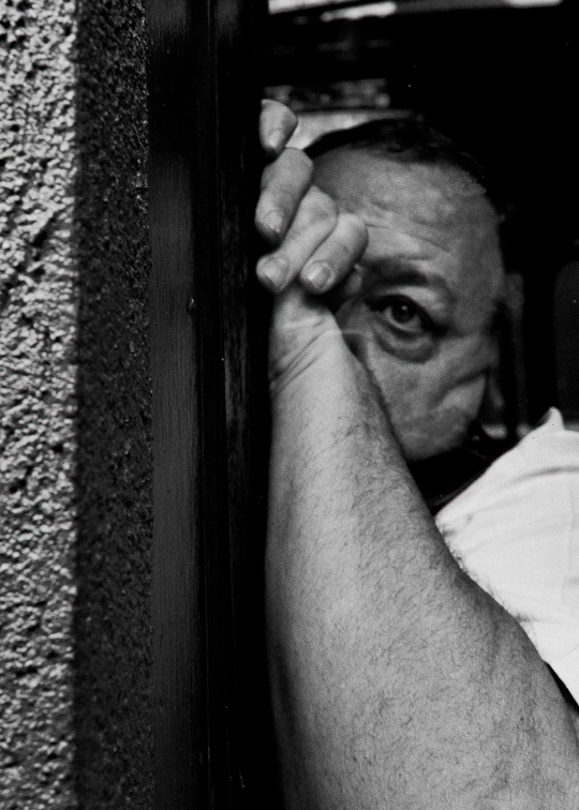
This is a video interview I did with Brian Soko in Chicago about a year ago. Enjoy his images and a transcript of the interview below!
Author: ERIC KIM
-
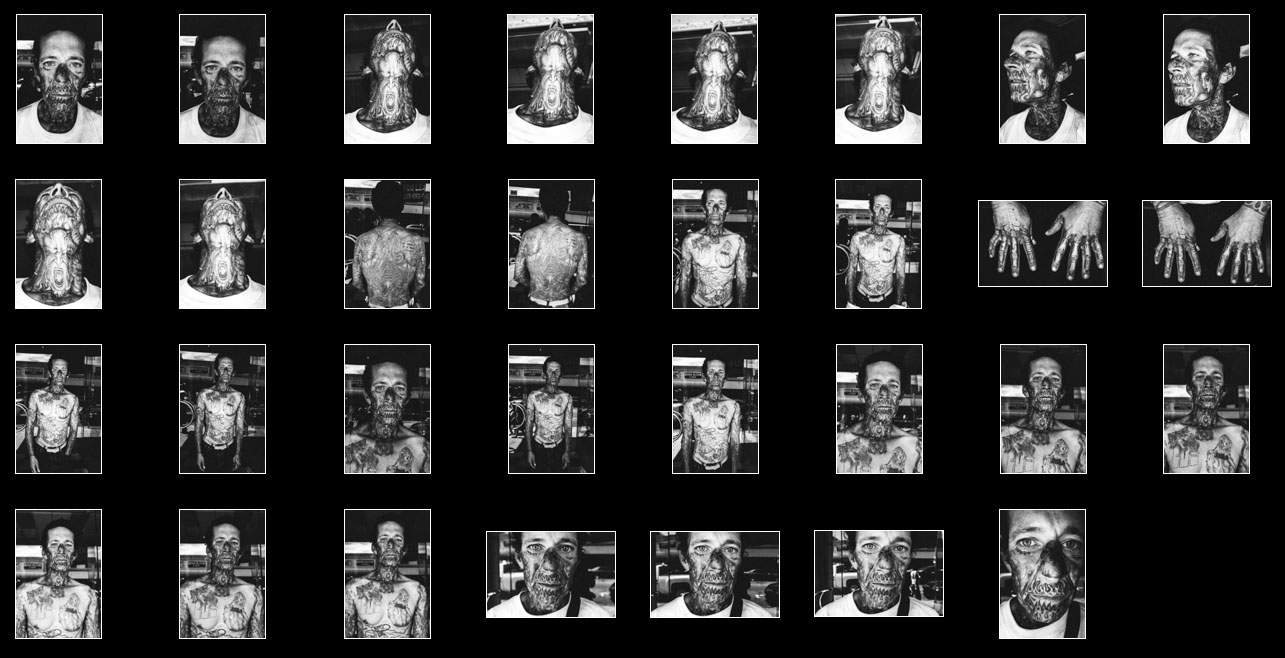
Street Photography Contact Sheets #1: Face Tattoo, Downtown LA 2014
At a recent workshop in Downtown LA, IÂ was shooting with one of the students (Luis) when we come across an interesting character with all these tattoos all over his body. He told us he just got out of jail (a few days ago), and was struggling on the streets. We gave him around 2 bucks, and asked him if it was okay if we took some shots. He had no problem with it– and to pose for the camera.
I asked him somewhere along the line what other tattoos he had, and he got excited and showed us all of his other tattoos all over his body.
-
On Going With the Flow in Street Photography

Indianapolis, 2014 I just finished reading a book titled: “Trying Not to Try: The Art and Science of Spontaneityâ€. It was a fascinating read on the paradox of “wu-weiâ€â€“ which is a concept in Taoism of “action without actionâ€. This means nature accomplishes everything without effort. Similarly, we should be able to accomplish many things in our life without unnecessary effort. In-fact according to wu-wei, most things in life (especially things we love) should be effortless.
Of course you know in my blog, I like to relate everything I read back to street photography. And I think this idea of “wu-wei†in street photography is quite fascinating.
To sum up, in street photography (according to wu-wei), our best shots should come to us naturally– without making any unnecessary effort.
-

What Do You Want Out of Street Photography?

Many of us shoot street photography because it is challenging, fun, and brings us great joy. However one question I find that most people don’t ask themselves (myself included) is what we ultimately want out of photography.
I just finished an intense week-long street photography workshop in Saigon which was absolutely incredible– and one of my students Sascha Jung asked me what I ultimately wanted out of my photography, and whether I wanted to become a great photographer or a great teacher.
-
Video Interview with Steve Simon, “The Passionate Photographer” in Dubai
When I was in Dubai, I had the pleasure of meeting Steve Simon who wrote an incredible book titled: “The Passionate Photographer“. We talk about working on projects, finding passion, and advice for aspiring street photographers. Read more to see his incredible photos:
-
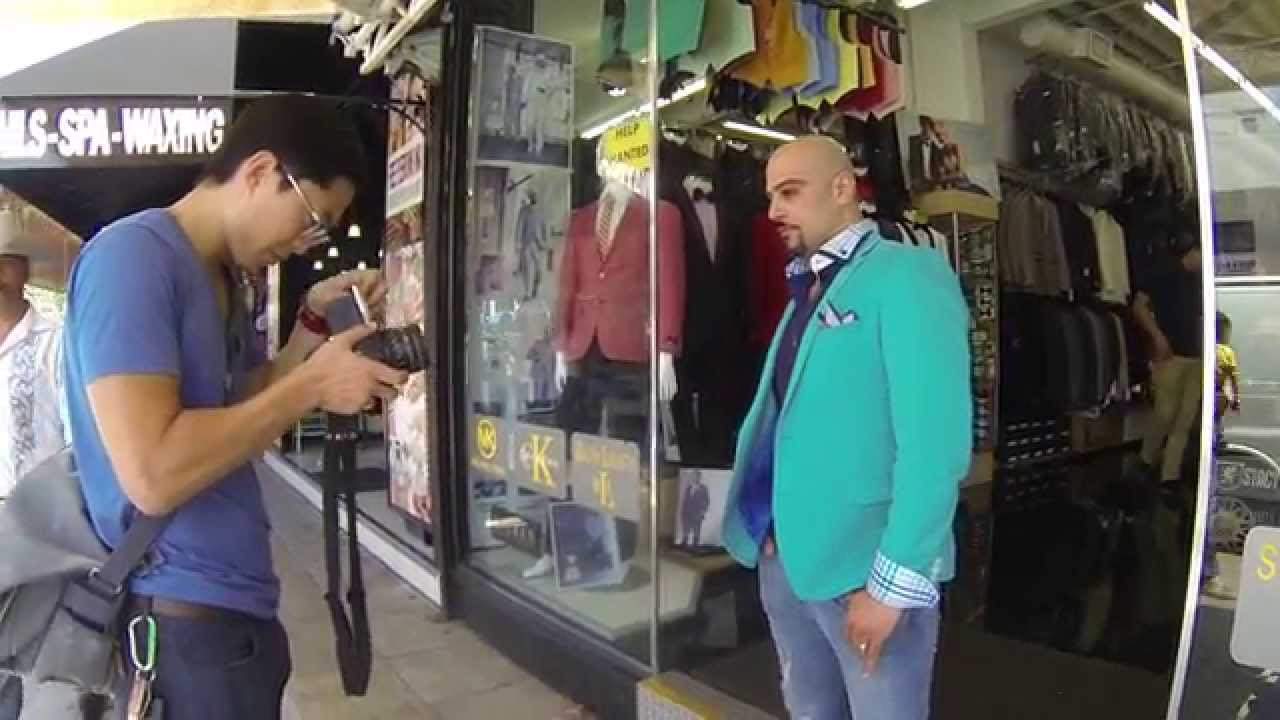
Shooting a Hasselblad Street Portrait in Downtown LA
Here is just a fun short behind-the-scenes clip of me shooting a street portrait with a Hasselblad in Downtown LA. Enjoy!
-

On Free Street Photography

Detroit, 2013 One question I am asked a lot is how I make a living in street photography, and questions about selling prints, and making money.
To start off, I am blessed enough to make a living from my street photography in teaching workshops. I make about 95% of my living from workshops (and around 5% from Amazon affiliates from links to books and other products on the blog).
But I have always been an advocate of “open source” in life and photography– and the greatness of having things open and free.
-
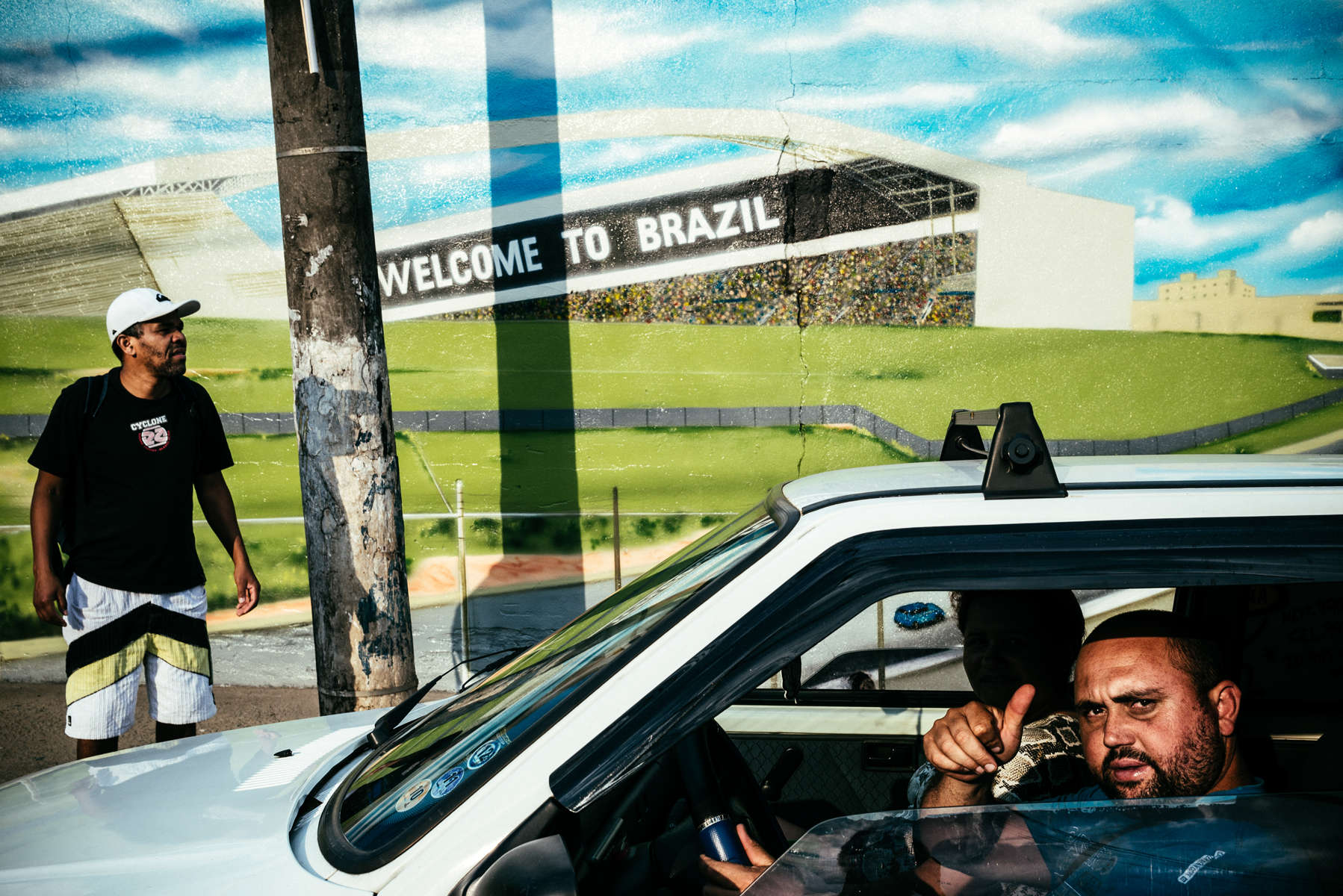
Looking for the bigger picture, Interview with SelvaSP Collective

Photo by Gustavo Minas (Editor’s note: All photos are the respected copyright of the members of SelvaSP)Â
Take a look at this interview of  SelvaSP. They are a street photography collective hailing out of Sao Paulo, Brazil. We explore how this collective is being run, what it is they look for, and how they approach the art of street photography.
-
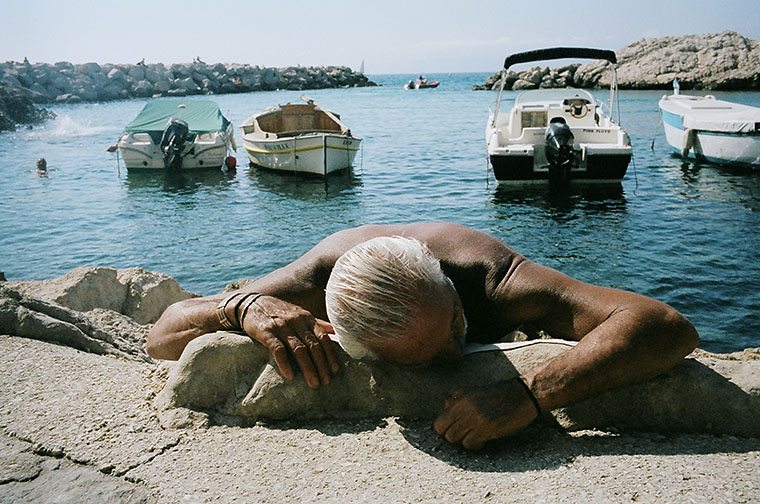
On Bridging the Gap in Street Photography

Tokyo, 2012 I feel one of the most important traits to become a better street photographer is first identifying what makes great street photography. This means having good taste.
A quote from Ira Glass from NPR comes to mind– in terms of having good taste:
“Nobody tells this to people who are beginners, I wish someone told me. All of us who do creative work, we get into it because we have good taste. But there is this gap. For the first couple years you make stuff, it’s just not that good. It’s trying to be good, it has potential, but it’s not. But your taste, the thing that got you into the game, is still killer. And your taste is why your work disappoints you.”
-
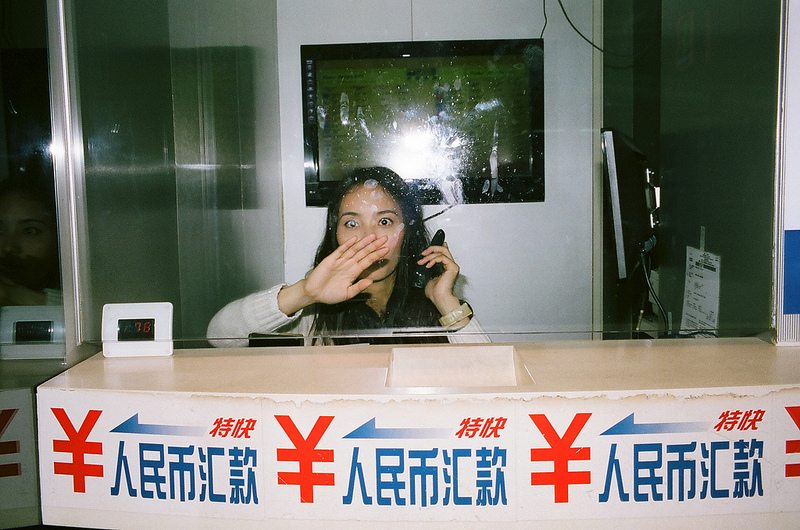
On Polarization and Street Photography

Hong Kong, 2012 I am a big fan of Nassim Taleb and his concept of the “barbell theory” which he derives from his book: “Antifragile” (one of my top 3 favorite books).
The concept of the “barbell theory” is that you embrace two extremes in life– rather than going for the boring “middle” strategy. For example Nassim Taleb says it is better to save 90% of your money in boring cash– and invest 10% in hyper-risky investments (rather than just putting it all into “medium risk” ventures). Nassim Taleb also mentions that regarding drinking, it is better to drink liberally 3 days a week (and completely abstaining the other days) rather than drinking “moderately” everyday.
I recently read a book titled: “A Perfect Mess”
in which the author promotes the benefits of randomness and messiness. -
Interview with Ibarionex Perello from “The Candid Frame”

Ibarionex Perello is a photographer, writer, educator as well as the host and producer of The Candid Frame photography podcast. He is the author of 5 books including “Chasing the Light Improving Your Photography Using Available Light“. His latest book is “Portraits of Strangers.”
-

10 Ways How to Have a Good Day in Street Photography

Stockholm, 2012 - Smile at and compliment a stranger.
- Surprise a friend with one of your favorite prints (for no reason).
- Give a constructive criticism to a street photographer with 0 comments online.
- Promote the work of another contemporary street photographer whose work you admire.
- Go out and only shoot with 1 camera and 1 lens (and turn off your smartphone).
- Contact a local street photographer to go out and shoot together.
- Lend one of your favorite photography books to a fellow street photographer.
- Give away a camera you don’t use to charity, a photography program, or someone in need.
- Donate some of your time by teaching a photography class or lecture to less-privileged students.
- Give yourself permission to take bad shots, enjoy a nice coffee, and shoot to please yourself (not others).
How do you have a good day in street photography? Share your tips in the comments below!
-
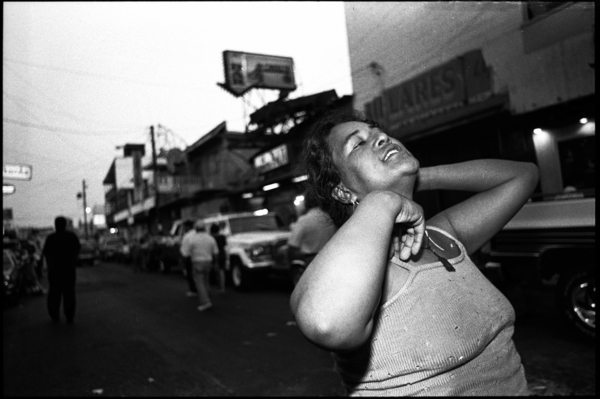
Reflections on Tijuana by Eric Labastida

(Editor’s note: The following are words and photographs of Eric Labastida. These are his thoughts and reflections during his time photographing Tijuana from 1992 to 2002)
When I started this project and photographing in general, I found inspiration in the library. Â This was before the internet, before we had the ability of riding the flood of information as we do now. Â I checked out photo books. Â My first visual and poetic guides were Henri Cartier-Bresson, Josef Koudelka, Mary Ellen Mark, and of course, Gene Smith. Â I was on a diet of strong composition, strong content and a feeling of pure joy in trying to catch that moment in the blink of an eye. Â It all had to be there: geometry, Â timing and magic. Â A very elusive beast indeed, Â but the hunt was pure living, and I got hooked.
-
Saigon Diary #5: Travels to Bien Hoa, Learning Vietnamese, and Coffee Culture

Cindy by the water in Bien Hoa, just outside of Saigon. Hey streettogs, thank you for waiting for this new episode of “Saigon Diary“.
A lot has happened the last week, namely me and Cindy visiting Bien Hoa– a place about an hour outside of Saigon. Cindy’s cousin got married recently, and it was a great time getting to know her father’s side of the family (while of course, eating some delicious food).
I’ve also learned a lot more Vietnamese– and can now hold a pretty basic conversation (a 4-year old is still better than me).
I’m still not sure what I ultimately want out of this “Saigon Diary” series– nor do I expect to really make any good photos while I am here. But like I mentioned before, I want to share some personal thoughts on the trip, my photography, and keep it all as transparent as I can.
-
Composition Lesson #14: Square Format

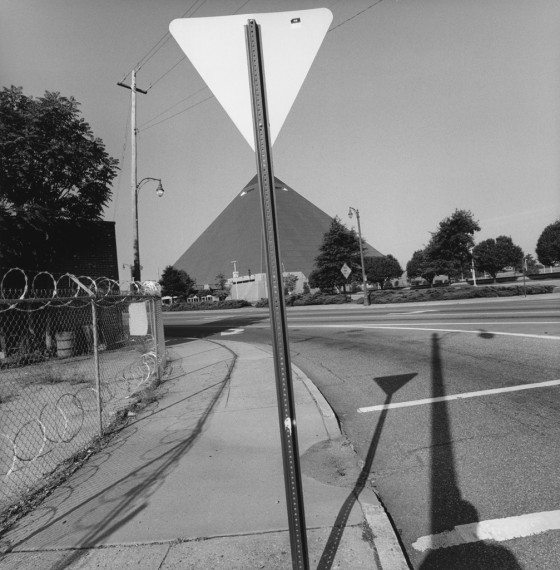
Symmetry in 6×6 photo by Diane Arbus You can see all my composition lessons here.
I have been quite fascinated with the square-format in street photography for a while. My fascination first came about from Jeroen Helmink, a photographer from the Netherlands (you can see a fun video we made on shooting Hasseblads). There was something quite sexy about the 6×6 format– the way that it created perfect balance in the frame, the simplicity, as well as the novelty.
Of course as Instagram has become insanely popular– the square-format just looks like an “Instagram shot.” I have heard of Instagram as “ruining” the 6×6 format (medium-format film).
However I don’t think it really matters what camera, format, or aspect ratio you shoot in. Ultimately the most important thing is to create a visually compelling image that speaks to our hearts or souls.
-

Introducing Streettogs Academy

We always push for people to keep on practicing and developing your skills and your eye. We also believe in having a passionate group of people helping each other to become good with this passion of ours. With that in mind, we are launching a new initiative here on the blog: Streettogs Academy.
-
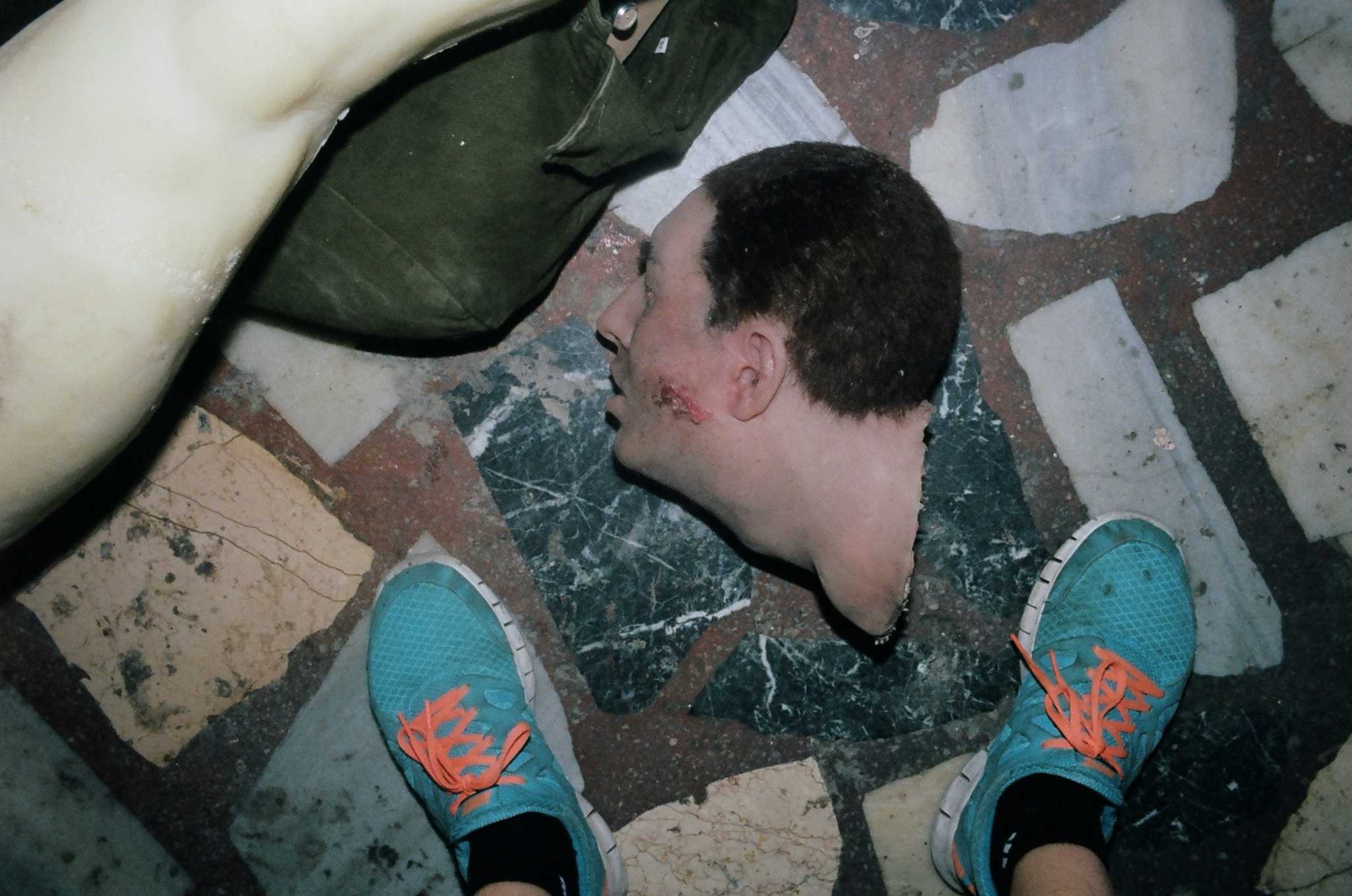
10 Things To Try When You’re in a Photographic Rut

- Visit an exhibition or a museum (on photography or any other art form).
- Try shooting film, and not processing your work for at least 3 months. Then do a final edit at the end.
- Travel (doesn’t have to be international, it can be even an hour drive away).
- Write down any photographic ideas you have for potential projects in a notebook over a nice coffee, beer, or glass of wine.
- Meet others photographers in person, and hear what they’re working on (or advice they may have).
- Go for a walk around your block, and bring your camera with you.
- Intentionally try to take really boring photos (a la Martin Parr).
- Stop taking photos for a while and try writing, drawing, or playing musical instrument.
- Attend a photography lecture or workshop.
- Ask yourself: “Why do I take pictures?” and reflect on it. Ultimately the most important reason to take photos is to have something to say.
What else do you do when you’re lacking inspiration in your photography? Add your tips in the comments below!
-
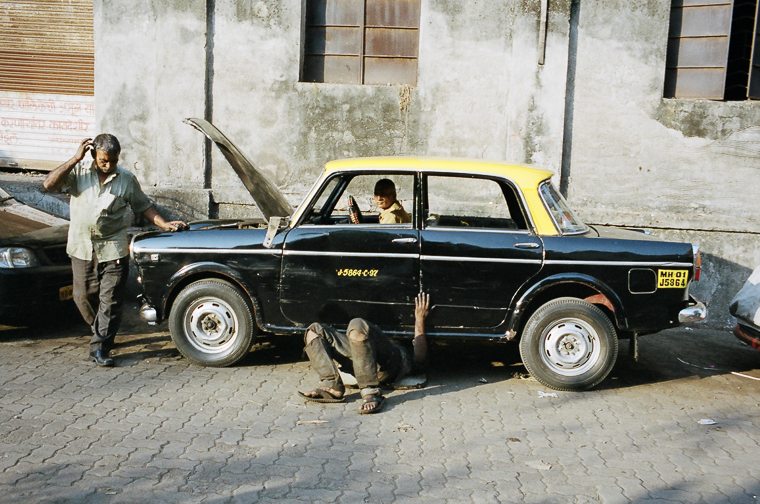
10 Things Not to Do While Traveling

Mumbai, 2013 - Don’t speak English (speak the local language)
- Don’t eat McDonalds or drink Starbucks (explore local food)
- Don’t travel with check-in luggage (keep everything to a small carry-on)
- Don’t keep to yourself (make new friends in the streets)
- Don’t try to see everything (it is better to see fewer places more thoroughly)
- Don’t travel without water
- Don’t be addicted to your devices (fast from social media)
- Don’t forget to keep a daily journal
- Don’t stay at an expensive hotel (use more money for experiences)
- Don’t go with a plan; explore, get lost, and be a flaneur
And of course– don’t listen to me. What else don’t you do while traveling? Add to this list in the comments below!
-
Saigon Diary #4: Leading Lines, Golden Triangle Composition, and Working the Scene

Hey streettogs, thanks for staying tuned in for the “Saigon Diary” series.
For the sake of getting sleep and having higher quality posts, I’ve decided not to keep a daily diary– but to update every 2-3 days (depending on how interesting my days are).
Some people are asking me why I’m showing bad photos in these series. So to clarify, I am trying to make this process of taking photos in Saigon as transparent as possible. So I am purposefully putting out bad photos, critiquing my own work, and sharing some of my thought process. My hope is that this is helpful to you!
-
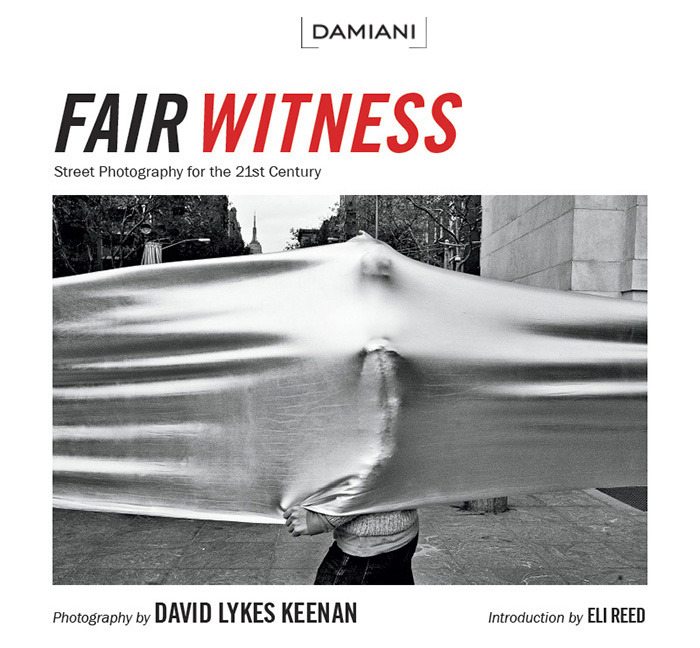
Fair Witness: Interview with David Lykes Keenan

Special thanks to Clifton Barker and Gary Gumanow for putting together this interview with David Lykes Keenan, who is currently fundraising a kickstarter for his “Fair Witness” street photography book.Â
Clifton: Few have done such great things for the photography scene in Austin as David Lykes Keenan, who I have the pleasure of interviewing today. He founded the Austin Center for Photography and helped it grow during the organization’s first three years. David’s work has attracted some very impressive fans from the likes of Elliot Erwitt and Eli Reed, and ultimately brought legitimacy to the art of street photography in Austin. His book FAIR WITNESS, a collection of photos from NYC, Austin, and other cities, is positioned to be a great success, take a moment and support it on Kickstarter.
-
5 Tips For Really Busy Street Photographers

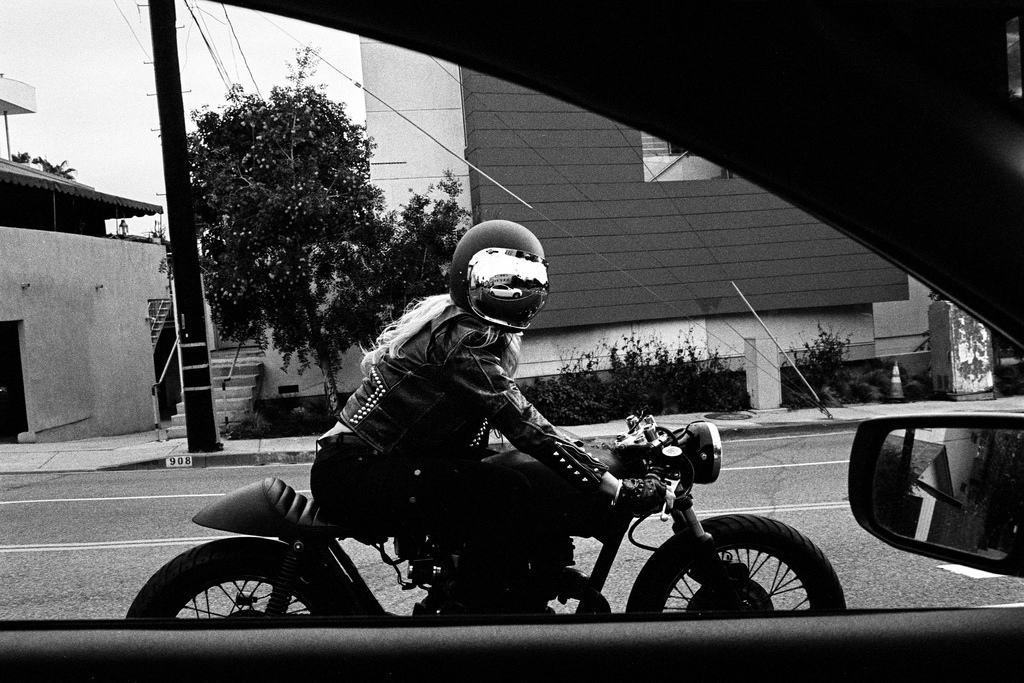
NYC, 2013 Nowadays. we are all really busy. We have countless commitments at work, at home, with our friends, and with our families. It is really hard to find time to shoot street photography. Not all of us can leave the obligations of the “real world†and just go out and shoot all the time.
Ironically enough even though I am a “full time street photographer‖ I still find it really hard to make time to shoot. I spend a lot of time with emails, social media, blogging, finances, helping out Cindy and my family, and church related activities.
If you consider yourself a busy person, here are some tips I suggest to shoot more street photography:
-
10 Things Not to Do in Street Photography

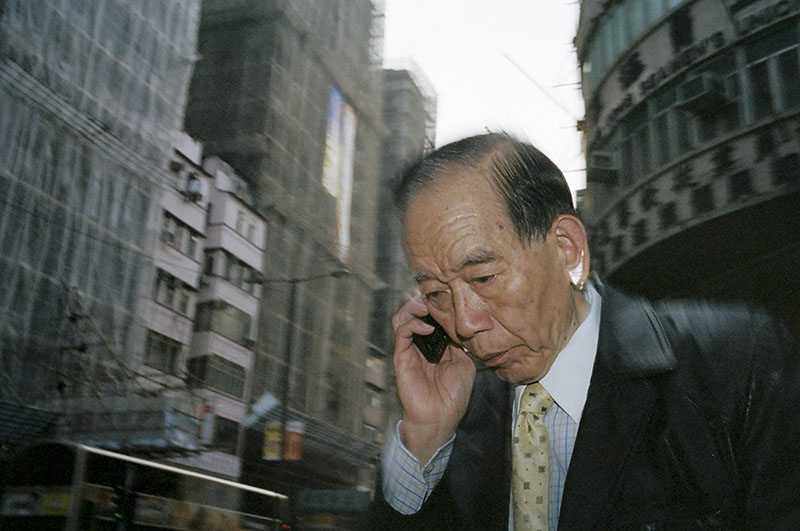
Hong Kong, 2012 - Don’t chimp (let your shots marinate)
- Don’t look at bad photos (study the masters)
- Don’t spend time on gear review sites when you’re bored (buy books, not gear)
- Don’t worry about your camera (the best camera is the one you have with you)
- Don’t mix black and white and color in the same set (aim for consistency)
- Don’t stop shooting (shoot a lot of bad photos to get a few good ones)
- Don’t worry about how many followers you have (shoot for yourself, like Vivian Maier)
- Don’t publish photos without a second opinion (edit ruthlessly)
- Don’t only take 1 photo of a scene (work the scene, there is more than one “decisive moment”)
- Don’t forget to have fun (life is short, shoot if everyday were your last)
What else would you add to this list? Share what you don’t do in street photography in the comments below!
-
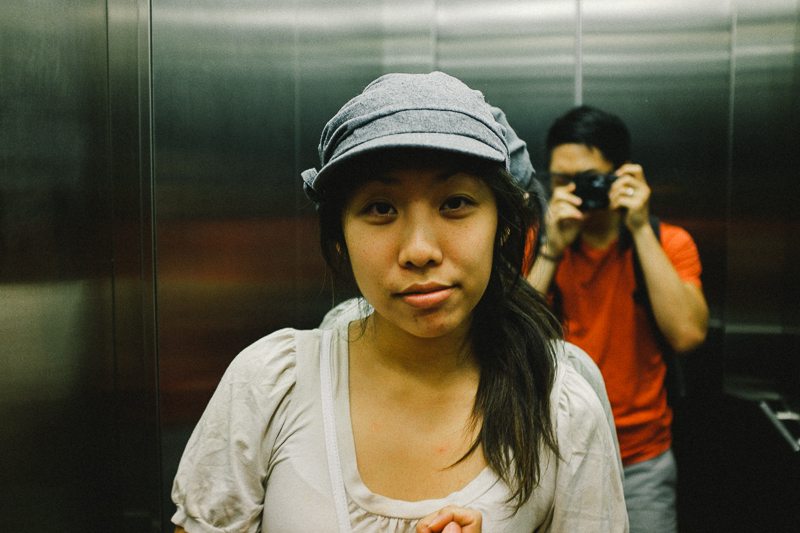
Saigon Diary #3: Motorbikes, Vietnamese Coffee, and Night Shooting
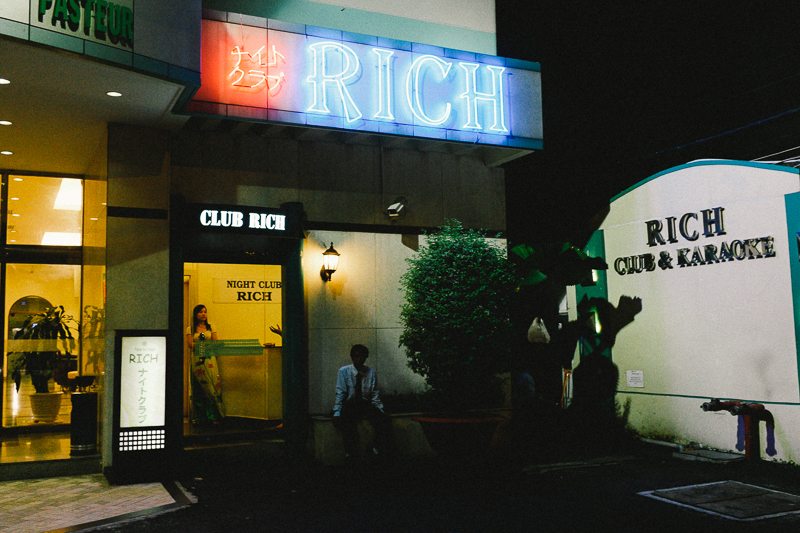
Today was another beautiful day in Saigon.
However, I did wake up pretty exhausted. The light from the morning light was nice, getting me up at around 8am. I slept probably around 1:30am (staying up to write Saigon Diary #2). But I think no matter how tired I am, I want to keep up this daily diary.
Anyways, went to the gym– lifted some weights, took a quick shower, and then woke up Cindy. We headed down to breakfast in a rush (at around 8:40– as breakfast ends at 9am). We enjoy our morning meal, and I practice some more Vietnamese to the chef who makes me my morning eggs.
Today is exciting because we meet up with Minh, a friend of a friend of Cindy– who teaches English and agrees to show us around town on his motorbike. I never rode a motorbike before, and am quite excited.
-
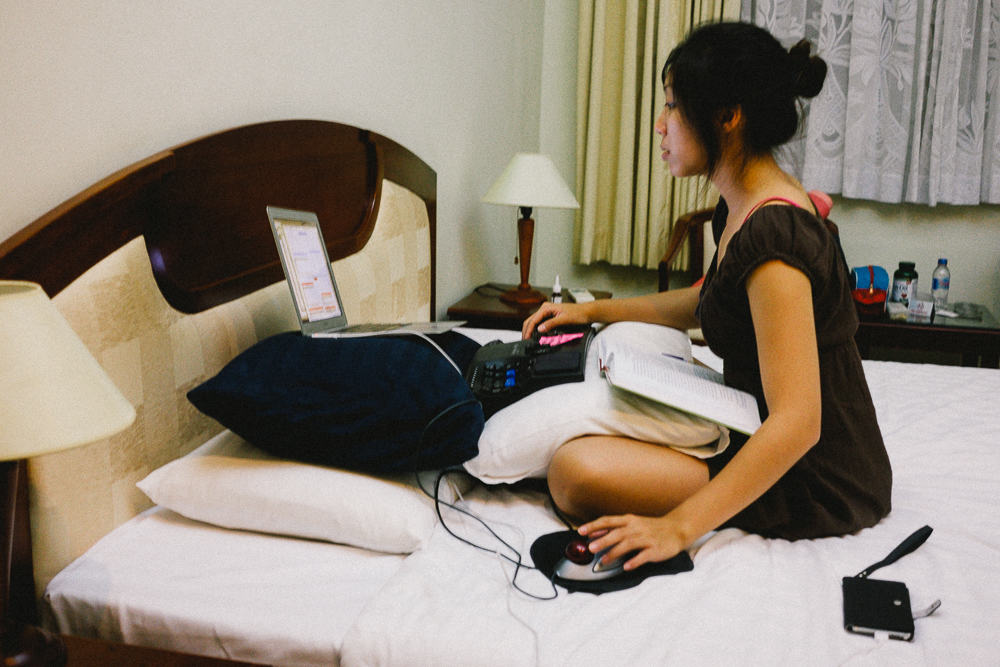
Saigon Diary #2: Learning Vietnamese, Seeing Common Threads, and Triangles

Due to the positive feedback from the first “Saigon Diary #1” I will see if I can do daily diary entries.
Thank you guys also for the feedback on the new blog design. I’ve been wanting to change my blog to a “responsive design” — that would look great across smartphones, tablets, and computers. I also made the change from a 2-column blog to a 1-column blog, to create a better reading experience for you guys. The 1-column design allows me to upload larger images, and also larger text.
I liked having the links on the right column, but now you can either find the articles in the “Start here” page or the “Masters” tab on top. I will play around with the design more in the upcoming weeks. Would love to hear your feedback on the new design in the comments below. Please let me know what you would like about it, and what you would like to see me add/change.
Anyways moving on– today I woke up relatively early again (around 7am). I wish I could wake up that consistently everyday back in the states (I usually get up at around 10am). I did some bodyweight squats in the room to get pumped up for the day, and also to prepare myself for breakfast.
-
Eric Kim Lightroom Presets

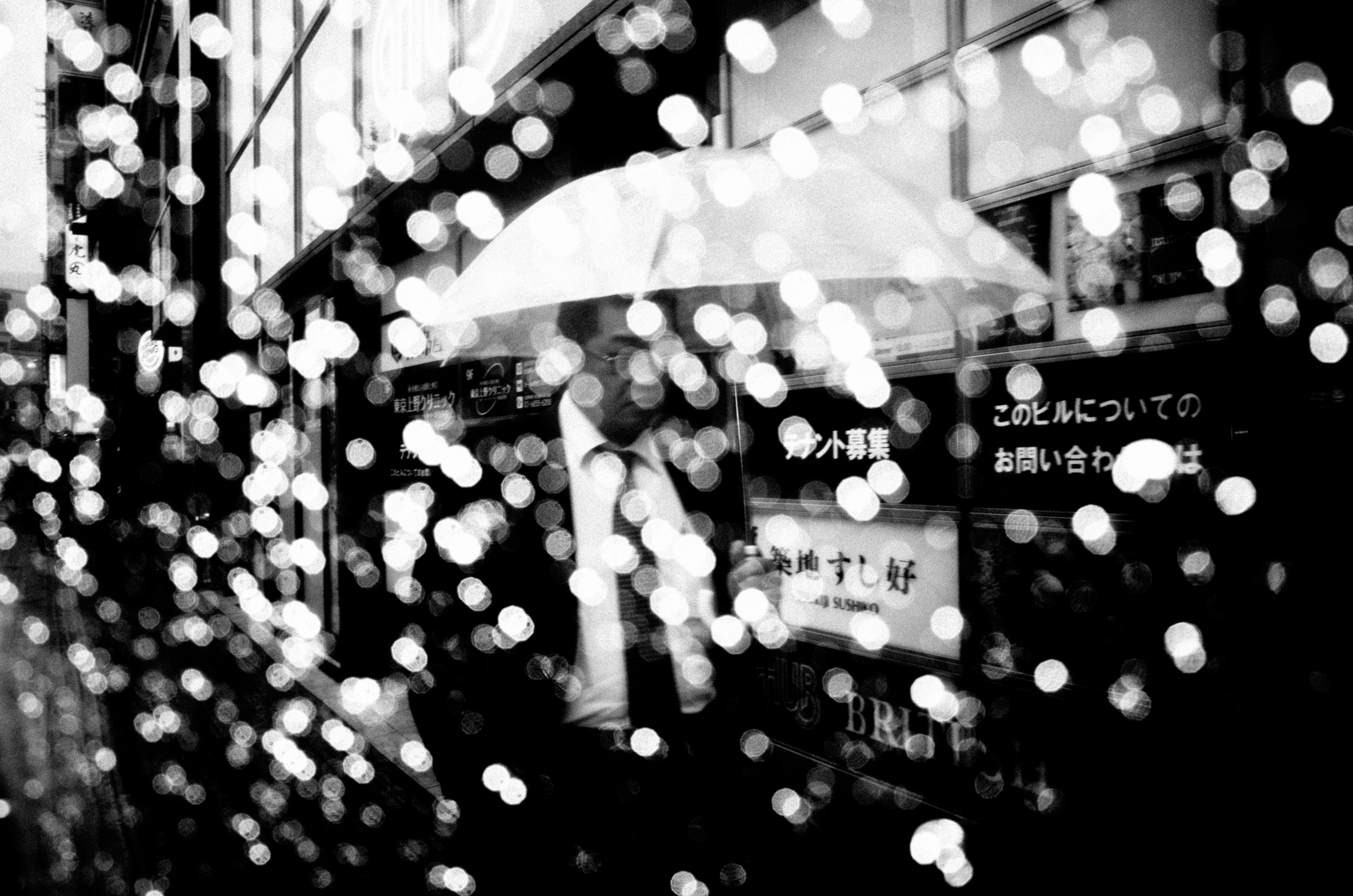
Tokyo man flip phone. Tokyo, 2017. Shot on RICOH GR II with flash, with ERIC KIM Color Preset Dear friend,
As a present, here are some new ERIC KIM LIGHTROOM CLASSIC CC PRESETS 2018 for you!
-
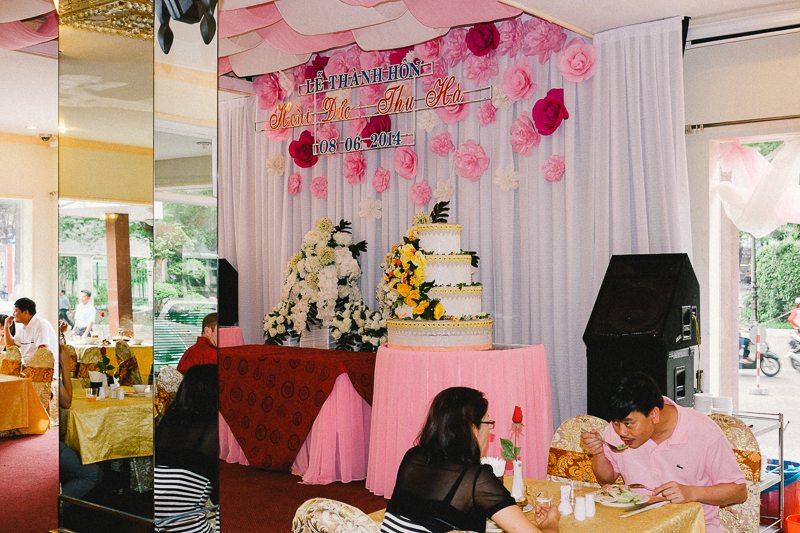
Saigon Diary #1: First Day in Vietnam

Saigon, 2014. Last photo of my first day in Saigon, in an elevator. Full story later in the article. You can download my free Lightroom 5 film street photo presets which I used to process these photos. I used the “XT-1 v2” preset on most of these.
Hey what’s up streettogs– this is Eric Kim reporting live from Ho Chi Minh City (Saigon) in Vietnam. After a lovely 14-hour flight from Vancouver and a 4-hour connecting flight from Hong Kong, my girlfriend Cindy and I made it safely here!
Today over some strong Vietnamese coffee with Cindy– she helped me come up with a good idea. I wanted to document my time here in Saigon, and also document Cindy’s experience here. I am going to include the contact sheets as well — and take you behind the scenes. I hope you enjoy this journey with me!
-
New Eric Kim Street Photography Workshops in 2014 and 2015 in Stockholm, Portland, SF, Chicago, Toronto, NYC & More!

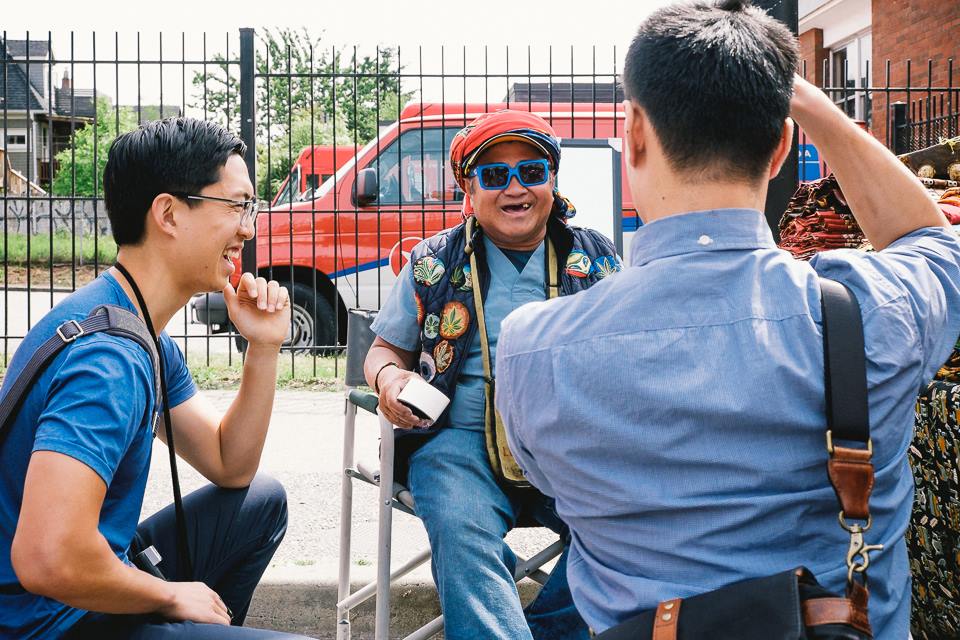
Photographing strangers on the streets of Vancouver with Tommy Chong! Photograph by Nancy Lee Hey streettogs, I am excited to share my upcoming street photography workshops for this year as well in 2015! If you want to push your boundaries in street photography, gain inspiration and confidence, and meet other passionate street photographers– join me at one of my upcoming workshops.
Some of my upcoming destinations include Ho Chi Minh City, Singapore, Tokyo, Hong Kong, Sydney, Melbourne, San Francisco, Stockholm, London (Intro and Advanced), Portland, Chicago, Toronto, New York City, and more! Read more to see my full schedule.
-
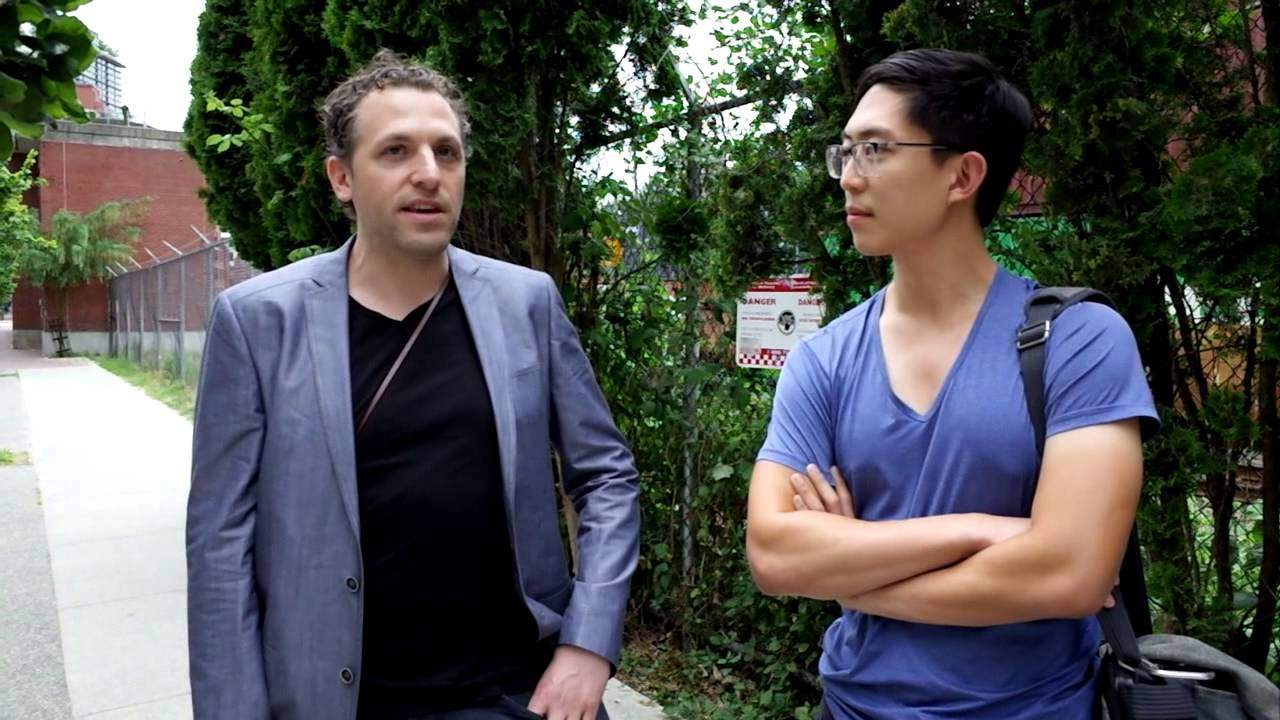
Street Photography Interview with John Goldsmith in Vancouver
Funny story– Take Kayo was interviewing me in the streets of Vancouver when John Goldsmith (in my opinion the best street photographer in Vancouver) pops out of some bushes and starts photographing us. We then turned the lens onto John, and I do a brief interview with him on the streets– asking him about his techniques, his “keeper” rates, and his passion for street photography.
You can check a longer interview I’ve done with John on the blog here.
Follow John
-
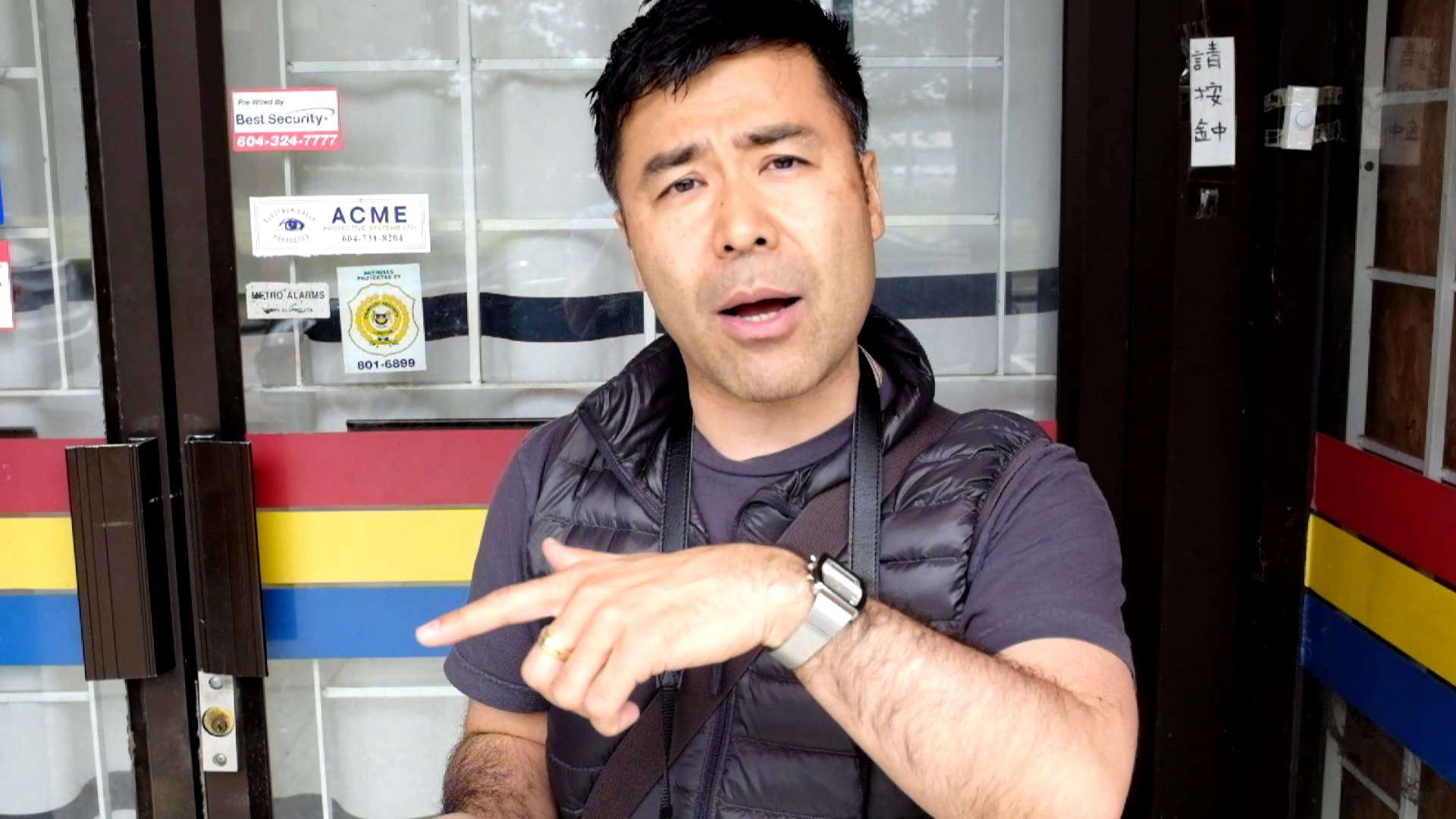
Video Interview with Take Kayo in the Streets of Vancouver
I recently had the pleasure bumping into Take Kayo (aka Bigheadtaco), a prolific street photographer and blogger based in Vancouver. Funny story: I was having an espresso and blogging at Revolver, and out of nowhere– Take and the owner Tarry recognized me and started photographing me (really close, at 1 meter). We started laughing, chatting– and got to know each other a bit more.
Take was born in Okinawa, and used to work at Kodak for around 10 years. Since then he has made the leap to digital, and has been passionate about shooting in the streets of Vancouver and testing & reviewing cameras. Seriously one of the most passionate guys I’ve met! To find out more about his infectious enthusiasm for photography, watch the interview above!
Follow Take
-
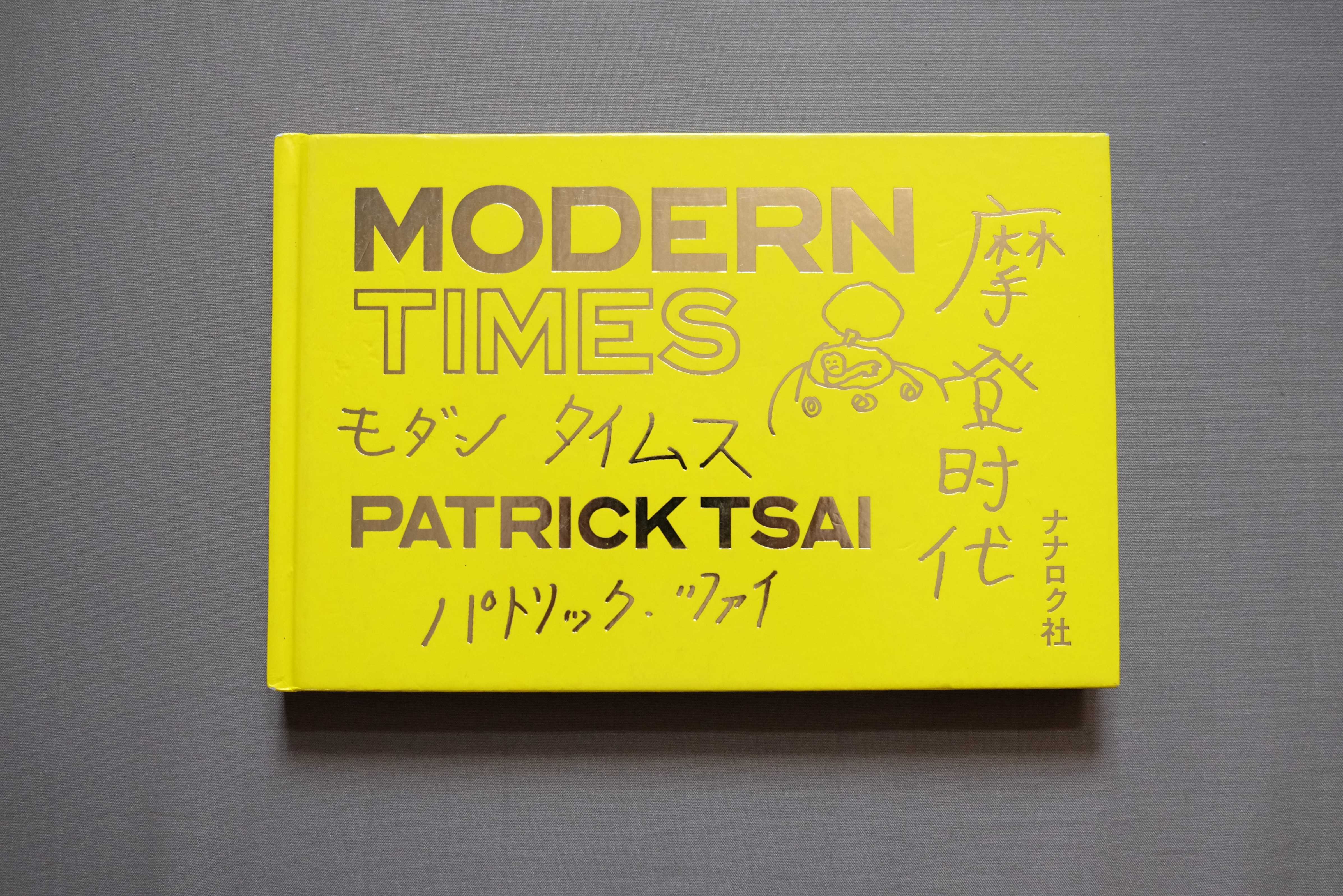
Street Photography Book Analysis: Modern Times by Patrick Tsai

One of the best things about photography is it gives us a view of places we otherwise won’t be able to visit. Street Photography ups the ante by actually heading to side streets, roads not taken, and places that won’t appear in your usual travel guide. In Patrick Tsai’s modern times, he shows us a China devoid of media’s prejudice and how this diaristic photographer tries to prove that he can document his surroundings as well.
Is he successful? Let’s analyze his book to find out.
-
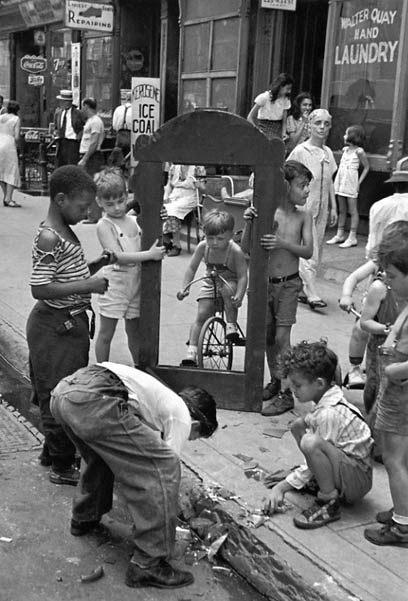
7 Lessons Helen Levitt Has Taught Me About Street Photography

Helen Levitt / New York, 1980 Helen Levitt is known as a “photographer’s photographer”
a photographer who is admired by photographers everywhere, but not that well known. Since the raise of fame of Vivian Maier— I wanted to profile the work of Helen Levitt, and share the work of talented female street photographers. -
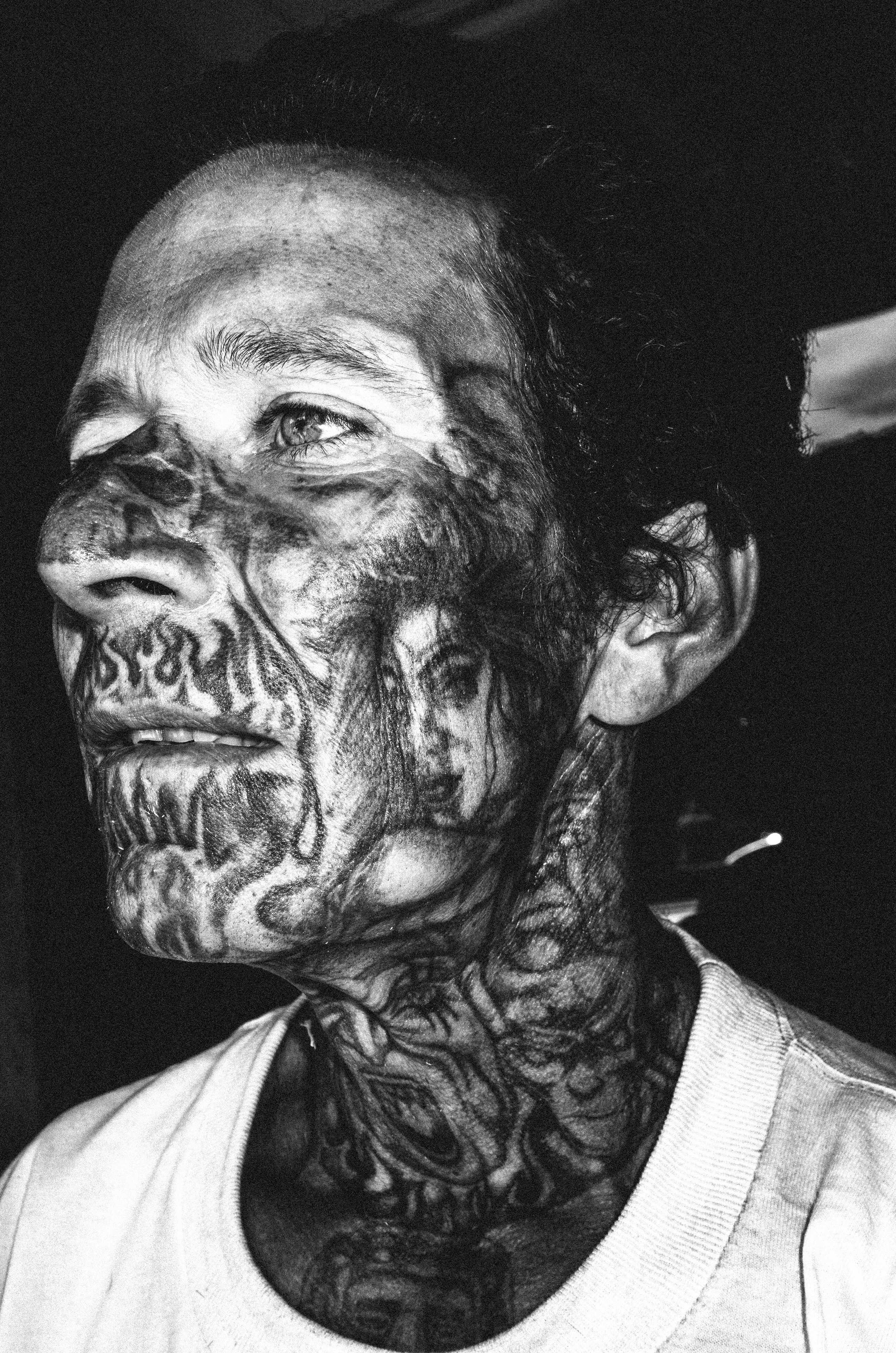
Listening to the Bass in Street Photography

Downtown LA, 2014 I recently read something quite interesting about music. The concept was when you’re listening to music, you tend to listen to the treble (high notes) and tend to ignore the bass (low notes).
Therefore the author suggested to get a richer experience listening to music, focus on listening to the bass (not the treble).
So I gave it a go myself. I listened to some of my favorite classical music, and really paid attention to the low notes of the cello in the background (instead of focusing on the high notes of these violins).
-
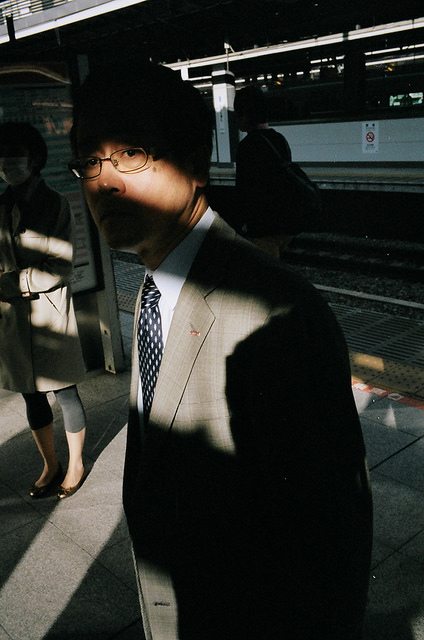
You Miss 100% of the Shots You Don’t Take

Wayne Gretzky once said, “You miss 100% of the shots you don’t takeâ€.
I find this such a beautiful quote not only in life but also street photography.
Many of us are afraid of taking risks, of taking chances. We worry about failure. We worry that others will judge us for our shortcomings. We worry about the worst case scenario.
But in life, we need to take chances. We need to take risks. We need to give things our best shot. By simply not trying, we don’t make any progress and don’t move forward.
In street photography there are a lot of risks face. Risk of getting yelled at, risk of missing the shot, risk of pissing somebody off.
We often hesitate too. For example I have missed thousands of potential photographs because of that split second in which that voice in my head goes, “Don’t take the shot, you might get in trouble or you might upset the person.†The second I have that doubt, I end up not taking the shot (and greatly regretting it afterwards).
In sports players often choke too. This has to do a lot with the pressure to perform. The second basketball players start thinking too much, they often miss the shots. Wayne Gretzky was one of the greatest hockey players in history, yet he has missed countless goal opportunities.
But you won’t ever make a shot unless you take a chance.
So in your street photography take more chances. Be bold. Take risks. Don’t worry about making bad photos. There is a nice quote I like: “To double your success rate, double your failure rate.â€
As my friend Charlie Kirk says, “When in doubt, click.†Don’t worry about making perfect photographs. Work hard, hustle, and work the scene. Take multiple photos from different angles. Crouch down. Take a step closer or take a step back. Don’t give up after only one photograph.
Work the scene
To learn more about working the scene and taking more risks, check out my article: “Debunking the Myth of the Decisive Moment.”
If you want to push yourself outside of your comfort zone in street photography, Check out one of my upcoming street photography workshops in Ho Chi Minh City, Singapore, Tokyo, Hong Kong, Melbourne, Sydney, and London.
-
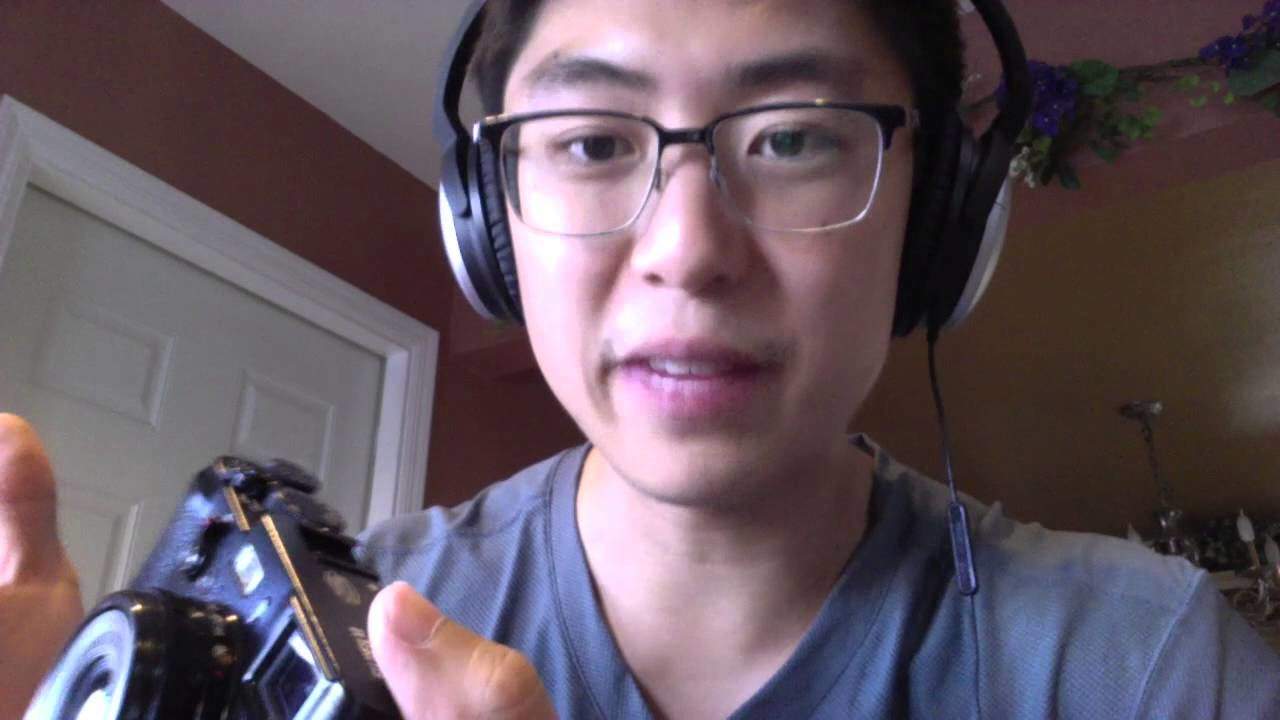
Video Review of the Fujifilm x100s and Tips for Street Photography
Just put together a video review and some street photography tips for the Fujifilm x100s. You can also see the full review I did of the camera here.
-
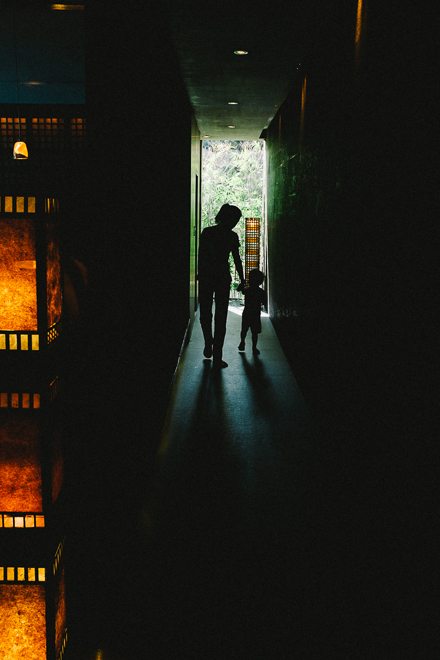
Review of the Fujifilm x100s for Street Photography

Disclosure: Fujifilm gave me a Fuji x100s for this review. I haven’t been paid to write this review, and will try to make it as non-biased as possible. Also there are Amazon affiliate links included– so if you order the camera or any other product from my link, it will give me a small percentage.
Fujifilm recently hooked it up with a x100s— and I took it on a test run throughout Manila and have been using it the last few weeks. Below is my review of the x100s for street photography and some of my thoughts on the camera.
-
Systems vs Goals in Street Photography

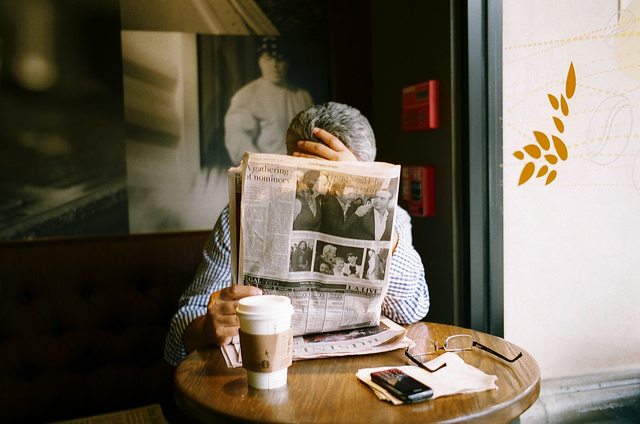
One of the most interesting concepts I’ve learned recently is the concept of “Systems” vs “Goals” from a book written by Scott Adams titled: “How to Fail at Almost Everything and Still Win Big.”
Basically Scott Adams says that in life we should focus on “Systems” instead of “Goals”. So what is the difference? Scott Adams defines a system as the following:
“A system is something you do on a regular basis that increases your odds of happiness in the long run.”
“Systems” are daily routines or procedures we do everyday (which we tend to have a lot of control over). For example in the context of street photography, going out and shooting everyday is a system. Buying a street photography book once a month and studying it is a system. Meeting other street photographers in person to get feedback and critique on your work is a system. Systems are much more dependent on the process– not the final result.
“Goals” tend to be external accomplishments that we have far less control over. For example in street photography– goals include: getting 100+ likes on your photos, having your book published by a famous publisher, having a big solo exhibition at a prestigious gallery, and becoming rich and famous through your photography.
So in life and street photography– focus on systems instead of goals. Focus on the daily things that you have control over.
Systems focus on the small daily achievements you make– and the step-by-step progress you make forward. Goals tend to be focused too many on things you have no control over. Not only that, but we tend to get more disappointed by goals as they are harder to achieve.
In conclusion to gain more happiness and progress in street photography– focus on systems, not goals. Now go out and pound the pavement!
-
The Benefits Shooting Both Film and Digital in Street Photography

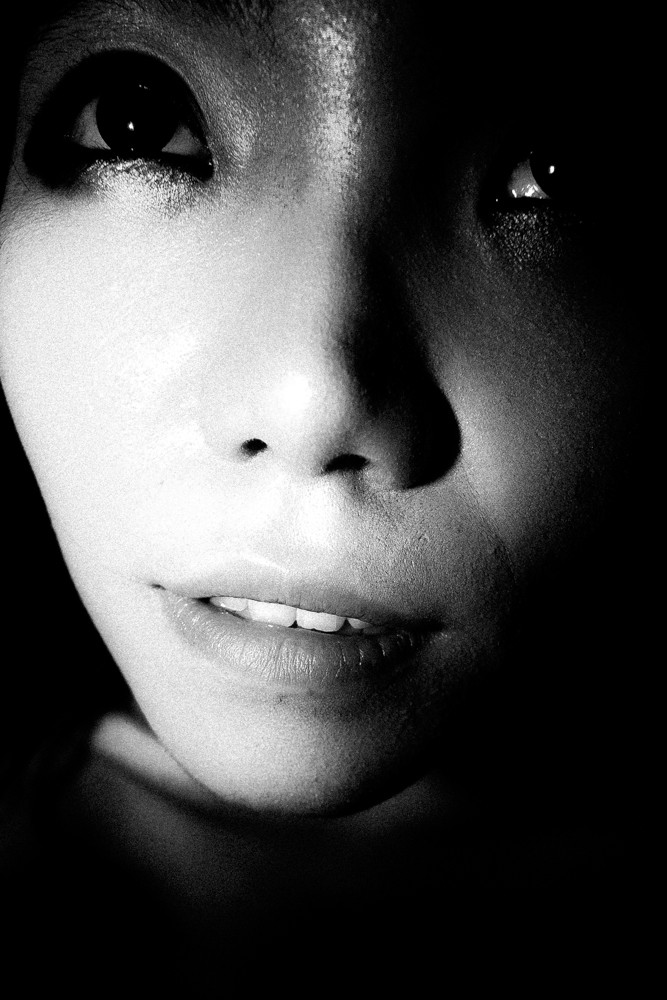
Digital. C/ Jt White This guest blog post is by JT White, a street photographer based in Seoul, Korea.
JT: I get asked a lot about film versus digital.
I use both film and digital cameras. Which, depend really depends on a lot of things. It can depend on my mood or on the lens I want to use. I don’t think I really have much of an aesthetic style as opposed to a way of shooting. I decide what camera to use depending on what I have and what my subject is going to be.
-
Behind-the-Scenes: LA Street Photography Workshop Video Testimonial & Review
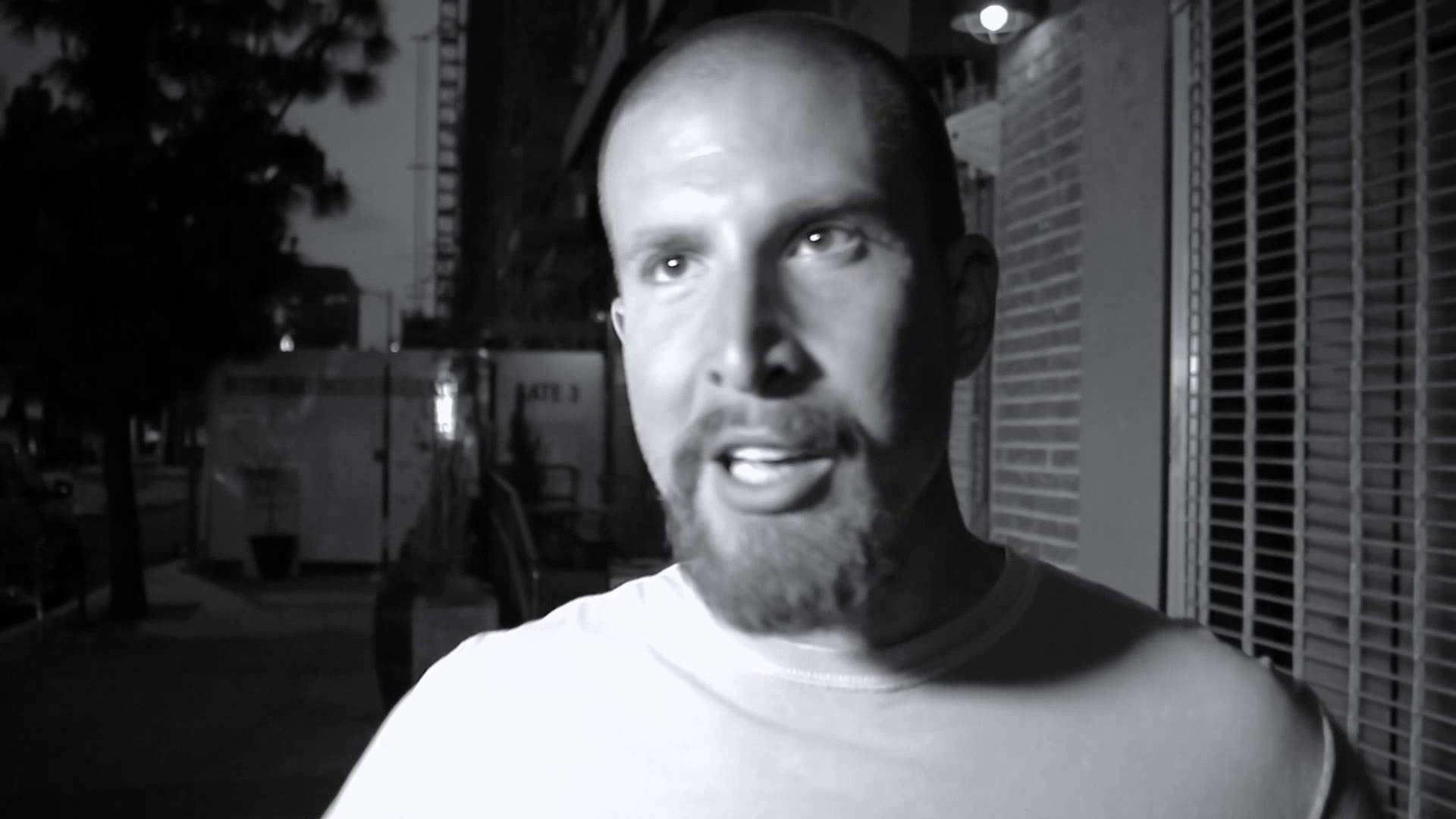
Chris Stoltz, a talented photographer and videographer (and workshop attendee), just put together an awesome behind-the-scenes video of my recent LA Street Photography Workshop. He interviews me about my passion for teaching workshops, and also the students and what they gained from the workshop.
If you’re interested in breaking outside of your comfort zone, growing creatively, and meeting other passionate street photographers– join me at one of my future street photography workshops.
-
8 Lessons Robert Capa Has Taught Me About Street Photography

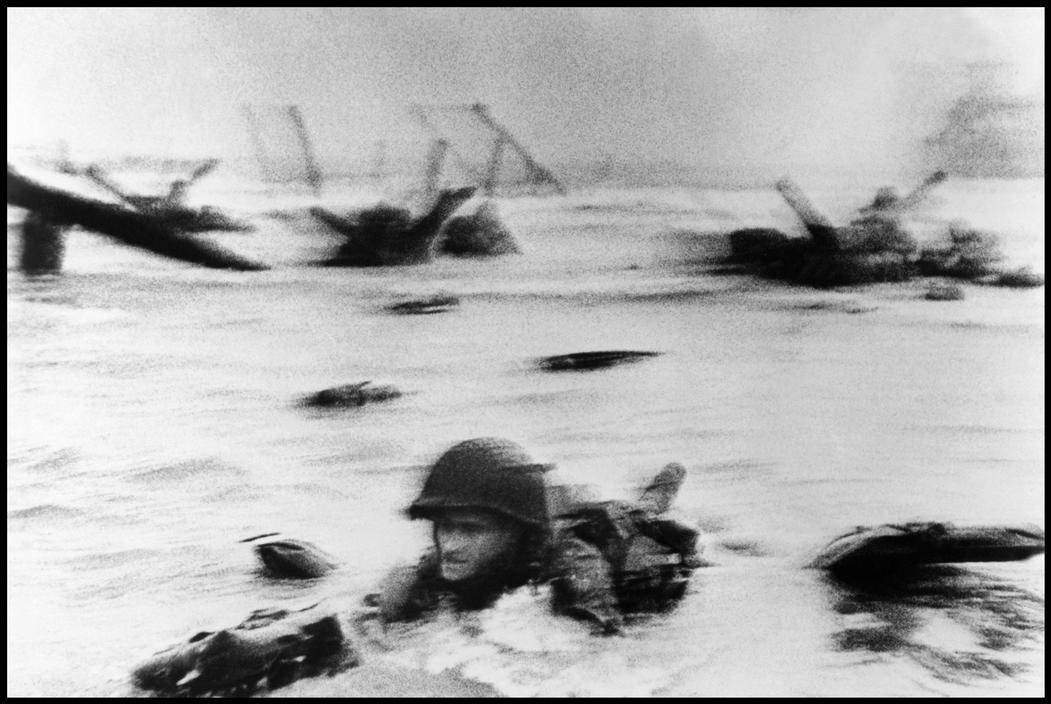
© Robert Capa / Magnum Photos. FRANCE. Normandy. June 6th, 1944. Landing of the American troops on Omaha Beach Robert Capa is one of the greatest photographers to have ever lived. When he was still alive, he was proclaimed as “The Greatest War-Photographer in the World”. He captured some of the most intense wars during his time, including the Spanish Civil War (1936-39), Chinese resistance to the Japanese invasion (covered in 1938), the European theater of World War II from (1941-45), the first Arab-Israeli War (1948), and the French Indochina War (1954) and tragically passed away by stepping on a mine.
During his lifetime, he co-founded Magnum alongside photographers Henri Cartier-Bresson, George Rodger, David “Chim†Seymour, and William Vandivert in 1947. He also mentored many young photographers in Magnum such as Eve Arnold, Elliot Erwitt, Burt Glinn, Inge Morath, and Marc Riboud.
Capa also famously coined the phrase: “If your pictures aren’t good enough, you’re not close enoughâ€
and his bravery on the front-lines helped him capture some of the most intense, intimate, and emotional photos of war.So who exactly was Robert Capa, the man and the photographer? How did he start off as a photographer, start Magnum, and create a legacy that has lasted for decades? I wanted to learn more about Robert Capa
and did some research on him through the biography “Blood And Champagne: The Life And Times Of Robert Capa” as well as the autobiography Capa himself wrote: “Slightly Out of Focus” where he shares his personal stories from World War II.Interested in learning more about the legend Robert Capa? If so, read on.
-
How to Overcome Obstacles in Street Photography

Manila, 2013 I just finished a new book: “The Obstacle is the Way” by Ryan Holiday. The book is a huge source of inspiration for overcoming challenges– and using them to your advantage. In-fact, Ryan uses the quote from Marcus Aurelius for the title of his book: “The obstacle is the way”
meaning that if it weren’t for obstacles in our life, we wouldn’t grow, develop, and mature.I thought a lot about the obstacles I’ve faced in street photography– and how I have used those negative experiences and turned them into positive ones. Here are some thoughts on how you can continue to grow and develop in your street photography– and utilize negative experiences to your benefit.
-
How to Master the Creative Process in Street Photography

Downtown LA, 2014 We would all love to be more creative in our street photography. We want to create work that stands out from the crowd. We want to create images that connect emotionally to our viewers. We want our images to inspire our viewers. We want our images to speak from our heart, and communicate messages to our viewers.
How do we find more creativity in street photography? I have written about creativity in the past, but have recently been inspired by a new book– “Creativity, Inc.†by the president of Pixar.
Pixar is one of the most creative studios in the world. In my opinion, they haven’t made a bad movie so far. In addition, all of their films have been wildly successful both artistically and commercially all around the globe.
I wanted to use this article as an opportunity to meditate upon the creative process a bit more–and see how we can apply it in our street photography (and other parts of our life).
-
Rare Interview with Garry Winogrand at Rice University, 1977
If you are a Garry Winogrand fan, don’t miss out on this rare video interview with him. He talks about everything, including the “ultimate justification” for shooting with a rangefinder (along other things). Gotta love Lee Friedlander’s introduction: “Welcome to the Garry Winogrand Circus– he’ll explain all his pictures!”
Thanks to Tom Kaszuba and Gary Gumanow for sending this to me!
-
Debunking the “Myth of the Decisive Moment”

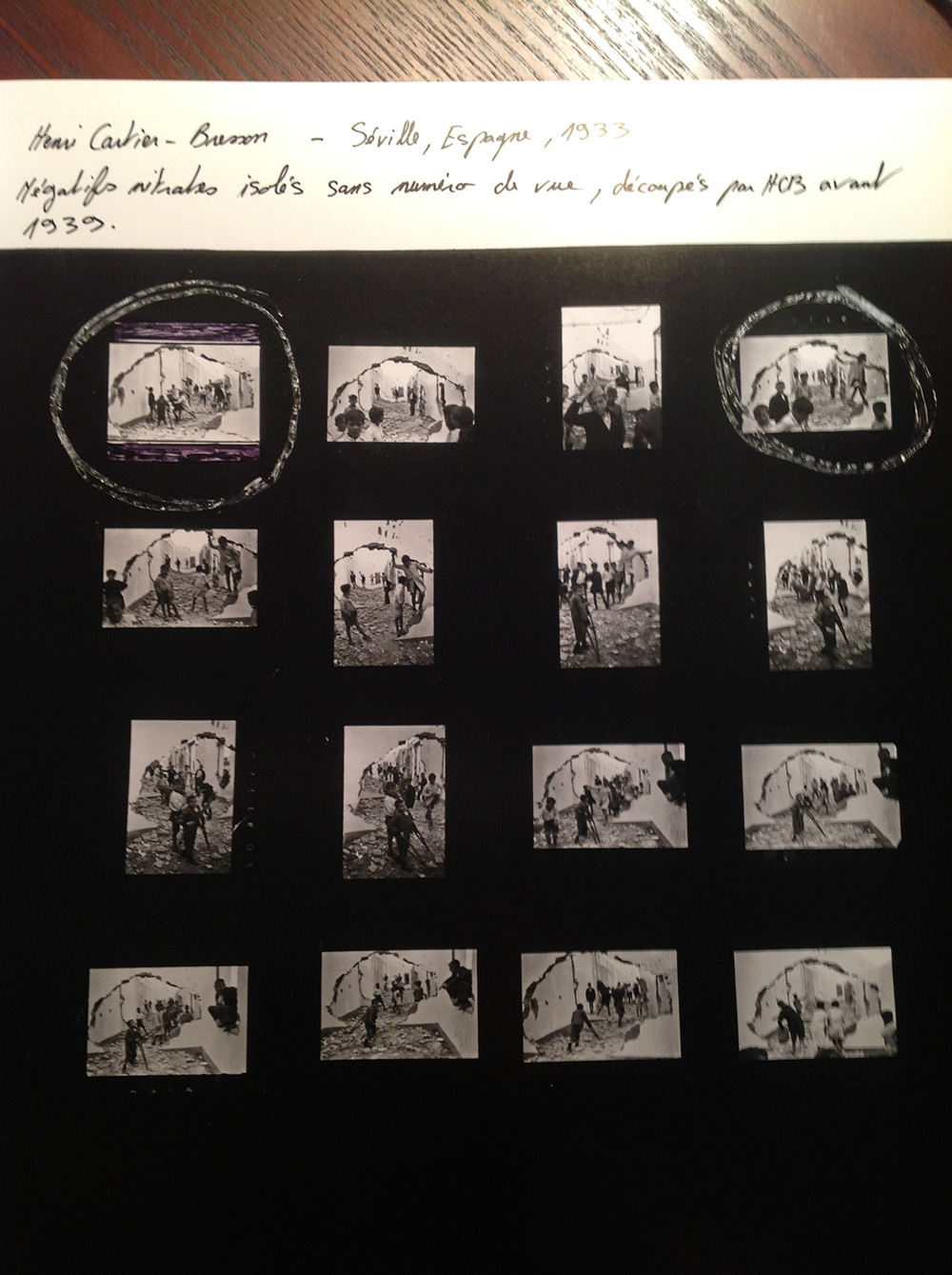
Contact sheet from Henri Cartier-Bresson in Seville, Spain, 1933. © Henri Cartier-Bresson / Magnum Photos When I started off in street photography, I believed in the “myth of the decisive momentâ€. What do I mean by that?
Well, when I first heard of “The Decisive Moment†by Henri Cartier Bresson, I had the wrong impression that he only took one photo of a scene. I imagined Henri Cartier Bresson waltzing into a street scene, carefully aiming his Leica, and taking only one shot and creating masterpieces. I thought he was a demigod– a photographer who somehow had this magic behind his lens.
However if we look at his contact sheets, it is a different story. He (and almost all great photographers) never only take one photo of a great potential scene. Out of Henri Cartier Bresson’s contact sheets, you can see that almost all of his great images required him “working the sceneâ€â€“ taking multiple photos of the same scene at different angles, moments, and perspectives. He hustled hard to get the shots he wanted– and would spend considerable time with his contact sheets, determining which photos he decided were his “bestâ€.
Close-ups of the contact sheet from Seville, by Henri Cartier-Bresson:


One mistake that I see a lot of beginner street photographers is that they only take one photo per scene. I think this is because they too believe in the “myth of the decisive moment†and partly because of the fear that they will be caught taking photographs.
The importance of studying contact sheets
 Henri Cartier-Bresson looking at contacts at the New York Magnum Office. 1959. © Rene Burri / Magnum Photos
I have written about contact sheets several times before. For those of you who aren’t familiar with what a contact sheet is it is pretty much a sheet of paper which shows all the photographs a photographer shot on a roll of film. And with this sheet of paper, a photographer can use a loupe (small magnifying glass for the eye) and edit (choose) their favorite images. This was done in the days of the darkroom, and when digital didn’t exist.
Now of course, we have “Lightroom†where we can identify all of our photos of a scene digitally. Instead of having to look at tiny thumbnails, we can now see all of our “almost†photos in full resolution.
Contact sheets are the best learning tools for a photographer. You can learn from contact sheets from other photographers, and also from your own contact sheets.
 Henri Cartier-Bresson. SPAIN. 1933. Valencia. Note the two versions of the photo he was considering from. This was the best.
 Henri Cartier-Bresson. SPAIN. 1933. Valencia. This image wasn’t as strong as the prior.
Analyzing contact sheets from the masters who came before us is the closest thing we have to reading their minds. We can see how they “worked the sceneâ€â€“ and how they took photos from different perspectives, decided when to hit the shutter, and how many photos they decided to take. Some photographers are able to “nail†their photos in just 5-6 shots, while other photographers will shoot a full roll of 36 photos in just one scene.
Realize that all these master photographers were shooting on film, where it actually cost something to photograph. Now that most of us shoot digitally, there is no excuse for us to not “work the scene†and take many different photos of the same scene.
To learn more about contact sheets, check out my article: “10 Things Street Photographers Can Learn From Magnum Contact Sheets†and also pick up a copy of “Magnum Contact Sheets†on Amazon. It will be the best $100 you will ever spend for your photographic education.
How to “work the sceneâ€
Okay, so we’ve talked about the importance of “working the sceneâ€â€“ and how important it is to take multiple photos of a scene (not just one photo). So how do you exactly “work the sceneâ€?
A few things to clarify:
1. Don’t only just take one photo
 Contact sheet of Elliott Erwitt, “Bulldogsâ€, New York, 2000. © Elliott Erwitt / Magnum Photos
Once again, it is very tempting to only the one photograph when you see a good scene. When I started off in street photography, I would be deathly afraid of offending people or being “caught in the act†of photographing strangers.
However realize that to make a great photograph, you need to work the scene. You will never know when the “best†decisive moment will occur. In a scene, there are many different great potential “decisive momentsâ€. You generally only know which is the best “decisive moment†afterwards in the editing phase.
 “Bulldogsâ€, New York, 2000. © Elliott Erwitt / Magnum Photos
Even Henri Cartier Bresson once said: “Sometimes you have to milk the cow a lot to get a little bit of cheese.â€
2. Don’t chimp
 Alain Capeilleres, 1976. © Martine Franck / Magnum Photos.
Another practical tip to better “work the scene†is to not “chimpâ€. What is chimping you ask? Well, it is when you look at your LCD screen after you take a photograph. Why do they call that “chimpingâ€? Well, apparently film photographers used to make fun of digital photographers by saying they looked like a bunch of “chimps†(or monkeys) when they would crowd around their LCD screens and show off the photos they just took.
 Photo by Martine Franck, Provence-Alpes-Côte d’Azur region. Town of Le Brusc. Pool designed by Alain Capeilleres, 1976. © Martine Franck / Magnum Photos
So what is so bad about “chimping†anyways? I’ve written an article on why street photographers shouldn’t chimp– but to sum up, chimping kills your flow when you’re out shooting on the streets. Rather than checking your LCD screen several times while working a scene to check for exposure, framing, and what you captured– it is better to just take a lot of photos at different angles and moments and choose the best photos later.
3. Linger
 Contact sheet of Richard Kalvar, “Piazza Della Rotondaâ€. Rome, Italy, 1980. © Richard Kalvar / Magnum Photos
“Lingering†is one of the most difficult things about “working the sceneâ€. Lingering is to “overstay your welcomeâ€. It is generally rude to “lingerâ€. Lingering is like “loiteringâ€â€“ you hang around longer than you should, and people look down on it.
One of the most frequently asked questions I get in my workshops is, “How long should I ‘work a scene’ and linger before I know it’s time to leave, or I got the shot?â€
Well, that is the big problem. We have no idea when we either “got the shot†or we’ve hung around “long enoughâ€.
Personally, my philosophy is to be the houseguest that overstays his or her welcome. Did you ever have a friend who asked to stay at your place for a week but ends up staying a few months? Be that guy.
 “Piazza Della Rotondaâ€. Rome, Italy, 1980. © Richard Kalvar / Magnum Photos
The reason I advocate for “overstaying your welcome†is because it is better to linger for a longer period of time because often your best shot will be the last shot. Looking at a lot of contact sheets, especially this image by Richard Kalvar, you see that his best image was at the very end (on his 37th frame, quite lucky). If he didn’t linger around and work the scene, he would’ve never gotten his iconic shot.
Furthermore in street photography, you will only see a great potential scene once in your life. You might see similar scenes, but you will never see the same exact scene with the same exact people, with that background, that light, and that configuration.
So don’t live with regrets, linger around longer than you should– and “overshoot†a scene.
A technique I learned from my friend Charlie Kirk is if you see a great potential scene, hang around and wait a bit longer before you go in and start taking photos. For example, if you see a cool looking guy smoking– linger around him and wait for him to take a puff– then jump in and take a few shots of him inhaling his cigarette.
Lingering is quite painful to do. It is awkward, makes you feel uncomfortable, and might make your subject feel uncomfortable.
One way I get over the awkwardness of lingering and “working the scene†is by pretending I am photographing something behind them and avoiding eye contact. Because I shoot with a 35mm lens, I don’t have to point my camera directly at my subject to get them in the frame.
Another technique is to smile and interact with my subject while photographing them. For example, if I see a good scene, I might start off by shooting candidly– then if my subject makes eye contact with me, I will also make eye contact, smile, keep shooting, and even start chatting with them (hey, you’re looking good!)
4. Look for gestures
 Che contact sheet. © Rene Burri / Magnum Photos
When you are “working the sceneâ€â€“ don’t just put your camera to rapid fire mode and start shooting aimlessly. Rather, be very conscious about when you decide to click the shutter.
 Che Guevara. © Rene Burri / Magnum Photos
Generally I make the decision to click the shutter when I see hand gestures. It can be a gesture of someone covering their face, holding their hands by their sides, or pointing in a certain direction.
Another great tip is to wait for eye contact. Try experimenting taking photos without eye contact, and some photos with eye contact. You never know which photograph will be better. But there is a saying: “eyes are the windows to the soulâ€â€“ which means if you get eye contact in your street photographs, they can be more intimate and emotional.
5. Keep your feet moving
If you ever watch a boxer, they rarely keep their feet still. The most important thing as a boxer is to never put your heels on the ground. The moment you stop moving is the moment you become a sitting duck– and will be a prime target to be knocked out by your opponent.
Take the same mindset as a street photographer. When working the scene, don’t just keep your feet planted on the ground. Keep your feet moving. Take photos from the left, right, take a step forward, a step backwards. Crouch down. Get different angles and perspectives.
6. Shoot both landscape and portrait photos
 Contact sheet, VJ Day. Photo by Alfred Eisenstaedt
Also when working the scene, try experimenting taking your photos in both landscape (horizontal) and portrait (vertical) modes. When you are in the heat of the moment and see a great street photography scene, it is often difficult to know which is the “better†orientation of your camera for the scene.
So if you have time, try to work out both orientations of your camera– depending on what kind of image you want to create.
7. Be calm and patient
 Jean Gaumy, Iran, 1986.
When you are working a scene, remember to try to stay calm and patient. We can sometimes get into a frenzy when working the scene, and trying to get “the shotâ€. However be calm and patient while you’re shooting– by analyzing when you need to hit the shutter, how close you need to be to your subject to frame them properly, and distracting elements in the background.
 Jean Gaumy, Iran, 1986.
When you start off working the scene as a beginner, you might get too much of an adrenaline rush to stay calm and patient when shooting. But realize that with practice be time, you will be more calm and patient when working the scene– which will help you make better rational choices while shooting, and ultimately help you make better images.
8. Focus on the background
 Martin Parr contact sheet from “The Last Resort“
When we are shooting on the streets, we can often focus too much on the subject and not enough on the background.
My advice is once you’ve established who your primary subject (or subjects) are– focus your eyes on the background. Try to get a clean background that doesn’t district– and adds to the scene.
 The Last Resort, Photo by Martin Parr
Try to avoid getting random heads, poles, trees, or cars in the background. When you are working the scene, move your feet to get a cleaner background. Messy backgrounds are one of the biggest killers of great potential street photographs.
Conclusion
 Contact Sheet by Martin Parr from Spain, 1997
To increase your odds of getting “keepers†in street photography, try practicing “working the scene†and lingering longer than necessary. Don’t keep your feet still, always be moving. But at the same time be patient.
 Photo by Martin Parr from his “Common Sense†book. Spain, 1997
Also know that by working the scene longer than you need to, it will be strange and awkward. But with time, patience, practice, and a smile– you will be able to overcome this.
Learn more
To learn more, I recommend picking up a copy of “Magnum contact sheets†or reading the in-depth article I wrote on it: “10 Things Street Photographers Can Learn From Magnum Contact Sheets“. Also make sure to check out the “Contact Sheets†section at the Iconic Photos Blog.
If you want to build your confidence in street photography and learn to better “work the sceneâ€â€“ join me at one of my upcoming street photography workshops!
-

Street Photography Tips with Zack Arias in Marrakech, Morocco with the Fujfilm XT-1
Zack Arias recently took the Fujfiim XT-1 for a trip to Marrakech, Morocco and shot some street photography there. In the video above, he demonstrates his approach and shares some tips and techniques in the streets.
I met Zack Arias in Dubai at Gulf Photo Plus a few months earlier and his enthusiasm and passion to learn more about street photography is infectious. Seriously one of the coolest and most down to earth photographers I have met. Enjoy the video above and make sure to check out Zack’s new DEDPXL website.
-
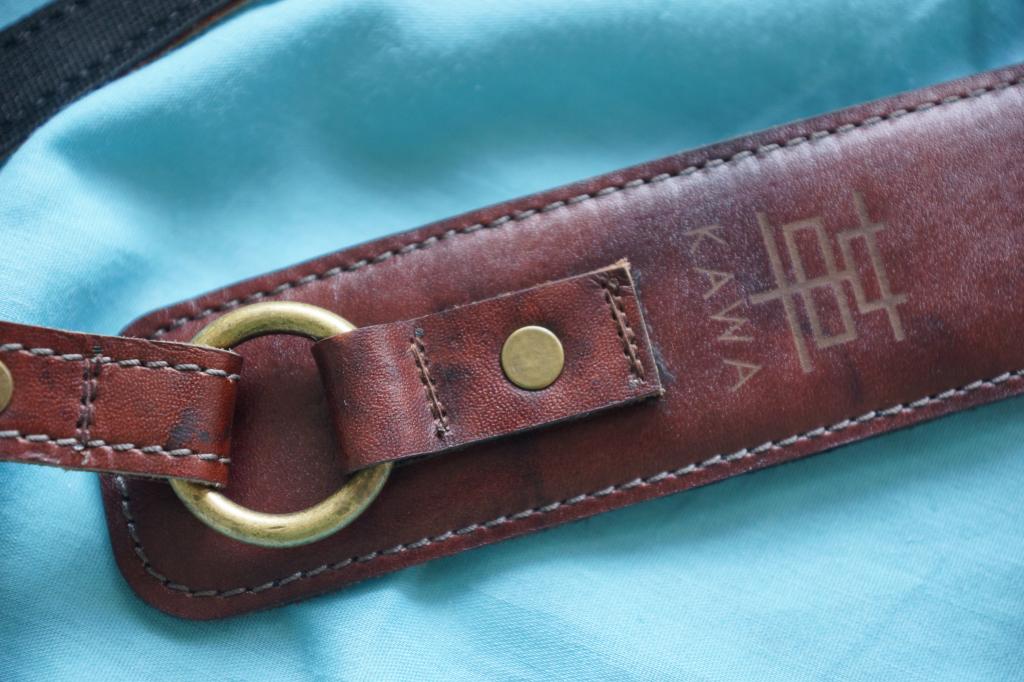
Fashionable and Functional: Review of the Kawa Pro Strap for Street Photography

Eric’s Note: We were given a Kawa Pro Strap for free to review for the blog. A.G. DeMesa, a talented photographer and writer based in Manila writes his thoughts about the strap in the review below. Expect more stuff coming from him soon ;)
On Straps
A.G. DeMesa: A strap is what physically attaches a photographer to his camera when not using his hands. It lets the photographer carry the camera and take it to places where he needs to. Therefore it is important for a strap to strike the perfect balance of comfort, robustness, and durability. In addition, speed is also a factor in street photography wherein we clock long hours in the blistering sun anticipating that photo. There are many makes and models that are available in the market that fulfill the criteria but I’m pretty sure none of them is as beautiful as a Kawa pro gear strap.
-
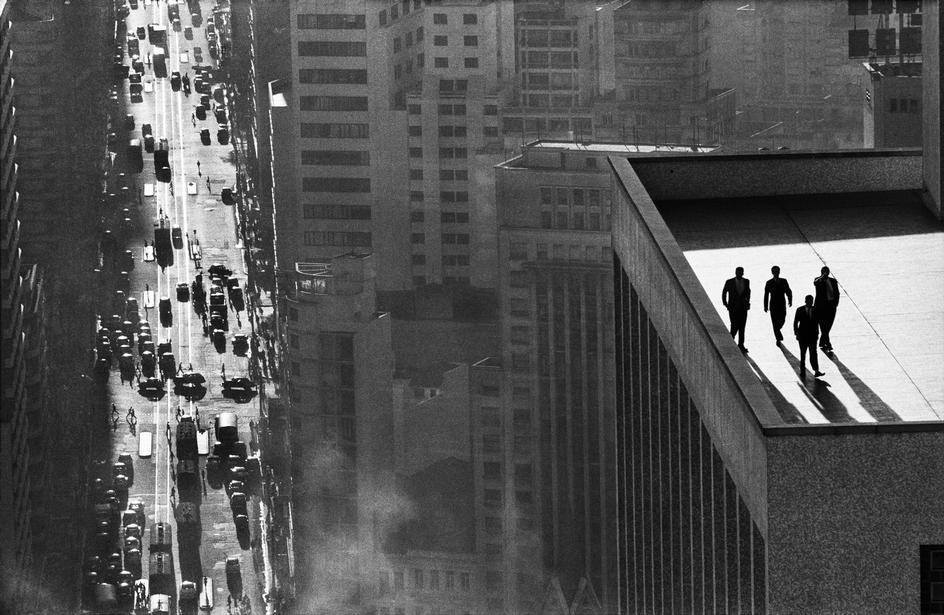
10 Principles of Good Street Photography

© Henri Cartier-Bresson / Magnum Photos Recently I’ve been getting really into Dieter Rams and his zen and minimalist philosophies when it comes to design. He has a famous list of “10 Principles of Good Design.” They are the following:
- Good design is innovative.
- Good design makes a product useful.
- Good design is aesthetic.
- Good design helps us to understand a product.
- Good design is unobtrusive.
- Good design is honest.
- Good design is durable.
- Good design is consequent to the last detail.
- Good design is concerned with the environment.
- Good design is as little design as possible.
I was inspired by his list, and thought I would do an homage to him by writing this list: “10 Principles of Good Street Photography†— read more to see how I applied Rams’ principles to street photography!
-
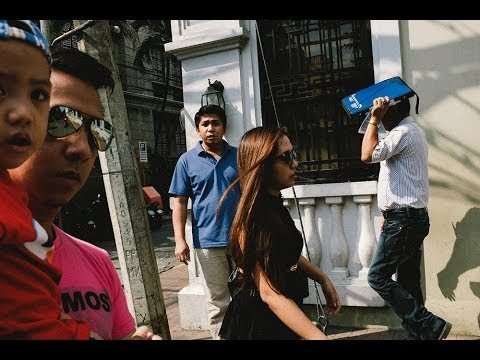
Working on Layers: Manila Street Photography GoPro POV with the Fujifilm x100s
Lesson: Layers + Working the Scene
In this video I shot with the Fujifilm x100s and pre-focused my lens to around 5-10 meters (manual focus), shot at f/8, ISO 800, aperture-priority mode, optical viewfinder, and worked on trying to get more layers in the shot. The technique I used here was trying to get someone in the extreme foreground in the photo, and the subject in the background sharp. You can read more about this approach in my “Multiple Subjects” composition lesson.
In addition, I also made a conscious effort to stick around and “work the scene” — by taking multiple shots of the same scene, rather than just taking one shot and moving on. The masters rarely just took one scene of a shot and moved on, as you can see in my article: “10 Things Street Photographers Can Learn From Magnum Contact Sheets“.
-
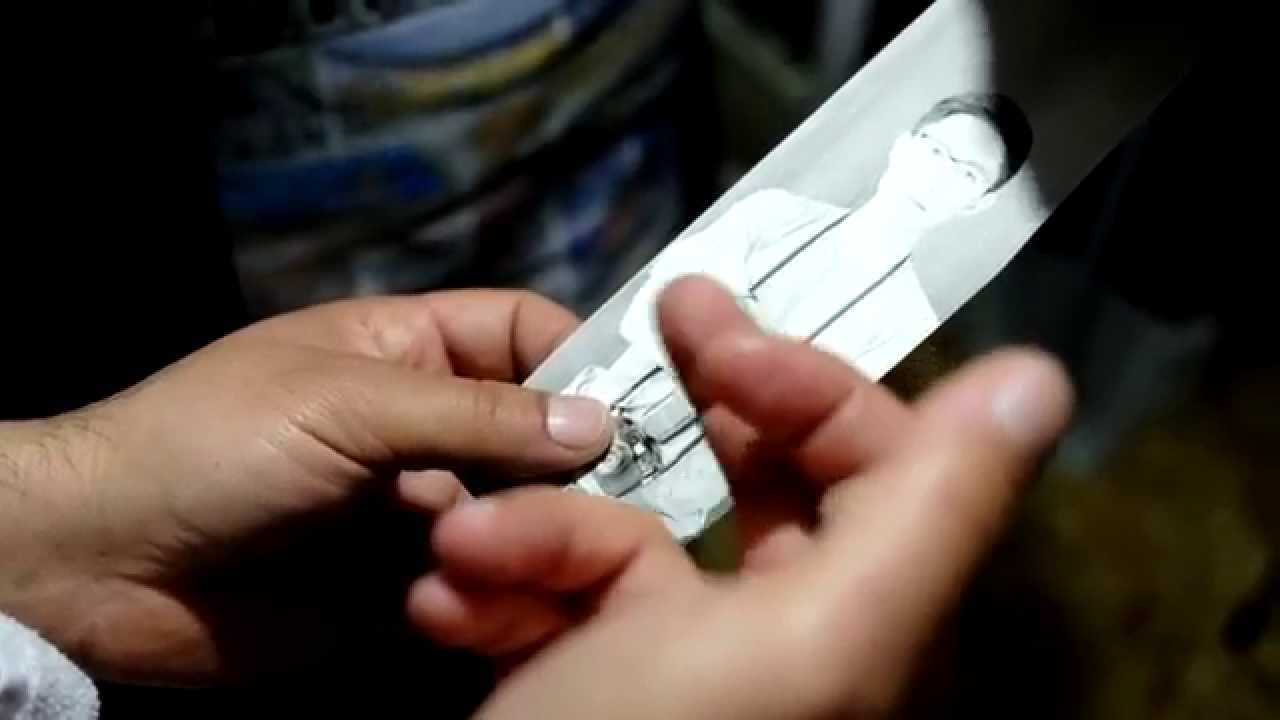
Introduction to Darkroom Film Developing and Printing with Taylan Bagci in Istanbul
While I was in Istanbul teaching my Week-Long Travel Street Photography Workshop with Charlie Kirk, we both attended an Introduction to Darkroom Film with Taylan Bagci. I hope this video can give you some helpful insight into the developing and printing process, if you’ve never done it before. The entire film is quite long at 2 hours, so I’ve chopped it into the relevant sections below:
Part 1: Introduction to Taylan and Darkroom (Beginning to 10:00)
Part 2: Developing the Film (9min:50)
Part 3: Inspecting the Processed Film (1hr:11mins)
Part 4: Printing Preparation (1hr:22mins)
Part 5: Printing the Test Strips (1 hr:55mins)
If you want to learn about darkroom printing in Istanbul, contact Taylan at taylan@taylan.net or check out his website.
-
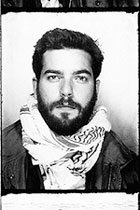
An Afternoon With Bruce Gilden
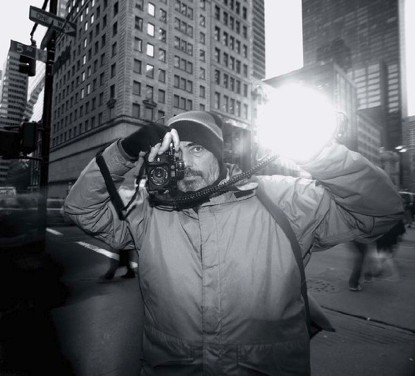
This article is written by Ayman Oghanna, an award-winning photographer and journalist based in Istanbul.Â
I step into his office and humanity explodes. People everywhere. Moments everywhere. An ocean of smiles, frowns, scowls, and yawns drowning the sidewalks. Since 1981, he has worked these Midtown streets and he’s walking them now as he always has, a step or two faster than everybody else, with an eye on everybody else.
Then he sees her. Twenty yards in front of him, a face-lift in the crowd. A slow moving cartoon of a woman with heavy make up and a shock of peroxide in her hair. She looks like old money and, despite the cosmetic surgery, old-age. A character. He moves towards her, fast, biting his bottom lip with concentration. She’s close now, a few feet away; he steps to the right, looks up and pauses as if lost in thought. She’s about to pass his shoulder. And then it happens. He attacks. Turning and swooping into her face. Right in her face. FLASH. She gasps, his camera clicks and a hand shoots to her startled heart.
-
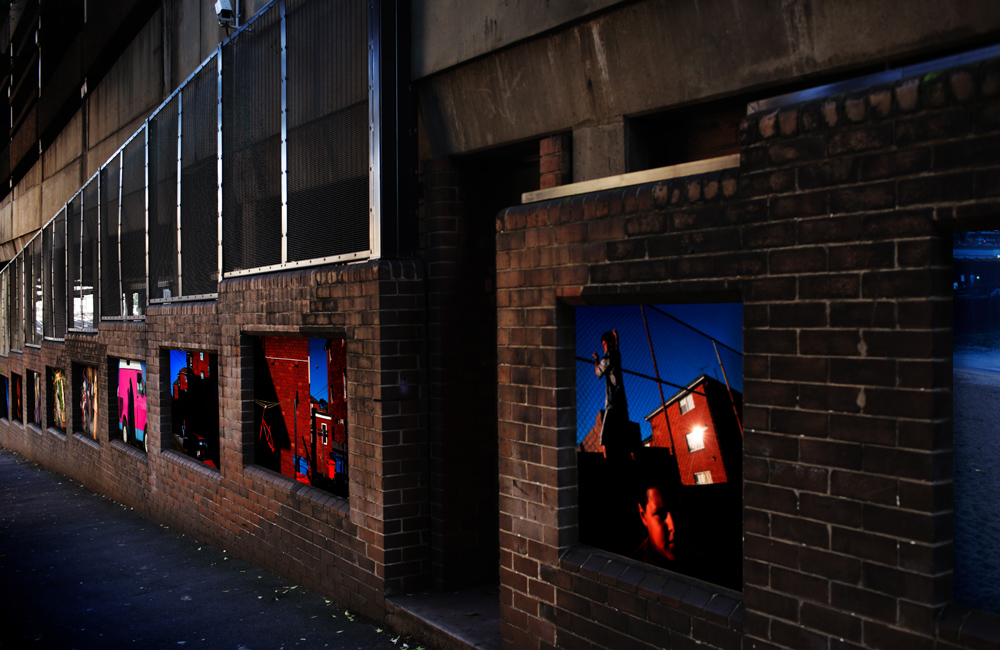
Art Need Not Be Confined to a Gallery Wall: Interview with Andrew Quilty, Curator of The Elizabeth Street Gallery in Sydney

THE ELIZABETH STREET GALLERY
Philanthropy need not be the domain of the rich. Art need not be confined to a gallery wall. Permission need not be begged for nor granted. This is a gift.
This is an interview with Andrew Quilty, one of the curators of the Elizabeth Street Gallery in Sydney– a public and outdoor gallery. See how he helping build democracy in art and exposing new talent in the feature below!
-
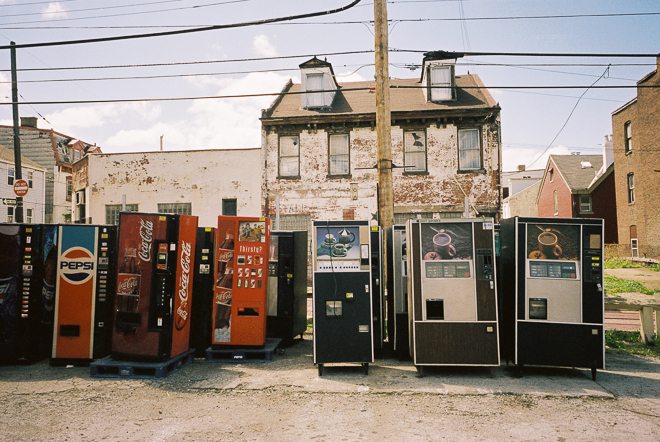
5 Essentialist Tips in Street Photography
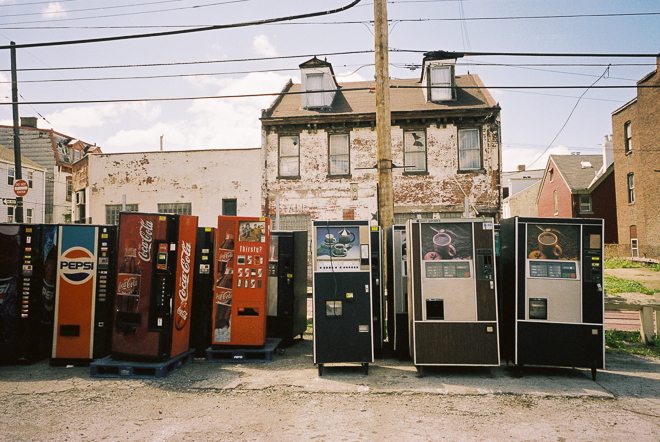
Pittsburgh, 2013 Photos in this article are part of my on-going “Somewhere in America” Urban Landscape series.
I recently finished a book titled: “Essentialism: The Disciplined Pursuit of Lessâ€, which made me think a lot about my life, the blog, and street photography. To sum up the book, the author praises the “less is more†ethos, and encourages us to do “less, but betterâ€.
I got inspired to write this article on how being an “essentialist†can help us in our street photography. Below are some ideas you can apply to your work and approach:
-
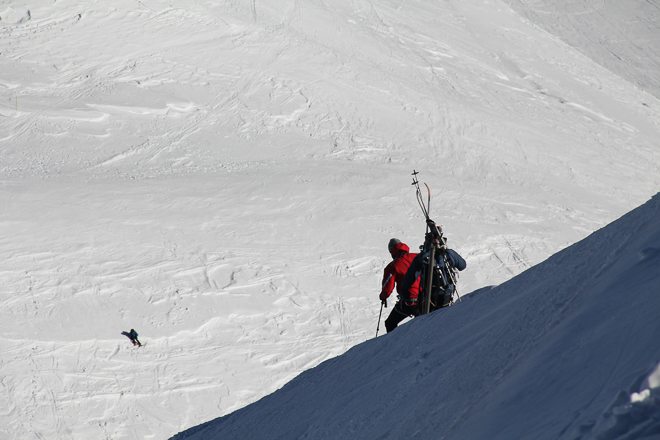
Before/After: Toronto Introduction to Street Photography Workshop 2014

Student photo by Quoc-Dien Trinh in Toronto I just finished my Toronto Introduction to Street Photography Workshop with my manager (and fellow co-teacher) Neil Ta. I was amazed by how much the students were able to build their confidence, push outside of their comfort zone, and have huge progress in their photography in such a short weekend! Check out all of their before/after photos below.
If you want to conquer your fears in street photography or take your creativity to the next level, join one of my upcoming street photography workshops!
-
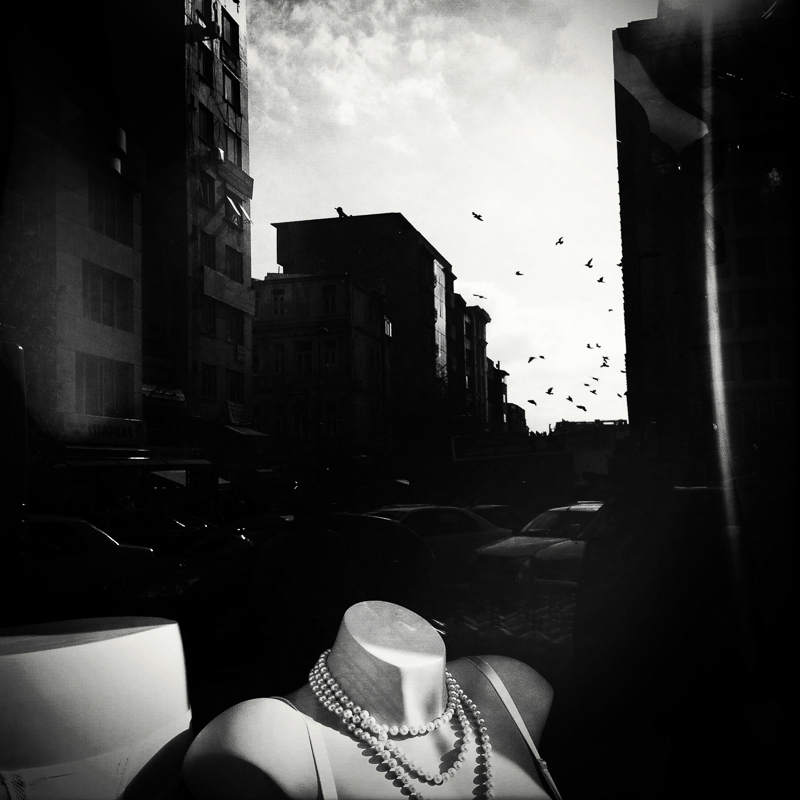
Capturing the History, Culture, and Light of Istanbul: Video Interview with Elif Suyabatmaz from the Tiny Collective
Elif Suyabatmaz is a street photographer part of the Tiny Collective and currently based in Istanbul. My friend Oguz Ozkan introduced me to her beautiful black and white work — which is all shot on her iPhone on hipstamatic. She has a keen eye for composition, design, and emotion in her shot. Hear about her inspirations, technique, and love of black and white in the video interview above. Read more to see her beautiful images.
-

How to Approach Strangers on the Street: Brandon Stanton from Humans of New York Shares His Technique
Brandon Stanton from Humans of New York shares some insightful tips on how to approach strangers on the street. If you’ve ever been nervous approaching strangers, this will be a great watch for you!
If you want to learn more how to overcome your fear of shooting street photography, you can download my free e-book: “31 Days to Overcome Your Fear of Shooting Street Photography“and also read my articles below:
-
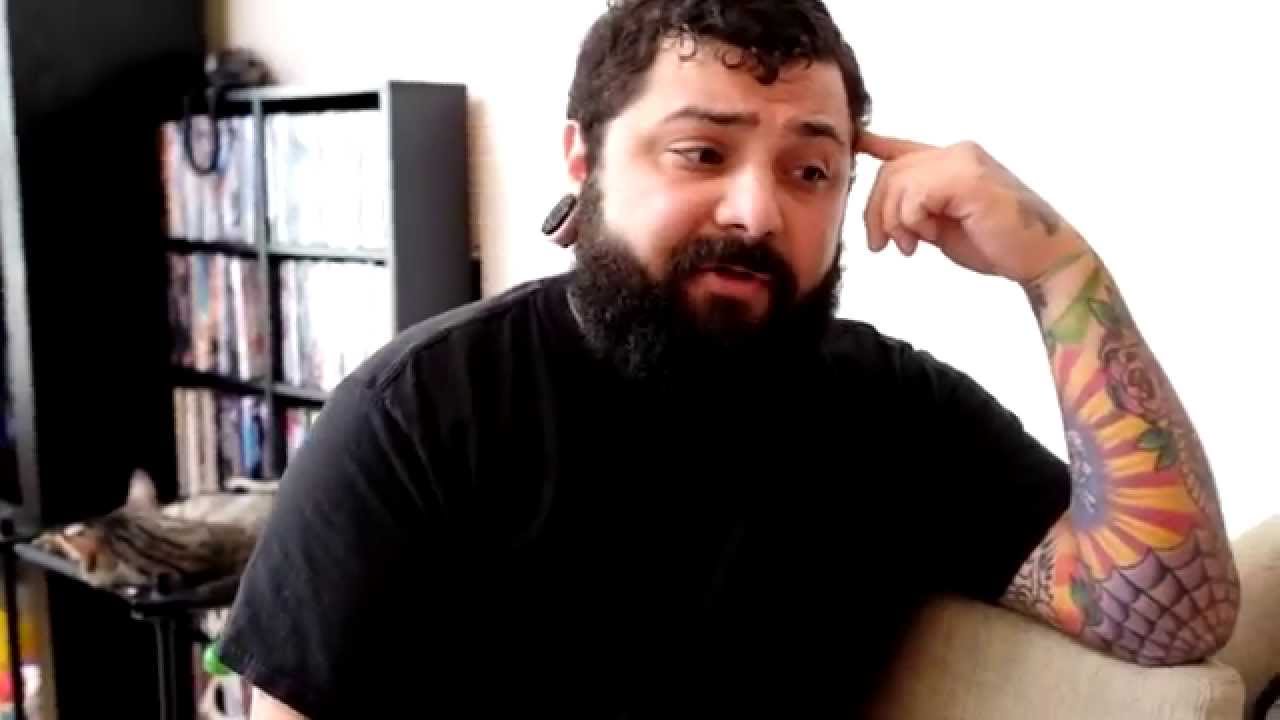
Video Interview with Joe Aguirre in San Francisco
Warning: Some of the photos in this video are NSFW
Today I had the chance to interview a good friend of mine, Joe Aguirre — a street photographer based in San Francisco. I just found out that he is moving to LA soon, so we had a “farewell” interview at his apartment. He is one of the most down-to-earth and prolific photographers I know. He has a huge heart, and a lot of passion for his photographic art.
In the video apartment, we talk about his passion for shooting film, his self-publication, and passion for street and other forms of photography.
Photos by Joe
Below are some of my favorite photos by Joe:


 Â
 
Follow Joe
-
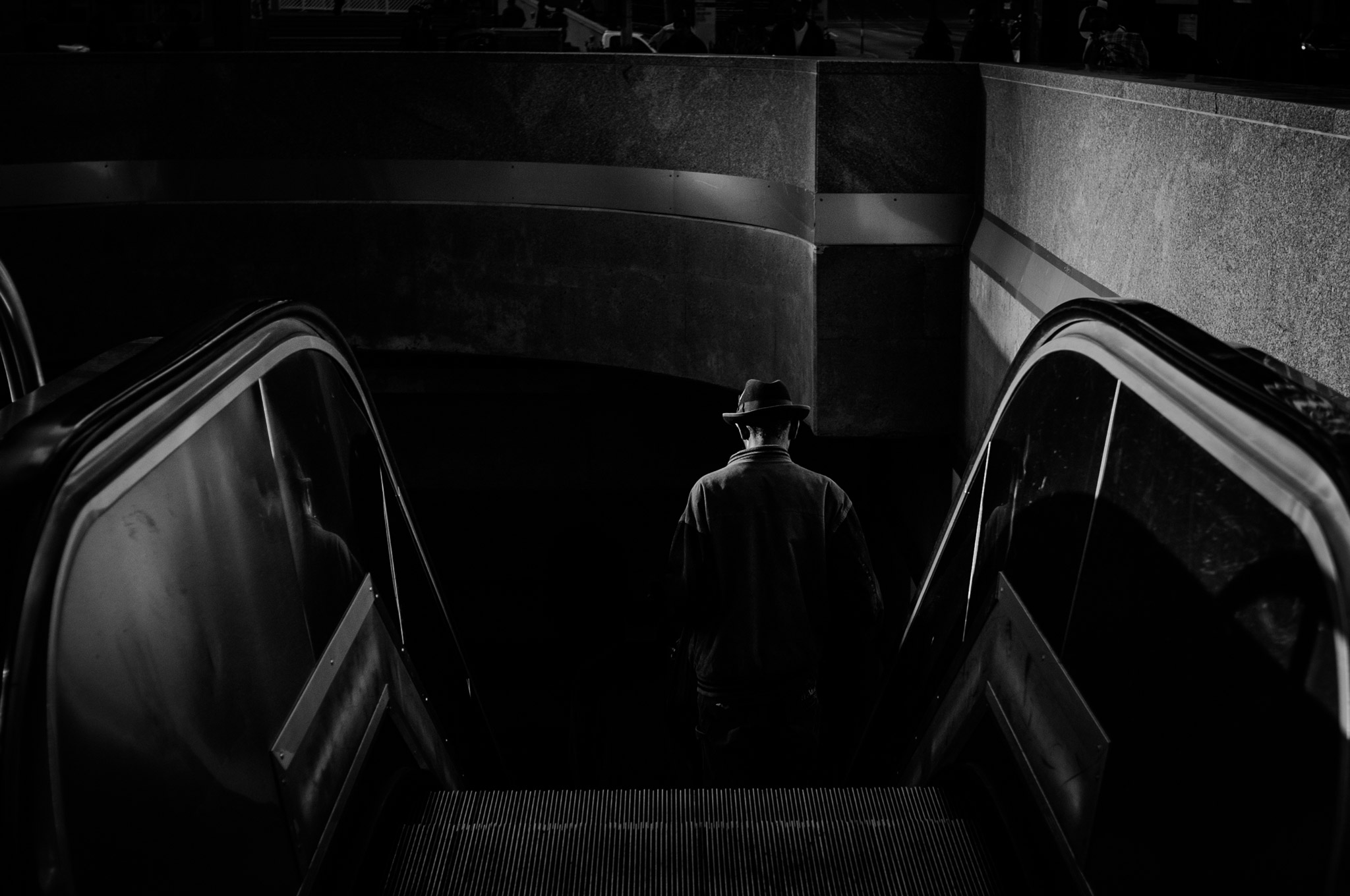
“Shooting Street”: The Street Photography Talkshow

Michael Meinhardt has been running a great series of street photography interview podcasts on “The Shooting Street Show.” He recently interviewed Rinzi Ruiz, make sure to check them out below:
Episode #5: Rinzi Ruiz

Rinzi and I talk about overcoming subject fatigue, the famous Rinzi style and how it came about, preparing a photo trip, the perfect street shooting camera, appearing benevolent and adjusting your energy, the importance of facial expression and, of course, the ultimate zen experience.
Find Rinzi at rinziruizphotography.com or streetzen.tumblr.com
Podcast: Play in new window | Download
Past Episodes
You can see all of the past episodes from “The Shooting Street Show” below:
Follow “The Shooting Street Show”
-
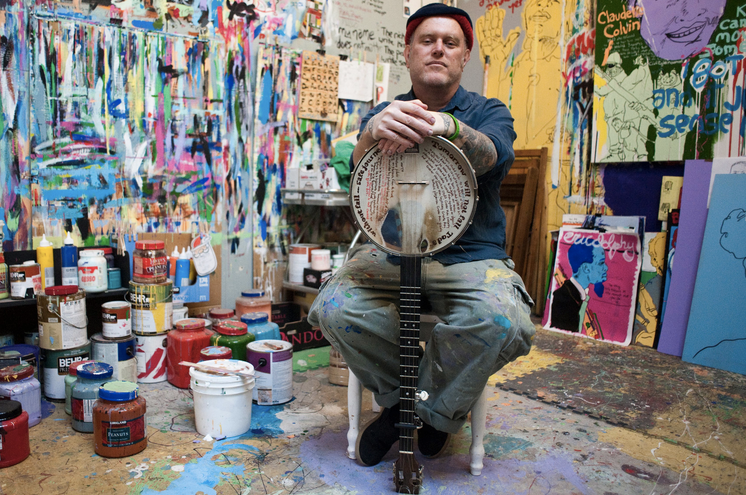
Self-Expression Comes From Within: Interview with Street Photographer, Artist, Musician, and Skater Tim Kerr

Painting by Tim Kerr of Garry Winogrand, Vivian Maier, and Lee Friedlander Tim Kerr is a street photographer, artist, musician, and skater from Austin, Texas. He is a prolific artist, and doesn’t put on restrictions on his creativity and forms of self-expression. Read about how he combines all his artistic forms in the interview below (and his fun stories taking a photography course with Garry Winogrand!
-
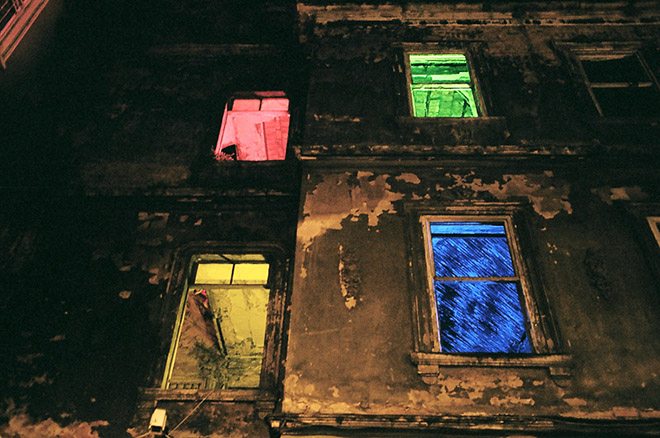
Time Flies. On Creating a Body of Work

It doesn’t take too long to create a solid body of work. If you are diligent, you could do it in 2 years. Other bodies of work can take you 5-10 years.
This sounds like a long time, but it isn’t. Time flies by extremely quickly. Do you remember being a college freshman, blinking your eyes, and suddenly you graduated? Do you remember being at your job the last 4 years? Do you remember seeing your kids grow up the last 4 years?
Of course it is always hard to make time for our photography. Life always gets in the way. But if you stay your project or body of work today, you will have images you are proud of in just a short time.
I also advocate working on a series or a project rather than just single images. 4 years working on just single images can net you a few interesting standalone photos. But 4 years working on a project can help you create a memorable body of work, which allows you to go deep into your subject matter and create more meaningful work.
So what do you have to lose? Start your body of work today.
-
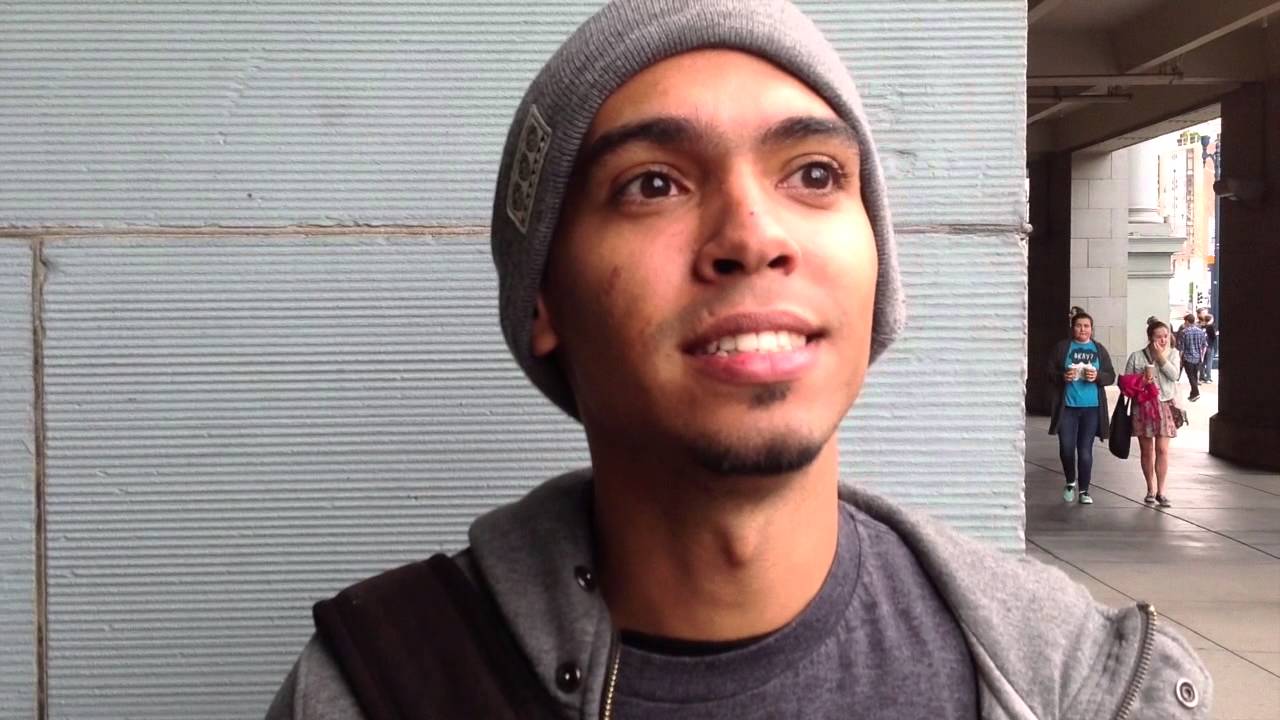
Video Interview with Hector Isaac from the Strata Collective
Earlier this year I met up with Hector Isaac, a street photographer originally from Cuba who moved and started shooting street photography in Miami, and now is based in LA. He is a part of the Strata collective.
In the video Interview I talk with him about his start in street photography, about the Miami Street Photography Festival, and his thoughts about working in color!
Hector recommends street photographers to check out the Observe Collective, and especially the work of Ilya Shtutsa (krysolove).
Follow Hector
-
Capturing the Emotional Connection to People, Places, and Objects: Interview with Christophe Agou from In-Public

Christophe Agou is a street photographer from France, currently based in New York. He is a part of In-Public, and his published works include “Life Below: The New York Subway” and his newest book: “LES FAITS SECONDAIRESâ€Â ( SECONDARY FACTS).
-
Before/After: Istanbul Week-Long Travel Street Photography Workshop Student Photos 2014

Student Photo by Gary Battle in Istanbul I recently finished teaching my Istanbul Week-Long Travel Street Photography Workshop with Charlie Kirk. We started off the workshop with a portfolio review, and we focused on each student’s individual needs. I am very impressed with all of the improvements from the students in working really hard during the week, and making a tight edit at the end!
See all the before/after photos below, and if you are interested in taking your street photography to new heights, check out my upcoming street photography workshops.
-
On Shooting For Your “Inner Scorecard”

Detroit, 2013 I recently finished reading “The Snowball“, a biography on the life of Warren Buffett, one of the most successful investors of all time. One inspirational thing I got from the book was how Buffett always played by his “inner scorecard” — staying true to himself and his own standards. Seeking to please himself, and not others.
I think sometimes photographers think photography is a sport with clear winners and losers. But photography isn’t a zero sum game. There are no point system. Rather we sometimes use social media follower numbers, the amount of exhibitions we’ve had, the books we’ve published, the gear we own, to validate our self worth (compared to other photographers).
But screw all of that. Shoot based on your own “inner scorecard”. Challenge yourself in photography, and know you aren’t competing with anyone. There are no clear winners or losers. We should focus on collaborating with one another, rather than worrying about who is a better photographer or who has more “favorites” or “likes”.
Don’t aim to be the best photographer out there. Rather, aim to the best photographer you can become.
For further reading, you can read my past article: How Many “Favorites†Or “Likes†Are Enough?
-
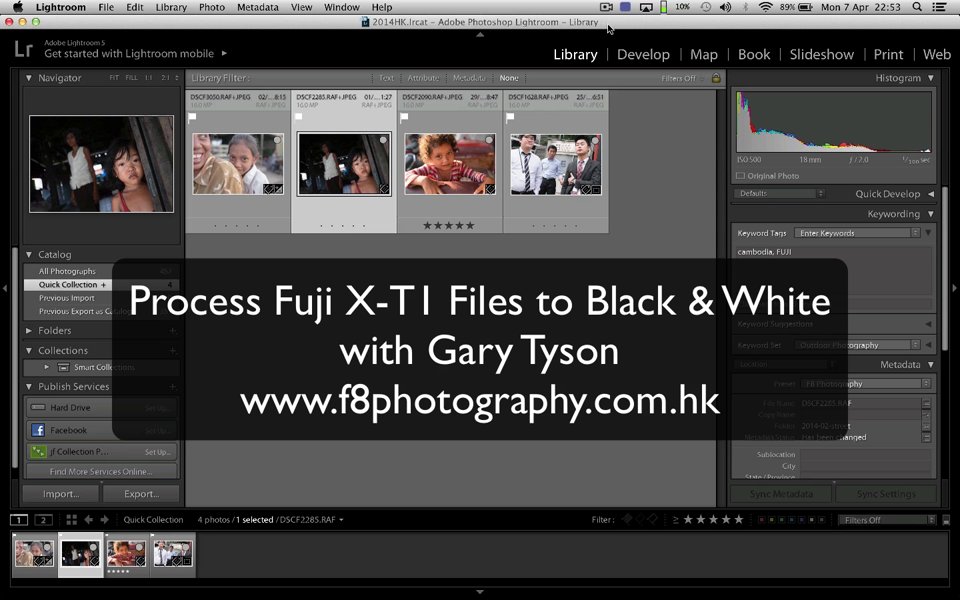
How to Post-Process Your Street Photography into Black & White in Lightroom 5 and Silver Efex Pro 2
My good friend and talented photographer Gary Tyson from F8 Photography in Hong Kong has recently put together a very helpful video on how to convert Fujifilm X-T1 RAW files into black & white with Lightroom 5.4 and Silver Efex Pro 2.
If you are unfamiliar with post-processing your street photography into black & white, the instructions is a great starting point for any camera. You can also download my black & white Neopan 1600 for Lightroom here. You can download all my Lightroom presets for free here.
Also if you want to take your street photography to the next level, don’t miss out on my Hong Kong Intermediate/Advanced Street Photography Workshop with Gary on August 22-24th, 2014.
-
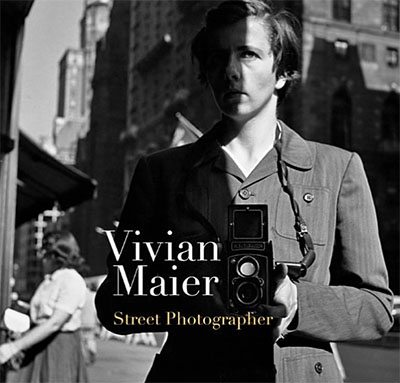
5 Lessons Vivian Maier Has Taught Me About Street Photography

All photographs copyrighted by Vivian Maier / Maloof Collection
A street photographer whose work and life I hugely admire is that of Vivian Maier. For those of you who haven’t heard her story, she worked and lived as a nanny her entire adult life– and shot street photography on the side for herself. She created incredible black and white and color work through the 1950’s all the way through the late 1990′s. She shot an incredible amount of images– that amount to over 100,000 negatives.
Recently the documentary: “Finding Vivian Maier” on the mystery behind her life and discovery came out. I realized I haven’t written an article on her yet– so I wanted to use the opportunity to do so.
-
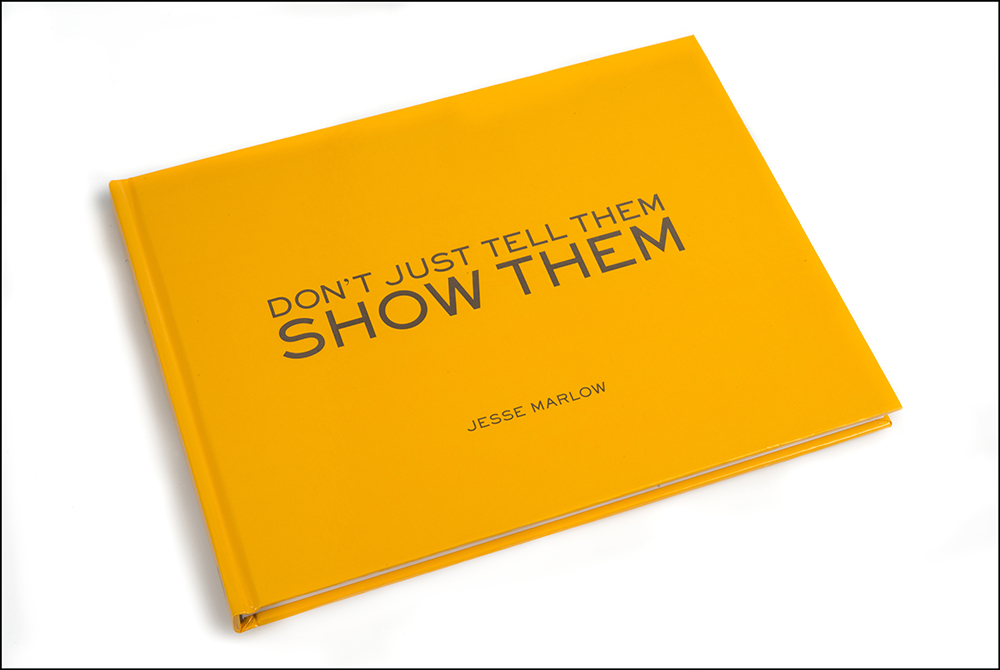
Interview with Jesse Marlow from In-Public on His New Street Photography Book: “Don’t Just Tell Them, Show Them”
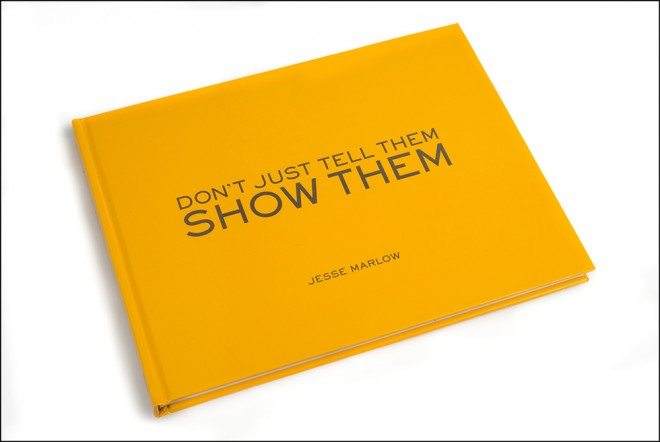
Jesse Marlow is a street photographer based in Melbourne, and a member of In-Public. He recently published his book: “Don’t Just Tell Them, Show Them.” The images were shot over a 9 year period on the streets of Australia and Europe and features 50 color photographs. I interview him on his start in street photography, the book-making process, and his interest in color film.
-
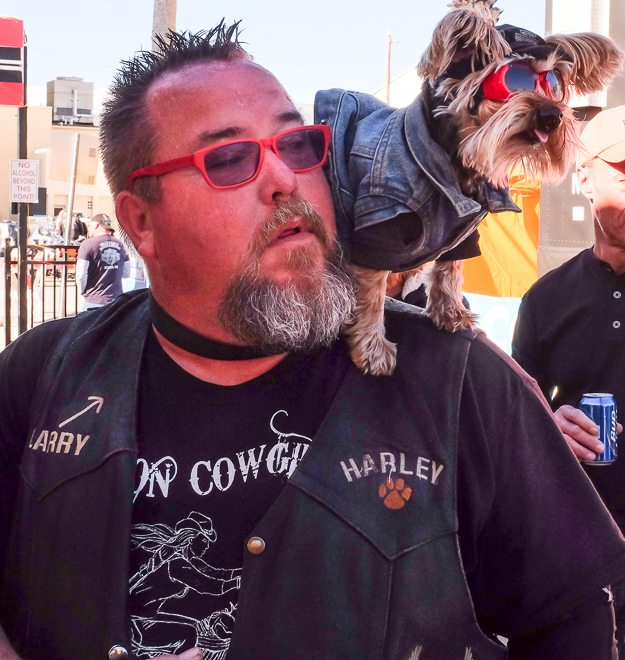
Before/After: NYC Intermediate/Advanced Street Photography Workshop 2014

Photo by Costa Gavras I just finished my NYC Intermediate/Advanced Street Photography Workshop this past weekend, and was so impressed to see the progress all the students have made. The focus of the workshop was finding your own style and voice– and it was centered on working on a mini-project.
Check out all the students’ before/after work below! If you want to take your street photography to the next level, you can also see my upcoming workshops here.
-
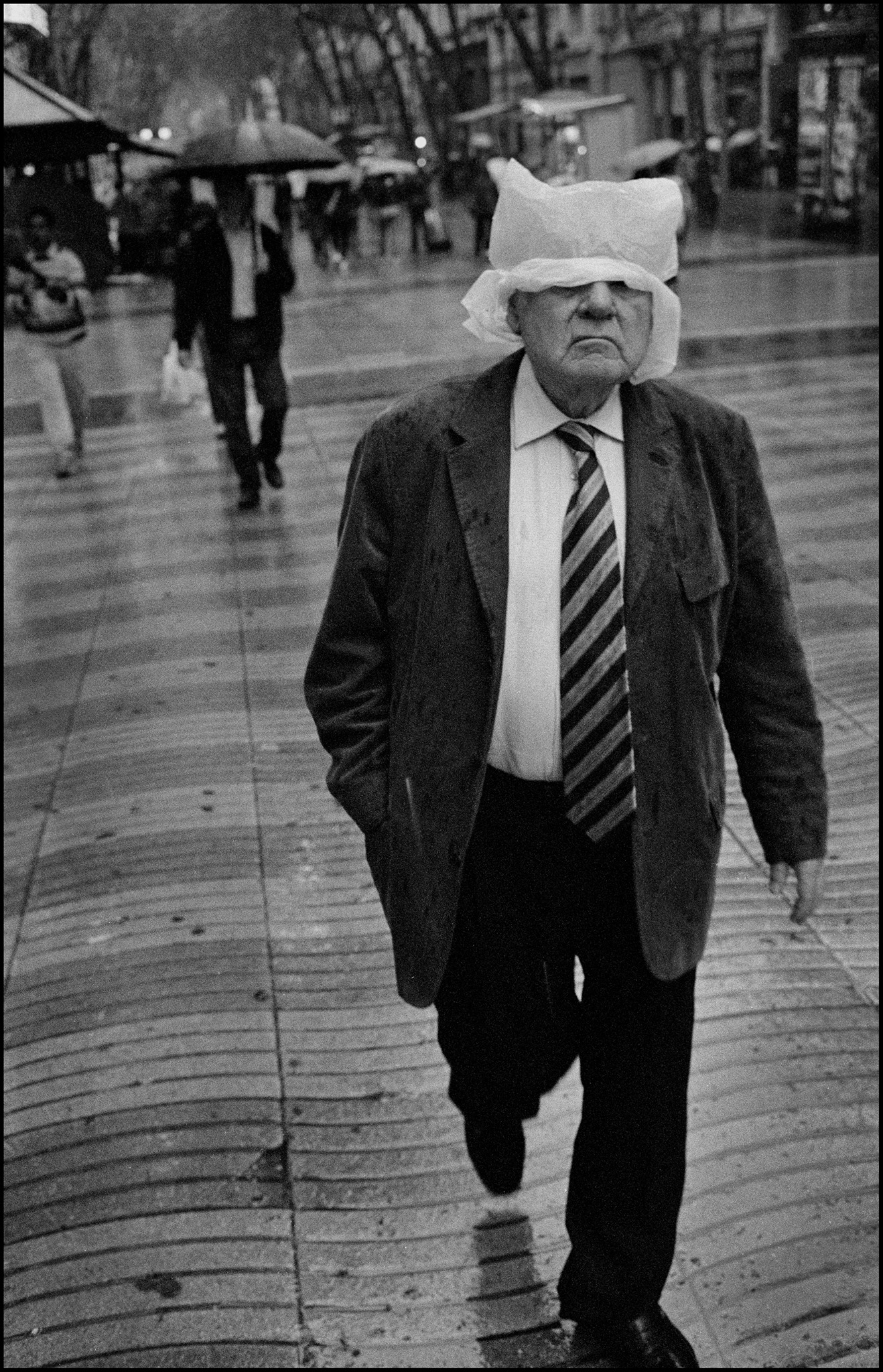
“Bad Weather” Street Photography Assignment Winner: Julian Furones from Spain

Photograph by Julian Furones I am excited to share this week’s winner for the “Bad Weather” street photography assignment is Julian Furones from Spain.
I love the sense of humor in the shot, the striped tie juxtaposed against the curved stripes on the ground, and the slightly out-of-focus figures of the people in the background with umbrellas. It is a shot that immediately makes me laugh, and reminds me of an Elliott Erwitt shot that could have been shout out of the 50’s.
This week’s assignment is: “Food” (thanks to Julian for helping me come up with the idea).
How to enter: Upload your (1) best street photograph directly to my Facebook fan page according to the theme (and a link to your Flickr or website). Deadline is this Sunday (April 13th) at midnight, Pacific Time. I will choose my personal favorite and share it on the site. Have fun and good luck!
-
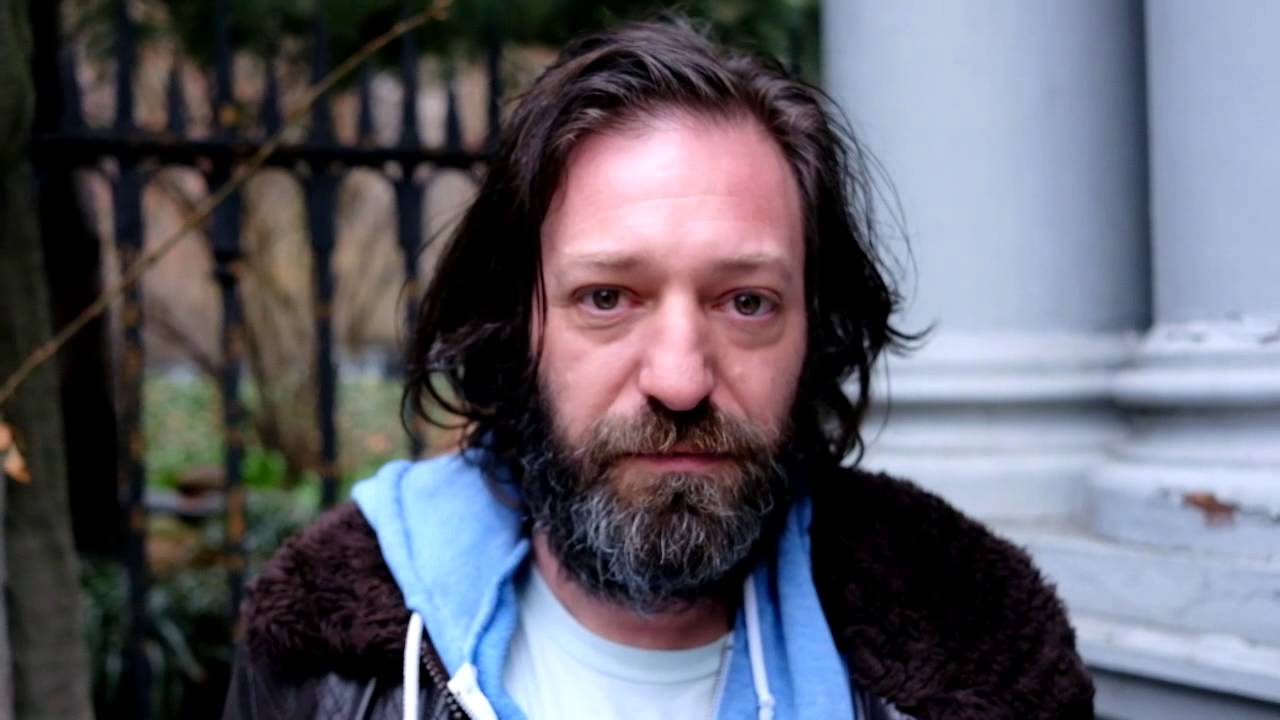
Street Photography Interview with Justin Vogel from HCSP & Burn My Eye in NYC
I recently had a chance to catch up and grab a coffee with Justin Vogel and Matt Stuart while I was in NYC. I did a quick video interview with Justin about his feelings on moderating the HCSP group on Flickr, what he thinks makes a memorable image, shooting color film, and his other thoughts on street photography.
You can also see a past interview with him on my blog here.
Follow Justin
-
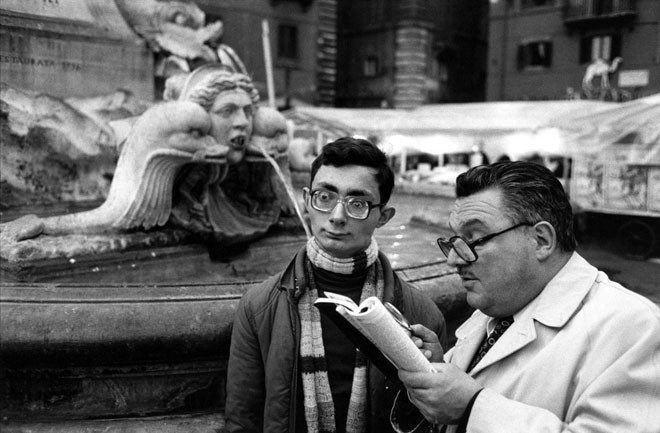
18 Lessons Richard Kalvar Has Taught Me About Street Photography

All photographs in this article are copyrighted by Richard Kalvar / Magnum Photos
Richard Kalvar is one of the contemporary masters in street photograph, and also a member of Magnum. I have always loved his quirky and observant street photographs, and am quite pleased how active he is– especially on Facebook and the Magnum Blog. I gained a lot of insight about his work and street photography through his various interviews online. Read more to gain inspiration from him!
-
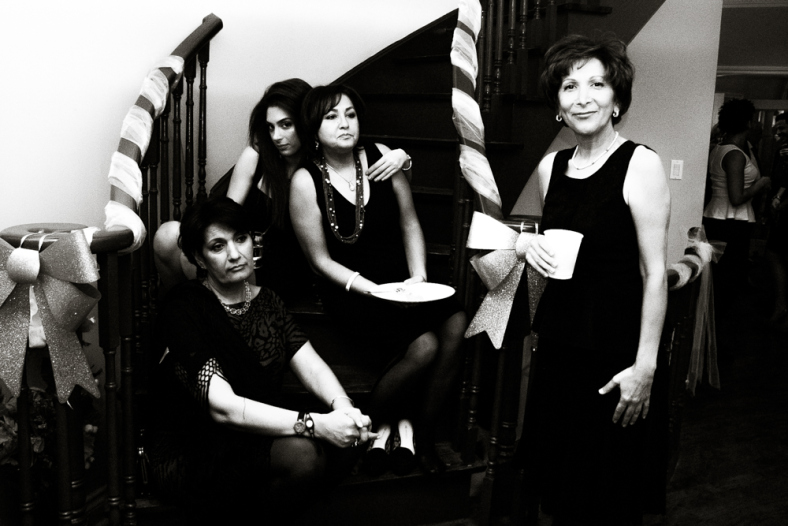
F$%K GAS (Gear Acquisition Syndrome)

Toronto This article by Josh White, a street photographer based out of Korea. This article originally appeared on Josh’s blog here.Â
DEFINITION
Gear Acquisition Syndrome (abbreviated to GAS) is a term used to describe an urge to acquire and accumulate lots of gear.
TREATMENT
None
GAS hasn’t received any major medical attention. GAS is not a clinical condition. It can be the result of a psychological lack of personality.
source: Wikipedia.
A lot of people have asked me a lot lately about cameras and getting over the feeling of wanting every f*cking camera you see. As much as I hate gear talk now, I really feel like this post is necessary.
