(A.g.: In the spirit of Open Source here on Eric’s Blog, this is a German translation of Eric’s 10 Things Henri Cartier-Bresson Can Teach You About Street Photography made by photographer Lukas Beinstein).
₿LOG
(A.g.: In the spirit of Open Source here on Eric’s Blog, this is a German translation of Eric’s 10 Things Henri Cartier-Bresson Can Teach You About Street Photography made by photographer Lukas Beinstein).

“If you start cutting or cropping a good photograph, it means death to the geometrically correct interplay of proportions. Besides, it very rarely happens that a photograph which was feebly composed can be saved by reconstruction of its composition under the darkroom’s enlarger; the integrity of vision is no longer there.â€
– Henri Cartier-Bresson
Another common mistake a lot of photographers make is that they over-crop their shots. They are “crop-a-holics,†in which you crop every single photograph you take.
I am also a recovering “crop-a-holic.†When I shot on the streets, I would be sloppy. I disregarded framing, as I told myself, “Eh, if I don’t get the shot right, I can always crop it later.â€
However when I learned this lesson from Henri Cartier-Bresson (the master street photographer on composition), I decided to give it a try. At first, it was difficult not to crop my shots. But when I gave myself the “creative constraint†of not cropping, it forced me to improve my framing in-camera.
Over the course of a year, I discovered that my framing and composition got much better. I worked harder to get the shots right in-camera, and this caused my photography to improve drastically.
Now I am not saying that you should never crop your photographs. There are a lot of master street photographers who heavily cropped their photographs (Robert Frank did some radical cropping for his seminal book: “The Americans,†even turning some landscape shots into portrait shots with cropping). Also the irony is that one of Henri Cartier-Bresson’s most famous photos (guy jumping over a puddle) is cropped.

Cartier-Bresson’s explanation for cropping the shot:
“There was a plank fence around some repairs behind the Gare Saint Lazare train station. I happened to be peeking through a gap in the fence with my camera at the moment the man jumped. The space between the planks was not entirely wide enough for my lens, which is the reason why the picture is cut off on the left.”
If you are trying to improve your composition and intuitive sense of framing: give yourself the assignment of going an entire year without cropping. I can guarantee you that a year later, your photography will improve dramatically. And if in the future you do decide to start cropping again, always do it in moderation. Very rarely does a poorly-framed photo look better when cropped.
A practical tip for framing better without cropping? Look at the edges of the frame while you’re shooting. Avoid suffering from “tunnel-vision†(only looking in the center of the frame).
At the end of the day, cropping is no evil. I would say crop in moderation, and if you’re going to crop, try to keep the aspect ratio consistent.Â

“A bible for photographers†– Clement Cheroux
Wow— where do I even begin? I would say that “The Decisive Moment†by Cartier-Bresson is one of the most beautiful photo books I have ever handled— and it is a book that brings me extreme joy and happiness (you can see all the photos from the book for free on the MagnumPhotos website here).
Sure I have seen many of these photos by Cartier-Bresson before, but to see them in a physical manifestation is a different experience. Not only that, but the original version of “The Decisive Moment†was nearly impossible to get (second-hand copies before the reprint were around $1000+). However now with this re-print by Steidl, “The Decisive Moment†is now open to everybody.

As this article is very long, I recommend reading this by saving it to Pocket or Instapaper. All photos in this article are copyrighted by Henri Cartier Bresson / Magnum Photos.Â
I recently picked up a copy of “The Mind’s Eye†– which is a great compilation of thoughts and philosophies Henri Cartier-Bresson wrote. Aperture published this great volume (as they are an amazing non-profit dedicated to promoting photography, education, and great ideas).
Ever since I have been back home, I have been dedicating more of my energy, attention, and focus to great photography books – and trying to distill the information. I’ve learned all of these great lessons personally– and I want to share that information with you.

I am really excited to share that Henri Cartier-Bresson’s “The Decisive Moment” in addition to “Exiles” by Josef Koudelka is going to be reprinted. These are two of the greatest street photography books published in history, and once sold for hundreds (or even thousands) of dollars.
Don’t miss out, pre-order a copy today!
Learn more about the masters:
Remember if you’re feeling uninspired in your photography, “buy books, not gear“– and check out this list of inspirational street photography books.
What other photography books are on your list? Share your recommendations in the comments below.

All photos in this article are copyrighted by their respective photographers.
For today’s street photography composition lesson– I would like to discuss leading lines.
Leading lines are one of the most basic photography compositional techniques– I am sure you have all heard of it before. But it is a technique that we often don’t listen to or follow. For example, it is easy to have a leading line in the background (for example, a background) that leads your eyes away from the main subject, rather to the main subject.
Whenever I look at a photograph, the first question I ask myself is: who is the subject?

For today’s street photography composition lesson, we will discuss a compositional rule that is simple enough: the diagonal. Credit goes to Adam Marelli for teaching me about this important design element which can help street photographers all around the globe.
Diagonals are one of the strongest and most fundamental compositional elements– something that we all know quite well.
There are 3 types of main lines: the horizontal, vertical, and diagonal line. They also go in degrees of intensity (the horizontal line being the least dynamic and the diagonal line as the most dynamic).

(All photographs in this article provided by Rinzi Ruiz)
My good friend Nicholas Susatyo recently recommended a book to me: “Zen in the Art of Archery.” In-fact, it was the book that Henri Cartier-Bresson said had the deepest influence in his photography. I have been meaning to read it for a while, so on my flight to Philly I decided to give it a go.
The book is written by Eugen Herrigel, a German philosophy teacher who went to Japan for several years and learned the art of archery (while teaching philosophy at a Japanese university). He heard about the art of archery, and was fascinated with the zen philosophy which was embedded in the art.

(Two shots Henri Cartier-Bresson shot of the same scene. SPAIN. 1933. Andalucia. Seville. © The Estate of Henri Cartier-Bresson / Magnum Photos)
One of the biggest misconceptions I know runs rampart in street photography is the “myth of the decisive moment”. What do I mean when I talk about “the decisive moment” simply being a myth?
Well of course there generally is a “decisive moment” when you hit the shutter – to capture that exact moment you desire in a photograph.
However one of the common misunderstandings that plagued many street photographers (including myself) was that the decisive moment simply being one shot. After studying many contact sheets from Magnum Contact Sheets book, I was able to gain a new level of insight to read the mind of a street photographer.
Curious? Read on.
If you haven’t yet, make sure to watch this documentary on Henri Cartier-Bresson, the grandfather of street photography. The great thing about this documentary is that he reflects not only on his photography, but on his life and relationship with other artists.
The film was titled : L’amour Tout Court (“Just Plain Loveâ€) and was directed by Raphaël O’Byrne back in 2001 when Cartier-Bresson was 92 years old.
Let us know what your favorite part of the documentary was by leaving a comment below!Â

(Above image:Â Henri Cartier-Bresson, Naples, 1960)
Adam Marelli, a photographer based in NYC (also doing a street photography workshop with me in NYC [register intent] and Calcutta India [register intent]) recently wrote up an incredible series on composition, surrealism based on the work of Henri Cartier-Bresson. Make sure to bookmark all the pages below (they are very thorough and intense) and read them when you have some time on your hands!

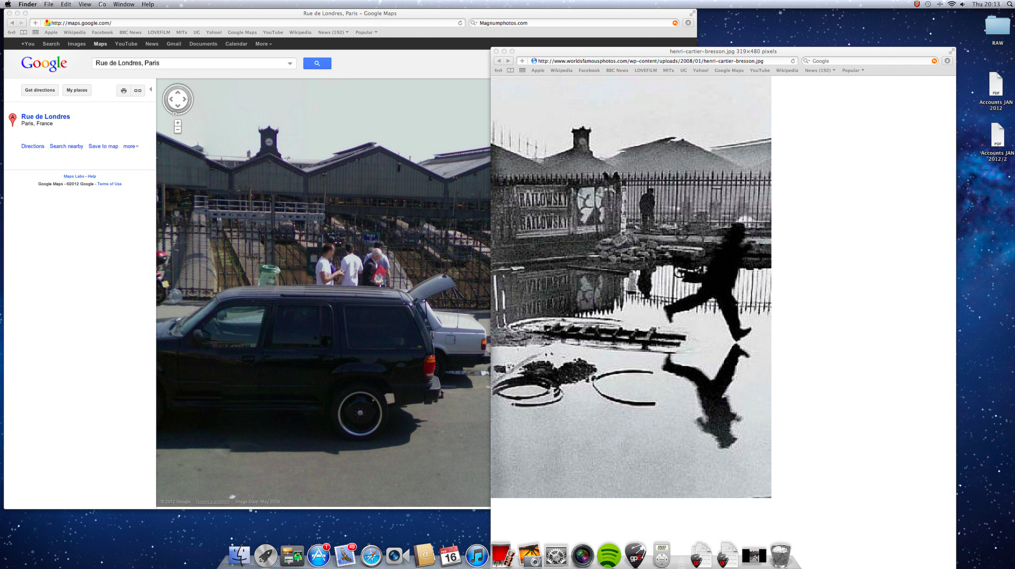
Darkon Coan, one of the readers of the blog, recently shared me an image of Henri Cartier-Bresson’s famous “Behind the Gare Saint-Lazare” shot in 1932 compared to what it looks like now in Google Maps shot in 2008. Fascinating to see how little has changed in that period of time!
See it large here.

“Sharpness is a bourgeois concept†– Henri Cartier Bresson
In the modern age of photography, everyone seems to have an unhealthy obsession with how sharp lenses are, how much bokeh they produce, and how “3d†they can make their images appear.
Ignore these statements. Anyone who talks at excessive length about any of these topics are misled into thinking that what makes a great photograph are the effects that expensive lenses can give you.
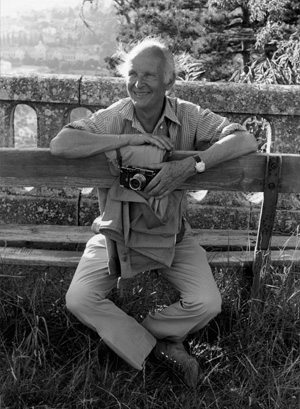
Eric’s Note:Â This original article was published on Ishu Patel’s site and re-published here with permission. It details Ishu Patel’s time with Henri Cartier-Bresson and gets some insightful views into his life and photography.Â
AFTER GRADUATING IN 1963 from the Faculty of Fine Arts, University of Baroda, India I was lucky enough to be selected by Gira Sarabhai to train as an “apprentice†at the newly formed National Institute of Design in Ahmedabad, India. And therein lies the story of my valued memories of Henri Cartier-Bresson.
The plan was to select a cohort of talented Fine Arts and Architecture graduates and to apprentice them in various design disciplines in order to become the future faculty of the National Institute of Design. During those amazing early years the giants of contemporary design from all over the world were invited to the Institute, staying on for months, even years at a time, as teachers and mentors, consultants and project heads. Who came? – Designers Ray & Charles Eames, architect Louis Khan, furniture designer Nakashima, graphic designers Armin Hoffman, Bob Gill, Leo Leonni, and Ivan Chermayeff, animation filmmaker Gullio Gianini, typographer Adrian Frutiger, textile designers Alexander Gerard and Helena Perhentupa, music composer John Cage . . . just to mention a few.
Don’t forget to order the new re-print of “The Decisive Moment” by Henri Cartier-Bresson!
I have been doing quite a bit of research into Henri Cartier-Bresson, the godfather of street photography.
Although my current approach in street photography is more like Bruce Gilden and less of Henri Cartier-Bresson, HCB influenced much of my earlier work and I still deeply respect his photography and philosophies. I hope you are able to enjoy these things I believe you can learn from Henri Cartier-Bresson about street photography. Keep reading to become inspired and learn more.

This week I announced on my Facebook fan page that the weekly street photography assignment was: “Blur”. I chose this theme because I was inspired by a quote from Henri Cartier-Bresson that “Sharpness is a bourgeoisie concept.” Many of you submitted your great images, and I chose the best images to be featured for this week! Make sure to read more to see the rest of the images, and stay tuned for next week’s assignment by liking me on Facebook!
Recently I was cruising around Petapixel and found this wonderful gem of a video– Henri Cartier-Bresson himself talking about street photography and “The Decisive Moment”. It is a bit of a long video (20 minutes) but worth every minute hearing the grandfather of street photography discuss his thoughts and share some of his most iconic images.
Who else has been inspired by Henri Cartier-Bresson? Let us know what you think of the video and his work by leaving a comment below!

I recently got an email from one of my readers, Kit Taylor, asking me the following question:
Color or B&W? What goes into the decision to finish a street/candid
photo as color or black and white? Some photographers have a strong
specialization. Some of us use both almost equally. Some photos are
obvious; often I have some that are difficult to decide on.
I’m really glad that Kit asked this question, as this is an issue that I grapple everyday as a street photographer. There are many pros and cons to both color and black and white street photography– which I will outline below.
Recently I came upon these amazing Lego recreations of famous street photography/journalist photographs. Can you identify who took the photos below? Read more and find out how good your photographic knowledge is!

Note: Every week, I feature street photographers with great skill and soul. For this week, I decided to feature street photographer Laurent Roch from France. When I first stumbled upon Laurent’s work on Flickr, I was thoroughly impressed by his gritty black and white portrayals of the city. In his images, you see a great deal of symmetry and balance, which cradle solid compositions. Not only that, but the man knows how to really work The Decisive Moment. Â Want to hear where he finds inspiration and how he shoots on the street? Read his exclusive interview below and be blown away.

Note: Every Wednesday, I feature street photographers with great skill and soul. For this week, I decided to feature amazing street photographer Jurgen Burgin. I first stumbled upon Jurgen’s work when he left a comment on my blog, which made me check out his Facebook page. I was mesmerized by his great eye, and wanted to share his phenomenal work with the rest of you and the community. Check out his interview and leave a comment to show him some love below!

It’s not too long ago, less than two years that I bought my first SLR. I started taking photos of birds, landscapes and so on, but living in a big city like Berlin, I soon started to shoot architecture – and finally people. To get some inspiration I went to my public library and read literally hundreds of photo books, of all kinds of photographers. That’s when I discovered the classic street photographers like Henri Cartier-Bresson, Brassai and so on. So those hundreds of photo books tought me everything I know about taking a good photo. And there was a lot of try and error, sure an advantage of digital photography: You can shoot hundreds of photos and try to find out how the aesthetics of photography works.

Let’s admit it–if you are a street photographer and not driving a BMW or Mercedes-Benz, you probably want the Leica M9. Trust me, I want it really badly too–it has been on my mind for quite a while. But honestly, can we justify purchasing a $6,900 camera just because the camera we have doesn’t pay an homage to Henri Cartier-Bresson and all of the other street photography masters? Mind that this is not taking into account the extra $2000 or so you need to purchase Leica lenses as well. So before you plunge yourself $6,900 deeper into debt, perhaps you should read this:
Today I was on Twitter and saw two tweets about this video, one from Jonathan Murray and one from RooshPhotog. It is a wonderful video which shows you Craig Semetko, a street photographer in action. He has been featured in countless exhibitions, and has even had his work side-by-side to street photography master Henri Cartier-Bresson. The music is great and gives you insight into Craig’s philosophies on street photography, which is quite inspirational.
His Bio from the Leica Camera Blog:
A street shooter in the tradition of Cartier-Bresson, his Leicas capture classic images that reveal the moment
Perhaps this says all you need to know about Craig Semetko’s inspired Leica photography: In 2008 his work was featured along with images by legendary photographer Henri Cartier-Bresson at the Open Shutter Gallery in Durango, Colorado, in an exhibition entitled, “Street Photography: From Classic to Contemporary – Henri Cartier-Bresson and Craig Semetko.†In 2009/2010 he mounted one-man shows at the Leica Galleries in Frankfurt, Germany, Salzburg, Austria, and at the Leica headquarters in Solms, Germany. His work was also recently shown opposite renowned photojournalist Elliott Erwitt’s in the group exhibition “The Art of Photography Today†at the Camera Obscura gallery in Denver, Colorado. In June of last year he spoke on street photography at the International Center of Photography in New York City and he was the keynote speaker at the Leica Historical Society of America’s 2009 annual meeting in Seattle, Washington.
Semetko is inspired by the humor and irony that crosses cultural boundaries and he travels the world to find them. A graduate of Northwestern University in Evanston, Illinois, and a current masters candidate in Consciousness Studies at the University of Philosophical Research in Los Angeles, Semetko’s photographs have appeared in The New York Times, The Los Angeles Times, The Chicago Tribune and numerous other international publications. Twenty of his images were selected to be published in the exhibition book Family of Man 2. Also, his book “Unposed†came out in October from publisher teNeues.
He also has a an interview with the Leica Camera Blog where you can continue to read here.
Every street photographer needs to take more photos. Street photographers (and many other types of photographers) don’t go out and shoot photos nearly as often as we should. In an ideal world, we should be outside every day, trying to capture the beauty of everyday life. Whenever photographers say, “I don’t have enough time” or “I’m too busy”–it is all just excuses. If there is something we care about enough, we will make excuses to go out and take photos. To help you get out on the streets more and shooting, I will outline some quick and practical tips that could help you be more on the streets and shooting photos.

This post was originally posted here by Neal Bingham, but I thought I’d repost it here to share it with the rest of you guys. A great resource for any aspiring street photographer. Please pass it on! Also follow Neal on Twitter!
—

I thought it would be useful to create a topic where people can share links to resources – whether that’s tips for beginners on how to get started, interesting articles found elsewhere on the web, or just amazing examples of street photography to give us all a bit of inspiration.
For starters:
In-Public – collective of modern street photographers:
www.in-public.com/
Photographer Not a Terrorist – a movement dedicated to defending the right to photograph in public – find out more about your rights here (UK only)
photographernotaterrorist.org/
Magnum Photos – legendary photo agency founded in 1947 by Henri Cartier-Bresson, Robert Capa and others:
www.magnumphotos.com/
Michael David Murphy’s invaluable ‘Ways of working’ guide:
2point8.whileseated.org/wow-footer/
A view from photographer Nick Turpin on the relationships between street photography, fine art photography and photojournalism:
www.sevensevennine.com/?p=429
Opinion and discussion: 99% of street photography is crap:
blakeandrews.blogspot.com/2009/09/streetwise.html
Street photography for the purist – free ebook by photographer Chris Weeks:
www.e-booksdirectory.com/details.php?ebook=270
NYC street shooter Joe Wigfall in action, demonstrating how he ‘sees with his hands’ to capture candid moments without interfering with the scene:
www.youtube.com/watch?v=y-IOEAlBpSo
Documenting the Human Condition – documentary discussing street photography and the rangefinder camera:
Part 1:Â vimeo.com/6497905
Part 2:Â vimeo.com/6502390
Part 3:Â vimeo.com/6504591
Please feel free to share any other relevant or useful links below!
When it comes to street photography, everybody has their own style and techniques. What interests one street photographer may not necessarily catch the eye of another street photographer. However in order for you to get a better grasp of what kind of styles there are in street photography, I have compiled a few elements that street photographers like to use to their advantage when constructing their images.

Juxtaposition is a big and fancy word that artists love to use. If you are not familiar with the word, it simply means drawing a stark contrast between two elements in an image. One could use juxtaposition in his or her favor by creating an image that is interesting, ironic, or just plain uncanny.
For example, if you were to see a sign that says “get fit†and you see a woman eating an ice cream, that makes for an image with great juxtaposition. Or you can see a sign that says “get big†with a small person standing next to it.
“The Decisive Moment†was a term coined by the pioneer of street photography, Henri Cartier-Bresson. During his time, photography was still a relatively new art medium and it wasn’t taken seriously. Furthermore, photographers were often criticized for not having the same discipline and creativity as traditional artists as photographers can create their images in a matter of seconds, not hours.

Anyways, Cartier-Bresson believed that “The Decisive Moment†was that split second of genius and inspiration that a photographer had to capture a certain moment. For example, that half of a second that you have when a man is jumping over a puddle, when a couple embraces for a kiss, or when a person points a finger at another. This moment is fleeting, meaning that once you miss that half of a second to capture that moment, it is gone forever. You can never recreate the same circumstances in terms of location and people.
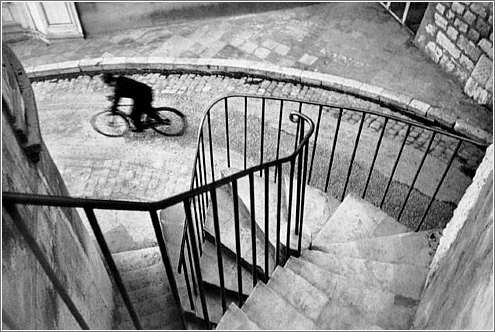
So an important lesson about “The Decisive Moment†is that the best photo opportunities often flash before our eyes and we must be ready at all times to capture those moments. That means bringing around your camera everywhere you go. Street photography is built on the mundane and ordinary moments, so any moment is a potential for a great photograph. Some of the most disciplined photographers bring their cameras even to places like the bathroom or the grocery market.

You must constantly be looking for moments to capture, so be sure to always keep your eyes and camera ready. Have you ever seen a photo opportunity but you didn’t have your camera on hand and deeply regretted it afterwards? This happens very often, because the greatest photographs can be captured at the most unexpected times.

Also when capturing a “Decisive Moment,†timing is crucial. Capturing an image half a second too late or early can greatly influence the outcome of an image. In many of my images, I take photographs of advertisements which look like they are interacting with people on the street. So if I want it to appear if a woman in an advertisement is staring at a man walking by, I must pull the trigger at the exact moment when eye contact becomes apparent. Half a second too early or late can kill the effect of the image.
So always be quick and never miss those “Kodak Moments.” Once that moment is gone, it is gone forever.
To learn more, read: “7 Tips How to Capture ‘The Decisive Moment’“