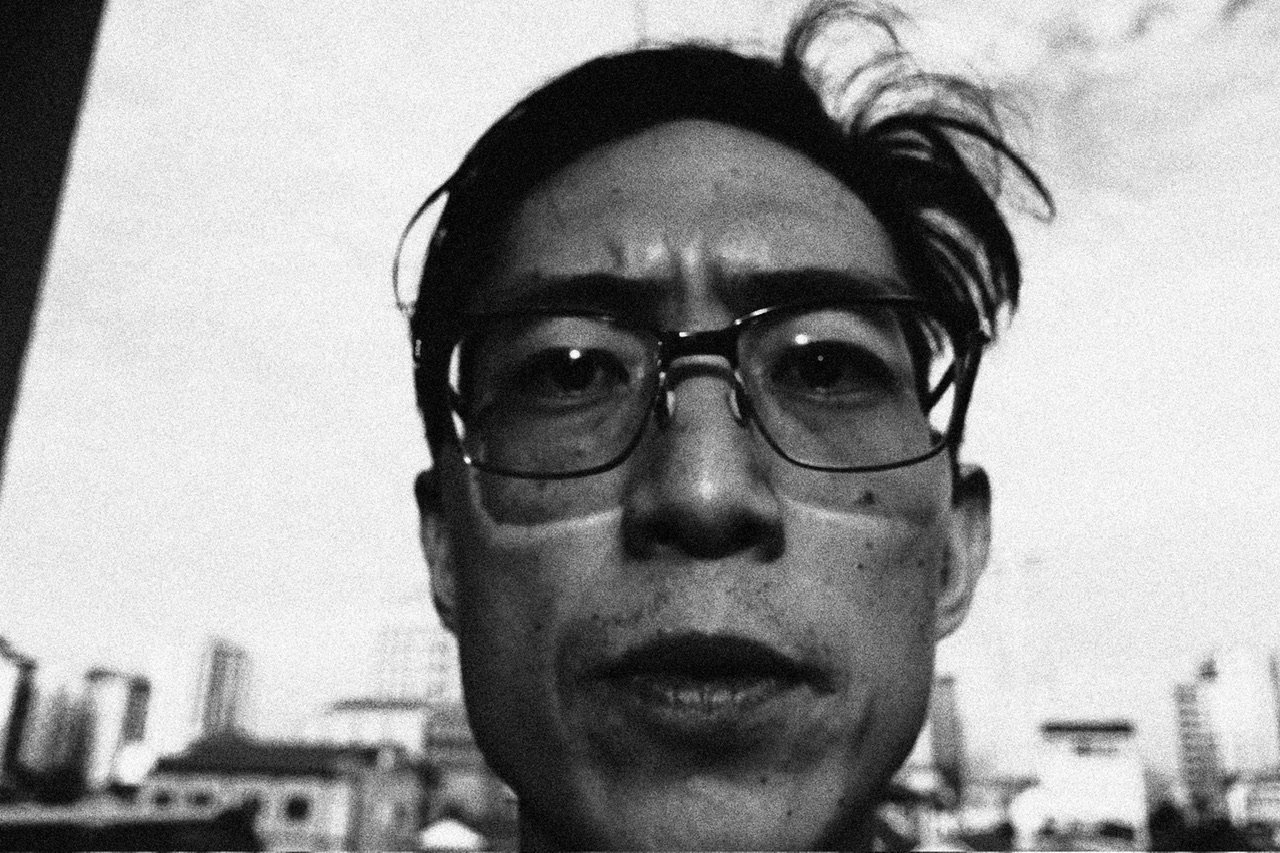
by Eric Kim
Dedication
To Cindy,
You never stopped believing in me, and you have helped me fulfill my personal maximum in my life.
I love you now and forever.
Berkeley, Dec 9, 2015.
Table of contents
- Fulfill your personal maximum
- Get closer
- Shoot 25% more than you think you should
- Shoot from the gut
- The “.7 Meter Challenge”
- “Marinate” your photos
- Don’t shoot from the hip
- Influence the scene
- Don’t crop
- Focus on the edges
- Emotionally detach yourself from your photos
- Create context in your frame
- Provoke your subjects
- “Can you do that again for me?”
- Don’t be a slave to your camera
- Cure yourself of “G.A.S.”
- Embrace “beginner’s mind”
- Shoot how you feel
- Limitations are freedom
- Document your own life
- Shoot with a “stream-of-consciousness”
- Shoot what it feels like
- Embrace failure
- Don’t be afraid to click the shutter
- Add “something more” to the frame
- Master your body language
- Tell convincing lies
- Kill your master
- Contradict a “rule”
- Follow your curiosity
- Don’t explain your photos
- “Open” vs “closed” photos
- Kill your ego
- Shoot what you love
- Don’t hesitate
- Don’t try to be someone else
- Don’t repeat yourself
- Ask for permission
- Try to get rejected
- Don’t stop your projects too soon
- Take shitty photos
- Chase the light
- Channel your personal emotions
- “All photographs are accurate, none of them is truth”
- Disturb your viewer
- Disregard technical settings
- Embrace “P” mode
- Enjoy the process
- Single photos can’t tell stories
- Don’t worry about marketing your work
- Subtract from the frame
- Make yourself vulnerable
- Forever be an “amateur”
- Stay hungry, stay foolish
- Don’t force it
- Don’t take easy photos
- Shoot what you’re afraid of
- Print your photos
- Don’t be “suckered by the exotic”
- Shoot in boring places
- Don’t take bad photos
- Make specific photos
- Compose intuitively
- Don’t have a “project”
- Improve 1% everyday
- Take 1 photo everyday
- Make something extraordinary from the ordinary
- Don’t see your photos as “art”
- Constantly question yourself
- Feel emotions in color
- Never leave home without your camera
- Make a book
- Juxtapose
- Pave your own path
- What do you want from your photography?
- Don’t constantly switch your equipment
- Learn where to stand
- Expect to be disappointed
- More megapixels, more problems
- Experiment with film
- Kill your babies
- Don’t look at your photos immediately
- Don’t shoot for others
- Photograph your own backyard
- Make images that stand on their own
- What counts is the result
- Abstract reality
- Capture your own personal “decisive moments”
- Rules will set you free
- Experiment
- Fuck fame
- Think long-term
- Create a relationship with your subjects
- Don’t bore your viewer
- Embrace your day job
- Count your blessings
- Don’t become married to your beliefs
- You’re only as good as your last photo
- Unlearn
1. Fulfill your personal maximum
“What has interested me in taking photographs is the maximum — the maximum that exists in a situation and the maximum I can produce from it.” – Josef Koudelka
For the last ten years, I have tried to seek my own personal voice, style, and path in photography. This journey has led me through life in so many incredible ways. I have learned so many valuable lessons in photography (and life) which has transformed me as a human being.
My particular interest has been in street photography; capturing moments of everyday life in public settings. I have always been drawn to my fellow human beings, and street photography has helped me become a more empathetic human being.
Ultimately, photography is photography. I used to feel that I should only shoot “street photography,” but I have discovered in my path that it doesn’t matter what you shoot. What matters is how shooting makes you feel. What matters is whether photography pushes you outside of your comfort zone, and whether you are able to achieve your personal maximum.
I feel the purpose of my life is to produce knowledge, and to distill information and lessons I’ve learned about photography to the masses. I am certainly not a “master” myself; just a humble student dedicated to a life-long pursuit of learning. Everything I share in this book is a distillation of the lessons I’ve learned from the masters of photography.
Don’t take everything in this book as “truth.” Rather, see the masters of photography as your personal guides. Take these lessons with a pinch of salt; pick and choose which lessons resonate with you, and throw away the rest.
Ultimately to find your own personal vision and style in photography, you just need to know yourself as a human being. “Know thyself” is the greatest wisdom given to us by the ancient philosophers.
Find yourself through the book, and discover the photographer you are. Love, Eric (@ Blue Bottle on Broadway, Oakland, Tuesday 3:46pm, Nov 10, 2015)
2. Get Closer
“If your photographs aren’t good enough, you’re not close enough.” – Robert Capa
One of the common mistakes that many beginning street photographers make is this: they don’t get close enough.
We have many fears and provide a lot of excuses for not getting close enough in our street photography. We are worried about pissing people off, we are worried about making other people feel uncomfortable, and we are worried that strangers might call the cops on us (or even worse, physically assault us).
Realize that this is all in your head. By getting closer to a stranger, you won’t die. In-fact, I have learned that in photography (and life), with physical proximity comes emotional proximity.
It isn’t enough to use a telephoto or zoom lens to get “close” to your subject. By using a telephoto lens, you compress your image, and visually your photo feels less intimate. It feels like you are more of a voyeur looking in; rather than you being an active participant of the scene.
In street photography I generally recommend using a 35mm lens (full-frame equivalent) for most photographers (Alex Webb, Constantine Manos, and Anders Petersen shoot with this focal length). The human eye sees the world in around a 40mm field-of-view, and I find that shooting with a 35mm lens gives you enough wiggle-room around the edges of the frame.
A 50mm is fine too (Henri Cartier-Bresson was famous for using it for nearly his entire life), but in today’s crowded world, I find it to be a bit too tight. A 28mm is fantastic too (William Klein, Bruce Gilden, and Garry Winogrand have used this focal length), but realize that you have to be close enough with this lens to fill the frame.
As a rule-of-thumb, I try to shoot with a 35mm at least two-arm-lengths away (or closer). 2 arm-lengths is 1.2 meters (around 4 feet). Therefore I always have my camera pre-focused to 1.2 meters, set at f/8, ISO 1600, and I simply go out to find moments to shoot.
3. Shoot 25% more than you think you should
If you see an amazing character once in your life, realize that you will never see them ever again. So live life without regrets and make the photograph.
For this photo, I saw this amazing woman in the streets of NYC and said to her, “Oh my God miss, you are the most incredible-looking woman I have seen all day. Do you mind if I made a few photographs of you?” She was quite humbled and said, “Of course!”
I got very close with her with a Ricoh GR digital camera, and shot on 28mm with the Macro mode in “P” (program) mode with ISO 400. To fill the frame with her face, I shot this photograph at around .3 meters (about 1 foot away). I took many photographs, shooting some with flash, some without. I asked her to look up, and to look down at me.
On the 19th frame, she started bursting out laughing and said, “You’re taking so many photos, you’re crazy!” and started laughing. On that frame, I captured the “decisive moment.”
After capturing the moment, I still wasn’t 100% sure whether I got an interesting photograph or not, so I kept clicking, around 10 more frames.
As a general rule-of-thumb, when I think I’ve got the photograph, I try to take 25% more photographs (because you never know if you might catch an even more interesting photograph after-the-fact).
Later she told me she was 82 years old. The reason the photograph is meaningful to me is because there are too many photos of death, destruction, and misery in the world.
It is one of the very few “happy” photos I’ve shot. Inspired by this image, I hope to make more photographs like this to spread positivity and love in the world.
4. Shoot from the gut
“My photography is not ‘brain photography’. I put my brain under the pillow when I shoot. I shoot with my heart and with my stomach.” – Anders Petersen
Anders Petersen is one of the most influential contemporary master photographers. He shoots with a simple point-and-shoot film camera (Contax T3) and shoots soulful black and white images which he refers to as “personal documentary.” He makes himself and the people he meets as his main subjects, and he shoots from the heart.
A photograph without emotion is dead. The problem that a lot of photographers make is that they try to become too analytical with their photography. They are too preoccupied with composition, framing, form, nice light, and they forget the most important thing of making a memorable image: creating an image that has heart, soul, and passion.
When you’re out shooting, try not too be too analytical. Shoot from your intuition and your guts. If you find anything even remotely interesting, don’t self-censor yourself.
Don’t let your brain tell you: “Don’t take that shot, it is boring, and nobody will find it interesting.” Take the photograph anyways, because you can always edit it out (remove it) later.
But when is it time to become analytical?
“It is more after when I am shooting when I am looking at my contact sheets, and then I try to analyze and put things together.” – Anders Petersen
Shoot from your gut when you’re out on the streets, but use your brain when you’re at home and editing (selecting) your shots. Analyze your images after-the-fact as a post-mortem, and learn how to “kill your babies” (weak photos that you are emotionally attached to, but you know aren’t great photos).
Separate the shooting and editing sides of your photography. They use different parts of your brains, and if you try to do both of them at the same time, you will fail.
As a practical tip, turn off your LCD screen when shooting, and refrain from looking at your images immediately after you’ve shot them (they call this “chimping”). Why? It kills your shooting “flow.”
Furthermore, let your shots “marinate” by not looking at them until a week after you have made your images.
5. The “.7 Meter Challenge”
To truly get comfortable getting closer to your subjects, try this assignment from my friend Satoki Nagata: For an entire month, only take photos of your subjects from .7 meters (1-arm-length).
For this assignment, switch your camera to manual-focusing mode, and tape the focusing mechanism of your lens to that distance. By setting yourself this “creative constraint,” you will learn how to better engage your subjects and get them comfortable with you shooting at such a close distance.
Start off by asking for permission, then once you feel more courageous, start shooting candidly.
6. “Marinate” your photos
I shoot both film and digital, but one of the biggest advantages of shooting film is that you’re forced not to look at your photos immediately after you’ve shot it.
With film, I generally don’t get my film processed until 6 months-1 year after I’ve shot it. This helps me truly help disconnect myself emotionally from my shots, which allows me to look at my photos more objectively.
With digital I find it a lot harder to let my shots “marinate,” as I am prone to “chimping” (looking at your LCD screen immediately after you’ve taken photographs).
For this photograph, I saw this woman juxtaposed against this billboard behind her in London. I got close to her, and took two photos: both with a flash. One of them she was looking away, and one she was looking directly at me.
At first I didn’t think that it was an interesting shot, but then I let the shot “marinate”— and the longer I sat on the image, the more I ended up liking it. I also ended up showing the photograph to a couple of my close friends, who all agreed that it was a strong image. For some shots, the longer you let your shots “marinate,” the more you like them.
For others, the longer you let your shots “marinate,” the less you like them. Imagine oil and water in a bottle. You shake the bottle hard, and they are both mixed.
The longer you wait, the oil will soon rise to the top (your good photos), while the water will sink to the bottom (your weak photos).
7. Don’t shoot from the hip
“I never shoot without using the viewfinder.” – Garry Winogrand
Another common mistake that aspiring street photographers make is that they try to overcome their fear of shooting street photography by shooting from the hip (photographing with your camera at waist-level and not looking through the viewfinder).
Personally when I started shooting street photography, I was dependent on “shooting from the hip” (2010). I was too scared to bring my camera’s viewfinder up to my eye, because I was afraid of getting “caught” of taking candid photos of strangers.
Garry Winogrand was one of the most prolific street photographers in history. He shot with a Leica M4, 28mm lens, and was known for creating layered, edgy, and head-on shots. If you go on YouTube, you can see how close he is to his subjects when shooting, and he always quickly looks through his viewfinder while shooting. This allowed him to frame properly, and capture the moments he found interesting.
“[Don’t shoot from the hip], you’ll lose control over your framing.” – Garry Winogrand
In my experience, I found that shooting from the hip was a huge crutch. The more I shot from the hip, the less confident I was as a street photographer. Not only that, but as Garry Winogrand said, I lost control over my framing. My shots would be poorly framed, skewed, and any shot that I got that looked half-decent was because of luck.
As a street photographer, you aren’t doing anything wrong. You are trying to make images that people can empathize with. If it weren’t for street photographers, historians would have no idea what people did in public spaces in the past. All of the iconic street photography done by Henri Cartier-Bresson, Helen Levitt, Robert Doisenau, and Vivian Maier wouldn’t exist.
Be confident. Have faith in yourself. By not shooting from the hip, you’re signaling to the world that you’re not doing anything wrong. Also by using your viewfinder (or LCD screen), you can have better control over your framing and composition.
What do you do when you’re shooting street photography and you get “caught in the act?”
My suggestion: Look at your subject, smile, say “thank you” and move on.
8. Influence the scene
Sometimes it is good to have your subjects notice that you are about to take a photograph of them.
For example in this photo I shot in Hollywood, I saw this hip older lady with these great sunglasses and hat. I crouched down, and took a photograph with my Canon 5D and 24mm lens. The second I was about to take a photograph of her, she looked at me and posed with her hands (giving me the “jazz hands”).
If I shot from the hip, she might have not noticed me. Therefore she would have never posed for me, and this photo wouldn’t exist.
But does that ruin the photograph, the fact that your subject noticed you? Absolutely not. William Klein famously engaged with his subjects a lot when he shot street photography, and his presence made his photographs more vibrant, dynamic, and edgy.
9. Don’t crop
“If you start cutting or cropping a good photograph, it means death to the geometrically correct interplay of proportions. Besides, it very rarely happens that a photograph which was feebly composed can be saved by reconstruction of its composition under the darkroom’s enlarger; the integrity of vision is no longer there.” – Henri Cartier-Bresson
A common mistake many photographers make is that they over-crop their images. They are “crop-a-holics,” in which they crop every single photograph they take (even when unnecessary). I am also a recovering “crop-a-holic.” I would unnecessarily over-crop my shots (even when the edges would be interesting).
Another downside to being a “crop-a-holic”: I would be lazy when shooting street photography. I shot really far away from my subjects, thinking that I could just crop and zoom in to my subjects, instead of moving physically closer to my subjects.
I would always tell myself in the back of my head, “Eh, if I didn’t get the shot right, I can always crop it later.” This made me lazy, and prevented me from improving my composition and framing.
When I first learned that Henri Cartier-Bresson (the Godfather of street photography and the master of composition) didn’t crop his images (and forbade his students to do so), I decided to also try the assignment for myself.
In the beginning, it was difficult not to crop my shots. Also by not cropping my shots, I realized how sloppy I was when I framed my images. Therefore by imposing this rule of not cropping on myself, I began to focus on “filling the frame” and creating better edges in my shots, which improved my composition dramatically.
I am not saying that you should never crop your photographs. There are a lot of master street photographers who heavily cropped their photographs (Robert Frank did some radical cropping for his seminal book: “The Americans,” even turning some landscape shots into portrait shots with cropping).
If you want to improve your composition: go an entire year without cropping. I can guarantee you that a year later, your composition will improve dramatically. And if in the future you do decide to start cropping again, always do it in moderation (I recommend cropping less than 10% of a frame).
When you’re shooting in the streets, avoid “tunnel-vision” (only looking in the center of the frame). Focus on the edges of the frame and particularly the background to improve your composition.
10. Focus on the edges
If you want better composition and framing in your photography, focus on the edges. Don’t worry about the subject in the center of the frame, if you focus on the edges what is in the center of the frame generally takes care of itself.
In Aix-en-Provence, I saw a woman drinking some wine the table across from me. I saw this epic silhouette of her and her wine glass, so I went up to her and asked if I could take some photos of her shadow. She reluctantly agreed.
I ended up shooting many different photos of the scene, focusing on the edges of the frame while I was composing this image. I wanted to get the silhouette of her face, the silhouette of the wine glass, and also of the water carafe in the bottom-left of the frame.
Focus on the edges, and your composition will fall into place.
11. Emotionally detach yourself from your photos
“Sometimes photographers mistake emotion for what makes a great street photograph.” – Garry Winogrand
Imagine this situation: it is a cold and rainy day. You are out shooting on the streets, and you are feeling miserable. You are about to give up and go home when you see a little girl with a red umbrella about to jump over a puddle.
You think of the famous photograph of Henri Cartier-Bresson (man jumping over puddle), and get excited. The girl jumps, and you click. You just captured the “decisive moment.”
You rush home, quickly download your photos to your computer, post-process the photo, and then upload the photograph online. You cross your arms, and think that it is one of the finest photographs you have ever taken. You are excited that perhaps, finally, you will get over 100+ favorites/likes on this image.
A day or so passes, and you only got 10-15 favorites/likes. You throw up your hands in rage and think to yourself: “These people on the internet wouldn’t know a great image if it hit them in the face!” You then continue about your day.
A week or two go by, and you revisit the image. You then look at the image and tell yourself: “Hmmm, this image isn’t quite as good as I remembered it.”
What just happened? You became emotionally attached to the backstory of how difficult it was to get that image (and the emotion you felt of being excited). This confused you into thinking that this was actually an “objectively” good shot.
This happens to the best of us. We get too emotionally attached to our shots, because we were there. We experienced it. It feels alive and vivid inside our memories.
The problem is that our viewers have no idea what the backstory of the image is (unless you write a long caption, which I generally advise against).
What is the solution? Emotionally detach yourself from your photos. When editing (selecting) which images to “keep” and “ditch,” ask your peers to be “brutally honest” with your work.
12. Create context in your frame
In photography, the entire story of the image must exist inside the frame. If you want to tell a better story, include context in your photos.
I have this vivid story in my head of how I got the image: I saw this well-dressed man in a hotel lobby, and asked if I could make a few photos. He said, “No problem,” and I took seven photos. Afterwards, I asked him what he did. He told me, “I own this hotel!”
Now I have this vivid backstory, but the viewer has no idea about that story or information in this photograph.
Viewers find this photograph interesting because the outfit of the man looks like he’s from the 1950s — a relic of the past. The viewer then makes up their own story about the man, based on the films they have seen in the past.
If you have a photograph which is weak without having a compelling story, ditch the shot. When you have to “explain” the back-story of a street photograph, it is like explaining a joke. Funny jokes don’t need to be “explained.”
13. Provoke your subjects
“Rather than catching people unaware, they show the face they want to show. Unposed, caught unaware, they might reveal ambiguous expressions, brows creased in vague internal contemplation, illegible, perhaps meaningless. Why not allow the subject the possibility of revealing his attitude toward life, his neighbor, even the photographer?” – William Klein
There is a general scorn in street photography against “posed” photos (or photos that aren’t shot candidly). A lot of people follow the Henri Cartier-Bresson school of street photography in which the photographer shouldn’t interact with his/her subjects, and to be an unattached observer.
However there is more than one approach to street photography. One street photographer who interacted with his subjects is William Klein; a street photographer who gave a middle-finger to all of the “rules” in photography. Klein provoked his subjects, and interact with them.
Even for Klein’s famous “Kid with gun” photograph, he told the kid: “Look tough.” At that moment, the kid with the toy gun pointed the gun to Klein’s face with a look of hate, anger, and intensity (see the contact sheet).
One lesson I learned from Martin Parr when shooting “street portraits” is this: ask your subject to look straight into the lens and not to smile. Sometimes I will more directly pose my subjects by asking them to look the other direction, cross their arms, to take a puff of their cigarette, or look left, right, down, and up.
An objection I often hear: “But Eric, once you engage with your subjects and ask them to do something for you, doesn’t it make the photograph less legitimate?”
My response is this: Every photograph we take is a self-portrait of ourselves. We decide how to filter reality. We decide what to put into the frame and what to exclude.
Don’t have any personal qualms about showing your own version of reality through your photography. Embrace it.
14. “Can you do that again for me?”
Sometimes you see things happen in the street; certain gestures, facial expressions, or actions by your subjects but miss “the decisive moment.” If you ever see a moment that you miss, try this out: approach the subject and ask them: “Can you do that again for me?”
For example, I was in Downtown LA in the fashion district and I saw a man blowing his nose. It looked like an interesting gesture, and I loved his eyes, his suit, and the overall moment. However the second I brought up my camera, he dropped the tissue and made eye contact with me (and stopped blowing his nose). I then said, “Excuse me sir, I love your outfit and look. Can you do me a favor and blow your nose again for me?” He laughed, and blew his nose again, and I took a few photos while walking backwards with a flash.
Now believe it or not, most people are quite happy to repeat certain gestures for you if you just ask.
Another technique you can try out in street photography if you feel timid approaching strangers and taking photos without their permission is to approach them and ask them, “Pretend like I’m not here.”
If you see a cool-looking guy smoking a cigar in front of a store, you can approach him and say, “Excuse me, I think you look badass smoking that cigar. Don’t mind me, can you just keep smoking that cigar and pretend like I’m not here?”
Most people will laugh, and literally ignore you. This can help you get a candid-looking photo (without getting punched in the face).
Sometimes your subject will start posing and smiling while continuing to smoke their cigar. In those situations, simply linger around, don’t say anything, and wait about 30 seconds until they start ignoring you.
Another tip: you can start chatting with them and asking them how their day is. When they start talking and drop their guard, you can continue taking photos. This allows you to capture much more natural looking photos (that don’t look posed).
15. Don’t be a slave to your camera
“You are not supposed to be a slave of mechanical tools, they are supposed to help you and be as small and unimportant as possible not to disturb the communication.” – Anders Petersen
There is a disease and a sickness out there which afflicts millions of photographers globally, and costs them hundreds and thousands of dollars. This disease breeds insecurity amongst photographers, as they feel that the camera they have is never good enough.
They think that once they upgrade their camera to a newer and more expensive version (or buy a new lens), they will suddenly become more “inspired’ and creative.
The disease? It is called “G.A.S.” (Gear Acquisition Syndrome). The concept is that camera companies, bloggers, and marketers try to breed dissatisfaction and insecurity with photographers by telling them: “The reason your photos suck is because your camera isn’t good enough.”
Personally I am still afflicted with “G.A.S.” Whenever I am dissatisfied with my photography, I always hope that buying a new camera will suddenly re-inspire me, and open up doors of creativity. Trust me: it never does.
One of the mantras I preach is: “Buy books, not gear.” Frankly I regret all the time, energy, and effort I wasted on buying new cameras and lenses. I wish I invested all of that time and money in photography-education (books, workshops) as well as traveling.
Money can buy you happiness, but only if you spend it on experiences, not stuff.
Not only that, but I find reading gear review sites, gear rumor sites, and gear forum sites always poisons me into wanting to buy new cameras and lenses that I don’t need. I have added a “StayFocusd” Google Chrome plugin which prevents me from visiting these gear-related sites (because I have no self-control).
I have discovered that when I am out shooting, I don’t think much about my camera. I only think about my camera when I am sitting at home or bored at work when I am surfing the web.
When I had a full-time 9-5 job, I barely had enough time to shoot street photography and hated my life. Somehow I convinced myself that by buying a new camera, I would spend more time going out and shooting.
Whenever I bought a new camera, it would only “inspire” me for a week or two, then I would return to baseline.
Remember; invest your money into experiences, travel, workshops, education, and photography books. No camera will help improve your vision.
16. Cure yourself of “G.A.S.”
I am still personally afflicted from “G.A.S.” (regardless of how many Tums I eat). I am a materialistic person, and everyday I have to fight the urge not to desire a new smartphone, car, home, clothes, watch, laptop, tablet, camera, lens, or accessory.
I am still not fully cured from “Gear Acquisition Syndrome”, but here are some things that have me feel (less) “gassy”.
1. Be grateful for what you have:
Rather than wanting a camera that I don’t have, I try to write down why I love the camera I already own.
2. Realize there is no “perfect” camera:
Every camera has an upside and downside. Rather than trying to find a “perfect” camera, try to find a “good enough” camera. Become a “satisficer” (happy with “good enough”) instead of being a “maximizer” (wanting “perfect”). For further reading, read my article: “What to Consider When Buying a New Camera for Street Photography” and the book: “The Paradox of Choice.”
3. Set yourself an upgrade limit:
You don’t want to own one digital camera for the rest of your life. For example, most laptops and smartphones work reasonably well for about 3 years. So set yourself a rule: “I am not allowed to buy new camera unless I have owned this camera for 3 years.”
4. Re-read old reviews of your camera:
Re-live the excitement you had for the camera you already own.
Imagine losing your camera: If tomorrow you lost your camera (or if your camera was stolen from you), how would you feel? I bet you would appreciate the camera you own a lot more.
5. Don’t own more than one camera and one lens:
I think it is fine to own high-quality and expensive cameras. Just try not to own more than one at a time. Personally when I have owned more than one camera and lens in the past, I had no idea which camera to bring with me when I left my apartment. Psychologists call this “paralysis by analysis.” If you only have one camera and one lens, you know exactly what camera to bring with you.
17. Embrace “beginner’s mind”
“My dream is that if you go out in the streets where you were born you see the streets like for the first time in your life even though you have been living there for 60 years.” – Anders Petersen
Do you remember when you first picked up a camera, and weren’t disturbed by dogma, rules, constraints, or any other “theories” in photography? Do you remember the lightness that you would just roam the streets, and just took photos that interested you without any prejudice or self-criticism? Do you remember how excited it was to just play, like a child?
In Zen Buddhism they call this approach “beginner’s mind.” When we begin any sort of pursuit, hobby, or art in life, we are unburdened. We see the world as fresh and full of opportunities. We are excited, nimble, fresh, and open-minded. We see possibilities, not obstructions.
The problem is that the more experienced we become in photography (and life), we become jaded. Everything just seems to becoming boring. Nothing interests us anymore. You can live in the most interesting city in the world (Paris, Tokyo, New York) and after a while become bored of what you see.
Follow Anders Petersen’s advice and hit the streets like it is the first time. Imagine that it is the first time you experienced it. Imagine what you would find interesting and unique. Imagine yourself like a tourist in your own city.
Try switching things up. Walk around your city with a different route than you usually take. Perhaps take a short trip out of town, and come back to your city with new and refreshed eyes.
Imagine yourself like an alien visiting from another planet. If you were an alien and visited your own city streets for the first time, what would you find interesting or unique?
Don’t analyze your scenes too much when you’re shooting. Just photograph what you find interesting, and just click.
Disregard what others think; just take photos like any good beginner would.
18. Shoot how you feel
Our emotions are highly variable: on some days we are super optimistic and think everything in life is perfect and super dandy. On other days we can feel pretty shitty and only feel doom and gloom.
Personally even though I have a “perfect” life (traveling, teaching photography, meeting amazing people) I still suffer a lot of dissatisfaction in my life. I have financial worries, family issues, and personal issues.
There are a lot of times I feel lost, confused, and frustrated. I don’t know what direction my life is going. Other times I have no idea what I am doing in photography and question myself, “Why do you even take photos? Nobody cares about your work. You suck. You will never be great.”
Photography is one of the best forms of self-therapy. Don’t judge your emotions (whether negative or positive). Know that life is a roller-coaster; we will suffer dips and highs.
When life is going downhill, the hill going up is just around the horizon. Similarly, when things are going well, remember that it won’t last.
When I am feeling dark and moody, I find that shooting gritty black and white suits my mood. However when my life is feeling more positive and upbeat, I find myself shooting more happy, colorful, and saturated color.
A photograph without emotion is dead. Avoid taking photos that are just purely compositional or design-oriented. Make street photos that open the doors of empathy to your viewer.
19. Limitations are freedom
”Too much choices will screw up your life. Work on one thing, then expand on your canvas.” – David Alan Harvey
The problem with modern society is that we have too many choices. Do you remember the last time you went to the grocery store and wanted to get some breakfast cereal? Let’s say you wanted to get some wheat cereal. You go to the cereal aisle, and you see that there are 10 different brands for wheat cereal. Even worse, there are different flavors: sugar, chocolate, vanilla, blueberry, and strawberry. Even worse, there are some cereals loaded with probiotics, some with less sugar, and some that is advertised as “heart healthy.”
Overwhelmed, you just pick up some of the chocolate wheat cereal, and you go home and the next morning you have a bowl of cereal. You are slightly disappointed with your choice, and you kick yourself for not getting the sugar variety.
This is what psychologists call “The Tyranny of Choice” (or “The Paradox of Choice”). When we have too many choices or options, we become overwhelmed. This causes more regret, and more stress.
Having too many choices (for example, owning more than one camera and one lens) can be stressful. By having more choices as a photographer, you spend less time shooting, and more time and energy debating which camera, lens, or film to use.
Ironically enough, having fewer options leads to less stress, and more inner-peace.
When I used to own more than one lens, “decision fatigue” killed me. I would be out shooting, and constantly switch my lens from a 28mm to a 35mm to a 50mm. No lens was ever perfectly “ideal” for the situation I was shooting. In the past I also shot with a Sigma 18-200mm (which made me a really lazy photographer).
If you only own one prime (non-zoom) lens, you learn how to work within the boundaries of your focal length. If your 35mm can’t fit in a whole body shot of your subject, perhaps you can focus on just their face or hands. “Creative constraints” force you to make more intriguing and interesting images.
Many masters of street photography have followed the philosophy of “one camera, one lens.” Henri Cartier-Bresson made the majority of his iconic images with his film Leica, 50mm, and black-and-white film. Alex Webb has stuck to mostly a film Leica, a 35mm lens, and Kodachrome color film. Daido Moriyama has stuck with point-and-shoot Ricoh GR cameras, 28mm, and have stayed consistent with grainy black and white look.
Of course there are other great photographers like Todd Hido who have used multiple cameras, lenses, films, and formats and have made great work. However if you are a beginner, starting off with just one camera and one lens and sticking with it for a long time can help push you creatively.
Try to figure out how you can start to eliminate options and choices from your photography (and life). Having more limitations will force you to be more creative, and set you free.
20. Document your own life
In January 2013, I got the news that my grandfather passed away. I quickly boarded a plane, and only brought one camera and lens with me: the Ricoh GR1v (a point-and-shoot film camera with a 28mm lens). I also only brought 10 rolls of film (Neopan 400) and pushed the film to 1600. I set myself this limitation in terms of my gear and my goal was to document my grandfather’s funeral in a meaningful, present, and mindful way.
By having this simple point-and-shoot camera, I was able to really focus on the experience of being there for my grandfather’s funeral. Because the camera is film, I couldn’t “chimp” and check my LCD screen after every photograph I took.
I was truly present, and wasn’t distracted by my camera. I think this lack of distraction from my camera helped me create one of the most meaningful projects in my photography career: my “Grandfather” series.
If you are a photographer that owns more than one camera and one lens, just bring one camera and one lens with you when you go out shooting. Or if you’re pursuing a certain photography project, do it all on one camera, one lens, and one film (or style of post-processing if you shoot digital).
Focus on the “shooting process,” and less about the equipment and technical settings involved.
21. Shoot with a “stream-of-consciousness”
“For me, capturing what I feel with my body is more important than the technicalities of photography. If the image is shaking, it’s OK, if it’s out of focus, it’s OK. Clarity isn’t what photography is about.” – Daido Moriyama
One of the common mistakes a lot of photographers make is that they are too analytical when they shoot street photography. They forget the most important part of photography: photographing what you feel with your heart.
Daido Moriyama is one of Japan’s most famous photographers who popularized the “stream-of-consciousness” style of photography. Not only that, but he popularized the radical “are, bure, boke” (grainy, blurry, out-of-focus) aesthetic, which rebelled against the photography at the time, which focused on making hyper-sharp images with fancy high-end cameras.
What is “stream-of-consciousness” in photography you ask? Well, the concept is that your thoughts, emotions, and ideas are like a river or stream, flowing through your mind. You trust your intuition, instincts, and gut.
When you’re shooting street photography, you just photograph what you find interesting, without any judgement, self-criticism, or frustration. You setup your camera with fully-auto settings, and just point-and-click. It is the purest form of “snapshot” photography, where you aren’t thinking like an “artist.” You are just like a child, exploring the world, and photographing what you find interesting.
If you shoot with a “stream-of-consciousness,” realize that the majority of your shots won’t be very good. In-fact, you will make a lot of crappy, uninteresting, and boring photographs. However if you channel your emotions into your photos, they will become more personally meaningful to you. Furthermore, this feeling will transfer to the viewer.
This makes the editing process so important. You need to always get a second opinion on your photos, and to see if other people get the same emotions from your photograph as you do.
22. Shoot what it feels like
“Seeing is not enough; you have to feel what you photograph” – Andre Kertesz
I shot this image in Saigon, Vietnam. I was at a bar, and I saw the mysterious mood and feeling of this man through a set of curtains. In terms of technical settings, I shot this image on a Fujifilm x100s, and set the camera to manual-focus, focused on the man, and just started to shoot away in “P” (program) mode (aperture set to auto, shutter-speed set to auto) at ISO 3200.
I often use “P” mode when shooting digitally, because it helps me focus on composing the scene, framing, and “working the scene” (instead of fiddling around with my camera).
I loved the expression of the man’s face, his sense of loneliness, and the mysteriousness of the place. I didn’t think too much about the composition and the framing, I just kept shooting what the scene felt like: dark, estranged, and lost.
Afterwards when I shared the photo with my friends and other photographers I trusted, they told me that the emotion that I felt in this scene mirrored what they felt.
The emotions you feel while shooting street photography won’t always translate to your viewers. However the more you shoot with your heart (and not with your brain), the more likely you are to translate what a scene feels like to your viewer.
23. Embrace failure
“Luck – or perhaps serendipity – plays a big role… But you never know what is going to happen. And what is most exciting is when the utterly unexpected happens, and you manage to be there at the right place at the right time – and push the shutter at the right moment. Most of the time it doesn’t work out that way. Street photography is 99.9% about failure.” – Alex Webb
Street photography is all about failure. As Alex Webb said, “Street photography is 99.9% about failure.” Every time you click the shutter, there is only a .1% chance that you will make an interesting shot. The majority of the time, you might shoot an entire day, not get a single good shot, and feel disappointed and frustrated.
Know that failure is a good thing. The more you fail, the more likely you are to succeed. As Thomas Edison once said: “If you want to increase your success rate, double your failure rate.”
You can control the effort, not the results. Meaning, you can control putting in 8 hours of shooting in one day, and how hard you work. What you can’t control is whether you get a good shot or not.
In my street photography, I often found that the more I go out and bring my camera, the more “lucky” I get. When I have my camera with me, the more opportunities I see. Luck isn’t some magical thing that hits us like lightning. However luck favors the prepared.
Be prepared by always having your camera with you, always observing your scenes and environment, and know that every once in a while, you will be at the “right place at the right time.” If you’re comfortable with your camera and skilled enough, you will also click the shutter at the right moment.
When you fail to get the shot, don’t become discouraged. Rather, learn from your failures and mistakes. What caused you to miss the shot? Was it because your camera wasn’t setup properly? Was it because your camera was in your bag (and not in your hand)? Was it because you were too nervous and didn’t have the courage to click the shutter? Learn from your failures, and the closer you will become to mastering your photography.
24. Don’t be afraid to click the shutter
One of the mistakes that street photographers make is that they are afraid to click the shutter, fearing that they will take bad shots. Realize the more bad shots you take, the more likely you are to get a “keeper.”
In this scene in Istanbul, I took 6 “bad” shots until I got lucky (boy jumping into the water) and got an interesting image next to this man.
To succeed more, fail more.
25. Add “something more” to the frame
“It’s not just that that and that exists. It’s that that, that, that, and that all exist in the same frame. I’m always looking for something more. You take in too much; perhaps it becomes total chaos. I’m always playing along that line: adding something more, yet keeping it sort of chaos.” – Alex Webb
The more experienced you get in street photography, the more sophisticated you will become. You might start getting bored with the images you make, and you want something more in your images.
Alex Webb is famous for creating complex images, with multiple layers and colors while having minimal overlaps in his frame. His photos are bursting with life, energy, and subject-matter. His photos are on the border of chaotic, yet they still work.
What Alex Webb does is he constantly looks for something more in the frame he can add, especially things in the background.
As beginner street photographers, we become obsessed only what is in front of us, and we disregard the background. We don’t know that the background is often as important as the foreground.
If you see a single-subject in the foreground, take the shot, but wait and be patient and look for “something more.” Perhaps somewhere to the right of the scene, you see an old lady about the enter the frame. And on the top-left of the scene, you might see a woman pushing a baby stroller into the frame.
Try to frame the shot where you can balance the image by dispersing subjects in opposite sides of the frames. Also try to avoid creating overlaps in your images with your subjects by adding a little bit of white-space between them.
But how do you know when a scene is “too busy”? It is often a matter of taste. What I try to find is “multiple stories” in a single scene, which keeps the viewer engaged and interested.
Don’t just put extra subjects in the frame for the sake of it. Only add what you think is essential and will add something of value to the frame.
26. Master your body language
“If you photograph for a long time, you get to understand such things as body language. I often do not look at people I photograph, especially afterwards. Also when I want a photo, I become somewhat fearless, and this helps a lot. There will always be someone who objects to being photographed, and when this happens you move on.” – Martin Parr
As a street photographer, you want to learn how to master your body language. 90% of communication isn’t verbal; we communicate through our facial expressions, body language, and hand gestures.
If you want make strong images, Martin Parr explains the importance of getting close to your subject, and how difficult it is:
”I go straight in very close to people and I do that because it’s the only way you can get the picture. You go right up to them. Even now, I don’t find it easy.” – Martin Parr
Even Martin Parr, who has been shooting street photography for decades still finds it difficult to get close to people and get the shot.
To be “invisible” when shooting street photography, Martin Parr gets very close to his subjects by pretending to focus somewhere else:
”I don’t announce it. I pretend to be focusing elsewhere. If you take someone’s photograph it is very difficult not to look at them just after. But it’s the one thing that gives the game away. I don’t try and hide what I’m doing – that would be folly.” – Martin Parr
Eye contact often makes a stronger street photograph, but also it makes it very obvious to your subject that you want to photograph them. So if you want to be invisible when shooting street photography, avoid eye contact.
The less nervous and awkward body language you show, the less nervous and awkward your subjects will feel.
26. Tell convincing lies
For this image, you can see the powerful effect of having eye contact in your photographs. To me, the man looks like he is peering straight into your soul; with a death-stare, which is unforgettable to the viewer.
How do you make memorable street photos?
Tell convincing lies.
The lie in this photograph is that it looks like a candid photograph, where I just took a photo of him without permission, and he is about to go up to me, and bash in my face.
The truth? He was the sweetest guy ever, as you can see in the contact sheet:
The photo is a lie. I crafted my own version of reality, rather than capturing what I saw before me. Ultimately I think it is less boring.
In this scene, I didn’t pretend like I was shooting something else. I was bold and make eye contact with my subject, and interacted with him. If I had never built up the confidence being able to make eye contact with strangers, I would have never been able to make this image.
Switch it up in your street photography. Sometimes interact with your subjects and ask them not to smile. Other times shoot candid shots without permission. Shoot whatever suits your mood, and know that there isn’t one “right” or “wrong” way to shoot.
Follow what feels right for you, and forget the rest.
28. Kill your master
“In those days Henri Cartier-Bresson limited us to lenses from 35 mm to 90 mm. When I showed him the photos he said, ‘brilliant René!’ I went outside and shouted ‘Hah!’ He heard me and said ‘what was that?’ I said, ‘nothing, never mind’. The lens I used was 180 mm – I never told him! At that point I broke loose from my mentor. I killed my mentor!” – Rene Burri
Ironically enough even though this book is on learning from the masters of street photography, there are only so many “lessons” you an learn from the masters before you need to “kill your master.”
For example, when Rene Burri started to shoot photography in Magnum, Cartier-Bresson was one of his mentors and “masters.” He hugely admired Cartier-Bresson’s work, and therefore would follow his philosophies in not using telephoto lenses, not cropping, and not posing his subjects.
Ironically enough one of Burri’s most famous image of silhouetted men in Brazil, he shot it with a 180mm (directly contradicting the rules of Cartier-Bresson). By “breaking the rules,” Burri was able to make one of his most iconic and memorable images.
Remember that after learning from the masters, you need to know when to ignore them or when to go against their teachings.
Consider the “masters” of street photography simply as mentors or guides. Don’t listen to them blindly, as one day you need to take off your training wheels and learn to ride on your own.
29. Contradict a “rule”
If there is a certain “rule” in photography you normally follow, break it for a month, in a creative way.
If the rule is “don’t crop,” do the exact opposite by experimenting with radical cropping. This is what William Klein and Robert Frank did with their images, and it worked for them. So never take “rules” at face value– always challenge them and try to contradict them.
A personal rule I don’t shoot the back of heads. Why not? Generally if you can’t see someone’s face, it is hard to see their facial expression, and get a sense of emotion in the shot. I almost always prefer faces.
In this situation for my “Suits” project, I visited the business quarters in Tokyo at around midnight. There was this arcade that I found on the top floor, and went around taking some photos with a flash. I saw this old man playing games at the arcade machine, and I took perhaps or two shots, and simply moved on.
For me, the reason I think the shot works is because the back of his head is quite interesting: it shows that he is an older “suit,” probably in his 60’s or older (because of his balding head).
If the back of someone’s head is more interesting than their face, just shoot it. Don’t be constricted by rules in a negative way.
30. Follow your curiosity
“The camera is like my third eye it is an outlet for my curiosity. I was always curious as a kid and you have to use your senses. I wanted to meet the big giants of the 19th century, a sculptor, an artist, a dictator a musician and then I would find the pictures would just happen. You don’t capture a picture you are responding. I respond to situations and I am very fast – fastest gun in the West – even at my age.” – Rene Burri
One of the best traits a street photographer can have is curiosity. You can’t fake curiosity in life. Curiosity is the fuel of life. Curiosity is what keeps us hungry to learn more, experience more, and live more.
If you want to become a better photographer, learn how to become more curious in life. Be more like a child and less like an adult. Once we become adults, we become closed off to new ideas and ways of thinking. Rather than exploring things for ourselves and following our curiosity we rather Google answers.
Jacob Aue Sobol is a photographer who is perpetually curious about the lives of others. This is what fuels his work and passion:
”I also photograph because I am curious. I am curious about what the person on the other side of the street is thinking, how he or she lives, and how he or she feels. I am always looking for someone to share a moment with.” – Jacob Aue Sobol
Don’t photograph what you think others might find interesting. One of the best ways to discover your “style” in photography is to learn what you don’t like to photograph. Photograph what you are personally interested in. If there is a certain neighborhood or part of your town that you are interested in, just go there with a camera and take photos.
Don’t think too much. Follow and shoot what you’re curious about.
31. Don’t explain your photos
“I leave it to others to say what [my photos] mean. You know my photos, you published them, you exhibited them, and so you can say whether they have meaning or not.” – Josef Koudelka
One of the common mistakes photographers make is that they don’t leave their photos open to interpretation. They use fancy titles which explain what they want the viewer to take out of the photograph.
Take the opposite approach: leave your photos open to interpretation to the viewer. The more open to interpretation you make your photos, the more engaging they will be to your viewer.
A key way to do this is to leave out key information, or to add mystery or ambiguity to your photos. Intentionally cut off heads, limbs, or obscure the background. Kill the sense of context of the scene. Make the viewer work hard to interpret what is going on in the scene.
A good joke shouldn’t need to be “explained” by the joke teller. Similarly a good street photograph shouldn’t need a detailed backstory in the caption of a photograph.
Similarly, movies are always the best when they end in an ambiguous way, in which the viewer makes up their own ending. When the director ends a film without a clear ending, the film is unforgettable.
Photographer Joel Sternfeld shares how when the photographer makes an image, he or she is interpreting the world:
”Photography has always been capable of manipulation. Anytime you put a frame to the world, it’s an interpretation. I could get my camera and point it at two people and not point it at the homeless third person to the right of the frame, or not include the murder that’s going on to the left of the frame.” – Joel Sternfeld
Richard Kalvar, a master Magnum photographer, also shares the importance of having mystery behind your shots and not explaining them:
“It’s tempting to satisfy people’s curiosity as to what was “really going on” in a scene, but it always leaves a bad taste in my mouth. If there’s a mystery, the viewer should try to unravel it for him- or herself, subjectively, through intelligence, imagination and association. I want people to keep looking, not just move on to the next thing.” – Richard Kalvar
One of the biggest takeaways we can get from Richard Kalvar?
Don’t make the mystery or drama too obvious to your viewer. Let them follow their curiosity, by analyzing your images, and trying to unfold the mystery themselves.
32. “Open” vs “closed” photos
In photography, there tends to be two types of images: “open” photos and “closed” photos.
“Open” photos
“Open” photos are open to interpretation; which means the viewer can make up his or her own story in their head. “Open” photos tend to be more memorable and engaging.
“Closed” photos
“Closed” photos are closed to interpretation. A “closed” photo can only be interpreted in one way. Generally “closed” photos are forgettable; the viewer looks at the image once and has no reason to look at it again.
Here are some assignments you can try out:
Assignment #1: Make an “open” photo
Make a photograph without a clear explanation. Intentionally try to use blur, out of focus effects, a flash, high contrast black and white, or cut out limbs or body parts.
Make an image difficult to interpret, and ask your friends or viewers to come up with their own story. Capture people with strong body gestures or emotions, and don’t make it clear what exactly is going on.
Make a mystery out of your photos, in which the viewer has to be the detective.
Assignment #2: Make a “closed” photo
Sometimes when you’re doing documentary or photojournalism photography, you don’t your photos open to interpretation. You want it to share a specific viewpoint.
In this case, you want a detailed description or caption, for the viewer not to be misled. But street photography is more about creating your own interpretation of the world, rather than trying to capture some “objective” reality.
Don’t forget that the more ambiguous or open-ended you make your images, the more fun and engaging it will be for the viewer.
33. Kill your ego
”I wouldn’t talk about the photographs. No, I try to separate myself completely from what I do. I try to step back to look at them as somebody who has nothing to do with them.” – Josef Koudelka
We can let our ego get in the way of our photography. We think our photos are like our children, and we become too emotionally attached to them (even if they are bad photos). We need to learn how to “kill our babies.”
I have a difficult time overcoming my attachments to my photos. When people critique my photos, I feel like they’re critiquing me as a human being.
Remember: you are not your photos. When people critique or criticize your photos, they aren’t criticizing you. They’re just judging your photos.
One of the best ways to overcome this is to detach your ego from your photos. By detaching your ego from your photos, you can judge them more honestly and objectively.
When you want feedback on your photos, ask people, “Please be straightforward and give the photos a brutally honest critique.” Also when critiquing your own work, imagine that they were shot by someone else.
Another master photographer, Sebastião Salgado mirrors this sentiment. He dedicates making images for others to make a positive impact in the world, instead of boosting his own self-ego:
”The biggest danger for a photographer is if they start thinking they are important.” – Sebastião Salgado
Edit ruthlessly, and kill your ego from the process.
34. Shoot what you love
”I wouldn’t talk about the photographs. No, I try to separate myself completely from what I do. I try to step back to look at them as somebody who has nothing to do with them.” – Josef Koudelka
We can let our ego get in the way of our photography. We think our photos are like our children, and we become too emotionally attached to them (even if they are bad photos). We need to learn how to “kill our babies.”
I have a difficult time overcoming my attachments to my photos. When people critique my photos, I feel like they’re critiquing me as a human being.
Remember: you are not your photos. When people critique or criticize your photos, they aren’t criticizing you. They’re just judging your photos.
One of the best ways to overcome this is to detach your ego from your photos. By detaching your ego from your photos, you can judge them more honestly and objectively.
When you want feedback on your photos, ask people, “Please be straightforward and give the photos a brutally honest critique.” Also when critiquing your own work, imagine that they were shot by someone else.
Sebastião Salgado mirrors this sentiment. He dedicates making images for others to make a positive impact in the world, instead of boosting his own self-ego:
”The biggest danger for a photographer is if they start thinking they are important.” – Sebastião Salgado
Edit ruthlessly, and kill your ego from the process.
35. Don’t hesitate
I have always been drawn to badasses, characters, and tattoos. Partly because I grew up not being confident in my own masculinity, so whenever I see those who I think are tough, I am naturally drawn to them.
I saw this man in Downtown LA, and I was absolutely frightened to approach and photograph him. However I mustered up the courage to approach him, and ask to make a few portraits of him.
Even though he looked scary, he was extremely friendly and had no problem with me taking his photo. I shot two photos with a flash on my camera, and I am glad that I followed my gut and intuition in asking him for the shot.
If you see what you think might be a good photo, never hesitate; and just go for it. Live life without regrets.
36. Don’t try to be someone else
”Photograph who you are!” – Bruce Gilden
One of the most polarizing street photographers is Bruce Gilden. Love him or hate him, he is true to who he is. He was born and raised in the concrete jungle of New York City, and he professes that his father was a “gangster type.” Bruce has an attitude, shoots up close and personal with a flash and 28mm, and is unapologetic about how he shoots or his work.
A lot of people criticize him for exploiting his subjects, or being an asshole. Personally I’ve met him and I would say that he stays true to who he is: a rough, tough, no bullshit human being. But at the same time, he has a lot of empathy for the people he photographs:
”I love the people I photograph. I mean, they’re my friends. I’ve never met most of them or I don’t know them at all, yet through my images I live with them. At the same time, they are symbols. The people in my pictures aren’t Mr. Jones or Mr. Smith or whatever; they’re someone that crossed my path or I’ve crossed their path, and through the medium of photography I’ve been able to make a good picture of that encounter. They have a life of their own, but they are also are symbols. I would say that I respect the viewer, but I don’t want to tell him everything.” – Bruce Gilden
When I started shooting street photography, I tried to imitate Henri Cartier-Bresson (who was extremely introverted and didn’t like to interact with his subjects).
But the problem is that I wasn’t being true to myself. I didn’t photograph who I was. I was imitating a photographer whose personality and worldview was completely different from mine.
Over the past several years I discovered my style in street photography reflected who I was as a human being: social, chatty, and engaging with others.
At heart I am an extrovert (I am an “ESFP” according to the Myers-Briggs personality test). Ultimately I prefer engaging with my subjects when photographing them (as Bruce Gilden often does), and I prefer to shoot closely and prefer physical intimacy through proximity.
There is no “right” or “wrong” way to shoot street photography. You need to shoot who you are. What makes your personality unique? If you prefer not to interact with your subjects, shoot from a distance and be candid.
If you’re extroverted and like conversation, don’t be afraid to talk with your subjects.
The ancient Greeks said: “Know thyself.” Similarly, know thyself in street photography. Shoot what suits your personality, mood, and temperament, and disregard what everyone else says or does.
37. Don’t repeat yourself
”When I went out of Czechoslovakia I experienced two changes: The first one is that there wasn’t this situation any longer. I didn’t need wide-angle lenses. And I had understood the technique very well, I was repeating myself, and I’m not interested in repetition, I wanted to change. I took a 50mm/35mm Leica.The second change was that I started to travel the world. I had this possibility and I had a look at this world.” – Josef Koudelka
There is always a fine line between repetition and variety as a photographer and artist. On one hand you want repetition and consistency in your work to give you a certain style or voice. On the other hand, you want variety in your work to prevent yourself (and viewer) from getting bored.
When Josef Koudelka worked on his “Gypsies” project, he traveled and lived with the Roma people for around ten years. He shot it all on a SLR and a 25mm lens. This helped him shoot in cramped quarters, and create an intimate document of the life of the Roma people.
When Koudelka was done with the project, he realized that he no longer needed to repeat himself. Therefore he just ended up exploring and traveling the world with a 35mm/50mm Leica. Koudelka wanted to also switch up the subject matter that he photographed:
“I don’t want to reach the point from where I wouldn’t know how to go further. It’s good to set limits for oneself, but there comes a moment when we must destroy what we have constructed.” – Josef Koudelka
There is a concept called “creative destruction” in art and life. The idea is that you need a framework to keep you inspired and creative in your artwork. But at a certain stage, this framework can become more of a cage. Once this happens, you must break out of your cage.
38. Ask for permission
“I carried this little album of my work. I have three choices. If I see someone in this beautiful mood, I’ll go up to them and ask them, I’d like to take a picture of that mood. If they say yes, I ask if they can get back into that mood. Not everyone can do that. Or, if the said no, then I took out the album and they saw the work. Or I took it, and ran like hell. I had those three choices in the subway.” – Bruce Davidson
Bruce Davidson is a photographer who isn’t afraid to ask for permission. He is a street photographer who has deep empathy for his subjects, and tries to make imagery that connects with them.
Davidson’s first body of work was “East 100th Street,” in which he documented impoverished individuals and families with uncompromising sincerity and love with a large-format camera. He would visit the neighborhood over and over again, before he was able to build trust with his subjects. One thing that helped him was that he printed photos of the people he shot and gave it to the subjects in the neighborhood, rather than just taking shots and running away.
After that project, he started to work on photograph the gritty subways of NYC in color, using an SLR and a flash in the 1980’s.
If you see Davidson’s images in his “Subway” book, most of them look candid and without permission. But in reality, Davidson asked a lot of his subjects for permission. Davidson describes his approach:
“Often I would just approach the person: ‘Excuse me, I’m doing a book on the subway and would like to take a photograph of you. I’ll send you a print.’ If they hesitated, I would pull out my portfolio and show them my subway work; if they said no, it was no forever. Sometimes, I’d take the picture, then apologize, explaining that the mood was so stunning I couldn’t break it, and hoped they didn’t mind. There were times I would take the pictures without saying anything at all. But even with this last approach, my flash made my presence known. When it went off, everyone in the car knew that an event was taking place– the spotlight was on someone. It also announced to any potential thieves that there was a camera around. Well aware of that I often changed cars after taking pictures.” – Bruce Davidson
Davidson didn’t always ask for permission. But shooting candidly would sometimes draw unnecessary attention:
”Sometimes, I’d take the picture, then apologize, explaining that the mood was so stunning I couldn’t break it, and hoped they didn’t mind. There were times I would take the pictures without saying anything at all. But even with this last approach, my flash made my presence known. When it went off, everyone in the car knew that an event was taking place- the spotlight was on someone.” – Bruce Davidson
Know that there is no reason you should be afraid of asking for permission. The worst case scenario is that someone will say “no” upon you asking them.
Zoe Strauss, a contemporary Magnum Photographer also has to deal with a lot of rejection in her work when asking for permission:
“I’ve stopped hundreds of people and asked to make their photo. If it’s an up-close portrait, I always ask the person if I can take the photo. Often the answer is ‘no’.” – Zoe Strauss
Asking for permission is incredibly difficult. You make yourself vulnerable to rejection, which is scary and intimidating.
The wonderful thing about asking for permission is that the image-making process becomes more a collaboration between two individuals, rather than the photographer simply “stealing” an image from the subject.
If you are afraid of approaching strangers and shooting their photo without permission, start off by asking. The more you ask and the more you get rejected, the more confidence you will build. Not only that, but you will improve your people skills when people do eventually say “yes.”
Here is some practical advice when asking for permission:
1. Compliment your subject
When you first approach your subject, start off by complimenting them by telling why you want to photograph them. For example, it can be the color of their hair or eyes, their outfit, their earrings, or sunglasses. In the past I have said, “Excuse me sir, I absolutely love your face. Do you mind if I made a portrait of you?” with great success.
If you find someone who looks a bit down on his/her luck yet still want to make a photo of them, don’t give a fake compliment. However you can say something positive like, “Excuse me sir, you look like you have one hell of a life story. Do you mind if I made a portrait of you?”
2. “Making” vs “Taking” a photo
I have also found that by saying “making” a photo (instead of “taking” a photo), I get more people to say yes. Why is that? “Making” a photo is a more collaborative and creative process (this is what Europeans say). “Taking” a photo almost sounds like you’re stealing somebody’s soul.
3. “Portrait” vs “Picture”
By asking to make someone’s “portrait” not “picture,” subjects are much more willing. What is the difference? “Portrait” sounds much more regal and respectful. Most people would be honored to have their “portrait” made. However “picture” sounds more creepy and unprofessional.
4. Show them your LCD screen
If your subject says “yes” to being photographed, make them part of the image-making process by showing them the LCD screen. Ask them which shot they like the best, and even offer to email them the photo.
5. Ask them their life story
Generally when I approach people and don’t have anything to say, I ask them “What is your life story?” as an ice-breaker. This opens up so many amazing stories, and you can always find some common ground. By paving this path, you can find a way to connect with any stranger on the streets, and also share some of your life story with them too.
As an example, I met this interesting character in the Mission in San Francisco while out shooting with a student. We chatted with him for about 10 minutes before taking his image. Once we started to talk about his life story, he totally dropped his guard:
I took 69 photos of him in total, and it wasn’t until the last photo that I made which I felt showed his character. I loved his orange beard, and the soft robin-egg blue of his eyes. Even though he was a rough character who was homeless, we made a connection. I ended up giving him a print, which brought him immense amounts of joy.
39. Try to get rejected
We often fear the rejection more than the rejection itself.
If you want to quickly break out of your shell in street photography, start off by asking for permission. The goal is by the end of the day, you want 10 people to say “yes” being photographed, and 10 people saying “no” to being photographed.
If your subject says “yes,” take at least 10 photos of them, and show them the LCD afterwards. Even offer to email it to them.
You can also ask your subject which photo of them they prefer. This engages your subject, and makes them more comfortable being photographed.
40. Don’t define yourself
“Oh people you’re a documentary photographer. I don’t even know what that means. Oh people say you are a photojournalist. I’m rarely published in journals. Oh then yore a fine art photographer. Then I say I’m not. I aspire to be a fine photographer.” – Bruce Davidson
Don’t become pigeon-holed by definitions in photography (especially in “street photography”). Most of the “street photographers” profiled in this book never call themselves “street photographers.”
“Street photography” is just an easy blanket term we can use to describe the type of public photos of people we make (to differentiate ourselves from nature and landscape photographers).
Photography is photography. Some days you might want to shoot “street photography,” and on other days you might want to shoot your friends, family, or sunsets.
Don’t let definitions hold you back. Disregard labels that others try to put on you.
Bruce Davidson is often characterized as a “documentary” or “street” photographer. Some of his work is “documentary” in the sense that he spends a lot of time with the same subjects. Some of his work is “street photography” in the sense that sometimes he shoots photos of subjects candidly, in public spaces.
Bruce Davidson sees himself as a “humanist” that happens to take photos, rather than being any sort of “photographer.”
You are a human being that is interested in life. Just think of yourself as an individual that loves life, and just happens to take photos.
Once you shed external definitions, this opens up your view to the world. No longer do you not shoot certain subject matter because it isn’t “street photography.”
Photograph anything that remotely interests you. Don’t worry if the photo might be a “cliche” or “boring.” You don’t need to publish all the photos you take. And if you shoot digitally, there is no downside to making extra photos.
Don’t aim to be a “street photographer”, aim to be a great photographer. Don’t ask photographers whether they think your photos are “street photography” or not. Simply ask them whether the images you make emotionally move them.
Why do photographers like to define one another and stick them into boxes? It makes others feel comfortable about themselves.
By putting other photographers into boxes, you feel more secure about yourself. This is a greedy and selfish thing to do that imposes your own definition onto others. Human beings are uncomfortable with unambiguity, and they always want to see where they are in comparison to you.
I often get ridiculed that I am not a “street photographer.” Rather than arguing with them, I just resort to self-deprecating humor by saying, “You’re right, I’m not a street photographer, I’m just an Asian tourist with a camera.”
To be a better photographer, be more interested in your fellow human beings:
“I’m just a humanist. I just photograph the human condition as I find it. It can be serious. It can also be ironic or humorous. I’m political, but not in an overt way.” – Bruce Davidson
Even Garry Winogrand hated the term “street photographer.” In one interview he joked that when people asked him what kind of photographer he was, he would just that that he was a “zoo photographer.”
To sum up, aim to love people first, and then focus on photography afterwards. I believe that it is more important to make connections with people than to make photos.
41. Don’t stop your projects too soon
“I find that young people tend to stop too soon. They mimic something they’ve seen, but they don’t stay long enough. If you’re going to photograph anything, you have to spend a long time with it so your subconscious has a chance to bubble to the surface.” – Bruce Davidson
One of the problems that many photographers starting off is that they stop their photography projects too soon. They quickly get bored before really delving deep into their subject matter, theme, or concepts.
A truly great photography project require time, depth, consideration, hard work, sweat, passion, and endurance.
For example for Bruce Davidson’s “Subway” project, he rode the subway nearly every single day (at random hours in the day) for two years straight. By spending so much time in the subway, he became part of the subway. He learned the nuances of the subway, was able to capture different types of subject matter, and a variety of images.
The problem with modern day society is that we often suffer from “photographic ADD”; we can’t concentrate on one project, vision, or subject matter. We quickly flit from one fashionable type of photography to another.
Growing a strong photography project is like growing a tree. You need to start off with a strong foundation, and you need to plant a seed and give it lots of water, light, and love. It takes a long time for a seed to sprout into a great tree.
Look at all the great redwood trees, and imagine the thousands of years they needed to grow to the height they currently exist.
The mistake many photographers do is that they prematurely pull their seeds out of the ground. They don’t let their seeds germinate long enough to lay down roots, and grow. If you are constantly re-planting your seed, it will never grow to incredible heights.
How do you find a photographic project that is interesting? Bruce Davidson gives great advice for aspiring photographers:
”If I were a student right now and I had a teacher like me I’d say, ‘You have to carry your camera everyday and take a picture everyday. And by the end of the week you should have 36 pictures exposed. And then suddenly you’ll latch onto someone, maybe a street vendor- oh he or she is very interesting I might have to be with him or her. So things open up visually.” – Bruce Davidson
Dorothea Lange, the famous photographer of “migrant mother” also shares the philosophy of working your theme until exhaustion, and not giving up too soon:
“Pick a theme and work it to exhaustion… the subject must be something you truly love or truly hate. […] Photographers stop photographing a subject too soon before they have exhausted the possibilities.” – Dorothea Lange
When you’re working on a project, don’t stop too soon. Keep working your theme over a long period of time. The more depth you have with your project, the more unique and meaningful you will make it.
A practical tip? Think decades for your photography project, not years, months, or days.
42. Take shitty photos
“You shoot a lot of shit and you’re bound to come up with a few good ones.” – Trent Parke
Don’t be a perfectionist in your photography. If you seek perfection, it might lead to “photographer’s block.”
Don’t get caught up in your ideas for your photography projects. Don’t worry about the small details; just go out and shoot and figure out the details later.
A lot of perfectionists shoot themselves in the foot because every time they go out and shoot, they expect all their shots to be great. But friend remember that the more “shit” you shoot, the more likely you are to get a great shot.
I am constantly disappointed in my photography, especially when I shoot digitally. Why is that? Because I set unrealistic expectations for myself, and I look at my photos too soon (the same day).
Most master photographers I have talked to only admit to making one good photo a month, and one great shot a year. The chance of me making a good photo in a day is extremely low.
This is a benefit of shooting film: I generally get my film processed once every 6 months-1 year. This means that I am more likely to get a great shot, which leads to less disappointment.
With digital, I don’t have the mental fortitude to wait so long.
Remember that the more risks you take, the more likely you are to take a great shot. To live life without taking any risks is to never have the chance to be great. Wayne Gretzky, one of the best hockey players of all time once said:
”You miss 100% of the shots you don’t take.” – Wayne Gretzsky
If you don’t take any photos of a scene you find interesting, your chance of making a good photo is 0%. The more risks you take, you are slightly more likely to make an image you are happy with.
Don’t be afraid to shoot shitty photos. In-fact, intentionally try to shoot a lot of “shit.” To be frank, I think it is impossible to shoot 100,000 “shitty” photos in a row. You are bound to get a good one along the line.
I don’t mean for you to put your camera to burst mode and just “machine gun” everything you see. Rather, try to shoot 10,000 photos intentionally, and try to make good shots. But the secret is to have no expectations of making any good photos.
The higher the expectations you set for yourself, the more pressure you will put on yourself, and the less likely you are to make a good shot. It is kind of like going on a first date: trying too hard to impress your date will actually make them less interested in you.
Remember to separate the shooting/editing phase in photography. When you’re out on the streets, just shoot anything you find interesting. Don’t put any restrictions on your shooting.
Once you go home and download your photos to your computer, be a brutal editor. Be ruthless. Kill your babies.
As a general rule of thumb, only expect to make one good street photograph a month.
Never forget how difficult street photography is; it is the most difficult genre of photography that exists. No other form of photography requires courage to approach strangers, to compose your frame well, and to also have the stamina to “work the scene.”
Not only that, but so much of what happens in street photography is fleeting and random. There is so little we can control in street photography; we can only control where to stand and when to click the shutter.
Remember if you don’t get the shot, don’t make excuses. There are certain scenes in which there is nothing else you can do in terms of making a better shot. For example, you might have been in a very cramped area, which prevented you from framing the scene better. But ultimately you have the control whether to “keep” or “ditch” your shot.
I honestly feel that 90% of photography is about being a good editor of your own work (choosing your best shots), rather than just making good images.
With modern digital cameras, making a technically competent photo is very easy (especially if you shoot in “P” mode and RAW). “Bad” cameras don’t exist anymore.
The biggest issue we have in modern photography is that there are too many images to look through. My friend Charlie Kirk said it best:
“If you shoot film, you’re a photographer. If you shoot digital, you’re an editor.” – Charlie Kirk
Not to say film is better than digital; they are just different. With digital, you need to be even more brutal with your editing, because with film you end up shooting less.
One great example of a master photographer is Trent Parke who is never satisfied with his work, and is always trying to take his work to the next level.
For example, one of Parke’s most famous images of of dark silhouetted subjects against a bus in Sydney (AUSTRALIA. Sydney. Martin Place, Moving bus. 2002) required him to visit the area 3-4 times a week for an entire month to capture. Parke explains:
”I shot a hundred rolls of film, but once I’d got that image I just couldn’t get anywhere near it again. That’s always a good sign: you know you’ve got something special.” – Trent Parke
One of the lessons I learned from a Magnum workshop I attended with David Alan Harvey and Constantine Manos is this: the difference between a mediocre and great photographer is how bad they want the shot.
A mediocre photographer will be satisfied with 1-2 photos of a scene. A great photographer will take 100-200 photos of a scene (to get the perfect image).
Don’t be afraid to make bad images. Diane Arbus explains how by taking “bad” photos we can learn:
“Some pictures are tentative forays without your even knowing it. They become methods. It’s important to take bad pictures. It’s the bad ones that have to do with what you’ve never done before. They can make you recognize something you had seen in a way that will make you recognize it when you see it again.” – Diane Arbus
43. Chase the light
“I am forever chasing light. Light turns the ordinary into the magical.” – Trent Parke
The root of the word “photography” in Greek means “drawing with light.” Don’t see yourself as a photographer, but as painter using a camera as your brush.
As a rule, always follow the light. When you’re out shooting on the streets, try to find areas with dramatic contrast between the shadows and light. If you shoot during the middle of the day, you can adjust your camera to -2 exposure compensation to get very dark shadows, and well-exposed highlights.
In post-processing, you can also “crush the blacks” by dragging the “black” slider to make even more contrasty black and white images.
One thing I have discovered is that black and white looks good regardless of lighting situations. However color photographs look really bad when shot in poor light.
For good inspiration of good light and color, study the work of Alex Webb. As a rule, he doesn’t shoot when the light is poor and harsh. Therefore he either shoots early-morning (sunrise) or late-afternoon (sunset). He is the ultimate painter of light in color photography.
What you can also do is this: during the day (when the light isn’t good), use that time to scout locations. If you find a street corner that you find might be interesting, re-visit it when the sun starts to set, and then park yourself on that corner, and work the scene.
Light turns the ordinary into the magical. A scene without good light can be boring. A scene with great light becomes something otherworldly.
If you’re shooting at sunset, follow the light. As the sun starts to set, you will notice the rays of light will shift and move. Just follow the light.
If you want to be more “efficient” in your street photography, limit your shooting only to “golden hour” (sunrise/sunset). During the times when the light isn’t good, either get a cup of coffee or take a nap.
When the light is good, shoot like a madman.
44. Channel your personal emotions
”When I came to Sydney at the age of 21 I left everything behind – all my childhood friends and my best mate – at first I just felt this sense of complete loneliness in the big city. So, I did what I always do: I went out and used my Leica to channel those personal emotions into images.” – Trent Parke
There is no “objectivity” in photography. As a photographer, you are a filter of reality. You decide what to include in the frame, and what not to include in the frame.
Furthermore, you are also a “subject selector.” You filter what you find “interesting” and what you find “boring.”
There is no such thing as an objectively “interesting” image. What you find interesting might not be interesting to your viewer.
For example, let’s say you took a photo of an African villager with exotic paint on their face. To you (assuming you are a Westerner) you might find it fascinating. But if you showed that to one of the fellow African villagers (who also wear the same exotic paint on their face), they wouldn’t find it interesting.
As viewers of images, we use our own personal background and story to interpret images. We use our prejudices, our pre-conceptions of the world, and interpret images based on our personal biases and views.
How can we make emotional images that connect with our viewers, if photography is so subjective?
My suggestion: shoot with your heart. Capture emotions.
There is no guarantees that your viewers will find your images interesting. But the more you shoot with your heart, the more likely you are to strike an emotional chord with your viewer as well.
One photographer whose work I greatly admire is Josh White, a friend of mine who shows his emotional scars through his photos. He is from Canada and has lived in Seoul for many years, and has blogged about his life experiences very publicly.
The viewer of Josh’s images don’t feel like outsiders; they feel like a part of his experiences. Furthermore, Josh writes with his heart on his sleeve (and also shoots from the heart). I feel like I have gotten to know Josh not only as a photographer but a human being through both his writing and images.
Often photographers who deal with a lot of emotional hurt and turmoil end up creating great work. Think about all the famous artists who have created incredible work after suffering a death, a break up, or any other personal tragedy.
Similarly, many artists have created great work when intensely happy things happen in their lives (birth of a child or a second-chance at life after a near-death accident).
Trent Parke, whose monochrome images bleed with emotion and mystery shares how he tries to infuse his personal images into his work:
”I’m always trying to channel those personal emotions into my work. That is very different from a lot of documentary photographers who want to depict the city more objectively. For me it is very personal – it’s about what is inside me. I don’t think about what other people will make of it. I shoot for myself.” – Trent Parke
I find that photography is one of the best ways of self-therapy. When I used to work a 9-5 job, and feeling stressed after answering 200+ emails, I would go walk around the block from my office and just take photos of strangers to relieve stress.
When I channeled my emotions in my shooting, I could better relate and emphasize with my subjects on the streets. When I felt shitty and overwhelmed, I would see other people like that on the streets. When I felt excited and overjoyed, I could see that in the streets as well.
In-fact, I could surmise that many street photographers treat street photography as “walking meditation” (Rinzi Ruiz, a good friend has taught me a lot about how he connects Zen “mindfulness” and street photography).
The more I shoot strangers, the more I discover and learn about myself. Every image I take of a stranger is a projection of my own emotions and beliefs upon them. Each image I shoot of a stranger is a self-portrait.
I love the interactions that I gain through street photography. There is nothing more soothing than sharing my stresses, anxieties, and difficulties with strangers (ironically enough, strangers are more willing to listen to your life problems than your close friends).
Trent Parke has a similar philosophy, that photography is discovering yourself and your place in the world:
”My mum died when I was 10 and it changed everything about me. It made me question everything around me. Photography is a discovery of life which makes you look at things you’ve never looked at before. It’s about discovering yourself and your place in the world.” – Trent Parke
Jacob Aue Sobol is another Magnum Photographer who is intensely curious about his subjects. I am always amazed to see the access he is able to get with his subjects during intimate moments (even having sex). His goal with photography? Integrating his life experiences with love:
”The year after I started at the European Film College, I started writing short stories and, later, taking pictures. Once I realized that I was able to isolate my emotions and communicate them through my pictures, I felt like I had found an ability which was unique and which I wanted to explore further. Now, a lot of experiences in life and the people I have shared my time with have added to my memories, my fear and my love, and through this they have inspired me to continue photographing.” – Jacob Aue Sobol
Photography enhances my life experiences. Without a camera I wouldn’t be as present. Furthermore, the camera helps record my emotions, memories, and feelings of loved ones, strangers, and my life experiences.
45. “All photographs are accurate, none of them is truth”
”There is no such thing as inaccuracy in a photograph. All photographs are accurate. None of them is truth.” – Richard Avedon
Richard Avedon isn’t known as a “street photographer.” He is famous for his large-format black and white portraits of models, celebrities, and musicians.
However I feel that his strongest body of work is his “In the American West” project. From 1979-84, Avedon traveled across America with a crew and shot stark black-and-white portraits of ordinary people against a simple white backdrop. His images ooze of hope, despair, longing, strength, confusion, and love.
When Avedon first exhibited the images, he got a lot of criticism. Many said that he showed a “distorted” view of working-class Americans. Furthermore, he was often criticized for capturing unflattering portraits of his subjects. How did Avedon respond? He described how his image-making process was more of a “fiction than “objective” documentary:
“I think the larger issue is that photography is not reportage, it is not journalism— it is fiction. When I go to the west and do the working class (it is more about the working class than the west)—it is my view. Like John Wayne is Hollywood’s view. So it means my idea of the working class is a fiction.” – Richard Avedon
Every photo we make is an opinion. Opinions are never “right” or “wrong”; they are simply our subjective view of reality.
Avedon boldly states that all photos are “accurate” in the sense that the moment your camera captures an image, the moment you caught is precise (cameras don’t lie).
There is no objective “truth” in your photos, because we only capture a fraction of a second. How can a fraction of a second show the entirety of someone’s personality, character, and soul? If you take a photo of someone blinking (and it makes them look stupid), is that a “lie,” or just a slice of reality?
Mary Ellen Mark (a photographer who was very intimate with her subjects) admits that photos are just opinions. As a photographer, you need to express your subjective point-of-view:
“I don’t think you’re ever an objective observer. By making a frame you’re being selective, then you edit the pictures you want published and you’re being selective again. You develop a point of view that you want to express. You try to go into a situation with an open mind, but then you form an opinion and you express it in your photographs. It is very important for a photographer to have a point of view- that contributes to a great photograph.” – Mary Ellen Mark
The humanist photographer Sebastião Salgado adds the deeply subjective nature of photography:
“Photography is not objective. It is deeply subjective – my photography is consistent ideologically and ethically with the person I am.” – Sebastião Salgado
Who are you as a photographer and a human being? Show it through your images.
46. Disturb your viewer
”It’s so strange to me that anyone would ever think that a work of art shouldn’t be disturbing or shouldn’t be invasive. That’s the property of work— that’s the arena of a work of art. It is to disturb, it to make you think, to make you feel. If my work didn’t disturb from time to time, it would be a failure in my own eyes. It’s meant to disturb— in a positive way.” – Richard Avedon
Fear holds us back as photographers and artists. We are afraid of being judged, critiqued, or hated on.
Every great photographer had their critics. No matter how great you are as a photographer, you will never have 100% of the photography world love your work.
Often people hate on photographers simply because they are jealous of their success. These jealous people call great photographers “overrated” because they feel frustrated about their own lack of fame and success.
No matter how good you are as a photographer, you’re always going to get your “haters.” In fact, you can judge how successful a photographer by how many haters that photographer has.
When you’re starting off, everyone is supportive of you. But once you become rich, famous, and influential– you are going to have people stab you in the back, be jealous of your success, and talk shit about you behind your back (trust me, it has happened to me).
When Robert Frank published “The Americans,” (arguably the most influential photography book in history) it was hated. Photography critics called it communist, Anti-american, and ugly. They disliked the high-contrast and gritty images, and they thought Frank was an amateur who didn’t deserve any respect.
Nowadays everybody looks at Robert Frank with a holy reverence, and his work has inspired millions of photographers from all around the world.
Whenever you try to do something against the grain, you will always be criticized. For example, when Daido Moriyama first started to shoot photography, the trend was to get hyper-crisp, sharp, and realistic images (with little grain as possible). Perfection in images were valued.
However Daido followed his own path and disregarded what everyone else did. He inherited a point-and-shoot film camera from a friend (film Ricoh GR) and shot gritty black-and-white photos, and innovated the grainy, out of focus, and technically imperfect aesthetic called “are, bure, boke.”
Now gritty black-and-white photos with high-contrast is a popular aesthetic, adopted by photographers such as Anders Petersen and Jacob Aue Sobol.
Going back to what Richard Avedon said, great art is often disturbing and invasive to the viewer. Great art disturbs the viewer by pushing them out of their comfort zones. Great art challenges the thinking, pre-conceived notions, beliefs, and concepts of the viewer. Great art challenges viewers to think and feel in a different way.
The worst thing you can be as an artist and photographer is to be boring. The secret to failure as a photographer is to make work that doesn’t offend anybody.
No matter how great a photographer is, they will always have “haters.” For example, do a Google search on any photographer or artist you admire. Search for their name and add keywords like “overrated” or “sucks.”
You cannot go through life and your photographic journey without having someone dislike your work.
My suggestion: embrace it, and follow your own voice, without worrying if others will be disturbed by your work.
47. Disregard technical settings
”Modern technology has taken the angst out of achieving the perfect shot. For me, the only thing that counts is the idea behind the image: what you want to see and what you’re trying to say. The idea is crucial. You have to think of something you want to say and expand upon it.” – Martin Parr
Nowadays with modern digital technology, a photographer doesn’t need to rely on manual or technical settings anymore. If you just set your camera to “P” (program mode), your camera automatically chooses the exposure, aperture, shutter speed, and often does a better job than the photographer. This liberates the photographer to focus on composing and framing the scene.
The technical settings matter insofar much as you need to make a strong image with a strong idea.
The real master photographers don’t care so much about technical settings, but what they are trying to say through their images. Magnum photographer Constantine Manos also mirror the importance of ideas in photography:
”Ideas are very important and underrated in photography. A photograph, like a written text or a short story, is an idea. A photograph is an idea. A visual idea. It doesn’t need any words. If you see something, a good photograph is the expression of an idea. This doesn’t require captions and explanations. A photo should make a statement.” – Constantine Manos
Even several decades ago many photographers were overly-obsessed with technical considerations. Andre Kertesz (a predecessor to Henri Cartier-Bresson) stressed the importance of mood and emotion:
”Technique isn’t important. Technique is in the blood. Events and mood are more important than good light and the happening is what is important.” – Andre Kertesz
Andre Kertesz expands by saying images with expression and soul is more important than technical perfection:
”If you want to write, you should learn the alphabet. You write and write and in the end you have a beautiful, perfect alphabet. But it isn’t the alphabet that is important. The important thing is what you are writing, what you are expressing. The same thing goes for photography. Photographs can be technically perfect and even beautiful, but they have no expression.” – Andre Kertesz
When someone reads a book that is amazing, wouldn’t it be silly if they asked the author what typewriter, laptop, or pen or paper they used?
It is the content and the emotion that matters, not the tool or technical settings.
48. Embrace “P” mode
When you’re out making images, you only have a limited amount of brainpower. So don’t waste your effort in thinking about your camera settings. Focus on capturing the moment, the mood, and the soul behind an image.
If you’ve never tried “P” mode, give it a go. Set your camera to “P” (or program), center-point autofocus, and ISO 800. This will automatically prevent you from worrying about the technical settings, and more on the image-making aspect of things. Try it out for a month, and see if this liberates and helps your photography.
For example when I was in New Orleans in 2015, I shot only with a Ricoh GR II digital camera, and shot it all in “P” mode, center-point autofocus, and ISO 800. I photographed anything I found remotely interesting, and had fun. It was amazing; I felt like I was a kid again.
The less I worry about technical settings, the more fun I have, and I also make better images.
If you make a great shot, nobody is going to care what camera mode you shot it in. Apparently Steve McCurry shoots nowadays digitally in “P” mode and Auto-ISO (even Moises Saman and Eli Reed from Magnum).
Set your camera settings, forget about it, and just shoot. Or even easier to remember: “Set it and forget it.”
49. Enjoy the process
“I was taking pictures for myself. I felt free. Photography was a lot of fun for me. First of all I’d get really excited waiting to see if the pictures would come out the next day. I didn’t really know anything about photography, but I loved the camera.” – William Klein
If you’re not having fun in photography, you’re doing something wrong. Not only that, but why would you make photos if you didn’t enjoy it? We already have enough stress and anxiety from our jobs, relationships, and other aspects of our lives. The more fun you have while making images, the more your enthusiasm will communicate to the viewer.
William Klein expresses his love and enthusiasm for photography vividly. Through his words, you can see how much love and passion he has for his craft:
“… a photographer can love his camera and what it can do in the same way that a painter can love his brush and paints, love the feel of it and the excitement.” – William Klein
When William Klein shot on the streets, he would experiment and try out different techniques. He wasn’t 100% sure what he would get, but he harnessed luck and chance, all the while enjoying the process:
”I would look at my contact sheets and my heart would be beating, you know. To see if I’d caught what I wanted. Sometimes, I’d take shots without aiming, just to see what happened. I’d rush into crowds – bang! Bang! I liked the idea of luck and taking a chance, other times I’d frame a composition I saw and plant myself somewhere, longing for some accident to happen.” – William Klein
While it is important to work hard in your photography, don’t push yourself so hard that you no longer enjoy the process of photography. Constantine Manos explains:
”Don’t drive yourself [too hard]. If you’re tired, sit down. If you’re not enjoying it [photographing], you’re doing something wrong. Photography should always be a pleasurable search for something wonderful.” – Constantine Manos
Another tip: don’t take yourself too seriously, just like Elliott Erwitt:
”I’m not a serious photographer like most of my colleagues. That is to say, I’m serious about not being serious.” Elliott Erwitt
At the end of the day, nobody cares about your photos but yourself. So remember that photography isn’t about creating great images, but about enjoying your life, and enjoying the process.
50. Single photos can’t tell stories
”For me this just reveals, once again, the biggest problem with photography. Photographs aren’t good at telling stories. Stories require a beginning, middle and end. They require the progression of time. Photographs stop time. They are frozen. Mute. As viewers of the picture, we have no idea what those people on the waterfront are talking about.” – Alec Soth
Alec Soth is one of the most successful and hard working contemporary master photographers. He is a master storyteller, and also constantly experiments with his photography. Although he is a photographer, he is less interested in making single images and more interested in telling good stories.
Soth makes the bold statement that a single image cannot tell a story. While a single image can suggest a story to the viewer, a real story needs a beginning middle and end. And you can only achieve that through a series of images. Soth expands on the idea:
”So what are photographs good at? While they can’t tell stories, they are brilliant at suggesting stories.” – Alec Soth
Furthermore, the problem with single images is that they often don’t provide enough context. Soth states:
”You can’t tell provide context in 1/500th of a second.” – Alec Soth
Photography has only been around for less than 150 years. But story telling has been around for millennia. Soth views the storytelling as the ultimate goal in his photography:
“I think storytelling is the most powerful art. I just think there’s nothing more satisfying than the narrative thrust: beginning, middle, and end, what’s gonna happen. The thing I’m always bumping up against is that photography doesn’t function that way. Because it’s not a time-based medium, it’s frozen in time, they suggest stories, they don’t tell stories. So it is not narrative. So it functions much more like poetry than it does like the novel. It’s just these impressions and you leave it to the viewer to put together.” – Alec Soth
Garry Winogrand also shares his perspective that photographs by themselves are just images; light reflected off surfaces. The meanings created through images are through the viewer, not the images themselves:
“Photos have no narrative content. They only describe light on surface.” – Garry Winogrand
Joel Sternfeld also shares the problem of photography, that single images can’t explain enough context:
“You take 35 degrees out of 360 degrees and call it a photo. No individual photo explains anything. That’s what makes photography such a wonderful and problematic medium.” – Joel Sternfeld
Sebastião Salgado ties it all together by also hammering in the point that he only works for a group of images to tell a story:
”I always work for a group of pictures, to tell a story. If you ask which picture in a story I like most, it is impossible for me to tell you this. I don’t work for an individual picture. If I must select one individual picture for a client, it is very difficult for me.” – Sebastião Salgado
One last piece of advice from Alec Soth when working on a project: think of yourself as a film maker, not a photographer. This will help you, because making great photography projects isn’t just shooting; the editing, sequencing, and publishing are just as important:
”I don’t come close to shooting every day. For better or worse, I don’t carry a camera with me everywhere I go. I liken my process to that of filmmaking. First I conceive of the idea. Then I do pre-production and fundraising. Then shooting. Then editing. Then distribution (books and galleries). As with most filmmakers, the shooting takes just a fraction of my time.” – Alec Soth
One of the problems of social media (Instagram and Flickr especially) is that there is a focus on the single-image. While single images are powerful and memorable; they’re not good at story-telling.
Know that making strong single images is important, but if you want to make a compelling story or narrative in a photography project, you need to string together many images to create that story.
51. Don’t worry about marketing your work
”I see a lot of young photographers pushing their work, and I think that’s fine, but so often it’s wasted effort before the work is ready. Everyone’s running around trying to promote themselves, and you kinda have to put in those years of hard work to make something decent before you do that. Particularly that first project is the hardest thing. I always say the 20s are the hardest decade because you don’t have money and you don’t have a reputation. In relation to this kind of issue, I’m always wary that the advice is like “you need to put together this promo package that you send out to these 100 people.” No, you need to do the work, and worry about that later.” – Alec Soth
In today’s society we all want to become famous. Social media has only intensified this. We start to focus on how to become more famous; how to get more followers, more views, more comments, more likes, more awards, more commissions, more exhibitions, more money, and more popularity.
Before you worry about promotion, fame, and wealth, you should focus on the most important thing in photography and art: the work itself.
It is true that you need some promotion if you want to have your work recognized. For example, Vivian Maier died penniless because she never showed her work to anybody else while she was alive (even though she was a master photographer).
At the same time, the problem that a lot of photographers make is they focus on the promotion of their images before getting better.
If you make good work, sooner or later you will become “discovered” and have your work appreciated. Even if you never become “discovered,” don’t you shoot to please yourself, not others?
I find the photographers who best become “discovered” are the ones who work on meaningful projects, that have a cohesive concept and theme, and publish it as a “body of work.” This often works much better than publishing random photos to Facebook, Instagram, or Flickr.
52. Subtract from the frame
”I have this thing, the camera’s on a tripod, it’s like an easel “Ok, I can only take a couple, I gotta makes this great.” Then I tried to get everything in the frame, which, in fact, is not a good strategy for photography. Its pulling stuff out of the frame is usually what you want to do, to simplify it. But I didn’t know that. So that was one of the lessons learned.” – Alec Soth
As a photographer, you are a surgeon with a scalpel, deciding what to remove from a frame and what to keep in the frame.
To make stronger images, you want to have less clutter and distractions in your frame. You want to be specific. By having too many subjects or objects in a frame, you only confuse your viewer. A cluttered photograph is difficult to look at, and often uninteresting.
By removing unnecessary elements from the frame, you give more focus and importance to what actually exists in the frame.
Ruthlessly eliminate distractions from the frame.
“The framing is very important – you have to keep out things that distract from the little drama that’s in the picture. I’d like my pictures to exist almost in a dream state and have people react to them almost as if they’re coming in and out of daydreams, you know?” – Richard Kalvar
Less is more. Try to be a minimalist in photography, and you will give more strength and focus to the subjects in your frame.
53. Make yourself vulnerable
”One thing I’m really interested in is vulnerability. I like being exposed to vulnerabilities. I think there’s something really beautiful about it. That’s kind of what I’ve been doing with these little stories, amping up the vulnerability, but also my own vulnerabilities, exposing more of myself. Because I knew with that “journalist” line I’m exposing my own shit there. I’m trying to get down to something raw.” – Alec Soth
The more vulnerable you make yourself as a photographer, the more vulnerable your subjects will make themselves to you. By breaking down these barriers, you will be able to connect with your subjects on a deeper level.
If you look at many of Alec Soth’s portraits of strangers, you might wonder how he was able to make them open up so much to him. His subjects are open, transparent, and sometimes even nude. Alec Soth still has difficulty approaching strangers, but he does it for the greater good.
You can’t expect your subjects to open up to you if you don’t open up to them. Human beings are mirrors; they will treat you the way you treat them.
Jacob Aue Sobol also gets deeply intimate with his subjects, and makes himself equal to them:
”You mustn’t avoid being vulnerable. For me, it’s a kind of exchange. Even though I’m the one taking the pictures, my ambition is to achieve an equal exchange between myself and the person I’m photographing.” – Jacob Aue Sobol
One of the common mistakes is that photographers just “take” from their subjects, but don’t “give” to their subjects. This happens more so when your subject is of a lower socio-economic background from you (think about all the middle-class photographers who have documented poor communities).
Treat and photograph your subjects the way you would like to be photographed if you were in their shoes.
54. Forever be an “amateur”
“I am an amateur and intend to remain one my whole life long. I attribute to photography the task of recording the real nature of things, their interior, their life. The photographer’s art is a continuous discovery, which requires patience and time. A photograph draws its beauty from the truth with which it’s marked.” – Andre Kertesz
In modern society, being called an “amateur” is an insult. However in reality, the definition of “amateur” is someone who does something purely for the love of it. Therefore just because you are an “amateur photographer” doesn’t mean that you are a bad photographer. It just means that you don’t make a living or money from your photography.
Similarly, just because you’re a “professional” photographer doesn’t mean that you’re good. You can be a baby photographer in a mall and be a “professional.”
Some of the best photographers I know are amateurs. Similarly, some of the best professional photographers I know admit to being amateurs, by shooting personal work on the side (which doesn’t pay their bills, but it is what they’re really passionate about).
Embrace and revel being an amateur.
The next time you meet someone at a party and they ask you the typical, “What do you do?” question simply respond and say, “I am an amateur photographer.” This will be much more interesting than just saying you work as some consultant or whatever.
Be proud of your photography, your passion, and your love of making images.
When I started shooting photography for fun, I did it purely for the joy of it. But then I got the idea that if I did photography full-time for a living, it would solve all of my life’s issues and I would be eternally happy.
Although it is true that now that I am technically making a living from photography (by teaching workshops), I honestly don’t shoot more now than when I had a full-time job. Furthermore, I know a lot of friends who are full-time wedding photographers who no longer have the passion to shoot as a hobby.
My practical advice is this: if you want to become a professional photographer, keep your day job, and work enough part-time gigs on the weekend until you earn enough income to make the jump. Don’t just quit your job and start traveling the world without a practical business plan.
At the same time, it is totally fine to have a day job and to work on your photography on the side. Often worrying too much about paying rent and monetizing your photography will suck the soul out of your work.
It is a fine line; tread carefully between following your passion and making money.
Ultimately, shoot because you love it. Forever be an “amateur.”
55. Stay hungry, stay foolish
”Even when Andre Kertesz was 90 years old, he created a new portfolio and shared it with the photographer Susan May Tell. When Tell asked him what kept him going, Kertesz responded: ‘I am still hungry.’”
Many of us have many frustrations in our photography: that we’re too old (and wish we started sooner), that we wish we had more time to shoot, that we don’t have enough money to travel (or afford the fancy new equipment), or that we don’t have enough “talent” (I don’t believe talent exists in any artistic form, it is just hard work).
None of these things matter. The only thing that matters is how passionate and hungry you are in your photography.
Many photographers become jaded after years of shooting. They lose a sense of their hunger and passion. This is what leads to artistic death and stagnation.
Andre Kertesz (after a lifetime of shooting) still created new work in his 80’s and even presented a new portfolio when he was 90 years old. Kertesz wasn’t easily satisfied with his work, he was still hungry to explore the world and shoot more, and to see the limits of the photographic medium.
One of the mantras I try to live my life by is from Steve Jobs who said:
”Stay hungry, stay foolish.” – Steve Jobs
We all need a bit of hunger in our life to propel us to action, and to keep going. If you’re constantly full and bloated with food, you have no motivation to move or do anything.
Personally I find my best writing, photography, and exercise happens when I am physically hungry. Hunger compels me to act. Hunger forces you to innovate.
Similarly in photography, stir up your appetite and hunger for image-making. Whenever I don’t feel motivated or inspired, I look at the photography and work of the masters. By chewing and digesting their images, I feel invigorated again and full of life, and hungry to follow in their footsteps.
Don’t let any external circumstances hold you back (whether time, financial, or where you live). Just ask yourself the question:
”How bad do I want it?”
56. Don’t force it
The irony of photography is that the harder I try to make good photos, the less likely I am to make good photos.
As a general rule, always have your camera with you, but don’t force yourself to shoot when you don’t feel like it.
There are certain photos you know you “should” shoot, and certain photos that you “must” shoot. Here is the difference:
“Should” photos
Photos that you “should” shoot are photos you think others expect you to shoot. This is the pressure of society to mold you into a certain type of photographer. Disregard taking “should” photos.
“Must” photos
Photos that you “must” shoot are images or situations in which you feel physically compelled to shoot, and you know that if you don’t shoot them, you will feel extreme regret or sadness afterwards.
Avoid taking “should” photos; only focus on taking “must” photos for more inner-serenity, happiness, and freedom from the opinion of others. Of course there is still a lot of fear to overcome of shooting “must” photos as well.
Whenever I see a photo that I “must” shoot (and still feel nervous), I generally go up to the person and ask for permission. I would rather ask and get rejected (than not ask at all).
If you want a candid photo, learn to deal with the negative consequences of shooting street photography (once again, the question you have to ask yourself in photography is “How bad do I want the photo?”) It ultimately comes down to a personal choice.
For me, I want to shoot and live with no regrets (and deal with the risk of pissing someone off or having them get angry at me).
57. Don’t take easy photos
”Shooting people is more beautiful, because it is more difficult.” – Constantine Manos
One of the best things about street photography is that it is so challenging. Anything in life which is too easy is no fun. As human beings we crave adventure, difficulty, and challenge.
Street photography is one of the most difficult genres of photography out there, because it is difficult to shoot human beings. We have so little control over the background, the subject, and the light. We have a fear of pissing people off. We have the fear of missing the “decisive moment.”
If you find yourself being bored with photography, it probably has become too easy for you. Push yourself out of your comfort zone, and aim to make more complex and difficult images from what you’re used to.
58. Shoot what you’re afraid of
Have you ever had a situation when you were out shooting all day and you didn’t find anything interesting? Happens to me all the time.
However have you ever seen a scene that you wanted to capture but were too nervous or afraid to do so?
Channel that fear in a positive way. Photograph what you are afraid of. The only reason that you’re afraid of shooting a scene is because you want to photograph it, but you’re afraid of the consequences.
By doing what we’re afraid of we continue to grow. We escape complacency.
As an assignment, go out and photograph a neighborhood or type of subject matter which frightens you. Of course do this within common sense and with safety in mind.
Whenever you see a shot you’re afraid of, shoot it.
59. Print your photos
”A photograph doesn’t exist until it is printed.” – Constantine Manos
In today’s digital age, we are so used to seeing our images on a screen. We see them on our laptops, tablets, and smartphones.
But the print is a dying medium. When is the last time you printed 4×6 prints of a holiday trip, instead of just sharing and tagging them on Facebook?
Constantine Manos says a photograph doesn’t exist until it is printed. If a photograph isn’t printed, it only exists metaphorically in pixels, and in 1’s and 0’s digitally in the ether. Printing a photograph makes it physical and brings it into the “real world.” A printed photograph has texture, weight, and takes up physical space.
In a manifesto called “The Print,” Constantine Manos shares the importance of printing our images:
“There are still photographers who believe that a photograph does not exist until it is a print. There remains in their memory the experience of working in a darkroom and recalling the magic of seeing an image gradually appear on a piece of paper in a tray of liquid. If processed and stored properly this print can last for generations. It becomes a treasure. It can be framed and hung in a favorite spot, to become an object of daily pleasure and comfort. It is a real object we can hold in our hands, not a negative or an image floating around in space and stored in cold machines. Let us celebrate the print.” – Constantine Manos
Prints are cheap. You can get them done at home, at the local drugstore, or the local photography lab. You can also get them done affordably online (I recommend mpix.com in the states). Print out your photos as small 4×6’s, give them away as friends as gifts, hang them on your walls, and enjoy the physicality of the print as an object. Lay them out on a table to edit your photography projects and sequence them.
Prints also make for fantastic presents to close friends and colleagues. The joy I get from giving away my prints is quite possibly the most joy I have ever received in photography.
60. Don’t be “suckered by the exotic”
“It is not enough to just photograph what something looks like. We need to make it into something that is unique, a surprise. Photography has been used forever to show what things look like, like when photographers photographed objects and landscapes.” – Constantine Manos
Have you ever been to India for the first time, where you strove to make all your photos look “National Geographic” and exotic? But we have all already seen those types of images before. The job of a photographer isn’t to just make beautiful postcards of exotic places but to make a unique image that hasn’t been done before.
Rather than simply duplicating what has been done in the past, we should strive to add to the conversation of photography by adding something a little extra.
Constantine Manos advised me not to get “suckered by the exotic.” I have to admit, this happens to me all the time, especially when I travel to exotic locations which are novel to me, like India, Tokyo, or Paris. I have a mental repository of all the exotic photos I have seen in the past, and I try to simply replicate it.
Also as a photographer, we need to imbue meaning into the images we make. We aren’t there to simply capture what is before our very eyes. We have already seen a million photos of the Eiffel tower, the Taj Mahal, and of a sunset.
We shouldn’t photograph what things look like. We should photograph what things feel like.
For example, it took me 3 trips to India before I didn’t take the cliche “National Geographic” Steve McCurry-wanna-be images. When I first went to India, I was blown away by all the colors, and the “exoticness” of the place.
61. Shoot in boring places
I make it a point to always have a camera with me, because you never know where there will be a good photo opportunity. However I do have the same struggles as you, I often find it hard to find inspiration in my photography.
Let me give you an example; when I lived in East Lansing, Michigan for about a year, I struggled a lot to find inspiration. I just moved from Los Angeles, where my main focus was photographing people.
Once I got to Michigan, there was barely anybody walking in the streets. I complained about my fate everyday, and made excuses how I wasn’t able to shoot interesting photos in Michigan.
However I started to try to find possibilities in the “boring” life that I lived.
This image shot at Meijer, the supermarket in town. I had a point-and-shoot film Ricoh GR1s in my pocket (which I always carried with me in Michigan), and I saw this interesting scene: an online employment application booth with an “OUT OF ORDER” sign in front.
To me, it said much about the socio-economic condition of Michigan and the United States. I would always hear Republican debates about the “lazy” and poor Americans not getting jobs.
What is the irony of the shot? Even if you want to get a job and apply for it, you can’t. Obviously you can see my political leanings in this image. But the takeaway point is know that good photos exist everywhere, sometimes in the most unlikely places (gas stations, supermarkets, mall, etc).
62. Don’t take bad photos
“The best way to take a bad picture is to take it. Ask yourself: ’Why am I pushing the button?’ You want to get rid of the clutter before putting it into the machine.” – Constantine Manos
As photographers we sometimes ask the wrong questions to ourselves. We ask how to take photos, where to take photos, when to take photos. But rarely do we ask ourselves why we take photos.
You need a reason to click the shutter. Otherwise you will lose your passion and drive.
What about a scene interests you? Why did you make that image? What kind of mood does it have? What are you trying to say about society? Try to keep this question always in the back of your head.
Furthermore, if you see a person or a scene that you don’t think will be a good photo, don’t feel pressured to shoot it. You don’t need to take bad pictures.
Sometimes it is sufficient to just look at something, appreciate it, and move on (without shooting it).
63. Make specific photos
”A photograph has to be specific. I remember a long time ago when I first began to photograph I thought, ‘There are an awful lot of people in the world and it’s going to be terribly hard to photograph all of them, so if I photograph some kind of generalized human being, everybody’ll recognize it.’ It was my teacher Lisette Model, who finally made it clear to me that the more specific you are, the more general it’ll be.” – Diane Arbus
A common mistake I see a lot of beginning photographers make is that their photos are too general. If you make your photos too general, there isn’t enough interest for the viewer to keep looking.
Viewers want to latch onto certain details they find interesting in a photograph. They want a visual anchor they find interesting to keep their eyes from wandering outside of the frame.
Diane Arbus learned the lesson from her teacher (Lisette Model) that the more specific you make your photos, the more people they will reach and touch.
For example, Diane Arbus would find specific details in her subjects that she found interesting. She would be drawn to their face, body gestures, or their expressions. Not only that, but she was specific in the types of subjects she photographed; people generally ignored or ostracized in society. These included dwarves, transgendered people, and others commonly known in her era as “freaks.”
What made Diane Arbus’ work special is that she photographed them as just normal human beings, and photographed them with empathy, love, and compassion.
Life is too short for you to photograph everything. Rather than trying to photograph every single genre of photography, stick to the type of photography that you are truly passionate about.
If your passion is street photography, intentionally give up all forms of other photography. Why? If your mind is divided amongst many different genres of photography, you will never create a single body of work that you are truly proud of. Not only that, but it takes a long time to cultivate and do one thing very well.
Don’t be a generalist in your photography; aim to be specific. Aim for depth over breadth. Then once you are able to “master” a type of shooting (let’s say this takes 10 years), then you can “graduate” and move onto the next project, theme, genre, or idea.
64. Compose intuitively
”Composition must be one of our constant preoccupations, but at the moment of shooting it can stem only from our intuition, for we are out to capture the fugitive moment, and all the interrelationships involved are on the move.” – Henri Cartier-Bresson
There are two things that make a great photograph: content (what’s in the frame) and form (how it is composed). You need a perfect marriage of these two elements to make a compelling image.
As photographers we must constantly be preoccupied with how we compose our photos. When it comes to street photography, how can we compose quickly when the moment we see can be so fleeting?
Henri Cartier-Bresson states that composition can only be derived from intuition. It is difficult to see diagonals, triangles, circles, leading lines, or other compositional elements when you’re out shooting.
You want to internalize composition. You want composition to be something that lives and breathes inside of you.
I never learned the theory of composition until after 8 years of shooting street photography. Too much theory can hurt you; you need to first be a practitioner and then create the theory from your experiences. You can sit in a studio and draw lines over images for hours on end, or you can go out and make images and discover the compositions after you shoot them.
Cartier-Bresson continues and once again really hits home the point: you can only discover composition after you’ve shot your images, not when you shoot them:
”Any geometrical analysis, any reducing of the picture to a schema, can be done only (because of its very nature) after the photograph has been taken, developed, and printed- and then it can be used only for a post-mortem examination of the picture.” – Henri Cartier-Bresson
Having a “post mortem” examination is one of the key points to improving your composition. We learn more from our mistakes than our successes.
When you’re out shooting on the streets, shoot with your gut. Then when you go home and sit down in front of your computer, edit with your brain. When you are analyzing your images, dissect your compositions, learn from them, and learn how you can improve from them.
Don’t shoot composition for composition’s sake. Who cares if you have a pretty photograph with beautiful composition, if the image has no soul and emotion?
One common mistake I make in my composition is that the edges of my frame are distracting and messy. So now I am super anal about having clean edges in my frame.
Nowadays when I am shooting, I only focus on the edges of the frame and just toss my subject somewhere in the center of the frame. By focusing on the edges of my frame, I eliminate distracting elements, which gives more focus to the subject in my photograph.
Another common mistake that a lot of street photographers make is that they have messy and cluttered backgrounds. Avoid poles sticking out of heads and shoulders of your subjects, white bags, white cars (anything white is the brightest part of the frame and is often distracting), cluttered trees, and too many subjects in the background.
Henri Cartier-Bresson studied Zen philosophy, and you can see how clean and minimalist his compositions are. He also often integrated the “fishing” technique into his images; he would find a nice composition, wait for the right person to enter the scene, and then shoot them once they stepped into the right part of the frame.
Interesting note: Cartier-Bresson was a hunter. A good hunter is one who is patient, sets a lot of traps, and knows when to pull the string.
Going back to the point of analyzing your photos after you’ve shot them, try this out: trace the geometric shapes you see in your photos in order to analyze and learn:
”You can take a print of this picture, trace it on the geometric figures which come up under analysis, and you’ll observe that, if the shutter was released at the decisive moment, you have instinctively fixed a geometric pattern without which the photograph would have been both formless and lifeless.” – Henri Cartier-Bresson
In a practical sense, make it a habit to print out your photos as small 4×6 prints, and use them as little sketches. Take a red sharpie, and draw the geometric shapes and forms you see on your images (or you can do it in Photoshop).
Honestly I am very suspicious of anyone who tells me that composition is their number one focus when they’re out shooting, and that they can see all these diagonals, triangles, circles, curves, and red lines when they’re out on the streets. It might work if you’re a landscape or architecture photographer, but as street photographers, this is something that cannot be done (especially if you want to focus on photographing a fellow human being).
Diane Arbus would probably agree on this point, as she also stresses that composition is mostly intuitive and comes with practice:
”I hate the idea of composition. I don’t know what good composition is. I mean I guess I must know something about it from doing it a lot and feeling my way into and into what I like. Sometimes for me composition has to do with a certain brightness or a certain coming to restness and other times it has to do with funny mistakes. Theres a kind of rightness and wrongness and sometimes I like rightness and sometimes I like wrongness. Composition is like that.” – Diane Arbus
Helen Levitt (another great female street photographer) also draws on the importance of practice and intuition and composition, and less on theory:
“It would be mistaken to suppose that any of the best photography is come at by intellection; it is like all art, essentially the result of an intuitive process, drawing on all that the artist is rather than on anything he thinks, far less theorizes about.” – Helen Levitt
Less theory; more practice.
Walker Evans also shares how he doesn’t think much when composing his images:
”I don’t think very much about it consciously, but I’m very aware of it unconsciously, instinctively. Deliberately discard it every once in a while not to be artistic. Composition is a schoolteacher’s word. Any artist composes. I prefer to compose originally, naturally rather than self-consciously. Form and composition both are terribly important. I can’t stand a bad design or a bad object in a room. So much for form. That way it’s placed is composition… when you stop to think about what an artist is doing one question is, what is the driving force, the motive.” – Walker Evans
Frankly speaking, I would take a photograph with strong emotional content and weak composition any-day over a photograph with a strong composition and weak emotional content.
Never forget: a photograph without emotion is dead.
65. Don’t have a “project”
”My obsession is with making photographs. I generally do not have a theme when in the act of photographing. Themes emerge after the photographs begin to accumulate. This happened in a clear way with my new book and exhibition Twirl / Run. For me picture taking is pure instinct. Gut. That is why I love doing it. I’m not thinking when I am working.” – Jeff Mermelstein
Jeff Mermelstein is a focused and intense contemporary street photographer who goes out and shoots whatever he finds interesting, than makes books later. This is a method that has worked well for him, and can work well for us too.
Working on street photography projects can be very challenging if you have too rigid of a concept before you go out and shoot. This can make your mind rigid to new opportunities.
If you face “photographer’s block” (or dislike working on “projects”) go out and shoot without a theme in mind. Simply photograph what interests you, and discover your “project” or a theme as you go.
React to what you see, and then you can compile your projects or series later. Elliott Erwitt follows the same way of working and explains:
”I don’t start out with any specific interests, I just react to what I see. I don’t know that I set out to take pictures of dogs; I have a lot of pictures of people and quite a few of cats. But dogs seem to be more sympathetic.” – Elliott Erwitt
Elliott Erwitt has shot for many decades, and after compiling thousands of images, he discovers common threads and themes in his work. Now towards the later part of his life, he is compiling his images into books of certain subject matter and places.
Helen Levitt, one of the pioneers of color street photography also rebelled against the notion of having a “project,” she simply photographed what she noticed:
“I never had a ‘project.’ I would go out and shoot, follow my eyes—what they noticed, I tried to capture with my camera, for others to see.” – Helen Levitt
Another way to discover what kinds of projects to pursue in your photography is to print out your photos and start sorting them into different boxes. Once the boxes start to fill up, you’ve got a project as Lee Friedlander explains:
”I just work and I throw the pictures in a box that says “X” or whatever, and eventually if the box gets full it merits looking at. I often work on two or three or four of those things at once. People tell me that they all look like they’ve been well thought out, and that’s because I’ve worked on them for so long.” – Lee Friedlander
Ultimately you want to figure out what fulfills you in photography. Some photographers hate going out and shooting “random” photos of everything. Some photographers prefer more focus and rigidity (working on projects).
However other photographers hate working on projects. They just want to go out, shoot, and have fun.
Follow what is true to you. There is no “right” or “wrong” in photography. There are just different approaches. Experiment and discover what works for you.
66. Improve 1% everyday
“Without instruction, at a very early age, I could play the piano. Anything, particularly—after hearing it once. Not reading music. I would pass a quite fine piano in my house every time we came from the back from the front—and every time I would pass it I would play a few things, and without any success at all. And I got a little better and better, and time went on. And maybe never playing the same one twice. It ain’t much different the way I work today, still [in photography].” – William Eggleston
It is easy to look at a body of work by an accomplished master photographer and feel that no matter how hard we work, we can never achieve as much as that photographer.
The journey of a thousand steps begins with the first step. If you want to create a body of work in photography, you need to start off with a single photograph.
If you want to improve your photography, just aim to become slightly a better photographer everyday. Aim to improve your photography by 1% everyday. You can improve your photography by taking more photos, studying master photographers, or analyzing photography books.
By improving 1% everyday, you will see huge compounded interest in the course of a year.
Great bodies of work take time. We need to be patient. Zen master Hakuin Ekaku explains:
”It’s like chopping down a huge tree of immense girth. You won’t accomplish it with one swing of your axe. If you keep chopping away at it, though, and do not let up, eventually, whether it wants to or not, it will suddenly topple down…But if the woodcutter stopped after one or two strokes of his axe to ask, ‘Why doesn’t this tree fall?’ and after three or four more strokes stopped again, ‘Why doesn’t this tree fall?’ he would never succeed in felling the tree. It is no different from someone who is practicing the Way.” – Hakuin Ekaku
1% improvement in a day is realistic. Don’t set unrealistic expectations for yourself, or you will become so overwhelmed and not start. Some suggestions:
- Shoot 1% more photos everyday
- Provide 1% more critiques to other photographers on social media everyday
- Edit down your portfolio by 1% everyday
- Learn 1% new photographic theory everyday
- Try to be 1% happier everyday
Don’t hesitate; start now!
67. Take 1 photo everyday
What is an easy way to get into physical shape? Just aim to do 1 pushup everyday.
“But how can you get physically fit from just 1 pushup a day?”
The secret is this: when you go down to do just 1 pushup, you end up doing more than 1 pushup. You might end up doing 5, 10, perhaps even 20 pushups. If you aim to do at least 1 pushup everyday, in the course of just a month you can become quite fit. The difficult part is overcoming the psychological burden of just getting down on the ground.
In your photography, aim to take 1 photograph everyday. Not every photograph you take everyday is going to be a good shot. But it is a good practice that keeps your eye sharp, and your trigger finger well greased and lubricated. If you aim to just make 1 photo a day, that might lead you to making 5, 10, 20 or even more photos.
Then compound that over the course of a week, a month, a year, and a decade, and before you know it, you will have an incredible body of work in your photography.
68. Make something extraordinary from the ordinary
”I think it’s exciting to make something extraordinary out of the banal. I’m not the kind of photographer that needs to travel to take pictures. I am not saying that there aren’t extraordinary images being made in Gaza and sometimes I wonder I should go to Gaza. But I’d probably get sick and be scared. I don’t want it. I’m comfortable, I’m not drawn to bullets. I’m not drawn to danger.” – Jeff Mermelstein
One of the great things about street photography is that we don’t need to live in a super exotic or interesting place to make good photos. The beauty of street photography is to make powerful images from the ordinary and mundane.
But what if you live in a really boring place, and you can’t see any beauty? Start off by taking photos of “ugly stuff”, as Rosa Eggleston (the wife of William Eggleston) shares:
“[William] at one time said to his great, highly respected friend: ‘Well, what am I going to photograph? Everything here is so ugly.’ And our friend said, ‘Photograph the ugly stuff.’ Well we were surrounded everywhere by this plethora of shopping centers and ugly stuff. And that is really initially what he started photographing.” – Rosa Eggleston
Then over the course of several decades, William Eggleston made an incredible body of work of pretty mundane and boring scenes. His city Memphis isn’t New York City, but he has really made his banal city beautiful. Photographer Joel Meyerowitz also agreed that the most beautiful art often comes from the ordinary of everyday life:
”Why is it that the best poetry comes out of the most ordinary circumstances? You don’t have to have extreme beauty to write beautifully. You don’t have to have grand subject matter. This little dinky bungalow is my Parthenon. It has scale; it has color; it has presence; it is real: I’m not trying to work with grandeur. I’m trying to work with ordinariness.” – Joel Meyerowitz
Embrace the plain, boring, mundane. Don’t strive to create high-brow “art”. Just document ordinary things as a photographer. Walker Evans shares his experiences:
”Forty years ago when I was going around with a camera I was doing some things that I myself thought were too plain to be works of art. I began to wonder – I knew I was an artist or wanted to be one – but I was wondering whether I really was an artist. But I didn’t have any support. Most people would look at those things and say, “Well, that’s nothing. What did you do that for? That’s just a wreck of a car or a wreck of a man. That’s nothing. That isn’t art.” They don’t say that anymore.” – Walker Evans
You don’t need an expensive camera or live in an exotic place to make interesting photos. You just need a keen and curious eye, and the ability to transform the ordinary into the extraordinary.
69. Don’t see your photos as “art”
”I don’t think of my photos as works of art—I see them as a fraction of a second in which my understanding and the worlds offering are unified in some way. That allows us to have some sort of open experience to share with whoever happens to look at the photo. So it isn’t formal, it is more experiential.” – Joel Meyerowitz
Pretentiousness is what often blocks or obstructs many photographers. If you want to create more inspired images, don’t force yourself to create “art.” If you start thinking that your work has to be “Art” with a capital A, you will put unnecessary pressure on yourself, which can actually prevent you from creating beautiful photographs which can be considered as “art.”
By not thinking of your work as art, you can be more open to experimentation and failing and tying out different things for fun.
70. Constantly question yourself
“[I’m always] asking myself: ‘How interesting is this medium? And how interesting can I make it for me? And, by the way, who the fuck am I?‘” – Joel Meyerowitz
It can be painful to feel lost and confused in our photography. But don’t fret, this is absolutely normal. Even the master photographers constantly grapple with these questions.
Photography is often a form of self discovery. And the more questions you ask yourself and the more you analyze your intentions in photography, the more you will grow, and the more you will become focused in your work.
Joel Meyerowitz, who was one of the most influential pioneers in color photographs even admits that he hasn’t found the definitive answer for himself yet:
”No, not yet [smiling], and time is running out. But I’m getting there.” – Joel Meyerowitz
You will never 100% “discover” who you are as a photographer or human being. But it is the journey what makes it all worth it.
71. Feel emotions in color
”Color plays itself out along a richer band of feelings—more wavelengths, more radiance, more sensation. I wanted to se more and experience more feelings from a photograph, and I wanted bigger images that would describe things more fully, more cohesively.” – Joel Meyerowitz
Shooting color isn’t just purely for decorative purposes. Shooting color reveals a deeper psychological depth and emotions in a scene. Joel Meyerowitz explains the importance of how colors can evoke feelings, memories, and certain life experiences:
”A color photograph gives you a chance to study and remember how things look and feel in color. It enables you to have feelings along the full wavelength of the spectrum, to retrieve emotions that were perhaps bred in you from infancy—from the warmth and pinkness of your mother’s breast, the loving brown of you puppy’s face, and the friendly yellow of your pudding. Color is always part of experience. Grass is green, not gray; flesh is color, not gray. Black and white is a very cultivated response.” – Joel Meyerowitz
Whether you decide to shoot color or black and white realize that you have control over your palette:
”A photographer must choose a palette as painters choose theirs.” – Joel Sternfeld
Joel Sternfeld, another pioneer in color photography also shares the challenge of color, which is how to abstract reality:
”Black and white is abstract; color is not. Looking at a black and white photograph, you are already looking at a strange world. Color is the real world. The job of the color photographer is to provide some level of abstraction that can take the image out of the daily.” – Joel Sternfeld
Color isn’t just decorative; it must have emotion as well to be memorable.
72. Never leave home without your camera
“I carry [the 8×10 camera] with me as I would carry a 35mm camera. In the very beginning, if I went for a drive or to the A&P, the camera was in the back seat of the car; if I went for a walk down the street to visit a neighbor, or if I went to the beach, the camera was on my shoulder. No matter where I went, that camera was ever-present: parties, walks, shopping. It came from the discipline of carrying a 35mm at all times—in the early years you never saw me without a camera. I didn’t want to be in that position of saying, “Oh I saw a great shot, if only I had my camera.” – Joel Meyerowitz
Have you ever seen a great potential photograph, but you didn’t have your camera with you? It has happened to all of us at least once.
I think one of the best disciplines that a photographer can have is always have a camera with him or her. I don’t necessarily feel that a photographer must take a photograph everyday (unless you want to), but the peace of mind of always having a camera on you (just in case) is wonderful:
”At that time no photographer was without a camera. We got that from Henri Cartier-Bresson’s being ready for ‘the decisive moment,’ and from Robert Frank’s traveling everywhere in America and making pictures of the Americans that seemed to occur in the most unexpected moments. Since my discipline was always to carry a camera, it didn’t matter that when the size changed it became big and awkward; I still wanted to have it at all times. So I provided myself with the opportunity of making large-scale, highly detailed photographs of unusual moments.” – Joel Meyerowitz
Most of us have smartphones, with great cameras. If you ever find yourself without your main camera, know you can always use your smartphone camera. It is better to shoot a scene with a smartphone camera than not take a photograph at all.
73. Make a book
”Before I lay out a book, I read the pictures many many times, until I’ve absorbed the so-called meaning of each picture. My feeling about it – not intellectually, but my gut feeling about these pictures and how I relate to them, and then I just collect them all as miniatures, at three inches across, and I carry them with me like a deck of cards, and I lay them out, everytime I have a few minutes, I lay them out – I’m doing it now, for this next book – I lay them out and look and look, and then I’ll see something that looks like a starting point!” – Joel Meyerowitz
Every photographer should aim to make at least 1 personally meaningful book in his or her lifetime. Why? A book can last decades, centuries, or perhaps even millennia (if well stored). A digital photograph on Instagram on your hard drive? Who knows how long that will be accessible (do you remember floppy or hard disks?)
Seeing your photos printed out in a book is a unique experience. It is a unique way of looking at your images which more tangible, real, and personal. Furthermore, a book allows you to pair, sequence, and arrange images in novel and flexible ways.
Joel Meyerowitz shares his pairing process when he is putting together a book:
”I’ll put that picture first, and then I’ll see what happens. What does it call, like magnetism, to itself? And what do these two call themselves, and what do these three call? Because it’s not just about the next picture, it’s the weight of the three of them in a row. Five of them in a row. Ten! I can set-up certain rhythms or cadences, so that when you get to the third or fourth picture, you begin to realize the first picture again, like, ‘oh yeah, the first and fourth are linked!’ And there are these links so that if you were to make a drawing of this book, if there were forty pictures – I could probably make a diagram that comes after the fact, not before the fact, that the first connects to the fourth and the tenth and on and on – and that there are these interconnections. It’d be a fun thing to do, actually.” – Joel Meyerowitz
You don’t need to get your books printed by some fancy publisher. Nowadays there are many great print on demand services like Blurb which give you high quality photo books without having to print 1,000s of them.
What if you have no experience putting together a photography book, where do you start? You can start off by dissecting your favorite photography books from other photographers. Joel Meyerowitz gives some advice:
“You should take your favorite book and take it apart that way and see why it works that way. What is it about the rhythm of these pictures that make you see it as a book, rather than a collection of pictures. I think, too many photographers make books that are just collections of pictures. You could throw them together any way and they’d be alright.”- Joel Meyerowitz
Lee Friedlander also shares the joy of the process of putting together books:
“I like making books… I realize that the nature of photography is such that I can’t see everything on first look, because photography has this ability to deal so well with information.” – Lee Friedlander
The beautiful things about photography books is that they are like a nice wine, they get better with age. Friedlander continues:
”There’s so much information in a picture that often I don’t see until the fifth reading or 30 years later.I can pick up Walker’s book American Photographs today and see something I never saw before – and I’ve owned that book for over 30 years. So I think that books are a great medium for photography. They seem to be the best. I can go back and re-read things – ‘Oh shit, I didn’t see that before’.” – Lee Friedlander
Don’t let your photos die on your hard drive. Convert them into photography prints or books; give them a physical life.
74. Juxtapose
“I believe that recognition and the power of the frame to put disparate, unrelated things together—suddenly this guy who was going on his business doing all this stuff and this woman with her poodle—they have no knowledge of each other. But in your frame, it is context.” – Joel Meyerowitz
One way to make stronger images is to put together unrelated things into a frame, which create a sense of juxtaposition, contrast, and context.
If you’re not familiar with the term “juxtaposition,” it is essentially a fancy word which means contrast. It is when you put two different things or concepts together (side by side) that directly contrast or contradicts one another, yet there is some sort of relationship.
A great juxtaposition in a photograph would include a young kid next to an old man, a tall person next to a short person, a person with a dark complexion next to a person with light complexion.
If you’re out shooting street photography and you identify one interesting thing going on, see if you can add another element of interest to make the frame more complex. Joel Meyerowitz continues on the point of making relationships in his photos:
”I’m going to go on record here—when I think about my photographs, I understand that my interest all along has not been in identifying a singular thing. But in photographing the relationship between things. The unspoken relationships, the tacit relationship—all of these variables are there if you choose to see in this way. But if you choose to only make objects out of singular things you will end up shooting the arrow into the bull’s-eye all the time, and you will get copies of objects in space.” – Joel Meyerowitz
It us only through comparison, analogy, similarities, and differences can we create meaning. Without sadness we couldn’t have joy. Without dark we couldn’t have light.
Much of street photography is to also show the hidden drama of everyday life. So if you’re able to make photos that show this tension between happiness and sorrow, hope and despair, old age versus youth in a single frame, you’re connecting with the viewer.
By capturing these relationships in your photos, you’re also acknowledging your own humanity, as Meyerowitz continues:
“I didn’t want copies of objects—I wanted the ephemeral connections between unrelated things to vibrate. And if my pictures work at all, at their best—they are suggesting these tenuous relationships. And that fragility is what is so human about them. And I think its what is in the ‘romantic tradition’—it is a form of humanism that says we’re all part of this together. I’m not just a selector of objects.” – Joel Meyerowitz
What kind of connections can you make in your photos, and how can you make your viewers connect to your photos?
75. Pave your own path
”I was enthralled by Eggleston, as everybody was. But I knew if I was ever to make a mark, I’d have to go to places he hadn’t headed. He owned the poetic snapshot, but I’d always had this leaning towards narrative, and so I began to lean a little harder.” – Joel Sternfeld
When learning photography, it is always great to study the work of the masters. The masters have put in decades of work, and have dedicated their lives to photography and their craft.
We can gain a lot of inspiration from them but we should consider us more of our guides, rather than trying to follow them blindly and duplicate them.
When Joel Sternfeld started shooting, he was greatly inspired by the color photography of William Eggleston (as were many other photographers). But Sternfeld knew that if he wanted to make his mark in the world of photography, he needed to go down his own path and road.
76. What do you want from your photography?
One of my personal struggles in street photography was trying to find my own voice. And to be honest, I still don’t think I’ve found my true “voice.” However as time has gone on, I feel I finally have a bit more clarity in terms of what I want out of photography.
Ultimately, I want to capture emotions in my photography. I want my photography to be a tool to empathize with my subjects. I want to make photos that pull at the viewers heart strings. Other details like what camera I use, what lens I use, whether I shoot black and white or color mean less to me now.
Ask yourself why you shoot. Do you only shoot to get likes, favorites, and comments on social media? Or do you really do it for yourself? And if you do it for yourself, what drives you?
77. Don’t constantly switch your equipment
”They’re humorous to watch, people who photograph, especially people who aren’t in tune with their equipment, because they don’t know when they pick it up what it will do. If you work with the same equipment for a very long time, you will get more in tune to what is possible. But within that there are still surprises. But using a camera day after day after day, within a framework, I’ll do the same thing. I’ll back up and I’ll go forward with my body.” – Lee Friedlander
In today’s society we are plagued by the disease of “G.A.S” (Gear Acquisition Syndrome). The concept is that when we are dissatisfied with our photography (or don’t feel inspired), we wrongly believe that buying new cameras, lenses, or equipment will make us more creative or inspired.
In reality what ends up happening is that we waste our valuable money, flit from one camera system to the next, trying to find the “perfect” camera for our needs.
The reality? No perfect camera exists. With every upside there is a downside. Not only that but because there are so many cameras out there, we never get really comfortable with one system.
For me, I am constantly tempted to change my gear. I know that having new equipment is just going to be a distraction, but I am constantly tempted by gear review sites, advertising, and marketing.
However I found the more cameras and lenses I owned the more stressed out I was. Before going out to shoot, I wouldn’t know which camera to use. I fell victim to “paralysis by analysis” and having too many choices hurt me.
The solution? Stick with one camera and one lens. With only one camera and one lens, the benefit is there is no stress. You know exactly which camera and lens to take to shoot because you have no other options. This is another “creative constraint” that will help your vision as a photographer.
Not only that, but when you stick with one camera and lens for a long time, you get to know the camera inside and out. You can change the controls of the camera without even thinking about it. You know all the buttons, dials, and how much to twist the focusing tab of your lens for a certain distance. You begin to worry less about technical settings and more about making the images you want.
Another tip that has helped me: try to appreciate your camera more by imagining how sad you would be if you lost your camera (or if someone stole it). Or you can re-read old reviews of your current camera, and re-live your joy and enthusiasm for the equipment you already own.
78. Learn where to stand
”The question of where to stand is interesting. What we’re really talking about is a vantage point. If you look at amateurs or people taking pictures, they do funny things. Most people obviously don’t know where to stand. They’re standing too close, they’re contorted.” – Lee Friedlander
One of the lessons I learned from Magnum photographer David Hurn is that the two main things you control in photography is where to stand (your position) and when to click the shutter (your timing). Lee Friedlander shares the importance of your position, and knowing where to stand when hitting the shutter:
”You don’t have to be a fancy photographer to learn where to stand. Basically you’re stuck with the frame and just like the person taking a picture of his family, who needs to go half a foot back – well, he doesn’t step half a foot back—but on the other hand, he knows where to be if he hits it right.” – Lee Friedlander
You don’t need an expensive camera or equipment to know where to stand. Sometimes all you need to do to make a better photo is to take a step forward or backwards.
79. Expect to be disappointed
“It’s generally rather depressing to look at my contacts- one always has great expectations, and they’re not always fulfilled.” – Elliott Erwitt
No matter how good you are in photography, expect to be disappointed. Even the masters of photography are often disappointed when they’re looking through their photos.
“I hate looking at my work. I delay it for as long as possible… I just know that it won’t live up to my own expectations.” – David Alan Harvey
Don’t be disappointed at being disappointed. Rather know that your disappointment comes from the fact that you have high expectations for yourself. If you had low expectations for yourself, you would never be disappointed.
In photography it is important to have high expectations. If you set your mark high, even if you miss, you still achieve a higher caliber of work. However learning from your mistakes can be the best instructor, as David Hurn explains:
“The contact sheet is a valuable instructor. Presumably, when a photographer releases the shutter, it is become he believes the image worthwhile. It rarely is. If the photographer is self-crucial, he can attempt to analyze the reasons for the gap between expectation and actuality.” – David Hurn
How do we bridge the gap between creating what we expect and the final result? Think about how you can improve the photo next time you shoot a similar scene.
”Could the image be improved by moving backwards or forwards, by moving to the right or left? What would have been the result if the shutter were released a moment earlier or later? Ruthless examination of the contact sheet, whether one’s own or another’s, is one of the best teaching methods.” – David Hurn
Work hard, but manage your expectations.
80. More megapixels, more problems
“The workload with digital has certainly doubled with fieldwork. You have now to photograph, edit and send your images on the same day. You go back to your car or hotel room to download, caption and transmit your work. It’s much more immediate and it becomes much more difficult to revisit the work.” – Paolo Pellegrin
Digital photography is one of the greatest blessings in photography. It has helped democratize photography to the masses. With digital photography, we can learn a lot quicker from our mistakes.
There are also downsides to digital photography. With digital photography, sometimes we feel too rushed to share our images. Other times, it is difficult to revisit our work after letting our images “marinate.” Digital photography can also cut out some of the collaborative process:
“Digital photography can permit greater sharing in the field, but cuts out collectively at the other end. Fewer people share the whole process. It used to be that you sent raw film in and often the Magnum editorial or another photographer would take a look at the contacts.” – Susan Meiselas
Not only that but the LCD screen is a blessing and a curse. One of the downsides of being able to see your images immediately is that you are given a false sense of certainty. Not seeing your photos on film made you work harder to get the image because the process was more uncertain:
”I still think not knowing what you ‘have’ at the end of the day with film gives strength of the intensity when you work. It is a mystery and surprise. Now everyone spends more time looking at their screens, first on the camera and then the computer.” – Susan Meiselas
Gilles Peress also shares how with digital it is harder to reflect at the end of the day after a full day of shooting:
”With film you kept track in your head of what you were shooting, and evenings could be spent on a mental recap of the work you had made: the technical demands of digital editing in the field, at their worst, mean ‘less reflection, less intelligence, less thinking time.’” – Gilles Peress
Shooting film isn’t better than digital. Digital isn’t better than film. They are just different. There are benefits to shooting both digital and film.
I have discovered that shooting digital requires more discipline than shooting film. Why? You need to be much more ruthless when editing your photos, because you end up shooting more than on film.
When you shoot film, it is easier to let your photos “marinate” for a long time, which actually makes it easier to “kill your babies.”
At the end of the day, it doesn’t matter if you shoot film or digital. Shoot whatever medium suits you (or shoot both). Ultimately photography is about emotions and capturing the human condition; the tool you use doesn’t matter so much.
81. Experiment with film
It doesn’t matter whether you shoot film or digital. There is not one “superior” format; they’re just different.
If you have never shot film before, try it out. Just buy the cheapest film camera you can buy, some cheap film, and go out and shoot 20 rolls, and get them developed and scanned some local lab (many local labs and drugstores still process color film).
Reflect on how the process of shooting film is different from digital. Then ultimately take those lessons and apply it to your digital photography. Or perhaps you can just end up sticking with film (or shooting both film and digital).
What you will find with film is that it will teach you patience, appreciation of images, the enjoyment of the slower process, and the excitement and joy of finally seeing your images after a long time.
82. Kill your babies
”I am a tough editor of my work, and usually when I look at my contacts I find that I can go as many as fifty rolls without getting a good photo.” – Bruce Gilden
Editing (choosing your best images) is one of the most important things in photography. The problem is nowadays “editing” is used interchangeably with “post processing.” So when many photographers say that they’re going to go home and “edit” their shots, what they really mean is that they’re going to go home and post-process their photos.
What is the problem with this? The issue is that there is much more emphasis on post processing images (rather than having the discipline of choosing only your best photos). What ends up happening is that you think that post processing a so-so photo will suddenly make it better. But no amount of post processing can make a mediocre photo into a great photo.
Know that photography is hard, especially street photography. Bruce Gilden admits that sometimes he has to shoot 50 rolls of film (1,800 images) before he gets a photo he likes.
Choosing your best shots is one of the most difficult decisions, especially when we shoot many photos of the same scene. The difficulty is that ultimately, you can only choose one image to represent your vision. Leonard Freed expands on this idea:
“It can be difficult to make a decision because you can like this frame for this reason, and that frame for that reason. Each photograph has its particular strength. But you only pick one. One has to represent all. So I am always trying to put everything into one image: the statement, the foundation, the composition, the story, the individual personality – all of that together into one image.” – Leonard Freed
How do we best edit our photos? One tip, follow your gut. Eli Reed says to choose the images that “speak to you”:
”Over three or four days I shot something like forty rolls of film. When I edit, I go for a gut, instinctual feeling. I started editing when I got the film back a day or two after I returned to the states. You are so aware of what you saw; the experiences that reflect in your mind. You don’ really forget the people and what they are going through. So I wanted to work on it immediately. Like anything else, when you’re trying to put down what you witnessed, you go for the pictures that speak to you.” – Eli Reed
Also don’t ignore your heart and feelings, and integrate your memories into the editing process. Larry Towell says how you can imbue your images with symbolism:
”When I look at a contact sheet, I try to remember the feeling I had when I took the frame. The memory of feeling helps me edit. Art for me is really simple. It’s when a feeling overcomes you and you convey your feeling with symbols. In photography the symbols are the thing itself.” – Larry Towell
There are also times when you’re looking through your images, there are some that simply “jump off the page.” That is a great indicator that it is a strong image, as Bruce Gilden explains:
”When I look at a contact sheet, I go in order from no 1 to no 36. I mark the ones I like, and unless something really jumps off the page at me, I go over them again to see which is the best one. With my personal work, I only print what I think is good. When something jumps off the page, it’s easy.” – Bruce Gilden
Another tip: I look at my photos in Lightroom as small thumbnails, which helps me better judge the composition and emotions of my images. I no longer look through all of my photos in full-screen.
When you aren’t sure which image to choose, ask yourself: “What am I trying to communicate through this image?” Mark Power had a similar difficulty, when he tried to edit down from 14,000 individual images. He ultimately asked himself, “What is this work really about?” This gave him insight into what the project was about:
”During the four years I spent making The Shipping Forecast I exposed nearly 1,200 rolls of film, which amounts to 14,000 individual pictures. Editing this down to a manageable number was a major exercise. I had advice from several people whose opinion I respected, but this only served to confuse me more. So instead I asked myself what the work was really about, and the answer was far clearer: it was about my childhood. In the end, The Shipping Forecast doesn’t depend on outstanding individual pictures, but instead on its collective strength.” – Mark Power
It is often hard to edit your images just by yourself. Having outside opinions and advice can greatly help the process. Mary Ellen Mark trusts the opinions of those close to her:
”I ask my husband or Teri who works for me in New York, to also look through the contact sheets and to pick the ones they like. It always helps to have an outside opinion. You are so close and so personally involved with your work, it’s hard to separate yourself from it and see it objectively.” – Mary Ellen Mark
I personally think that editing your photos is more difficult than shooting them. Any monkey can shoot a photograph, but it takes a rational, discerning, and experienced photographer to choose his or her best images.
83. Don’t look at your photos immediately
The problem with editing our own images is that we are often too emotionally attached to them. Often the memory of taking certain shots is so vivid that we think a shot is good. We treat our images like our children, and if you know anyone with ugly children you know, we think all of our children are beautiful.
Your photos aren’t your babies or children. They’re just photographs. So you need to learn how to “kill your babies.”
There are many ways to kill your babies. You can first off ask people you trust to be brutally honest with you. You can show people certain shots you’re unsure of and simply ask them: “Keep or ditch?”, then ask them to explain why.
Garry Winogrand famously wouldn’t process his photos for a year after he shot it to totally emotionally disconnect himself with his images, and to forget the photos he shot.
You don’t have to wait an entire year, but I do advise for you to at least sit on your photos for a week before looking at them. This gives you enough distance with your photos which can help you make more objective decisions when editing your shots.
84. Don’t shoot for others
”What was happening in Czechoslovakia concerned my life directly: it was my country, my problem. That’s what made the difference between me and the other photographers who came there from abroad. I was not a reporter. I didn’t know anything about photojournalism. I never photograph ‘news’. I photographed gypsies and theatre. Suddenly, for the first time in my life, I was confronted with that kind of situation, and I responded to it. I knew it was important to photograph, so I photographed. I took these pictures for myself, with no intention of publishing them.” – Josef Koudelka
There are many photographers who make images hoping that they will get a lot of attention, acclaim, and “likes” on social media.
But that is the wrong approach; you need to first start off by shooting for yourself. Shoot as if you will never show your photos to anybody. This will make your images much more authentic and personal.
Even if you become a world-famous photographer, realize that fame and fortune are fleeting. You might be famous for a day, but the next day you will be forgotten. Sooner or later, you will be ignored. Even the greatest photographers of history have faded into obscurity, or have faced financial difficulties.
The chief reason to continue to photograph? Because you need to. Your soul requires it. If you go without shooting, you feel like you are dying inside. You should focus on shooting for self-fulfillment and self-gratification, rather than shooting for others. If nobody ever saw the images that you made, would you still shoot them?
Focus on making your photography your passion, as Alex Webb recommends:
”Photograph because you love doing it, because you absolutely have to do it, because the chief reward is going to be the process of doing it. Other rewards — recognition, financial remuneration come to so few and are so fleeting. And even if you are somewhat successful, there will almost inevitably be stretches of time when you will be ignored, have little income, or often both. Certainly there are many other easier ways to make a living in this society. Take photography on as a passion, not a career.” – Alex Webb
Many photographers pick up a camera as a hobby and because they love it. But then the idea of becoming a “professional” can taint their vision. Start off by taking photos for yourself; photos you care about. Then let everything follow.
Nowadays I hear a lot of photographers rushing to become “professional.” They go out and buy tons of expensive professional gear, and hope to make a living doing wedding or commercial photography. Then once they get a few clients, they realize that they actually don’t like shooting professionally. They also soon lose their zest and passion for shooting, because it becomes more of a job than a passion.
Realize that you don’t need to be a “professional” to be a good photographer. There are many benefits of being an amateur; you can shoot exactly what you want, without any expectations from others or clients.
In some regards, there are a lot of downsides to being a “professional.” You become a slave to others, because you need to make photos you don’t care about just to pay the rent. Much better to have a 9-5 job to pay the bills, and utilize all of your free time to do the photography that really sets your heart on fire.
Christopher Anderson gives practical advice in terms of starting off by making photos that you enjoy, and perhaps professional photography will follow. But it is a process you shouldn’t force. Don’t be in a rush. If it happens, it happens. If it doesn’t happen, that is fine too:
”Forget about the profession of being a photographer. First be a photographer and maybe the profession will come after. Don’t be in a rush to make pay your rent with your camera. Jimi Hendrix didn’t decide on the career of professional musician before he learned to play guitar. No, he loved music and and created something beautiful and that THEN became a profession. Make the pictures you feel compelled to make and perhaps that will lead to a career. But if you try to make the career first, you will just make shitty pictures that you don’t care about.” – Christopher Anderson
If you have the talent to make great images, people will soon take notice of you by the quality of the images you make. This is a better route than trying to make photos that will please others:
Only shoot photos what you feel like shooting, rather than what you think others will find interesting. The best innovations often come from ignoring everybody else, and going opposite from the crowd, as Richard Kalvar explains:
”I think that I do what I feel like doing, which may not follow contemporary fashions but which comes spontaneously from the heart, the guts and the brain. To me, that’s what counts.“ – Richard Kalvar
Don’t follow the crowd; follow your own heart and intuition. Only shoot for yourself.
85. Photograph your own backyard
“I just made my photos in Wilkes-Barre and a few other places because I wasn’t the kind of photographer who liked to, or needed to, travel around the world. That reminds me, I saw something you had said about how artistic range effects an artist’s development over time. And I work on an extremely narrow range, in terms of my method and technical issues, too. It’s what is in my head that has developed over time. So I’ve just kept taking pictures in the same two counties [Wilkes-Barre and Scranton].” – Mark Cohen
It is always hard to shoot your own backyard. We become accustomed to our own neighborhood, and it is easy to become jaded.
Mark Cohen is a photographer who documented his own “boring” small town for several decades, and made interesting photographs. He didn’t need to be in NYC, Tokyo, or Paris. He made his own backyard his Paris.
You can often find beauty in the most ordinary places. Many photographers bemoan the fact that they don’t live somewhere exotic; but you can find beauty regardless of where you are.
To be alive and on the planet Earth is a blessing. You can find beauty in the conversation of an old couple at a local coffee shop, a child playing, or someone enjoying the warm rays of the sun in a park.
There is a hidden benefit of living in a boring place– the more boring the place you live, the harder you have to work to make interesting photos. That sort of challenge helps you be more creative.
Photographer Saul Leiter lived a pretty obscure life. Leiter didn’t care for fame, he cared to just capture beauty whenever he saw it. He also focused on capturing beauty rather than misery, pain, and distress in the world (like a lot of other photographers do):
”I never thought of the urban environment as isolating. I leave these speculations to others. It’s quite possible that my work represents a search for beauty in the most prosaic and ordinary places. One doesn’t have to be in some faraway dreamland in order to find beauty. I realize that the search for beauty is not highly popular these days. Agony, misery and wretchedness, now these are worth perusing.” – Saul Leiter
I personally find re-inspired by the place I live in by leaving and traveling. Then once I come back home, I appreciate my backyard even more.
86. Make images that stand on their own
”To be honest with you, I always try to think of the specific pictures. What’s important to me is to make strong, individual pictures. When I look at a documentary photographer or photojournalist whose work I really love- somebody like Eugene Smith-it’s because the images are single images. I think of his great picture stories as stories where the images really stood by themselves. In Life’s ‘Country Doctor,’ for example, you remember each image. They weren’t only linking images -each one was strong, and each can stand alone. I think in great magazine or newspaper photography every picture can stand on its own; it doesn’t need the other pictures to support it to tell a story.” – Mary Ellen Mark
One analogy I heard about writing is that instead of thinking of writing a “book,” try to write perfect paragraphs. Every time you write a perfect paragraph, you are making a pearl. And with enough pearls, you can connect them and make a beautiful pearl necklace.
You can also apply the same thinking to your photos. Try to make each photograph into a perfect pearl. Make each photograph a strong one that can stand on its own, without any sort of caption or outside context.
A strong single image is often universal, and can be appreciated by anybody, regardless of their culture, worldview, or age. Mary Ellen Mark explains:
”What I’m trying to do is make photographs that are universally understood, whether in China or Russia or America‑photographs that cross cultural lines. So if the project is about street performers, it touches those little things and whimsies we’re all interested in -animals and people and anthropomorphic qualities. If it’s about famine in Ethiopia, it’s about the human condition all over the world: It’s about people dying in the streets of New York as much as it’s about Ethiopia. I want my photographs to be about the basic emotions and feelings that we all experience.” – Mary Ellen Mark
A strong single-image will burn itself into the mind of the viewer, and live with them. Even if you have created one memorable single-image before you die, you have done your job as a photographer.
87. What counts is the result
”What counts is the result. It works or it doesn’t work. You may think after you’ve taken a picture that you may have something. And then you find out that you don’t have anything, that you almost had something but that in fact, you pressed the button at the wrong time. That you took a lot of pictures, but you were on auto-pilot – that instead of waiting, you shot buckshot at it, so you missed the one that might really work.” – Richard Kalvar
It is common we make photos that “almost” work. But ultimately, a photo either works or it doesn’t work. There is no need to beat around the bush.
If you didn’t get the shot right “in-camera,” don’t think that excessive cropping, vignette adding, making it black and white, HDR, selective color, or post processing can salvage the image.
The process of making photos is important, but know at the end of the day, the result of the photograph is the most important. You can have the most interesting backstory in terms of how you shot a scene, but if the result of the photograph isn’t interesting, nobody will care.
Learn to be honest with yourself and your images. Be sincere to yourself; ask yourself, “Does this shot work, or not?”
I have generally found with my photographs, if I have to hesitate whether I think works or not, it doesn’t work. Also when editing my photos, if a photograph is a “maybe”, it doesn’t work. The good photos you take generally tend to be quite obvious.
As a general rule remember: “When in doubt, ditch.”
88. Abstract reality
“In order for the mystery to work, you need abstraction from reality. Black and white is an additional abstraction, in addition to selective framing, to the freezing of the moment that in reality is a part of an infinite number of other moments (you have one moment and it never moves again; you can keep looking at the picture forever). The black and white is one more step away from reality. Color, for me, is realer, but less interesting.” – Richard Kalvar
Reality can be boring. What the viewer is interested in seeing is the abstraction of reality, not reality itself. So think to yourself, when you are making photos, what is the extra layer that makes the image interesting?
How can we make reality more surreal and abstract? You can start off by trying to “lie with reality,” as Richard Kalvar explains:
”That’s part of the magic of photography. Look at a picture and you have no idea what was going on. The only thing you can know is what’s visually depicted, and we all know photographers lie. That’s where the fun comes in. To be able to tell a lie with “reality” is a very tough trick.” – Richard Kalvar
You don’t want to make your photos too obvious. You want the viewer to work hard to come up with his or her own interpretation of reality. You do this by adding mystery and removing context from your images:
”As a photographer if your photos are too obvious then you’re missing the point. Photos are about mystery, about not knowing, about dreams, and the more you know about that—then you can recognize them on the street.” – Jason Eskenazi
Another approach you can have in street photography is to try to create “little dramas” in your frame. You want to create little mini-stories in your images, and you want them to stay open ended. You want the viewer to come up with their own interpretation of the scene:
“I’m trying to create little dramas that lead people to think, to feel, to dream, to fantasize, to smile… It’s more than just catching beautiful moments; I want to fascinate, to hypnotize, to move my viewers. Making greater statements about the world is not my thing. I think there’s a coherence in the work that comes not from an overriding philosophy but from a consistent way of looking and feeling.” – Richard Kalvar
Don’t make “obvious” photos. Make your viewer work to interpret your images and reality.
89. Capture your own personal “decisive moments”
”Sometimes it happens that you stall, delay, wait for something to happen. Sometimes you have the feeling that here are all the makings of a picture – except for just one thing that seems to be missing. But what one thing? Perhaps someone suddenly walks into your range of view. You follow his progress through the viewfinder. You wait and wait, and then finally you press the button – and you depart with the feeling (though you don’t know why) that you’ve really got something. Later, to substantiate this, you can take a print of this picture, trace it on the geometric figures which come up under analysis, and you’ll observe that, if the shutter was released at the decisive moment, you have instinctively fixed a geometric pattern without which the photograph would have been both formless and lifeless.” – Henri Cartier-Bresson
When we are shooting images, we never fully know which moment will be “decisive.” But when we are shooting, we sometimes have a gut feeling or an intuition that a certain moment might be significant. At that moment, we must click the shutter.
It is hard to know which moments are significant while we’re shooting, so we need to take a risk. Whenever you’re in doubt or think a moment might be interesting, don’t think too much. Just click the shutter.
Henri Cartier-Bresson expands the concept of “the decisive moment” below:
”To me, photography is the simultaneous recognition, in a fraction of a second, of the significance of an event as well as of a precise organization of forms which give that event its proper expression.” – Henri Cartier-Bresson
But which moment is “decisive” and which moment isn’t “decisive?” Ultimately, it is a judgement call. Every single moment which we think might be significant is personal:
”Your decisive moment is not the same as mine, but most of us are looking for a moment that is necessary for what we’re trying to do. Unnecessary moments quickly become easy, common, and boring.” – Richard Kalvar
Capture fewer “decisive moments” of people jumping over puddles, and more personal decisive moments. Make meaningful photos of your close friends, loved ones, and family. Make photos that you think are going to be meaningful on your deathbed. Make photos that aren’t going to get tons of “likes” on social media, but will bring you inner-happiness and satisfaction.
90. Rules will set you free
”I didn’t write the rules, but following them set me free.” – Richard Kalvar
As artists we have a knee-jerk reaction against “rules.” We want to be open, free, and unlimited in our creativity. But know that often having rules can help us be more creative.
Certain “rules” in photography include not cropping, not mixing color and black and white in a series, not posing your photos, not to use zoom lenses, and not applying gimmicky post-processing to your photos.
Know that these “rules” are simply “creative constraints.” Richard Kalvar followed a lot of the “rules” from Henri Cartier-Bresson, and first disdained them. But over time, he found out how these rules ended up helping his photography:
”Sometimes it turns out that the things that you do for the wrong reasons turn out to be the right things to do anyway. In retrospect, I’m really glad that I decided not to crop, because that developed my compositional discipline and my ability to organize a picture instinctively, in the viewfinder. It also obliged me to work very close up to my subjects in order to fill my 35mm lens frame. I had to be a toreador, not a sniper. Also, I had the feeling of doing something difficult, getting the picture right in the first place; anyone could crop a picture and find something interesting, but doing it in the camera was special. These things were essential to my photographic development.” – Richard Kalvar
When you’re starting off any creative endeavor, you don’t want to have too many options. It is good to set these artificial boundaries and rules for yourself.
By having these “creative constraints,” you will force yourself to be more creative given your limited options. Imagine a kid who doesn’t have any toys at home. He will take a refrigerator cardboard box and turn it into a fort. He will take plastic bags and turn them into parachutes for his little toy soldiers. He will innovate creative ideas given the few things he might have.
I personally believe that having some rules and structure in your life helps give you more creative freedom.
For example, I have a personal rule in writing (I am not allowed to turn on the internet before noon). I use an app called “Freedom” on the Mac which shuts down my internet for a pre-determined period of time. This “rule” has helped me become much more focused and productive as a writer (I currently have my internet disabled as I write these words).
Another rule you can set yourself: don’t go a day without taking a single photograph. This “rule” is a positive one, rather than that of a dictator.
Many “rules” in photography are just guidelines and suggestions. But there is a reason why so many of these “rules” stick around for a long time in history (because there is some wisdom and usefulness in them).
If you’re starting off in street photography, adhere to simple rules like don’t zoom, don’t crop, don’t constantly switch your equipment, don’t publish too many photos, don’t mix color and black-and-white.
Once you have learned these “rules” and learned why they are rules, then you can break away from them and kill them.
91. Experiment
”I liked different lenses for different times. I am fond of the telephoto lens, as I am of the normal 50 mm lens. I had at one point a 150 mm lens and I was very fond it. I liked what it did. I experimented a lot. Sometimes I worked with a lens that I had when I might have preferred another lens. I think Picasso once said that he wanted to use green in a painting but since he didn’t have it he used red. Perfection is not something I admire. [Laughs]. A touch of confusion is a desirable ingredient.” – Saul Leiter
Experimentation is what makes life exciting and fun. If you were to simply do the same thing everyday, life would quickly become boring and dull. Imagine eating the same one dish for the rest of your life.
Imagine how quickly you would become bored with it. As artists and photographers, it is hard to balance the fine line between experimentation and consistency. However without experimentation, you will never be able to find your voice in photography, or what you enjoy.
Have fun and experiment. Think of yourself like a scientist, and you can experiment with different approaches, subject-matter, cameras, lenses, films, styles of post processing, etc. Once you’ve found a certain experiment that works well, try to stick with it and see how deep you can go with it.
Even as an example, I have been experimenting shooting more with my smartphone and processing it in the VSCO app (with the “a6” preset). I have been happy with some of the results, but figured that I preferred using a more standard camera at the end of the day. Yet it was an experiment I’m glad I did.
Variety is the spice of life.
Don’t let others dictate what experiments you “should” do and “shouldn’t” do. Follow your own voice, and be your own mad photography scientist.
92. Fuck fame
”I’ve never been overwhelmed with a desire to become famous. It’s not that I didn’t want to have my work appreciated, but for some reason — maybe it’s because my father disapproved of almost everything I did — in some secret place in my being was a desire to avoid success.” – Saul Leiter
Being famous in photography or life is overrated. Fame can often add unnecessary pressure, anxiety, and stress.
Saul Leiter is one of the best examples of a great photographer who lived a happy, peaceful, and fulfilled life. Instead of trying to network all the time and try to get his photos seen in prestigious galleries, he preferred to simply sit and enjoy a nice cup of coffee:
“My friend Henry [Wolf] once said that I had a talent for being indifferent to opportunities. He felt that I could have built more of a career, but instead I went home and drank coffee and looked out the window.” – Saul Leiter
Becoming “famous” is something which is out of your control. 90% of “success” in photography is about who you know (and how much ass you kiss) not how good your work is (unfortunately).
Consider all of the famous artists who died penniless and without any fame (Van Gogh being a notable example), and were “discovered” after they died. Yet they still pursued their art for the pure love of it, not for the fame or money or riches. Saul Leiter explains:
”The cream does not always rise to the surface. The history of art is a history of great things neglected and ignored and bad and mediocre things being admired. As someone once said “life is unfair.” In the 19th Century someone was very lucky. He or she acquired a Vermeer for $ 12. There are always changes and revisions of the appreciation of art, artists, and photography and writers and on and on. The late art of Picasso is no good but then a revision takes place and then it becomes very good as the art records indicate. Things come and go.” – Saul Leiter
With social media and today’s modern society, we crave attention. But there is often a great advantage of being ignored, that you can live more peacefully and live life according to your own principles. Saul Leiter shares the upside of being “ignored”:
“I spent a great deal of my life being ignored. I was always very happy that way. Being ignored is a great privilege. That is how I think I learnt to see what others do not see and to react to situations differently. I simply looked at the world, not really prepared for anything.” – Saul Leiter
Even if you become the world’s most famous photographer, there will still be people who don’t know or appreciate your work. Just focus on creating work for yourself, without the added pressure to please others:
”I have a deep-seated distrust and even contempt for people who are driven by ambition to conquer the world … those who cannot control themselves and produce vast amounts of crap that no one cares about. I find it unattractive. I like the Zen artists: they’d do some work, and then they’d stop for a while.” – Saul Leiter
Saul Leiter expands on not taking yourself or life too seriously:
“In order to build a career and to be successful, one has to be determined. One has to be ambitious. I much prefer to drink coffee, listen to music and to paint when I feel like it… Maybe I was irresponsible. But part of the pleasure of being alive is that I didn’t take everything as seriously as one should.” – Saul Leiter
Fuck fame, fortune, and the number of social media followers you have. No matter how famous you become, there will always be someone more famous than you. Not only that, but sooner or later, all the people who admire your work will eventually die. And when you’re dead, why do you care if people admire your work anyways (you can’t enjoy “fame” when you’re dead).
The only pursuit in photography and life which is noble is this: pursue your inner-vision in photography, without any sort of internal censor or critic stopping you. Don’t make work to please others, but revel in creating work which brings you inner-satisfaction and joy.
Fame and fortune is the most empty and shallow thing. So many great photographers have lost their inner-vision and passion because they start chasing the dollars and the number of online followers, rather than sticking to their inner-wisdom and inner-voice.
Trust me, it has happened to me. When I started photography, I did it for the pure love of it. Then I discovered social media, and then it became about getting more views, comments, followers, and “fame.” I started to do sneaky stuff, like following people (only hoping that they would follow me back), and I would only leave comments and like their photos because I hoped that they would reciprocate. I would constantly refresh my photos every hour hoping that I got more views, comments, and other badges of external recognition.
Over the years, I’ve realized that this is bullshit.
Even now, I have tons of followers online, and after a while, they just become numbers. And enough is never enough. Even though my dream was once to get at least 100 “favorites” on Flickr, that number soon turned into 200 favorites, then 300 favorites, then 500 favorites. My most popular photo of a laughing lady in NYC has over 1,000 favorites, yet it still pales in comparison to other photographers who have over 10,000 favorites on their images.
Even with Instagram, I currently have around 24,000+ followers (which is a lot by “normal” people). But I still feel pangs of jealousy seeing other photographers with 200,000+ followers. I think to myself, “Why do they have so many followers, their work sucks, I am such a better photographer than them!” But how many “likes” or “favorites” is enough?
All of this ultimately was a reflection of my own insecurity of myself and my work.
Remember even if you do become “famous” in your photography, you will have lots of trolls and “haters” who come out of the woodwork. They will try to tear you down, not because you are a bad photographer, but because they are dissatisfied with their own work and lack of fame, and are jealous that you are pursuing your dream and passion (and have received some recognition).
To sum up, once again, fuck fame. Seek to please yourself, perhaps a few friends and close colleagues, and shoot everyday if it were your last.
When you die, you can’t take your “likes” with you.
93. Think long-term
“I very much like to work on long-term projects. There is time for the photographer and the people in front of the camera to understand each other. There is time to go to a place and understand what is happening there. When you spend more time on a project, you learn to understand your subjects. There comes a time when it is not you who is taking the pictures. Something special happens between the photographer and the people he is photographing. He realizes that they are giving the pictures to him.” – Sebastião Salgado
Everything great takes a long time to grow. You can’t expect to become a master photographer overnight. A redwood tree needs decades, centuries, and sometimes even thousands of years to achieve their grandeur.
Similarly, don’t feel so rushed in your photography to create great work overnight. Some of the best photographers in history need years, sometimes even decades to make a body of work they’re proud of.
For example, Sebastião Salgado shares the importance of spending a long time on a project, which really allows you to understand your subject matter deeper. Even though you might be tired and exhausted, you must keep peddling forward:
“When I started Genesis I was 59 and I thought I was an old man. But now I am going to be 70 and I feel fine so I am ready to start again. Life is a bicycle: you must keep going forward and you pedal until you drop.” – Sebastião Salgado
Zoe Strauss also worked on her “I-95” project for nearly a decade. The effort of her work really shows, the images are powerful, cohesive, and tell a narrative:
“I-95 was an epic narrative about the beauty and struggle of everyday life, comprising 231 photographs adhered to the concrete support pillars under an elevated highway that runs through South Philadelphia, Interstate 95. The installation of photos went up once a year, from 1pm to 4pm, on the first Sunday of the month. I worked on 95 for a decade, from 2000 to 2010.” – Zoe Strauss
Why a full decade? Strauss explains:
”A decade would allow me enough time to make a strong body of work. I needed to learn to make photographs and couldn’t gauge my capability until I actually started working. Setting a time constraint assured that the installation wouldn’t be overworked. Plus, I could go at it as hard as possible without fear of burning out.” – Zoe Strauss
Strauss also did something interesting: she set a time limit on how long she was allowed to work on her project. She figured a decade was enough time to work on her project, but didn’t dare work on it for longer than that.
Another example: Richard Avedon worked on his epic project, “In the American West” for 6 full years. During that period of time, he photographed 752 people, exposed 17,000 sheets of 8×10 film, traveled to 17 states, 189 towns, and ultimately only showed 123 photos for his exhibition.
Don’t settle for single-images on social media; aim to make meaning long-term projects.
If you pursue any project that is personally meaningful for at least a decade, how can it be weak?
94. Create a relationship with your subjects
”If you take a picture of a human that does not make him noble, there is no reason to take this picture. That is my way of seeing things.” – Sebastião Salgado
One of the main problems in street photography is how shallow it can be. Through street photography, we are trying to build a connection with our fellow human beings. But often when we shoot candidly, we aren’t able to make that deeper connection.
In these circumstances, I feel that it is important to try to build a human connection with your subjects.
Many proponents of street photography day that street photography must be candid. It is true that sometimes the best street photos are candid. But also some of the best street photos involve the photographer getting intimate with his or her subject. By getting to know your subject, you connect with them on a deeper and emotional level, which might help you uncover some hidden truths about them, which might manifest in the photos that you take.
Sebastião Salgado isn’t a “street photographer” and most consider him a “documentary photographer.” Salgado is most famous for photographing important socioeconomic and political issues all around the world.
Salgado’s personal story is this: he started off as an economist, saw all the problems in the world, and decided to pursue photography to reveal those injustices. This came out of his humanity and deep love of others.
Salgado doesn’t believe that making an image is just a one way process; rather, making a photograph is a collaboration between the subject and photographer. He explains below:
”The picture is not made by the photographer, the picture is more good or less good in function of the relationship that you have with the people you photograph.” – Sebastião Salgado
To get your subjects to open up to you, you also need to open yourself up to your subject:
”I tell a little bit of my life to them, and they tell a little of theirs to me. The picture itself is just the tip of the iceberg.” – Sebastião Salgado
Walker Evans also shares the importance of a photographer being able to be with other people, and to have your subjects feel comfortable:
“Incidentally, part of a photographer’s gift should be with people. You can do some wonderful work if you know how to make people understand what you’re doing and feel all right about it, and you can do terrible work if you put them on the defense, which they all are at the beginning. You’ve got to take them off their defensive attitude and make them participate.” – Walker Evans
There will be moments where you won’t have time to make a deep connection with your subject. However one of the most important things are to create an emotional bond with your subject, by empathizing with them as Weegee shares:
”When you find yourself beginning to feel a bond between yourself and the people you photograph, when you laugh and cry with their laughter and tears, you will know you are on the right track.” – Weegee
I believe the connections we make with our subjects is far more important than making photos. After all, what is a photograph anyways? It is just light reflected off a surface. There is no real soul or emotion in a photograph.
But the true emotion and soul of humanity lies within the connection we have with our fellow human-beings.
Personally, I might go an entire day without making any good photos. But if I had a nice chat with the bus driver, with my barista, or a stranger on the street and built a lovely (albeit brief) connection, my entire day was justified and worth it.
95. Don’t bore your viewer
”Don’t take boring photos.” – Tony Ray-Jones
One of the worst things you can do as a photographer is to bore your viewer. In today’s society we have very limited attention spans and if your work doesn’t instantly invite, captivate, or interest your viewer, you will fail to ever have an audience for your work.
But how can you make your photos less boring? One piece of advice from Jason Eskenazi is to reveal something personal about yourself:
”Ultimately any photo project that you do isn’t really about the subject matter, it is about you – and revealing yourself. If you don’t reveal anything about yourself, you are boring everyone. It is a confession in some ways.” – Jason Eskenazi
It is hard to tell whether a photo is any “good” or not, but it is easier to tell whether it is boring or not.
If you need editing (selecting) advice, approach your friends or fellow photography colleagues and simply ask them: “Is this shot boring?” Then based on their feedback, integrate their suggestions, and decide which photos to cut (and which to keep).
What you find boring is highly subjective. However most people have pretty keen “boredom detectors” which can be used as a useful tool when culling down your images or projects.
Furthermore, avoid boredom in your photography. If you are pursuing a project that no longer interests you, close it out, and continue along a new path. If black and white bores you, try color. If digital bores you, try film. If 35mm bores you, try medium-format. If shooting your neighborhood bores you, check out a different neighborhood. If photography itself bores you, pick up painting or some other artistic form.
Living life by simply avoiding boredom is a quite easy (and very fulfilling) way to live creatively.
96. Embrace your day job
I know a lot of photographers who wish their full time profession was being a photographer. Or if they were rich, and didn’t have to work, and could simply travel the world and photograph all the time.
The reality is that sometimes having too much free time can be bad for your creativity. There is a benefit on having a “day job” as a photographer. Having a steady income allows you to buy photography books, film, attend workshops, travel, and not have to stress to make a living from your photograph.
Many professional photographers burn out from doing so much commercial and wedding photography (and work they don’t really like doing). After a 12-hour long wedding, do you really have the energy, time, or motivation to go out and shoot some street photography? I doubt it.
Some of the most famous street photographers in history have had normal “day jobs”, like Vivian Maier who worked as a nanny. The benefit of being a nanny was whenever she took her kids to the city, she brought her camera along and made photos. Not only that, but when she was off work, she could fully devote her time to making images, without having to worry about selling her photos or anything to survive.
Walker Evans also had a job that gave him during the day, which didn’t pay much, but paid for his freedom:
”I had a night job on Wall Street in order to be free in the daytime. It paid for room and food. You didn’t have to sleep or eat much. In those days I was rather ascetic.” – Walker Evans
Even Albert Einstein worked as a clerk at the Swiss patent office, doing menial labor while he came up with the theory of relativity.
You have no barriers. Realize you can create a great body of work in photography even with a normal job.
97. Count your blessings
If you have a day job, count yourself blessed. Rather than making excuses about how your day job holds back your creativity as a photographer, think about the benefits of having a day job as a photographer. Then write down all the benefits on a piece of paper and tape it to your cubicle wall.
Another idea: try to find where you can make free time around your day job to do more shooting.
Perhaps you can shoot for 30 minutes before work on the train, subway, or in your neighborhood before you go to work. If you drive, perhaps you can shoot photos while stuck in traffic (do this with caution).
If you have a lunch break, devote that time to shoot your office neighborhood. If you don’t have people in your office area walking around, shoot urban landscapes, or just portraits of your Co workers. Don’t stay late after work sending more emails or sucking up to your boss, get out immediately at 6pm and go shooting where you want to go.
Maximize your weekends for shooting. Devote holidays to shoot. Ask your boss if you can work part time to allow yourself more time to shoot. Find the little holes of time in your schedule and maximize it.
There are no excuses, only photos to be made.
98. Don’t become married to your beliefs
”A year ago I would have said that color is vulgar and should never be tried under any circumstances. It’s a paradox that I’m now associated with it and in fact I intend to come out with it seriously.” – Walker Evans
In today’s society it is frowned upon to be a “flip-flopper” and to go back on previously stated beliefs you might have had. Not only that, but it is true that it is hard for old dogs to learn new tricks. Once we have a certain belief or way of thinking established in our minds, we don’t like to change our beliefs.
In order to continue to grow, evolve, and learn as a photographer is to not get married to your beliefs. It is important to stay open-minded to new ideas, approaches, and ways of working.
For example, Walker Evans worked most of his career in black and white. He looked at color photography with disgust, horror, and suspicion. He went on the public record by calling color photography “vulgar.”
Ironically enough, he started to be more interested in color when he started to shoot with an instant Polaroid camera. He then started to have fun and understand the benefits of shooting color. What I admire about Evans that he was able to admit that he was wrong, and changed his beliefs. Not many photographers or human beings can do that.
What are some preconceived notions or concepts or ideas that you have which you cling onto dearly? Learn how to kill your preconceived notions, and to divorce yourself to your own beliefs.
99. You’re only as good as your last photo
”Keep your eyes open. If you see anything, take it. Remember – you’re as good as your last picture. One day you’re hero, the next day you’re a bum.” – Weegee
There’s a saying also for film directors that you’re only as good as your last movie. Once you reach a certain quality or bar in your photography, you don’t want to make future work which is worse than your old work. You want to continue to improve, and be judged based on your past work.
Have a strong work ethic in your photography. Don’t be easily satisfied, try to make the best possible photos you can, judging yourself to your past work.
The secret isn’t to judge yourself and your work compared to other photography. Rather, only judge yourself to the last photo you took. If you have a certain shot that you’re really proud of, make that photograph your new standard.
Aim to make photos as good as that shot, if not better. This will help you continue to pave new ground in your photography, and take your work to the next level.
100. Unlearn
Dear friend,
I want to leave you with the last lesson it would be this: unlearn.
You’ve read all these 100 lessons from the masters of street photography. Some of these lessons probably resonated with you more than others. Some of these lessons probably were “bullshit” in your eyes, but you still kept an open mind.
If there is anything I can share that I have personally learned from putting this book is this: I appreciate all of the theory, lessons, and learning from the masters. But now I need to “kill my masters” and set my own sail.
Ironically enough, everyday I am trying to unlearn one thing. After a while of accumulating too much photography theory, it has hurt me more than hurt me. I hesitate making photos because I have too much self-criticism. The voices in my head tell me, “No Eric, don’t take that photo. It will be shitty.” I am a very harsh editor of my work as well; I only make about one photo a month I am proud of.
But moving forward, I want to have more fun with my photography. I don’t want to be held by theories and ideas. I want to pave my own path.
So friend, after you have learned all of these fundamental lessons, unlearn them as well. Pave your own path. Just see the “masters” as guides in your journey in photography. Once you’ve found your path, you can bid farewell to them.
If I could summarize all of the lessons I learned from the masters of street photography (and their philosophies of life) it would be this:
- Never stop learning.
- Never stop shooting.
- Never stop challenging your beliefs in photography.
- Don’t forget that you only live once; shoot everyday if it were your last.
- Follow the path of the masters, but know when to “kill” the masters.
- Don’t feel rushed; take your time. Your voice will emerge naturally.
- Disregard fame, fortune, and shoot for yourself.
- Buy experiences, not gear.
- Make connections, not photos.
- Love your subjects like yourself.
What are you going to unlearn today?
Epilogue
Dear friend,
Thank you so much for accompanying me along this journey. I hope you enjoyed reading this book as much as I enjoyed writing it.
The end of a journey is always a bit bitter-sweet. I have poured my entire heart, soul, and being into researching, writing, and designing this book— and I am quite proud of the final outcome. But remember at the end of the day, it is just a guide and a manual; not a bible you should mindlessly follow.
Always read all these lessons with a skeptical eye. Even though these master photographers are great, they are still fallible human beings (like the rest of us). Many of these photographers still succumbed to envy, grief, frustration, and jealousy (of other photographers). They didn’t have all of their shit figured out, and neither do we.
Ultimately we need to all pave our own path and life in photography. So don’t follow the masters blindly; be a good pupil and always question the teacher. After all, the teachers are also students at the end of the day.
In writing this book, I had a lot of ups-and-downs. I got my backpack stolen while in Paris and thought without a laptop I couldn’t write the book. But I followed the ancient proverb: “Hunger breeds sophistication.” I ended up writing most of the text for the book on my smartphone, synced it via Evernote, and designed the whole thing on an iPad and Apple Pages. For this eBook edition, I used the iBooks author tool.
The lesson it taught me was this: don’t let any of your external circumstances in life hold you back from creating. Your creativity, aspirations and ideas are limitless.
You have no boundaries to your imagination. The only boundary you have is your own mental limits. The limits are never your lack of money, lack of time, lack of opportunity, or the lack of equipment.
If you have any other ambitious photography projects, ignore what everybody else says. Follow your own heart and bliss. You only live one life, and it is short. Why waste it living according to the expectations of others? Devote every waking moment to creating your art.
Even when you’re busy at your day job “working”— never stop dreaming about your creative projects.
What legacy do you want to leave behind after you die? What regrets do you want to prevent at the end of your photographic life? What are some photographic projects you haven’t pursued yet that you have always wanted to?
Use money as a tool to accomplish some of your dreams, and know at the end of the day, you don’t need a fancy camera to pursue any of your projects. All you need is determination, grit, a supportive community of like-minded artists and photographers, and a dog-like determination to complete your project.
Never stop learning and creating, and always embrace “beginner’s mind.”
Farewell my dear friend, you were destined for great things.
Love,
Eric
New Orleans, Sun, 4:28pm, Oct 11, 2015
Index of the masters of street photography
- Alec Soth
- Alex Webb
- Anders Petersen
- Andre Kertesz
- Bruce Davidson
- Bruce Gilden
- Constantine Manos
- Daido Moriyama
- Dan Winters
- David Alan Harvey
- David Hurn
- Diane Arbus
- Dorothea Lange
- Elliott Erwitt
- Eugene Atget
- Eugene Smith
- Garry Winogrand
- Helen Levitt
- Henri Cartier-Bresson
- Jacob Aue Sobol
- Jeff Mermelstein
- Joel Meyerowitz
- Joel Sternfeld
- Josef Koudelka
- Josh White
- Lee Friedlander
- Mark Cohen
- Martin Parr
- Mary Ellen Mark
- Rene Burri
- Richard Avedon
- Richard Kalvar
- Robert Capa
- Robert Frank
- Saul Leiter
- Sebastião Salgado
- Stephen Shore
- Todd Hido
- Tony Ray-Jones
- Trent Parke
- Vivian Maier
- Walker Evans
- Weegee
- William Eggleston
- William Klein
- Zoe Strauss
Quotes from the masters of street photography
“What has interested me in taking photographs is the maximum — the maximum that exists in a situation and the maximum I can produce from it.” – Josef Koudelka
“If your photographs aren’t good enough, you’re not close enough.” – Robert Capa
“My photography is not ‘brain photography’. I put my brain under the pillow when I shoot. I shoot with my heart and with my stomach.” – Anders Petersen
“It is more after when I am shooting when I am looking at my contact sheets, and then I try to analyze and put things together.” – Anders Petersen
“I never shoot without using the viewfinder.” – Garry Winogrand
“[Don’t shoot from the hip], you’ll lose control over your framing.” – Garry Winogrand
“If you start cutting or cropping a good photograph, it means death to the geometrically correct interplay of proportions. Besides, it very rarely happens that a photograph which was feebly composed can be saved by reconstruction of its composition under the darkroom’s enlarger; the integrity of vision is no longer there.” – Henri Cartier-Bresson
“Sometimes photographers mistake emotion for what makes a great street photograph.” – Garry Winogrand
“Rather than catching people unaware, they show the face they want to show. Unposed, caught unaware, they might reveal ambiguous expressions, brows creased in vague internal contemplation, illegible, perhaps meaningless. Why not allow the subject the possibility of revealing his attitude toward life, his neighbor, even the photographer?” – William Klein
“You are not supposed to be a slave of mechanical tools, they are supposed to help you and be as small and unimportant as possible not to disturb the communication.” – Anders Petersen
“My dream is that if you go out in the streets where you were born you see the streets like for the first time in your life even though you have been living there for 60 years.” – Anders Petersen
“Too much choices will screw up your life. Work on one thing, then expand on your canvas.” – David Alan Harvey
“For me, capturing what I feel with my body is more important than the technicalities of photography. If the image is shaking, it’s OK, if it’s out of focus, it’s OK. Clarity isn’t what photography is about.” – Daido Moriyama
“Seeing is not enough; you have to feel what you photograph” – Andre Kertesz
“Luck or perhaps serendipity plays a big role… But you never know what is going to happen. And what is most exciting is when the utterly unexpected happens, and you manage to be there at the right place at the right time – and push the shutter at the right moment. Most of the time it doesn’t work out that way. Street photography is 99.9% about failure.” – Alex Webb
“It’s not just that that and that exists. It’s that that, that, that, and that all exist in the same frame. I’m always looking for something more. You take in too much; perhaps it becomes total chaos. I’m always playing along that line: adding something more, yet keeping it sort of chaos.” – Alex Webb
“If you photograph for a long time, you get to understand such things as body language. I often do not look at people I photograph, especially afterwards. Also when I want a photo, I become somewhat fearless, and this helps a lot. There will always be someone who objects to being photographed, and when this happens you move on.” – Martin Parr
“I go straight in very close to people and I do that because it’s the only way you can get the picture. You go right up to them. Even now, I don’t find it easy.” – Martin Parr
“I don’t announce it. I pretend to be focusing elsewhere. If you take someone’s photograph it is very difficult not to look at them just after. But it’s the one thing that gives the game away. I don’t try and hide what I’m doing – that would be folly.” – Martin Parr
“In those days Henri Cartier- Bresson limited us to lenses from 35 mm to 90 mm. When I showed him the photos he said, ‘brilliant René!’ I went outside and shouted ‘Hah!’ He heard me and said ‘what was that?’ I said, ‘nothing, never mind’. The lens I used was 180 mm I never told him! At that point I broke loose from my mentor. I killed my mentor!” – Rene Burri
“The camera is like my third eye it is an outlet for my curiosity. I was always curious as a kid and you have to use your senses. I wanted to meet the big giants of the 19th century, a sculptor, an artist, a dictator a musician and then I would find the pictures would just happen. You don’t capture a picture you are responding. I respond to situations and I am very fast – fastest gun in the West – even at my age.” – Rene Burri
“I also photograph because I am curious. I am curious about what the person on the other side of the street is thinking, how he or she lives, and how he or she feels. I am always looking for someone to share a moment with.” – Jacob Aue Sobol
“I leave it to others to say what [my photos] mean. You know my photos, you published them, you exhibited them, and so you can say whether they have meaning or not.” – Josef Koudelka
“Photography has always been capable of manipulation. Anytime you put a frame to the world, it’s an interpretation. I could get my camera and point it at two people and not point it at the homeless third person to the right of the frame, or not include the murder that’s going on to the left of the frame.” – Joel Sternfeld
“It’s tempting to satisfy people’s curiosity as to what was “really going on” in a scene, but it always leaves a bad taste in my mouth. If there’s a mystery, the viewer should try to unravel it for himor herself, subjectively, through intelligence, imagination and association. I want people to keep looking, not just move on to the next thing.” – Richard Kalvar
“I wouldn’t talk about the photographs. No, I try to separate myself completely from what I do. I try to step back to look at them as somebody who has nothing to do with them.” – Josef Koudelka
“The biggest danger for a photographer is if they start thinking they are important.” – Sebastião Salgado
“It’s not normal to feel that you have to do something, that you love to do something. If that’s happening you have to pay attention so you don’t lose it.” – Josef Koudelka
“I ran around Paris; I had to photograph everything. I realized that with this camera I could do something I’d never done before. The panoramic camera helped me go to another stage in my career, in my work. It helped me to remain interested in photography, to be fascinated with photography.” – Josef Koudelka
“I’m going to be seventy-seven. When I met Cartier-Bresson, he was sixty-two. I’m 15 years older than Cartier-Bresson was then. And at that time Cartier-Bresson was stopping his work with photography.” – Josef Koudelka
“Many photographers like Robert Frank and Cartier Bresson stopped photographing after 70 years because they felt that they had nothing more to say. In my case I still wake up and want to go and take photographs more than ever before.” – Josef Koudelka
“Photograph who you are!” – Bruce Gilden
“I love the people I photograph. I mean, they’re my friends. I’ve never met most of them or I don’t know them at all, yet through my images I live with them. At the same time, they are symbols. The people in my pictures aren’t Mr. Jones or Mr. Smith or whatever; they’re someone that crossed my path or I’ve crossed their path, and through the medium of photography I’ve been able to make a good picture of that encounter. They have a life of their own, but they are also are symbols. I would say that I respect the viewer, but I don’t want to tell him everything.” – Bruce Gilden
“Hopefully, there’s an element of mystery involved. I like him to look at a picture and say “Well, that that reminds me of someone,” and make up a little story in his head, make him smile, brighten up his day. I think this is what I’m trying to achieve with my photographs.” – Bruce Gilden
“When I went out of Czechoslovakia I experienced two changes: The first one is that there wasn’t this situation any longer. I didn’t need wide-angle lenses. And I had understood the technique very well, I was repeating myself, and I’m not interested in repetition, I wanted to change. I took a 50mm/35mm Leica.The second change was that I started to travel the world. I had this possibility and I had a look at this world.” – Josef Koudelka
“I don’t want to reach the point from where I wouldn’t know how to go further. It’s good to set limits for oneself, but there comes a moment when we must destroy what we have constructed.” – Josef Koudelka
“I carried this little album of my work. I have three choices. If I see someone in this beautiful mood, I’ll go up to them and ask them, I’d like to take a picture of that mood. If they say yes, I ask if they can get back into that mood. Not everyone can do that. Or, if the said no, then I took out the album and they saw the work. Or I took it, and ran like hell. I had those three choices in the subway.” – Bruce Davidson
“Sometimes, I’d take the picture, then apologize, explaining that the mood was so stunning I couldn’t break it, and hoped they didn’t mind. There were times I would take the pictures without saying anything at all. But even with this last approach, my flash made my presence known. When it went off, everyone in the car knew that an event was taking place- the spotlight was on someone.” – Bruce Davidson
“I’ve stopped hundreds of people and asked to make their photo. If it’s an up-close portrait, I always ask the person if I can take the photo. Often the answer is ‘no’.” – Zoe Strauss
“Despite my fantasies of being a hunter stalking a wild animal, I was still afraid. It was hard for me to approach even a little old lady. There’s a barrier between people riding the subway – eyes are averted, a wall is set up. To break through this painful tension I had to act quickly on impulse, for if I hesitated, my subject might get off at the next station and be lost forever.” – Bruce Davidson
“Oh people you’re a documentary photographer. I don’t even know what that means. Oh people say you are a photojournalist. I’m rarely published in journals. Oh then yore a fine art photographer. Then I say I’m not. I aspire to be a fine photographer.” – Bruce Davidson
“I’m just a humanist. I just photograph the human condition as I find it. It can be serious. It can also be ironic or humorous. I’m political, but not in an overt way.” – Bruce Davidson
“I find that young people tend to stop too soon. They mimic something they’ve seen, but they don’t stay long enough. If you’re going to photograph anything, you have to spend a long time with it so your subconscious has a chance to bubble to the surface.” – Bruce Davidson
“If I were a student right now and I had a teacher like me I’d say, ‘You have to carry your camera everyday and take a picture everyday. And by the end of the week you should have 36 pictures exposed. And then suddenly you’ll latch onto someone, maybe a street vendor- oh he or she is very interesting I might have to be with him or her. So things open up visually.” – Bruce Davidson
“Pick a theme and work it to exhaustion… the subject must be something you truly love or truly hate. […] Photographers stop photographing a subject too soon before they have exhausted the possibilities.” – Dorothea Lange
“You shoot a lot of shit and you’re bound to come up with a few good ones.” – Trent Parke
“You miss 100% of the shots you don’t take.” – Wayne Gretzky
“I shot a hundred rolls of film, but once I’d got that image I just couldn’t get anywhere near it again. That’s always a good sign: you know you’ve got something special.” – Trent Parke
“Some pictures are tentative forays without your even knowing it. They become methods. It’s important to take bad pictures. It’s the bad ones that have to do with what you’ve never done before. They can make you recognize something you had seen in a way that will make you recognize it when you see it again.” – Diane Arbus
“I am forever chasing light. Light turns the ordinary into the magical.” – Trent Parke
“When I came to Sydney at the age of 21 I left everything behind- all my childhood friends and my best mate -at first I just felt this sense of complete loneliness in the big city. So, I did what I always do: I went out and used my Leica to channel those personal emotions into images.” – Trent Parke
“I’m always trying to channel those personal emotions into my work. That is very different from a lot of documentary photographers who want to depict the city more objectively. For me it is very personal it’s about what is inside me. I don’t think about what other people will make of it. I shoot for myself.” – Trent Parke
“My mum died when I was 10 and it changed everything about me. It made me question everything around me. Photography is a discovery of life which makes you look at things you’ve never looked at before. It’s about discovering yourself and your place in the world.” – Trent Parke
“The year after I started at the European Film College, I started writing short stories and, later, taking pictures. Once I realized that I was able to isolate my emotions and communicate them through my pictures, I felt like I had found an ability which was unique and which I wanted to explore further. Now, a lot of experiences in life and the people I have shared my time with have added to my memories, my fear and my love, and through this they have inspired me to continue photographing.” – Jacob Aue Sobol
“What I want is more of my feelings and less of my thoughts. I want to be clear. I see the photograph as a chip of experience itself. It exists in the world. It is not a comment on the world. I want the experience that I am sensitive to to pass back into the world, fixed by chemistry and light to be reexamined. That’s what all photographs are about—looking at things hard. I want to find an instrument with the fidelity of its own technology to carry my feelings in a true, clear, and simple way.” – Joel Meyerowitz
“A portrait is not a likeness. The moment an emotion or fact is transformed into a photograph it is no longer a fact but an opinion. There is no such thing as inaccuracy in a photograph. All photographs are accurate. None of them is truth.” – Richard Avedon
“I think the larger issue is that photography is not reportage, it is not journalism— it is fiction. When I go to the west and do the working class (it is more about the working
class than the west)—it is my view. Like John Wayne is Hollywood’s view. So it means my idea of the working class is a fiction.” – Richard Avedon
“I don’t think you’re ever an objective observer. By making a frame you’re being selective, then you edit the pictures you want published and you’re being selective again. You develop a point of view that you want to express. You try to go into a situation with an open mind, but then you form an opinion and you express it in your photographs. It is very important for a photographer to have a point of view- that contributes to a great photograph.” – Mary Ellen Mark
“Photography is not objective. It is deeply subjective – my photography is consistent ideologically and ethically with the person I am.” – Sebastião Salgado
“It’s so strange to me that anyone would ever think that a work of art shouldn’t be disturbing or shouldn’t be invasive. That’s the property of work— that’s the arena of a work of art. It is to disturb, it to make you think, to make you feel. If my work didn’t disturb from time to time, it would be a failure in my own eyes. It’s meant to disturb— in a positive way.” – Richard Avedon
“Modern technology has taken the angst out of achieving the perfect shot. For me, the only thing that counts is the idea behind the image: what you want to see and what you’re trying to say. The idea is crucial. You have to think of something you want to say and expand upon it.” – Martin Parr
“Ideas are very important and underrated in photography. A photograph, like a written text or a short story, is an idea. A photograph is an idea. A visual idea. It doesn’t need any words. If you see something, a good photograph is the expression of an idea. This doesn’t require captions and explanations. A photo should make a statement.” – Constantine Manos
“Technique isn’t important. Technique is in the blood. Events and mood are more important than good light and the happening is what is important.” – Andre Kertesz
“If you want to write, you should learn the alphabet. You write and write and in the end you have a beautiful, perfect alphabet. But it isn’t the alphabet that is important. The important thing is what you are writing, what you are expressing. The same thing goes for photography. Photographs can be technically perfect and even beautiful, but they have no expression.” – Andre Kertesz
“I was taking pictures for myself. I felt free. Photography was a lot of fun for me. First of all I’d get really excited waiting to see if the pictures would come out the next day. I didn’t really know anything about photography, but I loved the camera.” – William Klein
“… a photographer can love his camera and what it can do in the same way that a painter can love his brush and paints, love the feel of it and the excitement.” – William Klein
“I would look at my contact sheets and my heart would be beating, you know. To see if I’d caught what I wanted. Sometimes, I’d take shots without aiming, just to see what happened. I’d rush into crowds—bang! Bang!
I liked the idea of luck and taking a chance, other times I’d frame a composition I saw and plant myself somewhere, longing for some accident to happen.” – William Klein
“Don’t drive yourself [too hard]. If you’re tired, sit down. If you’re not enjoying it [photographing], you’re doing something wrong. Photography should always be a pleasurable search for something wonderful.” – Constantine Manos
“I’m not a serious photographer like most of my colleagues. That is to say, I’m serious about not being serious.” Elliott Erwitt
“For me this just reveals, once again, the biggest problem with photography. Photographs aren’t good at telling stories. Stories require a beginning, middle and end. They require the progression of time. Photographs stop time. They are frozen. Mute. As viewers of the picture, we have no idea what those people on the waterfront are talking about.” – Alec Soth
“So what are photographs good at? While they can’t tell stories, they are brilliant at suggesting stories.” – Alec Soth
“You can’t tell provide context in 1/500th of a second.” – Alec Soth
“I think storytelling is the most powerful art. I just think there’s nothing more satisfying than the narrative thrust: beginning, middle, and end, what’s gonna happen. The thing I’m always bumping up against is that photography doesn’t function that way. Because it’s not a time-based medium, it’s frozen in time, they suggest stories, they don’t tell stories. So it is not narrative. So it functions much more like poetry than it does like the novel. It’s just these impressions and you leave it to the viewer to put together.” – Alec Soth
“Photos have no narrative content. They only describe light on surface.” – Garry Winogrand
“You take 35 degrees out of 360 degrees and call it a photo. No individual photo explains anything. That’s what makes photography such a wonderful and problematic medium.” – Joel Sternfeld
“I always work for a group of pictures, to tell a story. If you ask which picture in a story I like most, it is impossible for me to tell you this. I don’t work for an individual picture. If I must select one individual picture for a client, it is very difficult for me.” – Sebastião Salgado
“I don’t come close to shooting every day. For better or worse, I don’t carry a camera with me everywhere I go. I liken my process to that of filmmaking. First I conceive of the idea. Then I do
pre production and fundraising. Then shooting. Then editing.
Then distribution (books and galleries). As with most filmmakers, the shooting takes just a
fraction of my time.” – Alec Soth
“I see a lot of young photographers pushing their work, and I think that’s fine, but so often it’s wasted effort before the work is ready. Everyone’s running around trying to promote themselves, and you kinda have to put in those years of hard work to make something decent before you do that. Particularly that first project is the hardest thing. I always say the 20s are the hardest decade because you don’t have money and you don’t have a reputation. In relation to this kind of issue, I’m always wary that the advice is like “you need to put together this promo package that you send out to these 100 people.” No, you need to do the work, and worry about that later.” – Alec Soth
“I have this thing, the camera’s on a tripod, it’s like an easel “Ok, I can only take a couple, I gotta makes this great.” Then I tried to get everything in the frame, which, in fact, is not a good strategy for photography. Its pulling stuff out of the frame is usually what you want to do, to simplify it. But I didn’t know that. So that was one of the lessons learned.” – Alec Soth
“Early on I sensed the power of that in this regard: when you put your frame up to your eye, the world continues outside the frame. So what you put in and what you leave out are what determines the meaning or potential of your photograph. But you must continue to keep in mind that there are plenty of stuff off-stage. And what bearing might the rest of the off-stage have on this?” – Joel Meyerowitz
“The framing is very important – you have to keep out things that distract from the little drama that’s in the picture. I’d like my pictures to exist almost in a dream state and have people react to them almost as if they’re coming in and out of daydreams, you know?” – Richard Kalvar
“One thing I’m really interested in is vulnerability. I like being exposed to vulnerabilities. I think there’s something really beautiful about it. That’s kind of what I’ve been doing with these little stories, amping up the vulnerability, but also my own vulnerabilities, exposing more of myself. Because I knew with that “journalist” line I’m exposing my own shit there. I’m trying to get down to something raw.” – Alec Soth
“You mustn’t avoid being vulnerable. For me, it’s a kind of exchange. Even though I’m the one taking the pictures, my ambition is to achieve an equal exchange between myself and the person I’m photographing.” – Jacob Aue Sobol
“I am an amateur and intend to remain one my whole life long. I attribute to photography the task of recording the real nature of things, their interior, their life. The photographer’s art is a continuous discovery, which requires patience and time. A photograph draws its beauty from the truth with which it’s marked.” – Andre Kertesz
“Even when Andre Kertesz was 90 years old, he created a new portfolio and shared it with the photographer Susan May Tell. When Tell asked him what kept him going, Kertesz responded: ‘I am still hungry.’”
“Stay hungry, stay foolish.” – Steve Jobs
“Shooting people is more beautiful, because it is more difficult.” – Constantine Manos
“A photograph doesn’t exist until it is printed.” – Constantine Manos
“There are still photographers who believe that a photograph does not exist until it is a print. There remains in their memory the experience of working in a darkroom and recalling the magic of seeing an image gradually appear on a piece of paper in a tray of liquid. If processed and stored properly this print can last for generations. It becomes a treasure. It can be framed and hung in a favorite spot, to become an object of daily pleasure and comfort. It is a real object we can hold in our hands, not a negative or an image floating around in space and stored in cold machines. Let us celebrate the print.” – Constantine Manos
“It is not enough to just photograph what something looks like. We need to make it into something that is unique, a surprise. Photography has been used forever to show what things look like, like when photographers photographed objects and landscapes.” – Constantine Manos
“The best way to take a bad picture is to take it. Ask yourself: ’Why am I pushing the button?’ You want to get rid of the clutter before putting it into the machine.” – Constantine Manos
“A photograph has to be specific. I remember a long time ago when I first began to photograph I thought, ‘There are an awful lot of people in the world and it’s going to be terribly hard to photograph all of them, so if I photograph some kind of generalized human being, everybody’ll recognize it.’ It was my teacher Lisette Model, who finally made it clear to me that the more specific you are, the more general it’ll be.” – Diane Arbus
“Composition must be one of our constant preoccupations, but at the moment of shooting it can stem only from our intuition, for we are out to capture the fugitive moment, and all the interrelationships involved are on the move.” – Henri Cartier-Bresson
“Any geometrical analysis, any reducing of the picture to a schema, can be done only (because of its very nature) after the photograph has been taken, developed, and printed- and then it can be used only for a post-mortem examination of the picture.” – Henri Cartier-Bresson
“You can take a print of this picture, trace it on the geometric figures which come up under analysis, and you’ll observe that, if the shutter was released at the decisive moment, you have instinctively fixed a geometric pattern without which the photograph would have been both formless and lifeless.” – Henri Cartier-Bresson
“I hate the idea of composition. I don’t know what good composition is. I mean I guess I must know something about it from doing it a lot and feeling my way into and into what I like. Sometimes for me composition has to do with a certain brightness or a certain coming to restness and other times it has to do with funny mistakes. Theres a kind of rightness and wrongness and sometimes I like rightness and sometimes I like wrongness. Composition is like that.” – Diane Arbus
“It would be mistaken to suppose that any of the best photography is come at by intellection; it is like all art, essentially the result of an intuitive process, drawing on all that the artist is rather than on anything he thinks, far less theorizes about.” – Helen Levitt
“I don’t think very much about it consciously, but I’m very aware of it unconsciously, instinctively. Deliberately discard it every once in a while not to be artistic. Composition is a schoolteacher’s word. Any artist composes. I prefer to compose originally, naturally rather than self-consciously. Form and composition both are terribly important. I can’t stand a bad design or a bad object in a room. So much for form. That way it’s placed is composition… when you stop to think about what an artist is doing one question is, what is the driving force, the motive.” – Walker Evans
“I work from awkwardness. By that I mean I don’t like to arrange things if I stand in front of something, instead of arranging it, I arrange myself.” – Diane Arbus
“A photographer’s eye is perpetually evaluating. A photographer can bring coincidence of line simply by moving his head a fraction of a millimeter. He can modify perspectives by a slight bending of the knees. By placing the camera closer to or farther from the subject, he draws a detail. But he composes a picture in very nearly the same amount of time it takes to click the shutter, at the speed of a reflex action.” – Henri Cartier-Bresson
“The manifestation of people, whether it’s actual people or what people do, it’s the same thing.” – Elliott Erwitt
“My wish for the future of photography is that it might continue to have some relevance to the human condition and might represent work that evokes knowledge and emotions. That photography has content rather than just form.” – Elliott Erwitt
“Seeing is more than a physiological phenomenon… We see not only with our eyes but with all that we are and all that our culture is. The artist is a professional see-er.” – Dorothea Lange
“This benefit of seeing… can come only if you pause a while, extricate yourself from the maddening mob of quick impressions ceaselessly battering our lives, and look thoughtfully at a quiet image… the viewer must be willing to pause, to look again, to meditate.” – Dorothea Lange
“A camera is a tool for learning how to see without a camera.” – Dorothea Lange
“One should really use the camera as though tomorrow you’d be stricken blind.” – Dorothea Lange
“Noticing possible pictures — with or without carrying a camera — is fundamental to any working photographer. I would never get tired of noticing, although I would probably not be moved to take pictures that repeat and repeat.” – Elliott Erwitt
“Every image he sees, every photograph he takes, becomes in a sense a self-portrait. The portrait is made more meaningful by intimacy – an intimacy shared not only by the photographer with his subject but by the audience.” – Dorothea Lange
“There is no truth in photography. There is no truth about anyone’s person. My portraits are much more about me than they are about the people I photograph. I used to think that it was a collaboration, that it was something that happened as a result of what the subject wanted to project and what the photographer wanted to photograph. I no longer think it is that at all.” – Richard Avedon
“To know ahead of time what you’re looking for means you’re then only photographing your own preconceptions, which is very limiting, and often false.” – Dorothea Lange
“The best way to go into an unknown territory is to go in ignorant, ignorant as possible, with your mind wide open, as wide open as possible and not having to meet anyone else’s requirement but my own.” – Dorothea Lange
“I don’t have anything to say in any picture. My only interest in photography is to see what something looks like as a photograph. I have no preconceptions.” – Garry Winogrand
“The important thing is management of time, because there’s so much going around. There’s so many things happening that take your concentration away from things that you want to be doing. What I want to be doing is taking pictures. Management of time becomes more complicated as your photographic life gets complicated.” – Elliott Erwitt
“I don’t object to staging if and only if I feel that it is an intensification of something that is absolutely authentic to the place.” – W. Eugene Smith
“I ask and arrange if I feel it is legitimate. The honesty lies in my — the photographer’s — ability to understand.” – W. Eugene Smith
“My obsession is with making photographs. I generally do not have a theme when in the act of photographing. Themes emerge after the photographs begin to accumulate. This happened in a clear way with my new book and exhibition Twirl / Run. For me picture taking is pure instinct. Gut. That is why I love doing it. I’m not thinking when I am working.” – Jeff Mermelstein
“I don’t start out with any specific interests, I just react to what I see. I don’t know that I set out to take pictures of dogs; I have a lot of pictures of people and quite a few of cats. But dogs seem to be more sympathetic.” – Elliott Erwitt
“I never had a ‘project.’ I would go out and shoot, follow my eyes—what they noticed, I tried to capture with my camera, for others to see.” – Helen Levitt
“I just work and I throw the pictures in a box that says “X” or whatever, and eventually if the box gets full it merits looking at. I often work on two or three or four of those things at once. People tell me that they all look like they’ve been well thought out, and that’s because I’ve worked on them for so long.” – Lee Friedlander
“Without instruction, at a very early age, I could play the piano. Anything, particularly—after hearing it once. Not reading music. I would pass a quite fine piano in my house everytime we came from the back from the front—and everytime I would pass it I would play a few things, and without any success at all. And I got a little better and better, and time went on. And maybe never playing the same one twice. It ain’t much different the way I work today, still [in photography].” – William Eggleston
“It’s like chopping down a huge tree of immense girth. You won’t accomplish it with one swing of your axe. If you keep chopping away at it, though, and do not let up, eventually, whether it wants to or not, it will suddenly topple down…But if the woodcutter stopped after one or two strokes of his axe to ask, ‘Why doesn’t this tree fall?’ and after three or four more strokes stopped again, ‘Why doesn’t this tree fall?’ he would never succeed in felling the tree. It is no different from someone who is practicing the Way.” – Hakuin Ekaku
“I think it’s exciting to make something extraordinary out of the banal. I’m not the kind of photographer that needs to travel to take pictures. I am not saying that there aren’t extraordinary images being made in Gaza and sometimes I wonder I should go to Gaza. But I’d probably get sick and be scared. I don’t want it. I’m comfortable, I’m not drawn to bullets. I’m not drawn to danger.” – Jeff Mermelstein
“Bill at one time said to his great, highly respected friend: ‘Well, what am I going to photograph? Everything here is so ugly.’ And our friend said, ‘Photograph the ugly stuff.’ Well we were surrounded everywhere by this plethora of shopping centers and ugly stuff. And that is really initially what he started photographing.” – Rosa Eggleston
“Why is it that the best poetry comes out of the most ordinary circumstances? You don’t have to have extreme beauty to write beautifully. You don’t have to have grand subject matter. This little dinky bungalow is my Parthenon. It has scale; it has color; it has presence; it is real: I’m not trying to work with grandeur. I’m trying to work with ordinariness.” – Joel Meyerowitz
“Forty years ago when I was going around with a camera I was doing some things that I myself thought were too plain to be works of art. I began to wonder – I knew I was an artist or wanted to be one – but I was wondering whether I really was an artist. But I didn’t have any support. Most people would look at those things and say, “Well, that’s nothing. What did you do that for? That’s just a wreck of a car or a wreck of a man. That’s nothing. That isn’t art.” They don’t say that anymore.” – Walker Evans
“I don’t think of my photos as works of art—I see them as a fraction of a second in which my understanding and the worlds offering are unified in some way. That allows us to have some sort of open experience to share with whoever happens to look at the photo. So it isn’t formal, it is more experiential.” – Joel Meyerowitz
“[I’m always] asking myself: ‘How interesting is this medium? And how interesting can I make it for me? And, by the way, who the fuck am I?‘” – Joel Meyerowitz
“No, not yet [smiling], and time is running out. But I’m getting there.” – Joel Meyerowitz
“Color plays itself out along a richer band of feelings—more wavelengths, more radiance, more sensation. I wanted to se more and experience more feelings from a photograph, and I wanted bigger images that would describe things more fully, more cohesively.” – Joel Meyerowitz
“A color photograph gives you a chance to study and remember how things look and feel in
color. It enables you to have feelings along the full wavelength of the spectrum, to retrieve emotions that were perhaps bred in you from infancy—from the warmth and pinkness of your mother’s breast, the loving brown of you puppy’s face, and the friendly yellow of your pudding. Color is always part of experience. Grass is green, not gray; flesh is color, not gray. Black and white is a very cultivated response.” – Joel Meyerowitz
“A photographer must choose a palette as painters choose theirs.” – Joel Sternfeld
“Black and white is abstract; color is not. Looking at a black and white photograph, you are already looking at a strange world. Color is the real world. The job of the color photographer is to provide some level of abstraction that can take the image out of the daily.” – Joel Sternfeld
“I carry [the 8×10 camera] with me as I would carry a 35mm camera. In the very beginning, if I went for a drive or to the A&P, the camera was in the back seat of the car; if I went for a walk down the street to visit a neighbor, or if I went to the beach, the camera was on my shoulder. No matter where I went, that camera was ever-present: parties, walks, shopping. It came from the discipline of carrying a 35mm at all times—in the early years you never saw me without a camera. I didn’t want to be in that position of saying, “Oh I saw a great shot, if only I had my camera.” – Joel Meyerowitz
“At that time no photographer was without a camera. We got that from Henri Cartier-Bresson’s being ready for ‘the decisive moment,’ and from Robert Frank’s traveling everywhere in America and making pictures of the Americans that seemed to occur in the most unexpected moments. Since my discipline was always to carry a camera, it didn’t matter that when the size changed it became big and awkward; I still wanted to have it at all times. So I provided myself with the opportunity of making large-scale, highly detailed photographs of unusual moments.” – Joel Meyerowitz
“Before I lay out a book, I read the pictures many many times, until I’ve absorbed the so-called meaning of each picture. My feeling about it – not intellectually, but my gut feeling about these pictures and how I relate to them, and then I just collect them all as miniatures, at three inches across, and I carry them with me like a deck of cards, and I lay them out, everytime I have a few minutes, I lay them out – I’m doing it now, for this next book – I lay them out and look and look, and then I’ll see something that looks like a starting point!” – Joel Meyerowitz
“I’ll put that picture first, and then I’ll see what happens. What does it call, like magnetism, to itself? And what do these two call themselves, and what do these three call? Because it’s not just about the next picture, it’s the weight of the three of them in a row. Five of them in a row. Ten! I can setup certain rhythms or cadences, so that when you get to the third or fourth picture, you begin to realize the first picture again, like, ‘oh yeah, the first and fourth are linked!’ And there are these links so that if you were to make a drawing of this book, if there were forty pictures – I could probably make a diagram that comes after the fact, not before the fact, that the first connects to the fourth and the tenth and on and on, and that there are these interconnections. It’d be a fun thing to do, actually.” – Joel Meyerowitz
“You should take your favorite book and take it apart that way and see why it works that way. What is it about the rhythm of these pictures that make you see it as a book, rather than a collection of pictures. I think, too many photographers make books that are just collections of pictures. You could throw them together any way and they’d be alright.” – Joel Meyerowitz
“I like making books… I realize that the nature of photography is such that I can’t see everything on first look, because photography has this ability to deal so well with information.” – Lee Friedlander
“There’s so much information in a picture that often I don’t see until the fifth reading or 30 years later.I can pick up Walker’s book American Photographs today and see something I never saw before – and I’ve owned that book for over 30 years. So I think that books are a great medium for photography. They seem to be the best. I can go back and re-read things – ‘Oh shit, I didn’t see that before’.” – Lee Friedlander
“I believe that recognition and the power of the frame to put disparate, unrelated things together—suddenly this guy who was going on his business doing all this stuff and this woman with her poodle—they have no knowledge of each other. But in your frame, it is context.” – Joel Meyerowitz
“I’m going to go on record here—when I think about my photographs, I understand that my interest all along has not been in identifying a singular thing. But in photographing the relationship between things. The unspoken relationships, the tacit relationship—all of these variables are there if you choose to see in this way. But if you choose to only make objects out of singular things you will end up shooting the arrow into the bull’s-eye all the time, and you will get copies of objects in space.” – Joel Meyerowitz
“I didn’t want copies of objects—I wanted the ephemeral connections between unrelated things to vibrate. And if my pictures work at all, at their best—they are suggesting these tenuous relationships. And that fragility is what is so human about them. And I think its what is in the ‘romantic tradition’—it is a form of humanism that says we’re all part of this together. I’m not just a selector of objects.” – Joel Meyerowitz
“I was enthralled by Eggleston, as everybody was. But I knew if I was ever to make a mark, I’d have to go to places he hadn’t headed. He owned the poetic snapshot, but I’d always had this leaning towards narrative, and so I began to lean a little harder.” – Joel Sternfeld
“They’re humorous to watch, people who photograph, especially people who aren’t in tune with their equipment, because they don’t know when they pick it up what it will do. If you work with the same equipment for a very long time, you will get more in tune to what is possible. But within that there are still surprises. But using a camera day after day after day, within a framework, I’ll do the same thing. I’ll back up and I’ll go forward with my body.” – Lee Friedlander
“The question of where to stand is interesting. What we’re really talking about is a vantage point. If you look at amateurs or people taking pictures, they do funny things. Most people obviously don’t know where to stand. They’re standing too close, they’re contorted.” – Lee Friedlander
“You don’t have to be a fancy photographer to learn where to stand. Basically you’re stuck with the frame and just like the person taking a picture of his family, who needs to go half a foot back – well, he doesn’t step half a foot back—but on the other hand, he knows where to be if he hits it right.” – Lee Friedlander
“It’s generally rather depressing to look at my contacts- one always has great expectations, and they’re not always fulfilled.” – Elliott Erwitt
“I hate looking at my work. I delay it for as long as possible… I just know that it won’t live up to my own expectations.” – David Alan Harvey
“The contact sheet is a valuable instructor. Presumably, when a photographer releases the shutter, it is become he believes the image worthwhile. It rarely is. If the photographer is self-crucial, he can attempt to analyze the reasons for the gap between expectation and actuality.” – David Hurn
“Could the image be improved by moving backwards or forwards, by moving to the right or left? What would have been the result if the shutter were released a moment earlier or later? Ruthless examination of the contact sheet, whether one’s own or another’s, is one of the best teaching methods.” – David Hurn
“The workload with digital has certainly doubled with fieldwork. You have now to photograph, edit and send your images on the same day. You go back to your car or hotel room to download, caption and transmit your work. It’s much more immediate and it becomes much more difficult to revisit the work.” – Paolo Pellegrin
“Digital photography can permit greater sharing in the field, but cuts out collectively at the other end. Fewer people share the whole process. It used to be that you sent raw film in and often the Magnum editorial or another photographer would take a look at the contacts.” – Susan Meiselas
“I still think not knowing what you ‘have’ at the end of the day with film gives strength of the intensity when you work. It is a mystery and surprise. Now everyone spends more time looking at their screens, first on the camera and then the computer.” – Susan Meiselas
“With film you kept track in your head of what you were shooting, and evenings could be spent on a mental recap of the work you had made: the technical demands of digital editing in the field, at their worst, mean ‘less reflection, less intelligence, less thinking time‘.” – Gilles Peress
“I am a tough editor of my work, and usually when I look at my contacts I find that I can go as many as fifty rolls without getting a good photo.” – Bruce Gilden
“It can be difficult to make a decision because you can like this frame for this reason, and that frame for that reason. Each photograph has its particular strength. But you only pick one. One has to represent all. So I am always trying to put everything into one image: the statement, the foundation, the composition, the story, the individual personality – all of that together into one image.” – Leonard Freed
“Over three or four days I shot something like forty rolls of film. When I edit, I go for a gut, instinctual feeling. I started editing when I got the film back a day or two after I returned to the states. You are so aware of what you saw; the experiences that reflect in your mind. You don’ really forget the people and what they are going through. So I wanted to work on it immediately. Like anything else, when you’re trying to put down what you witnessed, you go for the pictures that speak to you.” – Eli Reed
“When I look at a contact sheet, I try to remember the feeling I had when I took the frame. The memory of feeling helps me edit. Art for me is really simple. It’s when a feeling overcomes you and you convey your feeling with symbols. In photography the symbols are the thing itself.” – Larry Towell
“When I look at a contact sheet, I go in order from no 1 to no 36. I mark the ones I like, and unless something really jumps off the page at me, I go over them again to see which is the best one. With my personal work, I only print what I think is good. When something jumps off the page, it’s easy.” – Bruce Gilden
“During the four years I spent making The Shipping Forecast I exposed nearly 1,200 rolls of film, which amounts to 14,000 individual pictures. Editing this down to a manageable number was a major exercise. I had advice from several people whose opinion I respected, but this only served to confuse me more. So instead I asked myself what the work was really about, and the answer was far clearer: it was about my childhood. In the end, The Shipping Forecast doesn’t depend on outstanding individual pictures, but instead on its collective strength.” – Mark Power
“I ask my husband or Teri who works for me in New York, to also look through the contact sheets and to pick the ones they like. It always helps to have an outside opinion. You are so close and so personally involved with your work, it’s hard to separate yourself from it and see it objectively.” – Mary Ellen Mark
“Sometimes you need to milk the cow a lot to get a little bit of cheese.” – Henri Cartier-Bresson
“I was out walking with my friend Hiroji Kubota around the corner from my studio on the upper west side of Manhattan, and i didn’t have my camera. I saw the situation and I said, ‘Could I borrow your camera?’ And I borrowed his Leica. He was very generous and let me use it and I shot the whole roll of film on it. Its a lot of pictures getting to the good one.” – Elliott Erwitt
“What was happening in Czechoslovakia concerned my life directly: it was my country, my problem. That’s what made the difference between me and the other photographers who came there from abroad. I was not a reporter. I didn’t know anything about photojournalism. I never photograph ‘news’. I photographed gypsies and theatre. Suddenly, for the first time in my life, I was confronted with that kind of situation, and I responded to it. I knew it was important to photograph, so I photographed. I took these pictures for myself, with no intention of publishing them.” – Josef Koudelka
“Photograph because you love doing it, because you absolutely have to do it, because the chief reward is going to be the process of doing it. Other rewards — recognition, financial remuneration come to so few and are so fleeting. And even if you are somewhat successful, there will almost inevitably be stretches of time when you will be ignored, have little income, or often both. Certainly there are many other easier ways to make a living in this society. Take photography on as a passion, not a career.” – Alex Webb
“Forget about the profession of being a photographer. First be a photographer and maybe the profession will come after. Don’t be in a rush to make pay your rent with your camera. Jimi Hendrix didn’t decide on the career of professional musician before he learned to play guitar. No, he loved music and and created something beautiful and that THEN became a profession. Make the pictures you feel compelled to make and perhaps that will lead to a career. But if you try to make the career first, you will just make shitty pictures that you don’t care about.” – Christopher Anderson
“I think that I do what I feel like doing, which may not follow contemporary fashions but which comes spontaneously from the heart, the guts and the brain. To me, that’s what counts.“ – Richard Kalvar
“I just made my photos in Wilkes-Barre and a few other places because I wasn’t the kind of photographer who liked to, or needed to, travel around the world. That reminds me, I saw something you had said about how artistic range effects an artist’s development over time. And I work on an extremely narrow range, in terms of my method and technical issues, too. It’s what is in my head that has developed over time. So I’ve just kept taking pictures in the same two counties [Wilkes-Barre and Scranton].” – Mark Cohen
“I never thought of the urban environment as isolating. I leave these speculations to others. It’s quite possible that my work represents a search for beauty in the most prosaic and ordinary places. One doesn’t have to be in some faraway dreamland in order to find beauty. I realize that the search for beauty is not highly popular these days. Agony, misery and wretchedness, now these are worth perusing.” – Saul Leiter
“To be honest with you, I always try to think of the specific pictures. What’s important to me is to make strong, individual pictures. When I look at a documentary photographer or photojournalist whose work I really love- somebody like Eugene Smith-it’s because the images are single images. I think of his great picture stories as stories where the images really stood by themselves. In Life’s ‘Country Doctor,’ for example, you remember each image. They weren’t only linking images -each one was strong, and each can stand alone. I think in great magazine or newspaper photography every picture can stand on its own; it doesn’t need the other pictures to support it to tell a story.” – Mary Ellen Mark
“What I’m trying to do is make photographs that are universally understood, whether in China or Russia or America‑photographs that cross cultural lines. So if the project is about street performers, it touches those little things and whimsies we’re all interested in -animals and people and anthropomorphic qualities. If it’s about famine in Ethiopia, it’s about the human condition all over the world: It’s about people dying in the streets of New York as much as it’s about Ethiopia. I want my photographs to be about the basic emotions and feelings that we all experience.” -Mary Ellen Mark
“What counts is the result. It works or it doesn’t work. You may think after you’ve taken a picture that you may have something. And then you find out that you don’t have anything, that you almost had something but that in fact, you pressed the button at the wrong time. That you took a lot of pictures, but you were on auto-pilot – that instead of waiting, you shot buckshot at it, so you missed the one that might really work.” – Richard Kalvar
“In order for the mystery to work, you need abstraction from reality. Black and white is an additional abstraction, in addition to selective framing, to the freezing of the moment that in reality is a part of an infinite number of other moments (you have one moment and it never moves again; you can keep looking at the picture forever). The black and white is one more step away from reality. Color, for me, is realer, but less interesting.” – Richard Kalvar
“That’s part of the magic of photography. Look at a picture and you have no idea what was going on. The only thing you can know is what’s visually depicted, and we all know photographers lie. That’s where the fun comes in. To be able to tell a lie with “reality” is a very tough trick.” – Richard Kalvar
“As a photographer if your photos are too obvious then you’re missing the point. Photos are about mystery, about not knowing, about dreams, and the more you know about that—then you can recognize them on the street.” – Jason Eskenazi
“I’m trying to create little dramas that lead people to think, to feel, to dream, to fantasize, to smile… It’s more than just catching beautiful moments; I want to fascinate, to hypnotize, to move my viewers. Making greater statements about the world is not my thing. I think there’s a coherence in the work that comes not from an overriding philosophy but from a consistent way of looking and feeling.” – Richard Kalvar
“Sometimes it happens that you stall, delay, wait for something to happen. Sometimes you have the feeling that here are all the makings of a picture – except for just one thing that seems to be missing. But what one thing? Perhaps someone suddenly walks into your range of view. You follow his progress through the viewfinder. You wait and wait, and then finally you press the button – and you depart with the feeling (though you don’t know why) that you’ve really got something. Later, to substantiate this, you can take a print of this picture, trace it on the geometric figures which come up under analysis, and you’ll observe that, if the shutter was released at the decisive moment, you have instinctively fixed a geometric pattern without which the photograph would have been both formless and lifeless.” – Henri Cartier-Bresson
“To me, photography is the simultaneous recognition, in a fraction of a second, of the significance of an event as well as of a precise organization of forms which give that event its proper expression.” – Henri Cartier-Bresson
“Your decisive moment is not the same as mine, but most of us are looking for a moment that is necessary for what we’re trying to do. Unnecessary moments quickly become easy, common, and boring.” – Richard Kalvar
“I didn’t write the rules, but following them set me free.” – Richard Kalvar
“Sometimes it turns out that the things that you do for the wrong reasons turn out to be the right things to do anyway. In retrospect, I’m really glad that I decided not to crop, because that developed my compositional discipline and my ability to organize a picture instinctively, in the viewfinder. It also obliged me to work very close up to my subjects in order to fill my 35mm lens frame. I had to be a toreador, not a sniper. Also, I had the feeling of doing something difficult, getting the picture right in the first place; anyone could crop a picture and find something interesting, but doing it in the camera was special. These things were essential to my photographic development.” – Richard Kalvar
“I liked different lenses for different times. I am fond of the telephoto lens, as I am of the normal 50 mm lens. I had at one point a 150 mm lens and I was very fond it. I liked what it did. I experimented a lot. Sometimes I worked with a lens that I had when I might have preferred another lens. I think Picasso once said that he wanted to use green in a painting but since he didn’t have it he used red. Perfection is not something I admire. [Laughs]. A touch of confusion is a desirable ingredient.” – Saul Leiter
“I’ve never been overwhelmed with a desire to become famous. It’s not that I didn’t want to have my work appreciated, but for some reason — maybe it’s because my father disapproved of almost everything I did — in some secret place in my being was a desire to avoid success.” – Saul Leiter
“My friend Henry [Wolf] once said that I had a talent for being indifferent to opportunities. He felt that I could have built more of a career, but instead I went home and drank coffee and looked out the window.” – Saul Leiter
“The cream does not always rise to the surface. The history of art is a history of great things neglected and ignored and bad and mediocre things being admired. As someone once said “life is unfair.” In the 19th Century someone was very lucky. He or she acquired a Vermeer for $ 12. There are always changes and revisions of the appreciation of art, artists, and photography and writers and on and on. The late art of Picasso is no good but then a revision takes place and then it becomes very good as the art records indicate. Things come and go.” – Saul Leiter
“I spent a great deal of my life being ignored. I was always very happy that way. Being ignored is a great privilege. That is how I think I learnt to see what others do not see and to react to situations differently. I simply looked at the world, not really prepared for anything.” – Saul Leiter
“I have a deep-seated distrust and even contempt for people who are driven by ambition to conquer the world … those who cannot control themselves and produce vast amounts of crap that no one cares about. I find it unattractive. I like the Zen artists: they’d do some work, and then they’d stop for a while.” – Saul Leiter
“In order to build a career and to be successful, one has to be determined. One has to be ambitious. I much prefer to drink coffee, listen to music and to paint when I feel like it… Maybe I was irresponsible. But part of the pleasure of being alive is that I didn’t take everything as seriously as one should.” – Saul Leiter
“I very much like to work on long-term projects. There is time for the photographer and the people in front of the camera to understand each other. There is time to go to a place and understand what is happening there. When you spend more time on a project, you learn to understand your subjects. There comes a time when it is not you who is taking the pictures. Something special happens between the photographer and the people he is photographing. He realizes that they are giving the pictures to him.” – Sebastião Salgado
“When I started Genesis I was 59 and I thought I was an old man. But now I am going to be 70 and I feel fine so I am ready to start again. Life is a bicycle: you must keep going forward and you pedal until you drop.” – Sebastiao Salgado
“I-95 was an epic narrative about the beauty and struggle of everyday life, comprising 231 photographs adhered to the concrete support pillars under an elevated highway that runs through South Philadelphia, Interstate 95. The installation of photos went up once a year, from 1pm to 4pm, on the first Sunday of the month. I worked on 95 for a decade, from 2000 to 2010.” – Zoe Strauss
“A decade would allow me enough time to make a strong body of work. I needed to learn to make photographs and couldn’t gauge my capability until I actually started working. Setting a time constraint assured that the installation wouldn’t be overworked. Plus, I could go at it as hard as possible without fear of burning out.” – Zoe Strauss
“If you take a picture of a human that does not make him noble, there is no reason to take this picture. That is my way of seeing things.” – Sebastião Salgado
“The picture is not made by the photographer, the picture is more good or less good in function of the relationship that you have with the people you photograph.” – Sebastião Salgado
“I tell a little bit of my life to them, and they tell a little of theirs to me. The picture itself is just the tip of the iceberg.” – Sebastião Salgado
“Incidentally, part of a photographer’s gift should be with people. You can do some wonderful work if you know how to make people understand what you’re doing and feel all right about it, and you can do terrible work if you put them on the defense, which they all are at the beginning. You’ve got to take them off their defensive attitude and make them participate.” – Walker Evans
“When you find yourself beginning to feel a bond between yourself and the people you photograph, when you laugh and cry with their laughter and tears, you will know you are on the right track.” – Weegee
“Don’t take boring photos.” – Tony Ray-Jones
“Ultimately any photo project that you do isn’t really about the subject matter, it is about you – and revealing yourself. If you don’t reveal anything about yourself, you are boring everyone. It is a confession in some ways.” – Jason Eskenazi
“I had a night job on Wall Street in order to be free in the daytime. It paid for room and food. You didn’t have to sleep or eat much. In those days I was rather ascetic.” – Walker Evans
“A year ago I would have said that color is vulgar and should never be tried under any circumstances. It’s a paradox that I’m now associated with it and in fact I intend to come out with it seriously.” – Walker Evans
“Keep your eyes open. If you see anything, take it. Remember – you’re as good as your last picture. One day you’re hero, the next day you’re a bum.” – Weegee
About the author
Eric Kim is a photography teacher currently based in Berkeley, California. His life’s mission is to dedicate himself to producing as much “open-source” knowledge about photography, philosophy, and happiness during his short term on this planet.