Theories on elevation —
Perhaps we humans need *AND* desire some terrain challenge to thrive in life?
Theories on elevation —
Perhaps we humans need *AND* desire some terrain challenge to thrive in life?
Terrain challenge?
Had an insanely bad experience with dis-hygiene— a place so disgusting and filthy, we had to evacuate for hygiene and allergy reactions. Seneca was only 2 years old at the time?
20 phone calls and 6 months later ,,, even though they initially promised a refund, no refund!
Airbnb suggestion:
Just give them their fucking refund!
Also — stop outsourcing your tech support to the Philippines! So obvious!
Motion is good for videos ,,, and also, for it to feel more *real*
Hand tracing Seneca —


My fridge is swole!
what does not comfort us will not be very de sirable.
“In fieri, non in facto esse” translates from Latin to “to be in becoming, not in being” or “to be in the process, not in the fact.” This phrase captures a dynamic aspect of existence, emphasizing the process or development of something rather than its completed state. It resonates with concepts in both philosophy and entrepreneurship, offering a rich ground for reflection and application in these areas.
Philosophy
In the context of philosophy, this phrase echoes the ideas of becoming and change as fundamental aspects of reality, as discussed in the works of philosophers like Heraclitus, who famously stated that one cannot step into the same river twice. It suggests that the essence of existence is not static but constantly evolving. This view aligns with the Spartan stoic aesthetics of embracing change, challenges, and the importance of resilience and adaptability. Stoicism teaches the value of focusing on what we can control—the process of our actions and reactions—rather than the outcome.
Innovation and Entrepreneurship
For innovation and entrepreneurship, “in fieri, non in facto esse” underscores the importance of the journey towards innovation and the development of new ventures. It highlights that the process of creating something new—be it a product, a service, or a company—is often as important as the final result. This perspective encourages entrepreneurs to value the lessons learned, the skills developed, and the experiences gained through the process of innovation.
This mindset fosters a culture of continuous improvement and experimentation, where failure is seen as a necessary step in the process of discovery and learning. In this light, embracing the “in fieri” aspect means maintaining flexibility, being open to pivoting strategies, and continuously seeking growth and development.
Practical Application
Applying this concept pragmatically involves:
- Embracing the journey: Recognize that the path to achieving goals is filled with learning opportunities. Focus on the growth and development that occurs as you pursue your objectives.
- Valuing resilience: In the face of obstacles and challenges, remember that the process of overcoming these is where true character and capabilities are forged.
- Continuous innovation: Keep innovating and iterating on your ideas, products, or services, understanding that perfection is a moving target and that the process of improvement is ongoing.
“In fieri, non in facto esse” serves as a reminder to appreciate and engage fully with the ongoing process of becoming, whether in personal development, philosophical contemplation, or the pursuit of entrepreneurial ventures.
For, as long as a trader is able, he will always prefer to maintaih money in trade in which, the gain is greatest.
“Fondi stabili” refers to “stable funds” in the context of investment, implying a focus on investments that offer steady returns with relatively low risk compared to more volatile options. For someone passionate about innovation and entrepreneurship, considering stable funds as part of a diversified investment strategy could be a pragmatic approach. These funds typically invest in a mix of assets that may include bonds, stocks, and other securities, aiming for a balance between risk and return.
Incorporating stable funds into your portfolio could align with a Spartan stoic aesthetic by emphasizing resilience and steadiness over the pursuit of high-risk, high-reward opportunities. This approach to investment reflects a philosophy that values stability and durability, characteristics admired in Spartan stoicism, which appreciates endurance, discipline, and the efficient use of resources.
For entrepreneurs and innovators, stable funds can serve as a financial bedrock, providing a source of steady income or capital preservation that complements the inherently risky nature of entrepreneurial ventures. This strategy can ensure that there is a safety net in place, allowing for the pursuit of innovation with a level of financial security.
To optimize the role of stable funds in your investment strategy, consider factors such as your overall risk tolerance, investment horizon, and financial goals. Diversifying across different asset classes and investment vehicles can also help mitigate risk and achieve a balanced portfolio that aligns with both your financial objectives and philosophical values.
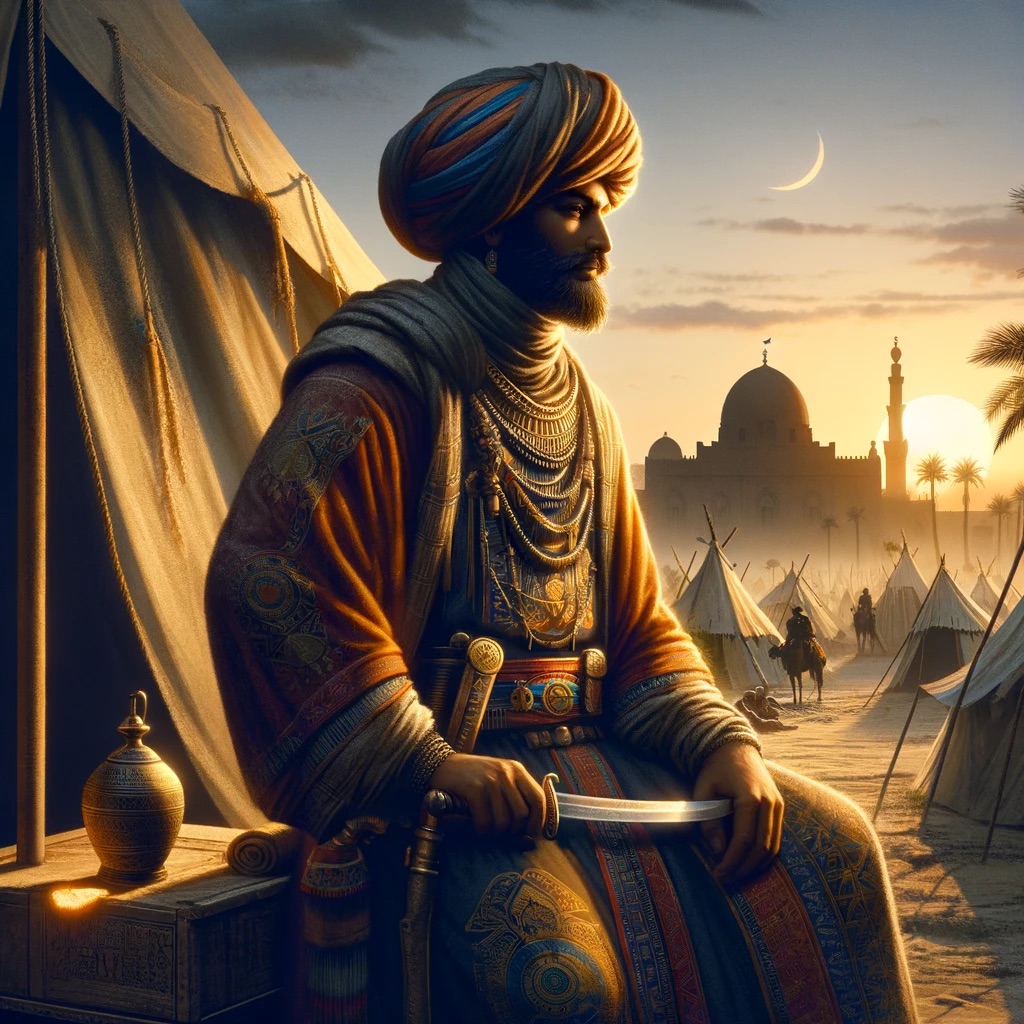
Defend with steel
The Mamluks were a military caste that originated in the Muslim world. The word “Mamluk” literally means “owned,” and initially, it referred to slave soldiers who were converted to Islam and trained as professional soldiers. Over time, these slave soldiers gained significant power, particularly in Egypt and Syria, from the 13th to the 16th centuries.
The Mamluk Sultanate was established in Egypt in 1250, after the Mamluks overthrew the Ayyubid dynasty. They are perhaps best known for defeating the Mongols at the Battle of Ain Jalut in 1260, halting Mongol expansion into the Mediterranean world. This victory was pivotal, as it marked the first substantial defeat of the Mongols and helped to preserve the Islamic Middle East.
The Mamluks were unique in that they were slaves who managed to rise to power, ruling as a military aristocracy. They established a system whereby new slaves were continuously brought in, converted, trained, and eventually could rise through the military ranks to high positions in the state, including that of the sultan. The Mamluk system allowed for a degree of social mobility within a rigidly structured hierarchy.
The Mamluks were eventually overthrown by the Ottoman Empire in 1517, but they continued to serve as a military force in Egypt well into the Ottoman period. Their legacy is complex, characterized by both their military prowess and the distinctive art and architecture they sponsored, which contributed to the Islamic Golden Age.
The word “parsimonious” comes from the Late Latin term “parsimonia,” meaning “frugality, thrift,” and traces its roots back to the Latin word “parsus,” which is the past participle of “parcere,” meaning “to spare, save, refrain from.” The transition from a focus on thrift and frugality to the modern sense of “parsimonious,” denoting extreme or excessive economy or frugality, and often implying stinginess, reflects the evolution of the word’s usage over time.
The English language adopted “parsimonious” in the late 16th century, carrying over the idea of sparingness from its Latin origins. Initially, it might have carried a more neutral or even positive connotation of prudent and careful management of resources. However, over time, “parsimonious” has come to be used more critically, often suggesting an unwarranted withholding or an excessive frugality that skimps on necessary spending or generosity.
The evolution of “parsimonious” reflects broader changes in societal attitudes towards economy and the management of resources, where the balance between thrift and generosity can be culturally dependent and subject to historical shifts in values.
True virtue, liberty
Salud, Salute!
The word “salus” originates from Latin, where it holds meanings related to health, safety, and well-being. The etymology of “salus” reflects a broad concept of welfare, including physical health, mental well-being, and public safety. Over time, this Latin root has influenced the development of numerous words in English and other Romance languages.
In English, the influence of “salus” can be seen in words like “salutary” (producing good effects; beneficial) and “salutation” (a gesture or statement of greeting or respect), which indirectly relates to health and well-being through the idea of wishing someone well.
In Romance languages, such as Italian, French, and Spanish, the derivatives of “salus” are directly related to health. For example, “salute” in Italian, “santé” in French, and “salud” in Spanish all mean “health” and are used both in the context of physical health and as toasts to one’s well-being.
The concept of “salus” in ancient Rome also extended to public health and safety, with the goddess Salus representing health, well-being, and the prosperity of both individuals and the state. This multifaceted understanding of health as encompassing physical, mental, and communal well-being is deeply embedded in the word’s history and usage.
And economic theory!
Excessive prosperity and opulence
To be sparing
To forbid the water from the fire
Exporting money is fine
Letters of exchange ?
Purchase innocent pleasures with their own aching sweat
39/uL is me —
If you’re referring to “health ALT” in the context of “alanine,” it sounds like you’re talking about alanine aminotransferase (ALT), a type of enzyme found primarily in the liver and, to a lesser extent, in the kidneys, heart, muscles, and pancreas. ALT plays a crucial role in metabolizing protein by converting alanine and α-ketoglutarate into pyruvate and glutamate. It’s an important marker for liver health.
ALT levels are measured through blood tests and are used to identify liver damage or disease. Elevated levels of ALT in the bloodstream often suggest the liver is damaged or inflamed, making this enzyme a key indicator in diagnosing liver issues such as hepatitis, cirrhosis, or liver damage due to drugs or alcohol. Normal levels of ALT may vary slightly depending on the laboratory, but they are generally in the range of 7 to 56 units per liter of blood.
Keeping ALT levels within a healthy range is important for overall health. This can be supported through a balanced diet, regular exercise, limiting alcohol consumption, avoiding unnecessary medications or toxins, and maintaining a healthy weight.
The path to true scholarship —
CD’s are the future! Thank god my 2010 Prius still has a CD player!
Costco and Amazon Prime?
REAL MEN WEAR SPANDEX?
THE SEXIEST BODY OF ALL-TIME?
A TRUE MARVEL;; A HUMAN BODILY MARVEL?
HUMAN BODILY ARCHITECTURE
LIKE AN ARCHITECTURAL MARVEL;; A HUMAN ARCHITECTURAL MARVEL?
Even all the money in the world to buy stuff;; it all sucks???
Ye ye ye ye ye ye
Physiological power is true power?
It takes no courage to be a trump supporter if you’re from the south, (some of) the Midwest, etc. Same takes no courage to like or support Kendrick Lamar (everyone loves him, even Taylor Swift)… and it takes no courage to vote democrat if you’re liberal.
Go opposite — true courage.
71.8kg to pounds 158 pounds
178cm
5 foot 10
119/70
Saving money is sexy!
Not even protein powder or creatine!
The term “logo” comes from the Greek word “logos,” which means “word” or “speech.” Over time, its application has broadened to encompass a range of meanings, including thought, speech, account, meaning, reason, proportion, principle, and logic, among others. In the context of branding and marketing, a logo is a symbol or design adopted by an organization to identify its products, uniform, vehicles, etc. It’s a visual representation that serves as a shorthand to convey the essence of a brand, company, or product.
The evolution of logos as a concept for branding purposes has roots in ancient times. Historical civilizations, such as the Egyptians, used hieroglyphs to signify ownership or origin. In the medieval era, craftsmen used marks to identify their work, a precursor to the modern trademark. By the 19th century, with the rise of industrial production and the subsequent need for differentiation in crowded marketplaces, logos became an essential part of corporate identity.
The modern logo’s purpose has expanded to embody the brand’s identity, values, and essence, conveying this to consumers through a mix of visual elements including typography, color, and imagery. This evolution reflects a shift from merely marking goods for trade to a more sophisticated role in branding and marketing strategies, aiming to create a memorable and recognizable symbol that fosters brand loyalty and conveys a desired image.
(13:49):
And I like that he said, he just kept on saying, 20 year anniversary, I’ve been doing this for 20 years. And his opening joke was so high level, I realized that I wasn’t funny. I realized that this dude is a professional at what he does. And so many things are subjective. I always talk about this. It’s like, you know, people are arguing like, is Emily Ratajkowski the hottest, you know, person? And I’m like, that’s such a subjective thing.
Emily 32 now —
ALO YOGA — the new hit sexy brand for young women?
Me and Cindy?
I’m 6 feet tall … Cindy is 5 foot 3– taller than Kanye and Kim! Kanye only 5 foot 7– Kim Kardashian is a midget at only 5 feet tall?
Steve Jobs
Ye (15:47):
There’s a lot of people that have kind of like sat through, I wanted to wear a different color hoodie because I was just tired of seeing this hoodie in all the interviews. And there’s a lot of kids that are with me, they see what I’m saying. And they had to sit through all of the muck of all the previous interviews to get to this. Every interview has been just an emotional, it’s just like been an argument up to this point. This is the first of, this is the next frontier of where our species is going to head. It starts here. It starts with you, Lex.
Ridley Scott
Ye (20:57):
Well, now I’ve gone past, I’m like at that place where Nikolai Tesla was later into his career where it wasn’t about being loved. It wasn’t about sitting at the dinner parties next to Anna Wintour and stuff. It was about getting the idea across. So I have these cells, that are very, and I just keep on saying Ridley Scott, but Ridley Scott has a special anointing.
We are gods iPhone —
Ye (22:50):
Yeah, I’m saying it’s 40,000 square feet, but that would be like- What are the other parts of the cell? Okay, so it’s a screen. It doesn’t go all the way to the top and it’s one hole for light, but the water and the light and air all come in from the top so that’s like the mouth. And then this is the belly button. We’re God’s iPhone. We’re his greatest creation.
Heaven on earth ,,, terrestrial happiness is family
(23:54):
Family is heaven. That’s the promised land. And for your family to be together. So say I smite the rock and God doesn’t let me have my family back. My mission in life is still to promote families at all costs and make family’s existence easier. So you take this thing, you put localized, a localized farm, say if it’s in community, that we do localized growing and then we partner with big pharma and all and say, hey, you’re actually gonna make more money by making better food.
Ye (27:02):
Yeah. Well, I love that. What we needed to do is turn I to we. So we take the responsibility and turn they to us. So we take accountability to us. They, I to we and they to us. And that relates, it’s a language at the same time. You’re seeing the language of our surroundings. You’re seeing the language of, one of the things, okay, let’s go back to the sale explanation because I’m also doing it. What’s that thing when Elon just put all the information in the open and people could figure out if they could figure it out and open source. Yeah, open source. So I’m open sourcing this idea right now so that engineers and anointed people, beings, anointed beings can collectively contribute to this to push our species forward.
Ye (28:59):
All of our buildings are based on just the industry and the economy, and then people lean into what people are used to seeing, like what we think is attractive, because then you go back to the women who give life. So everyone wants to be attractive to the attractive.
Moses is a central figure in the Abrahamic religions, most notably Judaism, Christianity, and Islam, revered as a prophet, leader, and lawgiver. His life and contributions are primarily recorded in the Hebrew Bible or Old Testament, especially in the books of Exodus, Leviticus, Numbers, and Deuteronomy. Here are some key historical and religious facts about Moses:
Moses’ life and legacy have had a profound impact on religious thought, law, ethics, and leadership, influencing not only religious traditions but also cultural and legal norms throughout history.
The age of Moses, as described in the biblical narrative, spans a long and eventful life. According to the Book of Exodus in the Bible:
- Moses at the time of the Exodus: Moses was 80 years old when he spoke to Pharaoh on behalf of the Israelites, demanding their release from slavery (Exodus 7:7).
- Moses at the time of his death: Moses died at the age of 120 years, just before the Israelites entered the Promised Land (Deuteronomy 34:7).
These ages are significant as they underscore Moses’ enduring legacy of leadership and faith. His life is divided into three 40-year periods, each marked by distinct phases:
- His early years in Egypt,
- His time in Midian, and
- His leadership of the Israelites out of Egypt and through the wilderness.
The portrayal of Moses as living to 120 years old also serves to emphasize his righteousness and the favor he found with God, as his longevity exceeds the average lifespan of the time.

The images depict Moses with features that reflect Semitic ethnic characteristics, which are consistent with the people historically associated with the region from which Moses originates. This includes dark hair, a beard, and a complexion that aligns with Middle Eastern heritage. His attire and physical appearance are designed to be historically plausible for an individual living in the Late Bronze Age, a period roughly spanning from 1550 to 1200 BCE in the Middle Eastern and Northeast African regions.
As for age, the depiction aims to show Moses as an aged man, embodying the wisdom and life experience attributed to him during the period of leading the Israelites out of Egypt, as described in biblical narratives. This choice reflects a common portrayal of Moses as a venerable leader, often depicted at an advanced age during the key events of the Exodus.

Brad Pitt, Leonardo DiCaprio —
(29:26):
And that’s the reason why the media goes and gets, you know, Bella Hadid, Kim Kardashian, Emily Ratajkowski. Those are the only ones I’m gonna… There’s more? There’s more, but I’m thinking of the ones that I think are attractive. It is subjective. Yeah, because it’s subjective. So to my subjective, which I think, I think the only guys that could argue with me on my opinion on girls would be Brad and Leo, because we’re the only ones with the track record, you know, everything else. So for everybody else, it’s subjective. We’ve got history. So… Are you happy?
Ye (33:11):
We’re still in the Holocaust. A friend, a Jewish friend of mine said, come, go visit the Holocaust Museum. And my response was, let’s visit our Holocaust Museum, Planned Parenthood.
The lost tribe of Israel — followers of Moses
Ye (33:52):
Because six million, well also, African Americans are actually Jew also. The lost tribe of Israel. I can push back on that too. Okay, so.
Ye (34:10):
So. We’re human. Six million people died in the Holocaust. Over 20 million have died by the hands of abortion. And the media promotes the My Body, My Choice, which is actually still a promotion for Planned Parenthood. 50% of black deaths a year is actually abortion. It’s not the cop with the knee. It’s not black on black violence and gang violence. It’s not heart attacks. It’s actually abortion. The most dangerous place for a black person in America is in their mother’s stomach.
Black trauma economy —
Ye (35:10):
That’s what we deal with on our TVs right now with black people. Soros would use black trauma economy to win an election. What I love is having a healthy conversation and as opposed to, there’s certain things, you know, boom, this drops, people are gonna have pussy hats on. Boom. This drops, it’s gonna be black people and white people with signs. Boom, this drops. So, hey, China, hey, left agenda, hey. What we’re gonna do is say that our species can have a healthy conversation.
Ye (36:32):
I know. If Jewish people would accept that I’m Jew, then they would see what I’m saying in a different way. They would hear it in a different way. But see, the people, you saying you’re Jewish, that- No, I’m Jew, not Jewish. Jewish means like that of a Jew. I’m saying I’m Jew. You’re a Jew. Blood of Christ, Orthodox Christian.
THE GLORY
COOL
TRUE GLORY!
Democracy —
Speculations about CIA involvement or influence in Hollywood films often revolve around movies that depict espionage, national security, or military themes. While direct involvement is difficult to prove without concrete evidence, there are films where the U.S. government or military has acknowledged providing support, advice, or resources. This involvement is usually aimed at ensuring accurate representations of military operations, equipment, or procedures, rather than exerting covert influence. Below are examples of films and genres that have historically attracted speculation about government involvement:
Military and War Movies
- “Top Gun” (1986): This film received support from the U.S. Navy, which provided access to aircraft and carriers, helping to boost the Navy’s image and recruitment efforts. Such cooperation often leads to speculation about the extent of the military’s influence on the film’s content.
- “Zero Dark Thirty” (2012): This film about the hunt for Osama bin Laden sparked controversy and speculation due to its portrayal of torture and the extent of access the filmmakers had to classified material.
Espionage and Thrillers
- Films that depict CIA operations or espionage, such as the “Bourne” series, often lead to speculation about whether they reflect real tactics or scenarios and if there’s any advisory role played by intelligence professionals.
Political Dramas
- Movies like “Argo” (2012), which is based on a declassified CIA operation, also generate discussion about the relationship between Hollywood and the CIA, particularly regarding the portrayal of historical events and operations.
Science Fiction and World Events
- Even science fiction films or films with global disaster themes, such as “Independence Day” or “The Day After Tomorrow,” can attract speculation about government influence, particularly regarding how these films might reflect or shape public perceptions of national security, alien life, or climate change.
Documentaries
- Documentaries that delve into sensitive or controversial topics might also be speculated upon for having government influence or censorship, especially if they touch upon issues related to national security or intelligence.
It’s important to note that while the U.S. government, military, and intelligence agencies have at times worked closely with Hollywood, the extent of their influence varies widely. In many cases, their involvement is transparent and focused on logistical support or ensuring accurate representations of military or intelligence operations. Assertions or speculations about covert influence or manipulation of content by agencies like the CIA often lack solid evidence and should be approached critically. The line between influence, consultation, and the creative independence of filmmakers can be complex and nuanced, contributing to ongoing debates about the relationship between the entertainment industry and government entities.
The connection between the CIA and companies like Pixar and Disney often emerges in discussions about the influence of government agencies on popular media and culture. However, it’s important to distinguish between verified facts and speculative or theoretical connections.
Disney and the U.S. Government
The relationship between Disney and various U.S. government entities, including the military and intelligence agencies, is well-documented, particularly during the World War II era. Disney produced numerous training, propaganda, and educational films for the U.S. military and other government departments. This collaboration was part of a broader effort by the U.S. government to utilize media and entertainment for public information and morale during wartime. Disney’s involvement with the government extended into the Cold War period as well, with themes in its movies and TV shows sometimes reflecting anti-communist sentiments, which were prevalent in American society and politics at the time.
Pixar
Pixar, originally a computer division of Lucasfilm, was acquired by Steve Jobs in 1986 and later became a powerhouse in animated movies after its partnership with Disney, leading to its eventual acquisition by Disney in 2006. There’s no widely recognized public evidence of direct involvement by the CIA or other intelligence agencies with Pixar similar to the historical collaboration between Disney and the U.S. government during World War II and the Cold War.
Speculation and Conspiracy Theories
Speculation about the CIA’s involvement with film studios and entertainment companies often arises within the context of broader conspiracy theories about the government’s influence on media and popular culture. While it’s true that the U.S. government has historically engaged with Hollywood to produce propaganda or promote certain messages (e.g., anti-drug campaigns), claims about specific movies or studios require careful scrutiny. Direct involvement of the CIA in the creative process of companies like Pixar and Disney, beyond general cultural or thematic influence, is not supported by concrete evidence.
It’s crucial to rely on verified information and credible sources when discussing the potential influence of government agencies on entertainment media. While the historical relationship between Disney and the U.S. government during specific periods is an established fact, broader assertions about ongoing influence or specific interventions in movies produced by Pixar or Disney should be approached with caution and skepticism unless substantiated by reliable evidence.
Ye (37:40):
And then what did I say we shouldn’t focus on? Race. Not just that. I said they shouldn’t teach this in school. History. The history because what they do, what schools are doing is exactly what the CIA does with Pixar films and Disney films. They make Bambi’s mom die in the beginning, right? And off that pain comes a purchase of ice cream. Off that pain comes, I need some more toys. Off that pain comes, I need a bigger house. Off that pain comes, I need more girls than my wife. Off that pain comes, so they put that pain in to make us, now we’re the orphans of capitalism, to make us be consumers. And we need to be a community, not just consumers. So I could have went another seven minutes by being a person who presents himself in a way that says, well, I don’t have to feel your pain because I also have pain too that’s not being recognized. And in every interview, when I say, well, why did I get to the point of putting up the tweet?


